Kansas Citian was diagnosed with a fatal, degenerative disease. So she opened a bar
The test came back positive: Heather Hamilton had the gene for Huntington’s disease, a degenerative brain disorder with no known cure. It was all but certain to shave a couple decades off her life.
Hamilton, 47 years old, absorbed the tidal wave of the news. Then she and her husband, Sean Smith, 51, started making plans. Everything had changed. In the long term, it was bad. But the short term? Maybe the short term could be really good.
“It was that feeling of, well, our retirement isn’t gonna look like what most people’s retirement will look like,” Hamilton said, “so let’s do the things we want to do now, even if it’s a ton of work.”
In their case, that meant selling a nice house they’d recently purchased in Waldo, cashing out some retirement savings, buying a historic building, and opening a bar. Maybe they’d book some live music there. Sell some local art on the walls. Put in a couple of pingpong tables. Life’s short. Why the hell not?
So, in late 2020, the couple bought an old two-story brick building in the West Bottoms and moved into the top floor. Six months later, they were serving cocktails at their new bar downstairs, 9th and State.
You wouldn’t really call it a neighborhood, this part of town. It has history — political boss Tom Pendergast once lived down here, and Charlie Parker performed on a stage that’s still upstairs at Hamilton and Smith’s place — but not much in the way of housing stock.
To the west, past railroad tracks that divide Missouri from Kansas, a vaguely menacing Cargill facility rises unevenly in the sky. Across the street, weedy lots and abandoned car parts sit behind chain-link fences with spiky tops. Minus the sign out front, you might assume the business next door, Weird Stuff Antiques, was a junkyard.
But Hamilton and Smith say that beneath the surface of this harsh industrial corridor is a community more welcoming than any other they’ve experienced in Kansas City.
“I’ve lived all over town — Brookside, Westport, midtown, Waldo — but there’s something about this area,” Hamilton said, as semi-trucks bound for nearby loading docks rumbled by along Ninth Street. “It’s a completely different vibe down here. Something about it brings people together.”
The Huntington’s diagnosis
Hamilton always knew there was a good chance she had Huntington’s disease. It’s a genetic disorder — “sort of a combination of ALS, Parkinson’s and Alzheimer’s, so it affects cognition, movement, balance, memory,” Hamilton said — and her mother suffered from it, as did a few aunts and uncles.
“For most people, it hits you around 30 and you’re dead by about 45,” she said. “Fortunately, in our family, it tends to be late-onset. My mom didn’t start showing signs of it until she was 60, so if that’s how it goes for me, I have about 15 years left before things start to go downhill.”
She got tested for Huntington’s in April 2020, about a month into the pandemic.
“I’d thought about it (getting tested) a lot over the years, but I wasn’t sure if knowing would be better than not knowing,” Hamilton said. “My sister was tested and doesn’t have it, and my brother hasn’t been tested for it. Eventually my therapist was like, ‘Uh, maybe knowing would be better.’ And it was. Knowing was better than to wonder.”
The knowledge has colored everyday life in ways large and small. Simple mistakes like dropping a glass or forgetting a name have a way of taking on ominous meaning. Let your mind run wild, and almost anything can be an early sign of degeneration.
“There’s a certain amount of anxiety and depression,” Hamilton said, “because you just don’t really know. And some doctors will say that you’re anxious and depressed because of the diagnosis. Others say it’s an early symptom. So it’s there, and I deal with it. But it has also lit a fire under me. I think it motivates me.”
The original plan didn’t include opening a bar. They just wanted to find a historic building and fix it up to suit their life-work purposes. Hamilton, who works in advertising, could have an office there, and Smith, who’d quit his corporate job after 27 years, could have space for woodworking and furniture-building, his passion.
They looked for a while and didn’t find much. “They were either not very historical, too expensive, bad neighborhood,” Hamilton said. “We got to a point where we were like, ‘Does this building we’re dreaming of even exist?’”
But there was this one building, the only old one on its block down by The Lunchbox in the Bottoms: 1717 W. Ninth St. The windows were boarded up, and the photos on real estate websites were scarce and only showed the upstairs. They drove by a few times and eventually got inside.
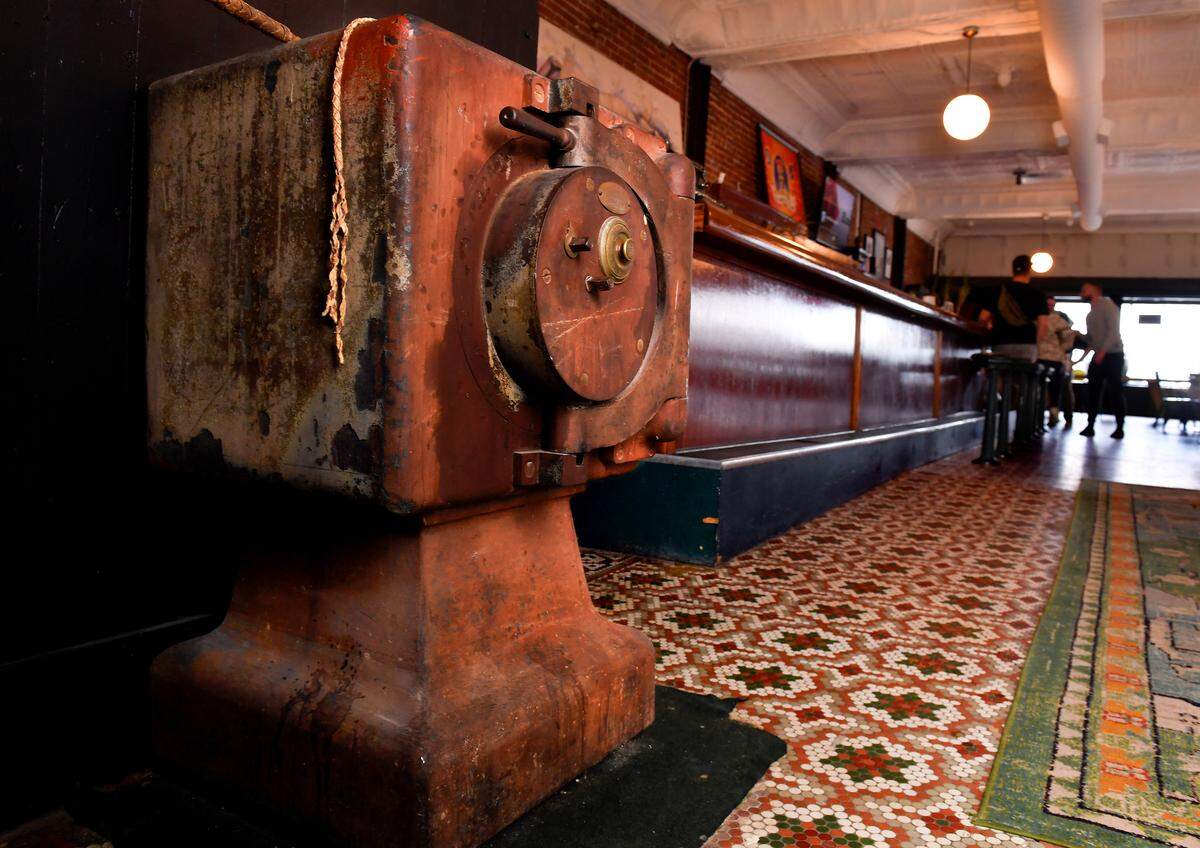
“And the first thing we saw downstairs was this 42-foot bar,” Smith said. “That, I think, is probably what changed the plan.”
A colorful history
When he’s not behind the bar at 9th and State or building furniture around the corner at KC Custom Hardwoods, Smith likes to research the history of the building he and Hamilton bought in December 2020. He takes great delight in the details he’s been able to hunt down, which stretch back to before the building was erected.
There was once a wooden structure at the same address, and it’s there that future political boss Tom Pendergast operated the Pendergast Brothers Saloon with his brother James in the late 1800s. In those days, this stretch of the city was dubbed the Wettest Block in the World, owing to the fact that roughly 23 of the 29 buildings there were liquor stores or bars frequented by border-hopping Kansans seeking relief from the state’s alcohol ban.
Pabst Brewing built the current building in 1911, and during Prohibition it was a wink-wink “soda shop” where, Smith said, “you purchase non-alcoholic drinks legally but bring your own little bottle of something-something to drop into it.” In the 1930s, the building hosted a renowned jazz club and casino called the Antlers Club.
“I was able to find mention in an old newspaper of Charlie Parker playing on the upstairs stage — this was before he moved to New York,” Smith said. “The stage is still up there. For a while, we had our bed on it.”
The 1951 flood ravaged the West Bottoms, bringing water as high as the second floor.
“I think that’s when a lot of the original character of the building was lost,” Smith said.
The building’s history between the 1960s and 1990s has been tougher for Smith to pin down. (Pop into 9th and State if you think you can help him fill in the gaps, and he’ll probably buy you a drink.)
Around the turn of the millennium, Jordan and Marty Honig bought the space and leased it to a series of enterprises, some above-board, some rather subterranean. The list includes Fahrenheit Gallery, run by the Honigs’ daughter, artist Peregrine Honig; a music venue called Wild West Border Deli and Bar; a Soviet-themed nightclub called Korruption, and a punk space called Spitfire.
More recently, 1717 W. Ninth St. has been home to a fetish club called Club IX and Negative Space, an underground nightclub and art gallery. When Smith and Hamilton got the keys to the place, they did away with the maroon-and-gray Korruption paint job and began sprucing it up with an eye to returning the building to its early 20th century glory.
“We wanted to honor the history of the building,” Smith said.
“Without being pretentious or weird,” Hamilton added.
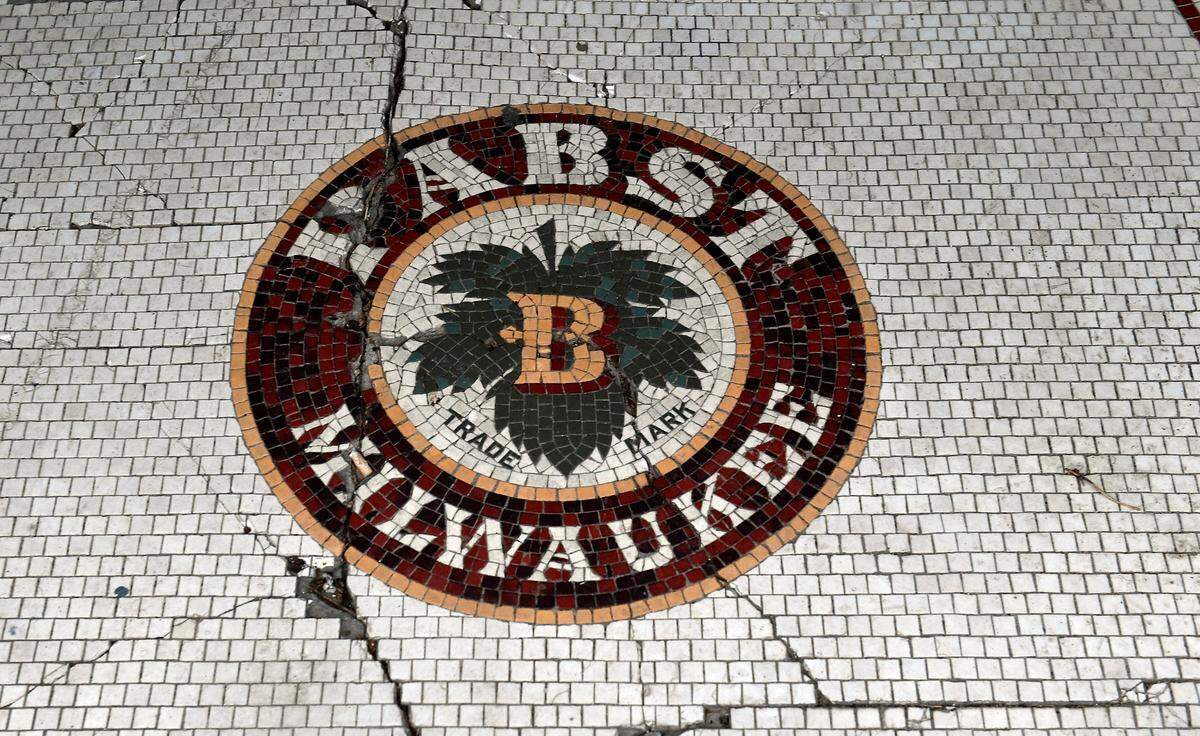
A few vestiges of the pre-war era remained. Metal bar stools were still bolted onto the green, red and white penny tile that’d been hand laid on the barroom floor a century before. A vintage Pabst mosaic still greeted visitors near the entrance. They shined up the floor and upholstered the bar stools.
Their friend, Caro Thomas, is an art teacher at Pembroke Hill as well as a “part-time mixologist,” Hamilton said. She helped design an initial cocktail menu to complement Hamilton’s collection of vintage glassware. Thomas also trained Smith how to tend bar.
“I’d never bartended in my life,” Smith said. “Caro really had the knowledge and background to help us get the bar stocked and ready. And had it not been for Heather’s tenacity in dealing with all the red tape with the city — all those agencies and licenses — there is no way we would have ever opened. I was ready to scrap the whole plan. But she worked endlessly.”
They opened 9th and State (named after the intersection where it sits) on June 5. The place defies categorization. Smith called it a “cocktail dive,” though you wouldn’t necessarily expect a place like that to have two ping-pong tables and host “Golden Girls” watch parties, as 9th & State did for a few months after opening.
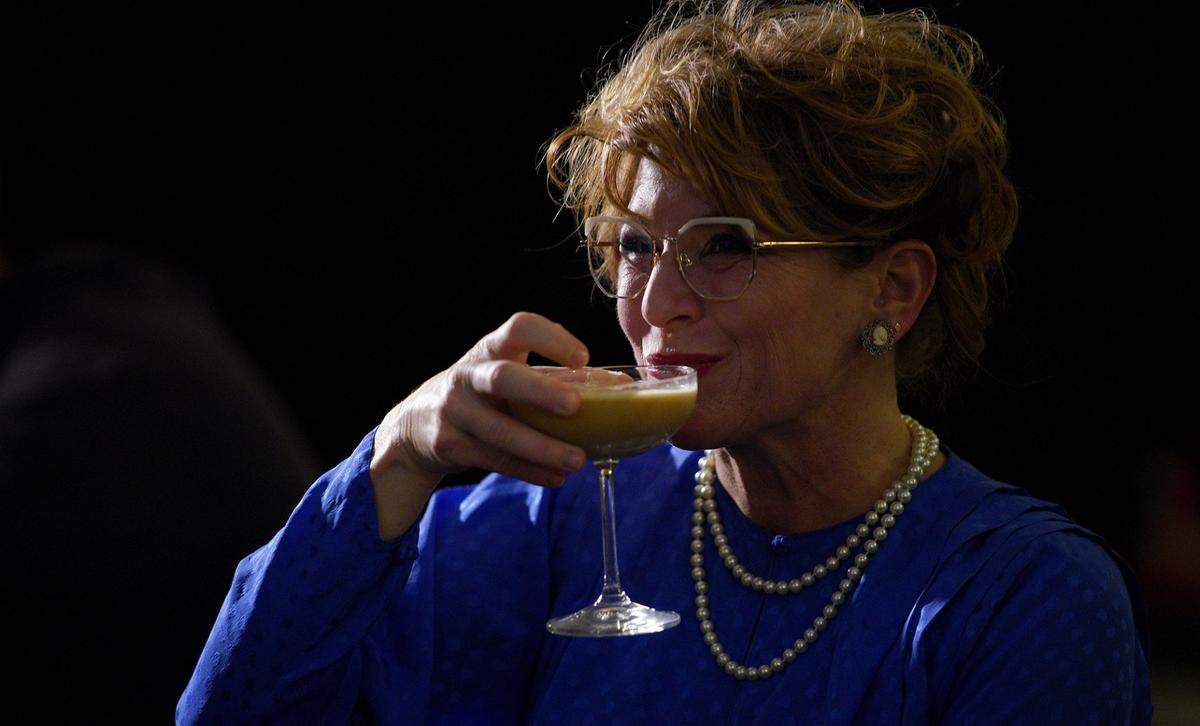
Lately, they’ve been leaning more into music — you can pretty much bank on Lauren Krum spinning country records on Mondays and live shows on Fridays — and oddball events, like a sold-out Espresso Martini party it held in conjunction with Kansas City magazine in early April.
“I think because having a bar was never the goal, we’ve been free to kind of explore what this could be,” Hamilton said. “Whether that’s a community space, or an arts space, music, or just finding ways to support organizations we love.”
The Wettest Block Party
Among the perks of owning a bar is it’s a quick way to get to know your neighbors. Hang an Open sign out front and a lot of them’ll come in and say howdy.
That’s how Hamilton and Smith have met most of the residents, workers, and eccentrics of this rugged patch of the West Bottoms. Guys like Steve, who builds bikes inside an old railroad electrical plant over on James Street. (“He comes in and has one Rusty Nail,” Smith said. “We stock Drambuie and Chivas just for him. He’s like 80.”)
Or the considerably younger residents of the West Bottoms Flats, three historic buildings a block down from the bar that have recently been rehabbed and converted into apartments. Hamilton pointed to the art for sale hanging from the walls inside 9th and State. “That’s Cory Green’s work — he has a studio over there,” she said.
“It really is a hard-to-classify clientele,” Hamilton added. “Last Friday, we had a birthday party in here with several trans women, and on the other side of the bar it was a bunch of veterans. I think that’s one of my favorite things about this place, that everybody feels comfortable and welcome.”
The couple also now have tenants upstairs: Big Muddy Gear Exchange, a secondhand shop for outdoors clothing and gear. And nearby are a handful of newer operations that preceded 9th & State in the area, including Blip Roasters and The Ship.
“I think there’s a bit of a misperception about this area that it’s this dark place you don’t want to be going after midnight,” Smith said. “We haven’t found it to be that way. I mean, I could do without the street racing. And the train goes very early in the morning every Wednesday. But besides that, it’s a lot of people looking out for each other. There is this sense that we’re all part of building a community down here together.”
Smith and Hamilton will try to highlight that burgeoning sense of camaraderie this Saturday at the Wettest Block Party, part of the Historic West Bottoms’ Heritage Days celebration.
Heritage Days has been happening for about seven years, said Bruce Holloway, president of Historic West Bottoms. The group advocates for infrastructure improvements in the Bottoms — streetlights, sewers, signage, security, levee work near the river — and also promotes the area’s history. They’ve lately been leaning in to the “Wettest Block” branding, which fit with Hamilton and Smith’s desire to throw an outdoor party on the block with music, food, art, and booze.
“We wish everybody down here was as enthusiastic and resourceful as Heather and Sean have been,” Holloway said. “They’ve been such a great addition.”
The event, right outside 9th & State, starts at 4 p.m. May 7. It’ll feature live music from country-centric acts The Grisly Hand, Strawbilly, and Lou and the Knock Em Back Charlies as well as hip-hop from Black Creatures and KC Bones, a Grateful Dead cover band.
May’s a big month for the bar. It’s Huntington’s disease awareness month, which means 9th & State will be giving 15% of all sales in May to the Huntington’s Disease Society of America. It seems an appropriate way, Hamilton said, to mark their first year in business.
“We’re so busy, but when I stop and think about all this good stuff that has happened here, just by opening this bar,” she said, a touch of wonder in her voice. “I mean, who knew a cocktail could be so much?”