These Kansas City witches fight misconceptions as they conjure their African roots
On the front porch of Nicolette Paige’s East Side home sits an altar, a stone centerpiece laden with candles and eagle feathers. Surrounding it from above, animal skulls and bones hang from the ceiling.
Paige is performing a ritual in honor of the new moon. She prays to the spirits of her ancestors, joined by her fiancé, Darrian Davis, and friend Shae Bradley, hand and hand, heads bowed.
The women are witches. And they know full well that their ritual and the very word “witch” can paint a sinister picture for those who are unfamiliar with what they do. They are used to the ignorance and misconceptions.
It is no secret that white Christian landowners ripped away religious practices from enslaved African peoples. Through fear, intimidation and ignorance, spiritual practices based outside of European Christianity have mostly been associated with the sinister or demonic.
“I don’t want to say the word ‘brainwashed,’ but we have been in Western culture so long that we have been stripped of that innate spirituality and demonized. There are just a lot of Black people scared of African spirituality,” says Paige.
The 32-year-old mother of four identifies herself as a bruja (pronounced brew-ha), the Spanish word for witch. The label sprung from enslaved Latin Americans and is becoming more prominent today. This emergence of Black witches, Paige says, comes as more women of color look to reconnect with their heritage and rediscover their power.
She sees herself primarily as a healer. She and others believe they possess the gift to heal physically, spiritually and emotionally through the manipulation of energies.
“It is my connection to my ancestors that guides me,” she says. “They are the ones who speak through me through my intuition. I don’t dive into the world of what people may consider dark magic.”
Paige uses her spiritual practices as an additional form of income for her family. She offers a variety of services, such as tarot readings and spell work consultations, costing $25 to $50, all the way up to home blessings/cleanings or spiritual advisory, which run $150 to $200.
Many may write off such practices as snake oil merchants akin to psychics looking to profit off of unsuspecting rubes, but Paige’s customers stand by her practices and their results.
For Damon Patterson, a spiritual advisory with Paige has had deep ramifications on his life.
“I have been seeing her about a year now. I was going through heavy alcohol issues and trying to stop drinking. I am going on 10 months sober now,” says Patterson. The 39-year-old Kansas City native says his sessions with Paige give him insight and comfort.
“She helped me find my inner peace and voice again,” he says. “Helping me think through my own thoughts. It has helped me strengthen myself. I think great practitioners help you to find what you are looking for in yourself.”
In addition to being a singer and songwriter, Paige also manages an urban farm co-op and owns her own honey company, Beelicious KC.
“There are so many definitions of what a witch is,” she says. “I think it is someone able to tap into energies on a deeper level as well as being in tune with the earth.”
‘We are all spiritual beings’
For other Black women looking for alternatives to the traditional religious faiths, witchcraft has become a bridge to learn about different cultures. Twenty-nine-year-old Taylor Pond feels she has always been a witch. She remembers the allure while growing up in the ’90s.
“Pop culture has a lot to do with it for people like me who grew up in my era. I grew up on ‘Buffy,’ ‘Charmed,’ ‘Sabrina, the Teenage Witch’ and ‘The Craft,’” says Pond.
Pond, who is a writer, yoga instructor and energy healer using the Japanese practice of reiki, realized her path was not bound to one faith or teaching.
“We are all spiritual beings,” she says. “Some of our souls are called to learn. I went to church as a kid. I still go. I dig Christianity, but I also dig the Hare Krishna movement,” she says.
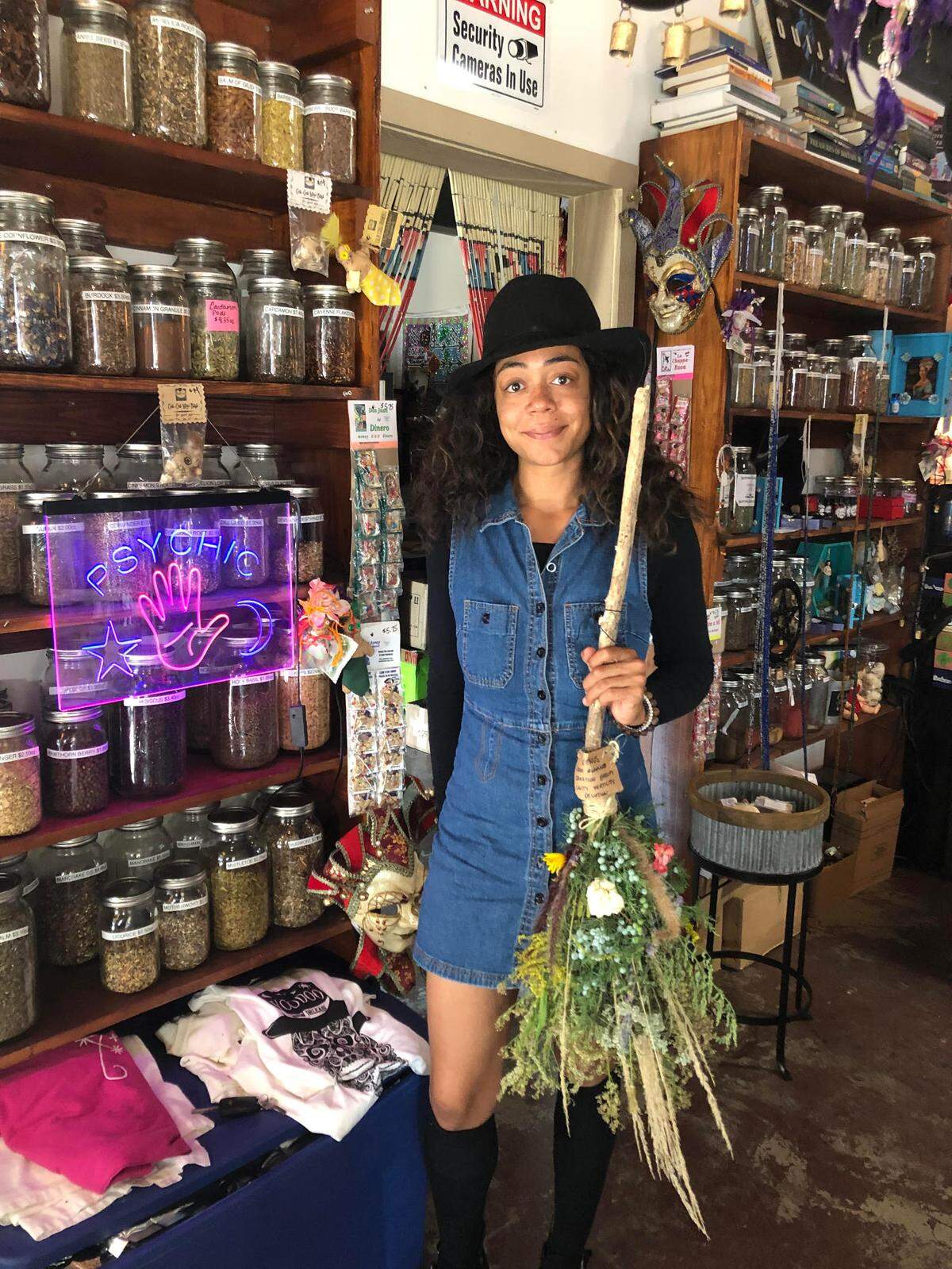
Pond believes many women identify as witches but choose not to broadcast the fact.
“I feel like the number hasn’t grown, you are just hearing more about the people who identify as witches. I don’t advertise myself because I don’t like attention,” says Pond.
She bonds with fellow witches by crafting broomsticks for them, she says.
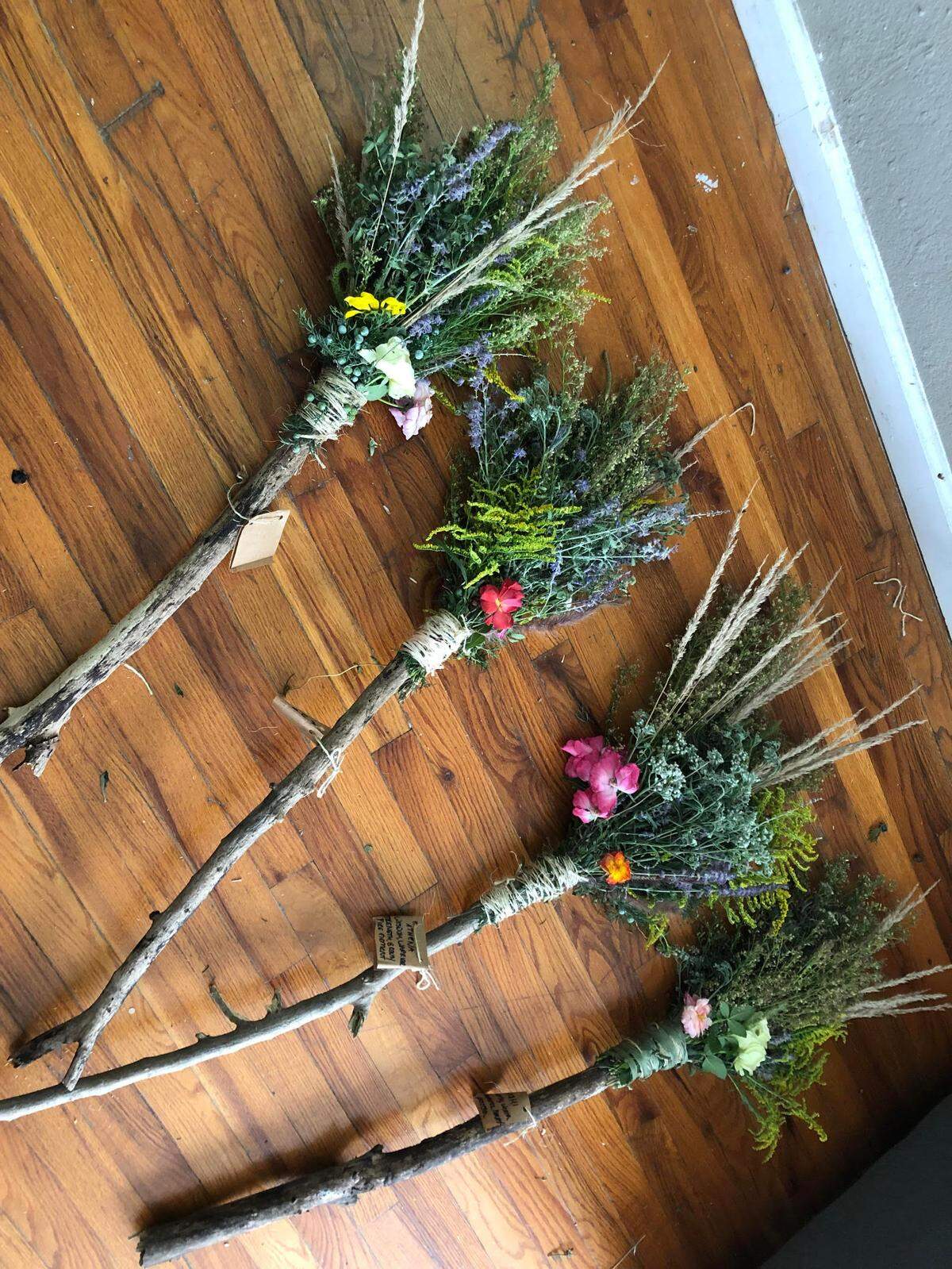
Some use them for decoration, but most use them in magical practices, such as blessing unions.
She says her creations are infused with her own magics and energies, so other witches who own them are “joining her coven in a way,” she says.
Witches, herbalists, healers
A few years ago Pond teamed with 7th Heaven, a Kansas City music and head shop, to create an underground art market, a vendor event bringing together small businesses selling holistic and all natural goods.
Rosierra Warren-Thomas (known as Rosie the Herbalist), owner of Nature Made Me, was only too happy to not only find an outlet to sell her goods but also connect with a fellow believer in the mystical.
Warren-Thomas, a Black woman who was raised in a strict religious household, began to question aspects of her Christianity and set out on her own journey of self-discovery. She explored witchcraft, which, unsurprising to her, did not sit will with friends and family.
“I came out as a witch on social media when I was 20 years old. My mom told me to take the post down. She was heartbroken for a while. I had to really talk to her and let her know I am not evil or working with the devil,” says Warren-Thomas.
She, like many young Black people, faced a sense of isolation for wanting to distance herself from the traditional Christian beliefs passed down since slavery without question of deviation.
On her journey Warren-Thomas found a love of plants and became captivated with the forgotten utilities of herbs. Herbalists have long been a facet of Black culture, dating back to the plantation, where a lack of adequate medical care caused Black healers to concoct remedies and tonics using herbs, roots and wildflowers with medicinal properties.
Warren-Thomas, an Army veteran and mother of two, has grown her business not only through word of mouth and social media but also through her constant presence at Black vendor fairs, and one of the few people of color at local mystic fairs.
Warren-Thomas finds herself in a wave of Black entrepreneurs looking to reintroduce the public to these forgotten, all natural alternatives. Since starting her business seven years ago, she has developed a catalog of teas, oils, syrups and body butters, to name a few.
Warren-Thomas no longer considers herself a witch and sees herself as an herbalist.
But like witches, she hopes the Black community can move past years of stigma and judgment. “I don’t need labels to put over my magic, she says. “My ability to manipulate and control my life with my energies is what matters.”
This story was originally published April 19, 2022 at 5:00 AM.