
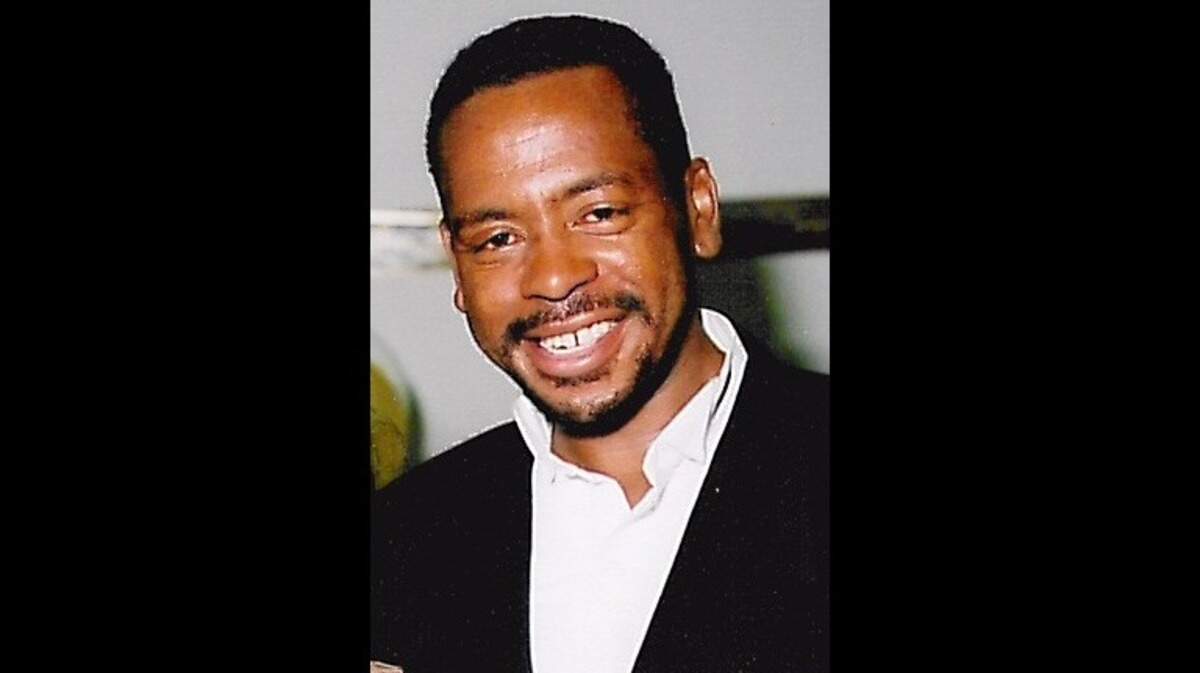
‘Marvelous’ Marvin Jones, gifted Kansas City drummer and jazz musician, dies at 61
Editor’s note: This feature is part of a weekly focus from The Star meant to highlight and remember the lives of Black Kansas Citians who have died.
In a family filled with musical talent, Marvin Jones found a way to stand out.
His father, Warren Jones, was the drummer for the Kansas City jazz band The Scamps in the 1970s, lining up gigs each week in the historic clubs at 18th and Vine and the Plaza. Marvin and his siblings often sat attentive in the crowd, the fast-paced and improvisational rhythms rubbing off on them. Three of his four sisters formed a gospel group as teens, in which they belted out harmonies inside local chapels. They occasionally sang R&B songs at talent shows.
But Marvin seemed to be destined for more, even from the time he was young, his family says.
He was, in the words of his sister Cynthia Bradley, “the shining star of all of us.”
The first instrument he learned was the trumpet, at age 12, and his swift grasp was so apparent his parents enrolled him in the former Charlie Parker Institute for lessons. Over the next several years, he taught himself guitar, upright bass, piano and, more prominently than the rest, drums — the instrument that would eventually make him a Kansas City jazz staple known to his peers simply as “Marvelous Marvin.”
He sneaked down to the basement as a kid to practice on his father’s drum set, pretending there was a crowd in the room around him, swaying and nodding like the musicians he had seen.
Years later, he made the dream in his head a reality.
“I think it was a gift that he was born with. There’s no explaining it,” his youngest sister, Cheryl Jones, 56, said during a phone call with the three living sisters. “I just think it was who he was. He was meant to be this great musician.”
Marvin Jones, whose keen ability to anticipate and compliment the musicians around him led him to back everyone from famed duo Bettye Miller and Milt Abel to — on one occasion, many years ago — Ray Charles himself, died on March 12 following a short and sudden fight with brain cancer, family said. He was 61.
He toured for many years with popular Kansas City organist Charles Earland and played on his 1990 album “Whip Appeal,” his smooth drumming providing the backbeat for songs like Earland’s cover of “More Than Yesterday.”
Among the many tributes shared on Facebook, Chris Hazelton, an organist and the owner of the independent label Sunflower Records, wrote that Marvin shaped his playing, “always quick to bark at us musicians to ‘JUST KEEP TIME!’” He showed them how it was done, too.
“I have never heard anything swing as hard or as tightly as Everette and Marvin together,” Hazelton said in the post.
For the past two decades, Marvin has served as the pianist at Starlight Missionary Baptist Church, playing Sunday morning standards with a jazz-like bounce. In a video shared by family, he sits behind the grand piano in a black suit and his hands move purposefully across the keys, as he lifts his fingers high and then drops them down like a drummer would.
He nods his head in tune with the music but his face is subdued, giving off a look of nonchalant cool behind dark sunglasses.
Marvin was a reserved person, family said, more comfortable with an instrument in his hand than talking.
“Quiet, but outgoing when it came to music,” said his sister, Constance Weber, 58.
A struggle for success
Marvin was born on November 9, 1960, and grew up with a friendly sibling rivalry that could also be not-so-friendly. Their brother, Ronald Jones, who’s several years older, was out of the house by the time they reached high school, and then soon their late sister, Deborah Jones, left and it was the four of them. They didn’t necessarily like each other all the time.
There were times when the girls ganged up on him, and times where Marvin was wrapped up in his music at the expense of being a supportive brother, the sisters recalled. It may not have been helped by the fact that it seemed he was the “golden child” of the family, as Cheryl recalled.
He and Weber were perhaps the closest back then, sometimes dropping their feuds to play Batman and Robin around the house. He made up theme music on his sisters’ toy organ — it slowly turned into his organ, with the hours he spent on it — and she put words to it.
“He was my right-hand man,” Weber said. “We would make songs together.”
Cheryl, 56, remembers as they got older, it seemed their parents began to turn some of their attention to him.
She knows now why: They recognized the something he seemed to have.
“I felt like they really put a lot of effort and investment into him, like getting him to college,” Cheryl said. “I remember looking at my mom packing up this chest that we used to travel with full of stuff just to send him off to college because they wanted him to succeed.”
His skill with the trumpet earned him a full-ride scholarship to the University of Arkansas Pine Bluff to play in the marching band. He went to the school for three and a half years, dropping out with one semester remaining.
He packed up and moved to Chicago to pursue his goal of being a jazz performer. Not knowing anyone, he walked into clubs trying to impress the owners toying around on the piano. He usually did.
It still wasn’t easy to get by. He became homeless for a time, Weber said, and struggled with alcohol and addiction. Family came to visit, leaving him with money.
But he pulled himself up slowly, encouraged by the dream gigs like when he drummed as part of the opening act for the late comedian Bernie Mac. Among Weber’s favorite stories of her brother was that of his brief friendship that bloomed with the entertainer, to the point that Mac offered him a place to stay during a rough stretch, she said.
He didn’t like to tell name-dropping stories, even when it came to his performance at the Disney World stage with Ray Charles, facilitated by his father who had known and played with the great.
“He wasn’t phased,” Weber said. “He wasn’t phased when he played with Ray Charles.”
His life after Chicago included several stops and milestones: He moved back to Kansas City for a short time, then to New Orleans for two or three years, and was married three times. He had a son, Marvin Jones Jr., with a woman he had dated in high school and later reconnected with. He didn’t see him often, with his busy music career and working odd jobs.
His life, in his young adulthood, was a whirl-wind of places and experiences, driven by his love of jazz.
That was until he settled down for good in Kansas City, in the 1990s, and found the stability he had been missing. He became a regular at clubs — everywhere from The Blue Room to Jardine’s — and later assumed the role of minister of music at the church he was raised in. He developed a bond with his son, and nieces and nephews. He got a job at Ford. His relationship toward his sisters changed from childhood too.
They came to know him as the type of overprotective brother who would do whatever he could to help.
“He would do anything for you. He would,” said Bradley, his 60-year-old sister. “One of his famous things — ‘You OK, baby sis? You need anything, baby sis? What you need?’ He would ask me that over and over again.”
A musical legacy
Marvin’s cancer journey was fast. On February 16, one day after his mother, Deborah Jones, died of liver failure, his sisters rushed him to the hospital because he was feeling sick and weak, the sisters said. He had objected, saying he only needed to lie down.
Six hours later, he learned the hard truth: he had inoperable brain cancer. He chose to not undergo any treatment. He was moved into hospice not too long after that. He lived for three more weeks.
Bradley got to be with him in his final days.
“I got a chance to tell him I loved him and to talk to him and to ask him, ‘What do you want me to do?’” she said. “He said, ‘Hey, just take care of me. And he never talked any more after that.’”
She believes he must have suspected something grave was wrong with him, as he was the type of person who would self-medicate with alcohol if he was in pain, and brush off seeing a doctor.
Though these past weeks have been brutal for the family, they know his legacy will live on in all the work he leaves behind, immortalized on vinyl recordings and videos. His memory will also stay alive in the people whom he impacted.
Weber’s son is a gospel drummer in the church in many ways because of him, following proudly in his tradition.
He grew up pounding on pots and pans like his uncle, inheriting whatever gene it was that gave Marvin his effortless sense of rhythm.
“I think he has taken a liking to my brother,” Weber said, “but I think it’s just talent that’s a gift he inherits.”
This story was originally published March 27, 2022 at 12:00 AM.