An 18th & Vine renaissance: Boone Theater and Black Movie Hall of Fame to join revival
Shomari Benton and Shawn Edwards are old enough to remember when city officials promised to turn Kansas City’s historic jazz district into a world-famous tourist attraction — only for that vision to sputter year after year after year.
But now a true renaissance finally appears at hand for the Historic 18th and Vine District, and Benton and Edwards are right in the middle of it. They are part of a group that is resuscitating the dilapidated, 98-year-old Boone Theater at 1701 E. 18th St.
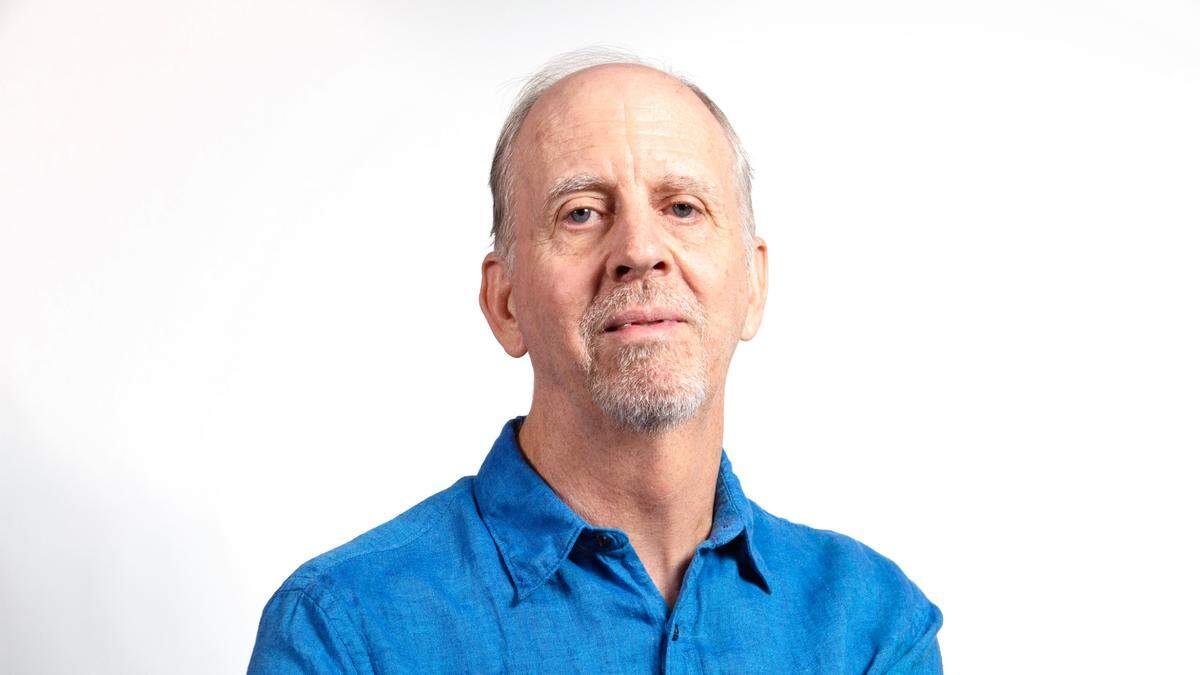
Benton is co-owner of Vine Street Collaborative, developer of the $6.8 million Boone Theater Project. Edwards is the creative force behind the new Black Movie Hall of Fame, which will be located in the building and will be officially launched March 30 at a film festival downtown.
This is one of several redevelopment projects in the works for the district.
“It’s pretty exciting, man,” said Benton, a real estate development attorney. “I’m 43, born and raised here. People have been talking about highest and best for the district for almost my entire life. It’s nice to see both the combination of the public and private sector getting together and really pushing this forward.”
Some would say it’s about time.
That original resurrection plan for the historic district came in 1989, when city officials threw $20 million at the project. But in the past 33 years, despite the presence of the Negro Leagues Baseball Museum and the American Jazz Museum, efforts have produced far more misses than hits. Many buildings remained vacant and in disrepair for decades.
“I know all the problems,” said Edwards, the longtime Fox 4 TV critic. “I know all about the failed deals. I know all about how incompetent a lot of people have been in trying to bring that area to light. I know all about the mistakes. I know all about the dropped balls. In my opinion, it’s quite frankly been embarrassing.”
Those failed deals include “three or four times” when Edwards had been asked to participate. “So, to be honest, I was a little jaded, little bitter,” he said.
And yet he jumped on board with Benton and his group.
“I think the team they’ve put together to revitalize the Boone has the best track record of any team that’s ever approached me. Like they’ve actually done things, they’ve been documented.”
Prominent among those things is 2000 Vine St., comprising two 140-year-old stone structures that housed the city’s original public works operations. Benton said one building, site of the new Vine Street Brewery, is on target to open by early summer.
Last month, Kansas City’s City Council approved a proposal by 18th & Vine LLC for apartments and retail space in the district.
The city’s website lists about a dozen other ongoing and proposed developments in the 18th and Vine area, including the old Wheatley-Provident Hospital (another project involving Benton) and Crispus Attucks School.
A new Boone
The Boone Theater, which is listed on the Kansas City and national registers of historic places, opened as the New Rialto Theater in 1924 and was renamed in honor of famed Black pianist John “Blind” Boone. It was converted into an armory in the 1940s and abandoned in the 1970s.
The renovated building is slated to house the Black Repertory Theatre of Kansas City, digital media production facilities and other offices, as well as the Black Movie Hall of Fame.
“This will be unique because there will be shared space with some of those other uses,” Benton said. “In some ways, this is going to be nontraditional.”

He and Edwards were careful to use the term “hall of fame,” emphasizing that the Black Movie Hall of Fame won’t be a museum. As such, it will exist as an entity even before construction begins.
The first 10 inductees will be revealed March 30 at an event called Celebration of Black Cinema, in conjunction with the KC FilmFest International’s kickoff reception at B&B Theatres Mainstreet KC.
Edwards will provide details of the hall of fame and the festival’s new Black Film Series, and a screening of the new documentary by Stefan Forbes, “Hold Your Fire,” will follow.
“The Kansas City FilmFest International reached out to partner on this,” Edwards said. “I thought that was really cool of them to do.”
The hall of fame’s inaugural members will all have connections to the Kansas City area, but it will eventually include Black stars from throughout Hollywood history.
“You’ve got to make it a balance because we want it to appeal to all generations,” Edwards said. “So you can’t just go all legends that lived back in the 1920s and ’30s and ’40s and ’50s. It’s got to be a mixture of some contemporary people or you’re going to age yourself out. You don’t want to age yourself out right out of the gate.”
Edwards, who co-founded the Kansas City Urban Film Festival and created the African American Film Critics Association, said the idea of a Black movie hall of fame had been “swimming in my head for a really, really long time.”
“When this thing comes online, it’s not going to be just a collection of artifacts. It’s going to be an interactive deal,” he said. “We’re celebrating people who made an impact on Hollywood, and we’re going to do it in unique and different ways. We’re going to make it real meta.”
Edwards hopes for a return to the district of something more traditional as well.
“You can’t show a real movie there,” he said, “so hopefully the Boone Theater project sort of like fills that void.”
City involvement
The Boone Theater renovation has been on the city’s radar for a long time, too.
It agreed to spend $140,000 on renovation in 2013 and $1.2 million more in 2016 to stabilize the building in hopes of converting it into an events space.
In addition, the Arts Council of Metropolitan Kansas City and the Downtown Council received a $200,000 grant from the National Endowment for the Arts in 2011 to repurpose the building for a new Folk Alliance International headquarters, which wound up moving from Memphis to 509 Delaware St. and since has settled in at 601 Avenida Cesar E. Chavez.
The current Boone Theater reincarnation is on much firmer ground.
“I think the advantage we have is we have the tenants in place, we have the programming in place, we have the building, and the team has the know-how to do projects like this,” Benton said. “Barring anything unforeseeable … I think within the next 1 ½ to 2 years, people will see an active Boone Theater they can be proud of, another addition to the district. And that’s exciting to the city as a whole.”
The City Council approved the development agreement on the project in September, and Benton’s group currently is waiting to close on the purchase. The city, which sold the building for $10, will provide a 25-year property-tax abatement.
When the final product opens to the public, those visions from 33 years ago might finally come true as the Black Movie Hall of Fame joins the Negro League Baseball Museum and the American Jazz Museum as cornerstones of what Edwards called “a corridor of history.”
“This is something we think will appeal to people from all over the world,” he said. “Now you have all these people coming in from Japan and England and Kenya and Australia and Brazil, and they can come and not only learn about Kansas City history, but a lot of this is just flat-out American history and world history.”