
Dr. Norge Jerome, researcher who founded field of nutritional anthropology, dies at 91
Editor’s note: This feature is part of a weekly focus from The Star meant to highlight and remember the lives of Black Kansas Citians who have died.
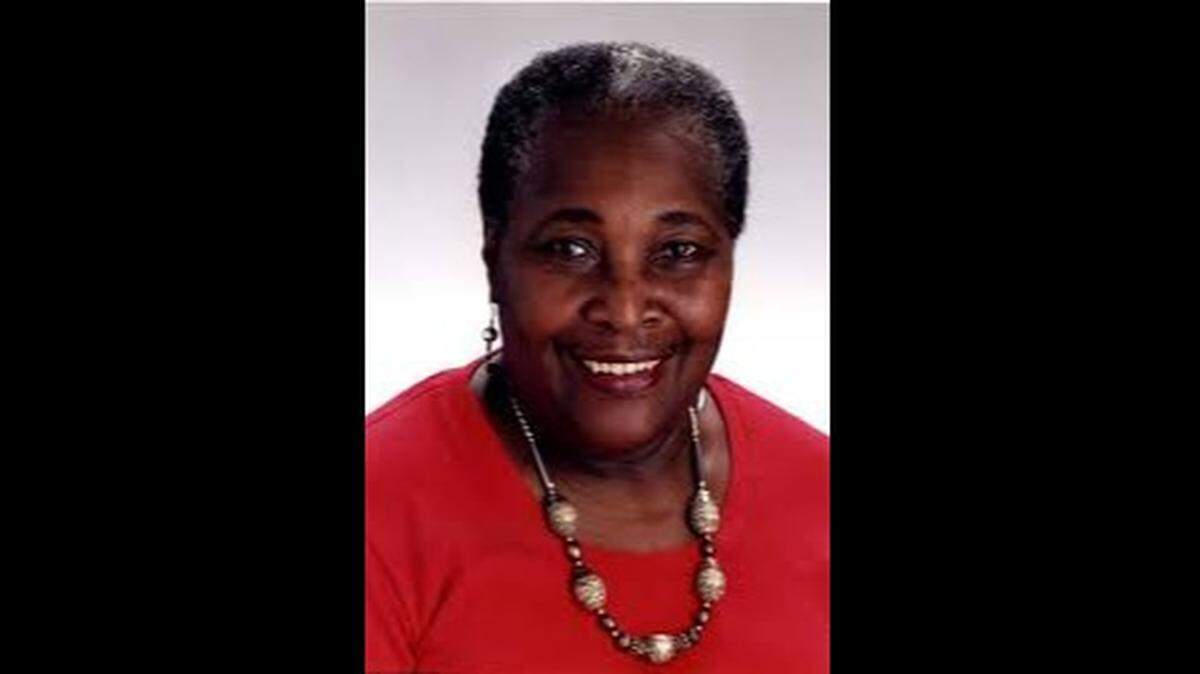
Through the halls of the University of Kansas Medical Center, Dr. Norge Jerome had the hard-earned reputation of a serious-minded, trailblazing rockstar, a researcher whose insights into the ties between nutrition and culture helped her create a new field of study taught in colleges across the world.
The Grenadian-born woman, though, was far less intimidating than her daunting resume, friends and colleagues recall. Her love of humankind — and of mentoring to those facing down the same obstacles she did — guided her life and work.
When Dr. Rosetta Robins joined the staff some 50 years ago as the director of student aid, she knew Jerome as a professor beloved by her students and revered by colleagues. She knew her, too, as one of the only other Black faces in a sea of mostly older, mostly white men, and the sole faculty member of color. Robins, then in her 20s, looked up to her.
They met for the first time in a chance encounter in a hallway, as Jerome enthusiastically told Robins she had heard she was here and had been meaning to say hello. Robins later sat down in her office for a proper meeting; her staff protectively hovered around her, admiration in their eyes. Mementos from her trips to different continents hung from the walls.
Jerome spent a lot more time with her in the coming years as they built a close friendship, advising her on navigating the bureaucracy of the medical field as a woman of color. She spoke often about her steadfast belief in women supporting women.
Robins, now a retired lawyer living in Kansas City, learned over time she was one of possibly hundreds of young women Jerome helped.
“She thought it was very important for females to have positive role models,” Robins said over the phone this week. “And she saw to do that.”
World’s first nutritional anthropologist
Jerome, whose distinction as the world’s first nutritional anthropologist meant less to her than her commitment to improving the lives of others through her charitable work and personal mentorship, died two months ago on Dec. 21 after years of gradually worsening dementia, family said. She was 91.
Her family noticed her condition was getting worse as Christmas crept closer so they decided to bump up their regular end-of-the-month Zoom call, inviting friends and relatives separated by oceans to say goodbye, according to Jerome’s 68-year-old niece, Jacinta Johnson. She died before the set time came around, inside the Village Shalom long-term care in Overland Park. They kept their planned call anyway so they could properly mourn the woman who touched all of their lives.
Growing up in the tiny and impoverished island nation of Grenada, Jerome was among the lucky few who were educated, and dreamt of harnessing her intellect to help people, said Johnson, who resides in Toronto.
She accomplished all she could have ever imagined and more.
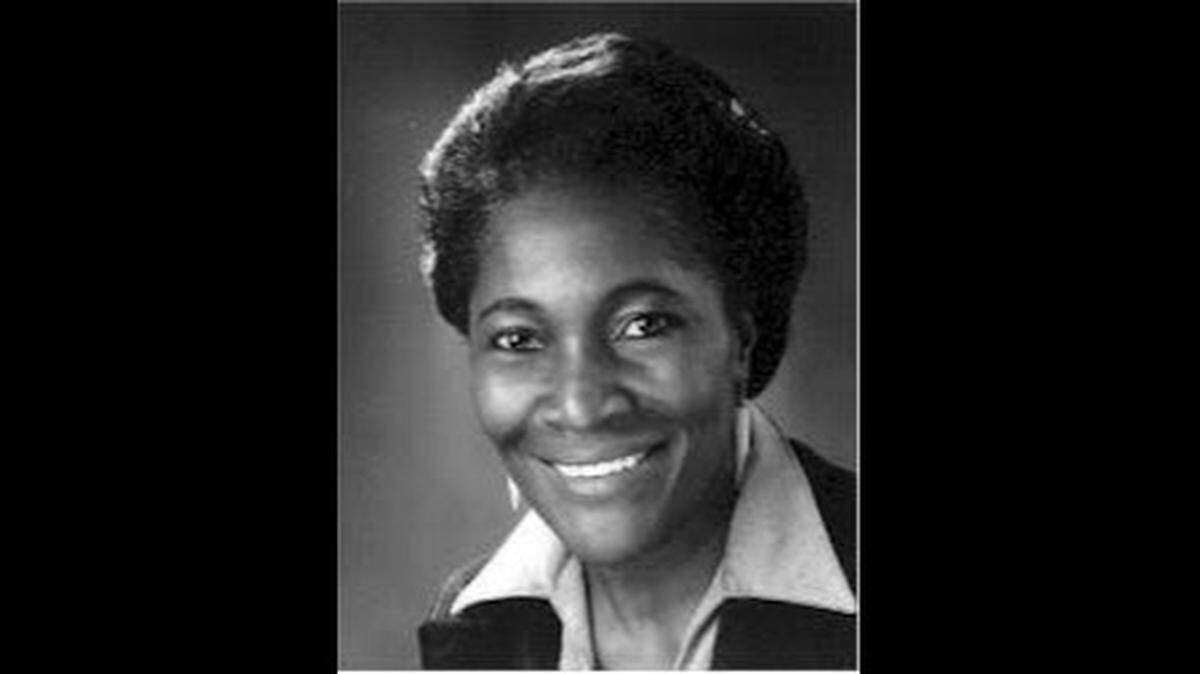
Jerome’s groundbreaking studies at the University of Wisconsin-Madison, where she first posited the idea that nutrition and anthropology could be studied in unison, led her to invent a new medical discipline and profession for herself. As a nutritional anthropologist, she authored a book, founded what is now known as the worldwide Council on Nutritional Anthropology and wrote research papers discussing everything from societal behaviors and dietary habits, to the struggle for civil rights. Those are now housed in UMKC’s LaBudde collection for historical preservation.
She was bestowed with various accolades over the years for her many contributions to society, like when the Starr Women’s Hall of Fame inducted her last year, or KU’s Department of Preventive Medicine and Health established a scholarship several years ago for graduating medical students in her name. She also was given the Higuchi Research Achievement Award from KU in the early 1980s, which Robins said meant a lot to her because she was the first-ever recipient — and a Black woman.
But loved ones say she felt proudest of her endless philanthropic work, helping out in places like her home country, where she started giving an annual award to four outstanding educators, and helped fund a library.
“She was very big on giving back,” Robins said. “I think really that dates back to her culture…the values and norms of the island that she grew up in in Grenada.”
Born in Mon Plaisir
She was born on November 3, 1930 in the small village of Mon Plaisir, and would be the eldest of six children, including her adopted sister. Her parents operated a small shop that was comparable to the neighborhood corner store, with groceries and toiletries and other items people might need. It was one of the few shops in town and a community gathering place.
Jerome’s father additionally ran a business where he bought people’s nutmeg, the island’s most profitable export, recounted Johnson. He was in a unique position to provide his daughter with an education, and she was such an outstanding student she got into St. Joseph’s Covenant boarding school, run by nuns.
The facility was located in the capital city of St. George’s, about 14 miles away. Like many of the out-of-town students, she lived with a family in the city during the week and returned home to her family on the weekends.
After she graduated at 16, she continued her academic pursuits at the school for several more years as an elementary teacher, and she also led programs at the Grenada YWCA. She was living in the city in 1955 when Hurricane Janet swept across their island, toppling homes and uprooting trees.
Jerome walked all the way back to her home to check on her family, stepping over branches and debris in the roads, unsure what awaited her.
“She had to climb over, go under, etcetera,” Johnson said. “That’s a story she never forgot.”
Her harrowing experience with the storm came just before good news in her life, getting the the opportunity to study at the University of the West Indies in Mona, Jamaica. She chased what she described as a “taste for scholarly activities” to the historically black Howard University in Washington, D.C., where she graduated magna cum laude and was excited she had maintained eight successive semesters of perfect 4.0’s. That had translated into eight tuition scholarships.
She moved on to the University of Wisconsin next, where she got her master’s in experimental foods and microbiology; then returned to Howard for a year to be a professor of nutrition and dietetics; then came back to Wisconsin to research international nutrition. An academic advisor suggested she add a minor, she picked anthropology and the rest is history.
Her desire in her research was to understand how the nutritional needs in different societies vary and break down cultural barriers, thinking back to her childhood when visiting doctors would bring in their own biases, family said.
‘Model of success’
When she joined the KU Medical Center faculty in 1956 to continue her academic journey, she was the “model of success” in her friend Robin’s eyes.
“She was not only respected as a scientist but she had the respect of her colleagues,” she said. “That says a lot for being in a male-oriented, male-dominated workplace.”
She carried herself with a smile and a confident strut, always well aware when she was the only Black person in a room but never letting it stop her from what she needed to do. She faced blatant discrimination at times, Robins said — when she moved from Wisconsin to Kansas City, a landlord refused to rent an apartment to her. She later secured a place after a white friend posed as the rentee.
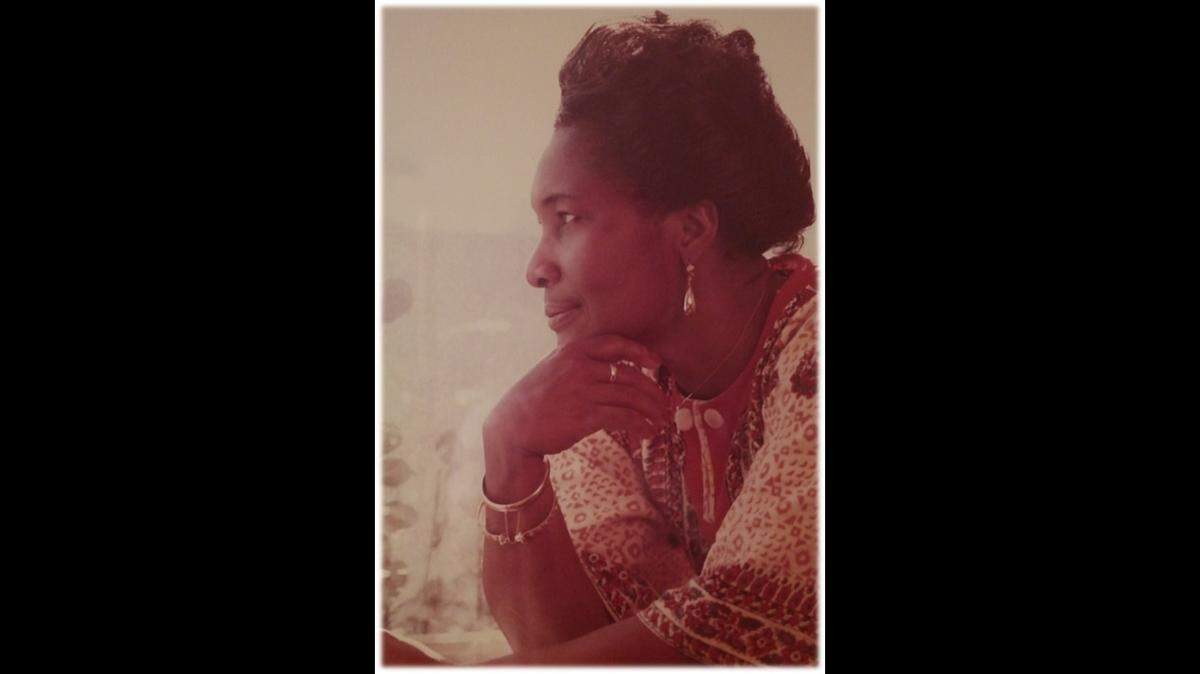
Those who grew to be friends with Jerome during her four decades at the KU Medical Center knew her as a perfectionist in everything she did but also a mischievously funny, laidback person. She admired fashion, dressing in clothing from her international travels, made from finely woven fabrics and filled with colorful criss-crossing patterns. She saw the Kansas City Symphony every month and was a regular at the Unicorn Theatre, where she later funded the Norge Jerome Stage.
Though she never married, she had an active social life, getting drinks with friends and sometimes jetting off with them to faraway places. She kept up with people regularly, even long after her retirement.
She and Johnson — the niece she was closest to — wrote letters back and forth for years, catching each other up on what they were doing and exchanging information about goings-on back in Grenada. The tradition dated back to when they were still living on the island and there was no electricity to make phone calls.
In the months before her death on Dec. 21, Johnson would send her letters reminding her of moments they shared together, trying to jog her waning memory. Her final letter, which Jerome never got a chance to read, described one year she came to Kansas City for Christmas. They went to the Plaza, strung up with lights, and had a nice meal.
Those are the kinds of memories she’s trying to think of instead of these past few years of decline.
One of her favorite stories ever is how Jerome paid for her tuition to go to college, learning about psychology and discovering she really wanted to be a social worker.
Her aunt’s one condition with her generous aid was simple: Pass it forward.
So she paid for another one of Jerome’s nieces to go to college.
“She liked to bring out the best in everyone,” Johnson said. “Because everyone has potential and they should use as much of that potential as possible.”
Other remembrances
Gilbert Smith Sr.
Gilbert Smith Sr., an Air Force veteran of 20 years who in his personal time enjoyed collecting comic books and volunteering his time to his church, died February 5, according to an obituary on the Thatcher’s Funeral Home website. He was 84.
He was born February 12, 1937, in Kansas City, Kansas, the first member of a family that would grow to include eight others. He went to city schools and at Lincoln High School was a member of the band and ROTC.
That sparked a desire to be a part of the military, and he enlisted in the U.S. Air Force.
Over the next several years, he became a father to eight children he had with three women, the obituary said. He was a devout Catholic at Our Lady and St. Rose Church, known for skillfully preparing the meals for ministry programs, the obituary said.
He also went to surrounding farms with the parish’s priest to harvest produce for their congregants, the obituary said, and volunteered at the Willa Gill Food Kitchen.
He’s survived by his wife of 47 years, Frances Smith; eight children, Severla Moye, Waverly Smith, Sharion Jones, Cheryl Holder, Gilbert Smith Jr., Franchiel Nyakatura, Harold Spencer and Marilyn Baker; three siblings, Catherine Hall, Gayle Jean and Dale Smith; 29 grandchildren; and several nieces and nephews.
Charles Wallace
Charles Wallace, a father of one and uncle with a reputation as the singing, wisdom-spouting pillar of the family, died February 4, according to a Watkins Heritage Chapel obituary. He was 64.
He was born on February 16, 1957, in Monroe, Louisiana. His family later moved to Kansas City, Missouri, where he went through school, the obituary said. He had his first and only child, Terry Taylor, in March 1976; he later married Lynn Renae Lenley.
His first career was at Kapell Fabrics, where he spent a decade, and then he worked for more than 20 years at Greenbrier Rail Services.
He was described in the obituary as a big fan of the Kansas City Chiefs, loving to watch the games with his loved ones. He additionally spent lots of time with his nieces and nephews and wouldn’t hesitate to share a life lesson, the obituary said.
But he had a sense of humor, too, and loved to play chess and cards as well as shoot pool.
He’s survived by his son, Taylor; sisters, Barbara Love, Elsie Wallace, Annette Davis and Shirley Reese; and several nieces and nephews.
Eunice Jones
Eunice Jones, a skilled hairdresser and loving mother who eventually became a beloved grandmother, great-grandmother and great-great-grandmother, died February 15, according to an obituary from Watkins Heritage Chapel. She was 89.
Born on August 17, 1932, in Muskogee, Oklahoma, she was the youngest in a family of 17. She went through school in Oklahoma before she moved to Kansas City, Missouri, in 1950.
It was there she met her husband of 65 years and had six children.
She attended Owens Beauty College and loved to cut hair, the obituary said. She also was known to cook, sew and sing, as well as spend hours on her puzzle books. She was famous for making what her family called “Eunie-burgers.”
She’s survived by her children, Cynthia Bradley, Constance Weber, Cheryl Jones, Thelma Anderson, Ronald Jones and Mavin Jones; eight grandchildren; 15 great-grandchildren; three great-great-grandchildren; and several nieces, nephews and cousins.
This story was originally published February 20, 2022 at 5:00 AM.