
Millage Gilbert, legendary Kansas City ‘downhome blues’ guitarist, dies at 83
Editor’s note: This feature is part of a weekly focus from The Star meant to highlight and remember the lives of Black Kansas Citians who have died.
When Millage Gilbert plucked the strings of a guitar with his right thumb, his left hand sliding across the fretboard — the two were in perfect harmony — you could hear his whole life.
There was a joyous influence of the Southern gospel of his childhood from Jackson, Mississippi, where he played the acoustic guitar alongside his older brothers in the church band, raising the spirit with hymns that shook the sanctuary.
The jaunty, toe-tapping and heavily improvisational blues of his second home in Kansas City, the midwest music hub that — in the 1960s — opened his eyes to the power of intimate, underground performances. The simmering jazz of the dimly lit clubs he frequented, first as a guest and then as a nightly performer.
It all gelled together into what he liked to call “downhome blues,” like the famous song by one of his idols, the singer Z.Z. Hill. But Gilbert didn’t play or perform quite like anybody else.
The week before Christmas 2021, he played to a standing-room only crowd at B.B.’s Lawnside Blues & Barbecue on East 85th Street, going through his own songs and riffing on classics by his favorite artists.
An employee at B.B.’s at one point loudly remarked they need to bring Gilbert back soon because of all the people who turn out to see him, his close friend and unofficial God-son, Clarence Logan, recalled. The crowd swayed and nodded their heads to the groove of the downhome blues.
“He related the Mississippi upbringing with the Kansas City upbringing,” Logan said during a phone conversation this week. “He was able to tie both of them together and sing about the blues.”
Less than a month later, Gilbert tested positive for COVID and, due in large part to underlying conditions like a history of kidney issues, became seriously ill, family said. He received the vaccine in the hospital but it was too late, Logan noted; he died on Jan. 16. He was 83.
His death leaves a hole in the Kansas City blues scene, as fans mourn the fedora-fitted figure who might not have been a household name but was known to all those who devotedly showed up to venues like B.B.’s, Danny’s Big Easy and Knuckleheads.
His family band, Millage Gilbert and the Down Home Blues Band, held regular Saturday matinee gigs for several years at two separate Kansas City institutions — The Grand Emporium, which closed in 2004, and the Forty2 Restaurant & Lounge. He opened up for artists he admired when they came through Kansas City, from Hill, to Bobby Bland, to perhaps his biggest inspiration, guitarist Albert King.
His music found its way into people’s homes and cars, too: His 1997 album, “3 Faces,” released by Red Hot Records, was a slow and sultry CD present in the lives of many Kansas City blues fans.
He released several uptempo and rocking tracks in 2016 as part of the collaborative album Kansas City Gold, laying down guitar riffs and lending the use of his deep, soulful singing voice. The project — available on Apple Music and Spotify — includes spoken word interludes in which Gilbert, then a man in his mid-70’s, ruminated on his life and on making art.
“When you get older, you’ll find that, OK, you wanna do something for yourself,” Gilbert says on album opener “Doing Something for Yourself.”
“Even though you’re doing something somebody else has done, you’re doing it your way.”
Millage Gilbert Jr., his 62-year-old son, said his father was inspired to make his own kind of music because he grew up with music around him, with a father and multiple older brothers who knew how to play the guitar before he could.
“He just got real good at it,” Millage Gilbert Jr. said. “He was doing the same thing they were doing except he learned to do it a little bit better.”
Born on May 24, 1938, and raised on a farm near Jackson, Gilbert was the youngest son in a family of 14, Millage Gilbert Jr. said. His grandfather and father could not only play the guitar but also the violin and the accordion. Gilbert often felt like he was bound to carry on a musical tradition. He says in the Kansas City Gold track “Three Generations of Guitar Players” that he felt born into it.
He got his first acoustic guitar at age five and would perform to popsicle sticks set out across his room, pretending they were a buzzing nighttime crowd, as if he knew then what he wanted to do with his life.
He later said, in a wide-ranging interview with Living Blues magazine, that his father played the blues for him when he was in the womb and he always felt like he somehow recognized it.
He never really learned how to play guitar, he said — he just picked one up and started to play.
Like his inspiration, Albert King, Gilbert liked to stick with one string and make as many notes as he could, his fingers moving up and down the fretboard. The effect, in his own words, was like “releasing a spirit,” making the note truly “mean somethin’,” according to the magazine article.
A lot of things in his life felt destined to be, like meeting his wife, Cora Lee Gilbert, as a young 20-something in Mississippi.
They had eight children together, and she was the one who pushed them to move to Kansas City in the ‘60s, Millage Gilbert Jr. said. She thought the schools would be better. The move changed Gilbert’s life, introducing him to hole-in-the-wall joints and lively streets that seemed familiar and where he found a musical community.
“When I was a child, he always had a day job,” Millage Gilbert Jr. said. “But he had gigs that he would do at night and on the weekends. So he was constantly busy.”
He worked as a maintenance technician for the University of Kansas Medical Center and Hilton Hotel corporation, always making time for shows. He started working in whatever clubs he could, crossing from Missouri into Kansas late at night because the clubs were open later, according to the Living Blues story.
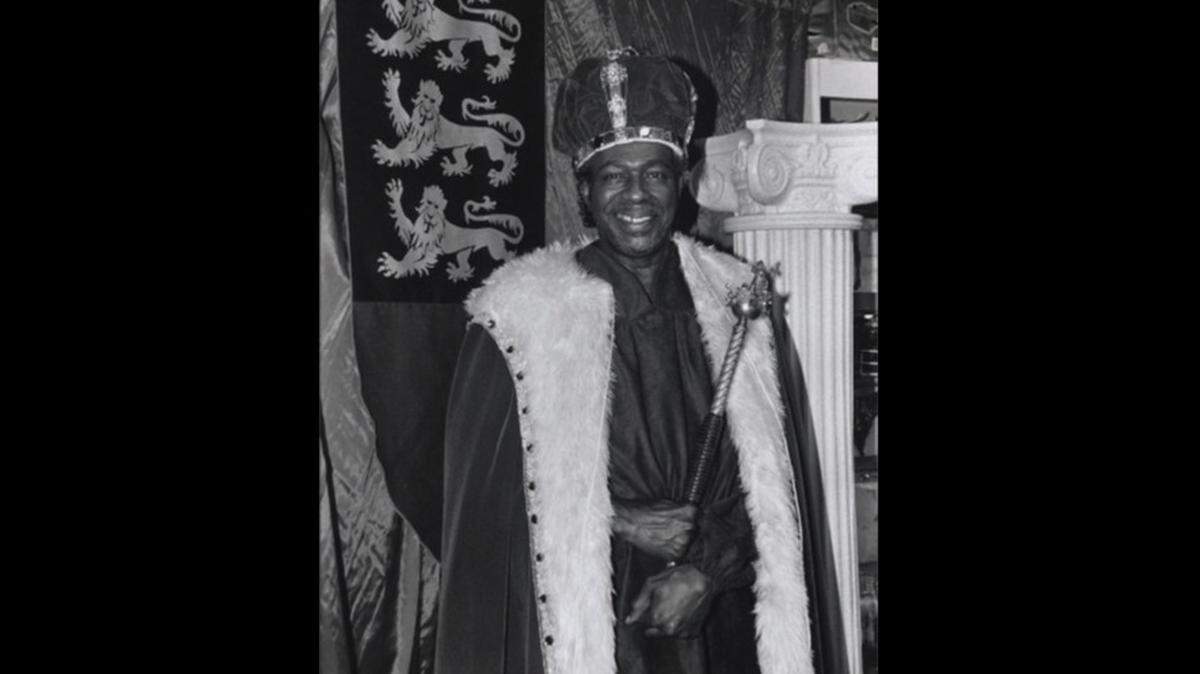
In 2004, he was crowned king of the Kansas City Street Blues Festival, an honor that meant a lot to him even though he believed he was nowhere near finished. It was amazing to Logan that, even in his older age, he could still work the room, never letting the crowd know exactly how old he was. He continued to have a standing engagement every week at the Ameristar Casino in North Kansas City.
“I didn’t know if everybody in the audience knew, but I knew what his age was,” Logan said. “And for him to perform and then fill the hearts of all the people that were there — I was just like, ‘Wow, boy.’”
The warmth and happiness he brought into his sets, family said, extended into his private life, too. He was a loving, and at times stern, father, forever preaching the importance of going to school and finishing the task at hand. His main catchphrase with family was one that could describe his own life: “Make it happen.”
In the days since his death, his family has remembered a man whose life was about much more than his music, even though the blues was the constant backdrop that helped him understand the world better.
It was more than fitting that, at the end of his funeral service on Tuesday, the Kansas City Blues Association played some of the classics he loved, like “A Change is Gonna Come” by Sam Cook and “Stoop Down Baby” by Chick Willis. They performed with the kind of loose energy and passion he was known for.
The crowd of masked mourners rose to their feet, stomping and clapping, as if it were one of Gilbert’s shows.
“He wouldn’t have wanted it any other way,” Logan said. “You don’t know how many times I was waiting for him to get up and start talking about down home blues.”
Other remembrances
Louvenia Trigg
Louvenia Trigg, a mother of two and computer specialist whose love of art and music shone through in her everyday life, died Jan. 17, her family said in an obituary, shared by the Watkins Heritage Chapel website. She was 63.
Trigg, known to family and friends as Vennie, was born on Sept. 19, 1958 in Kansas City. She went through school in her hometown and decided, as an adult, she never wanted to leave.
She worked for more than 30 years as a computer specialist and graphic artist, according to the obituary, and was also an artist skilled at knitting, sewing and crocheting. She loved to dance and go to live music shows, especially those of her brother, who was in a rock band. She was his self-professed biggest fan.
She had two sons and later became a grandmother to five.
She’s survived by her parents, Robert Trigg and Elzadie Trigg; sons, Sergio Trigg and Cedrick Trigg-Diamparo; siblings, Sandra Wilson and William Trigg; and nieces, nephews and cousins.
Robert Smith
Robert Smith, a father of two who made a childhood dream come true by becoming a long-distance truck driver, died Jan. 14, family said in an obituary on the E.S. Eley & Sons Funeral Chapel website. He was 63.
Born on Dec. 14, 1958 in New Edinburg, Arkansas, he moved to Kansas City during his childhood, according to the obituary. He graduated from Paseo High School and went on to attend Manual Career & Technical Center, studying to become a diesel mechanic.
He married Antonia “Toni” Smith on April 30, 1994. They had two daughters together.
Though his work was one of his biggest passions, he had a love for roller skating and bowling, family said. He also liked to watch movies, especially action and cowboy flicks. He possessed what his family described as a goofy personality.
He was known to be respectful of others and was the kind of person who never met a stranger, family said.
He’s survived by his wife, Smith; daughters, Shayla and Shyneice; father, Lee Edward Smith; brother, Lee Anothy Smith; sister, Ruthie Purdie; two grandchildren; a niece; and several other relatives.
Rhonda Willoughby
Rhonda Willoughby, a mother of two and devout Christian who worked in the large-scale production of food, died on Jan. 20, family said in a Serenity Funeral Home obituary. She was 56.
Born on Jan. 21, 1965, she was the sixth child of eight in her family. She grew up in Kansas City, Kansas, attending Frank Rushton Elementary School and the Sumner Academy of Arts & Sciences, according to her obituary. She later went to the University of Kansas and then Penn Valley Community College, where she got her degree in natural sciences.
As she pursued a career in the field of food production, she married Arnell Willoughby in 1989; within one year, they had a son together. Eleven years later, they had a daughter.
She spent some time working as a chemical technician at Farmland Industries and most recently was employed by Smithfield Foods. She was promoted to laboratory compliance supervisor shortly before her death.
She was described by family as a dedicated member of the Love Fellowship church who became an avid reader of the Bible, ready to share scriptures with others at a moment’s notice.
She’s survived by her mother, Carol Allen; children, Demetrius Willoughby and Kennedy Hoy; sisters, Carla Martin, Carol Hamilton, Linda Hamilton, Rochelle Robinson, Bonnie Hamilton and Cherita Brown; brothers, Ronald Hamilton, Roy Hamilton and Leon Brown; and several nieces and nephews.