
Bicentennial of Santa Fe Trail? Yes, if you ignore the history, KC area experts say
On Sept. 1, 1821, William Becknell set out from Franklin, Missouri, to Santa Fe, New Mexico, with five other men. That journey has gone down in most histories as the opening of the 870-mile-long Santa Fe Trail.
Happy 200th birthday, Santa Fe Trail? Well, not quite, a growing number of historians are quick to point out. For while Becknell has been called the father of the Santa Fe Trail, Mexicans and Spaniards had been trading along the route for decades. And American Indians had been using it for millennia.
So while historians prepare for Santa Fe Trail bicentennial events, and the premiere of a new public television documentary, “commemorating” is the operative word, not “celebrating.”
“If we ‘celebrate’ we might be just having a party, but if we ‘commemorate,’ we take the time to dig in and understand the nuances of history, the complexity of the interactions along the trail,” said Frances Levine, president of the Missouri Historical Society in St. Louis.
By 1821, Becknell had racked up a lot of debt and was facing prison time. He’d heard a rumor that Mexico was fighting for independence from Spain, which, if they succeeded, would mean the end of Spanish trade restrictions. He thought he’d cash in.
In June of that year, he placed a help wanted ad in the Missouri Intelligencer that said he’d be going “to the westward for the purpose of trading for horses and mules and catching wild animals of every description that we may think advantageous.”
He and the five men who answered his call turned the hoped-for profit and returned to Missouri to spread the word that Mexico — then the vast area south of the Arkansas River — was open for trade after 300 years of Spain controlling the region’s commerce.
“Saying that Becknell is the father of the Santa Fe Trail gives him a little more oomph, a little more emphasis in history,” Levine said. However, “People had been trying from the Missouri side … to trade with Spain long before the Santa Fe Trail.”
Levine makes that point in filmmaker Dave Kendall’s new documentary, “The Road to Santa Fe: A Convergence of Cultures,” set to premiere at 8 p.m. Sept. 24 on Kansas City PBS and later on other public TV stations. She pointed out that journals of explorers like Hernando de Soto and Francisco Vasquez de Coronado note the existence of ancient, native trade routes; they were nothing new in 1821, the year Missouri became a state and Mexico gained its independence.
But what sets the Santa Fe Trail apart from, say the Oregon Trail or the California Road, was that, initially, its primary purpose for Americans was trade.
“The Santa Fe Trail was America’s first great international commercial highway, and it remained so for the 60 years until railroads reached Santa Fe,” said Larry Short of Independence, president of the national Santa Fe Trail Association.
The way it worked was that merchants in eastern states would ship goods manufactured in Europe or America by riverboat as far west as they could.
“There’s a lot of debate about where the Santa Fe Trail starts, and I’m going to say that you have to look all the way back to the Mississippi River — to the confluence of the Mississippi and the Missouri, and that’s where it starts,” Levine said in “The Road to Santa Fe.”
She cites historic photographs of goods piled high — coffee, furniture, food, textiles — on the levee waiting to be loaded onto westward-bound St. Louis-made wagons.
To see the types of goods the steamboats carried, Short suggested visiting the Steamboat Arabia Museum in the City Market.
“Some of the goods that were on the Arabia would have been offloaded for the trip to Santa Fe before it headed on upriver and sank near Parkville,” he said.
But because the goal was to go as far west by boat as possible, the more commonly mentioned starting points are Independence and Westport Landing.
Short explained, “Westport Landing was at the base of Grand just north of the River Market area today. All the rail lines run along that area now. That was the takeoff point, the supply point, and everything, after about 1843, for all the traders and everything.”
He described the route through a cut in the bluff headed south toward where Crown Center is today, at which point the path went southwest to Main Street, then south toward Westport. The path has a trail marker between the National WWI Museum and Memorial and the Federal Reserve Bank.
It was the development of the trails that made Kansas City what it is today, including an early multicultural center in the Midwest.
Mexican traders who had been sending their children to school in Spain or on the East Coast began to instead educate them in Kansas City. The influence and importance of those Mexican traders’ use of the trail is often underplayed or overlooked altogether, said educator and diversity consultant Gene Chavez.
It was the “capitalistas,” he said, “in Mexico who had the financial resources to purchase those goods and to bring them to their distribution networks throughout the Camino Real.”
Leo Oliva of Hays, Kansas, has studied the Santa Fe Trail since 1959. He said people “have a tendency to think that the Americans just dominated.” Indigenous people and Mexicans have been left out of the story.
But this was not a one-way trail, and the Americans didn’t dominate trade; that’s part of the story he and Chavez want to tell at 200 years.
“We need to better understand the diversity of the United States, and this trail shows the diversity all the way along. We’ve got three cultures involved from the beginning to the end of the trail,” Oliva said.
Though Indigenous people participated in the trade along the trail, it was they who suffered from it the most.
After 1830, 25 eastern tribes were sent to reservations in Kansas, some of which are along the trail, said Mark Brooks, the site administrator for the Kansas Historical Society’s Kaw Mission and Last Chance Store Museums on the Santa Fe Trail in Council Grove, Kansas. The trail ran right through the Kanzaa reservation, he said.
Members of the tribes wanted European goods, but their culture had different ideas on how to procure them. For instance, Brooks said that when tribes had a surplus of a useful item like potatoes, they’d share with those around them.
So, when members of tribes saw what appeared to be a surplus of goods traveling along the trail, they expected the traders to share as well. Brooks said this cultural disconnect led to a stereotype of the Native Americans being beggars.
Similarly, when white travelers didn’t see them cultivating large farms, they labeled them lazy.
“The Santa Fe Trail brought wondrous things for the United States and Mexico, but for the Indigenous people,” Brooks said, “it really didn’t help them at all. In fact, it hurt them greatly. It basically opened the door for more things to happen.”
By “more things” Brooks means westward expansion, the loss of more territory, and eventually the transcontinental railroad, which caused both the demise of the trail and life as the native people had known it for millennia.
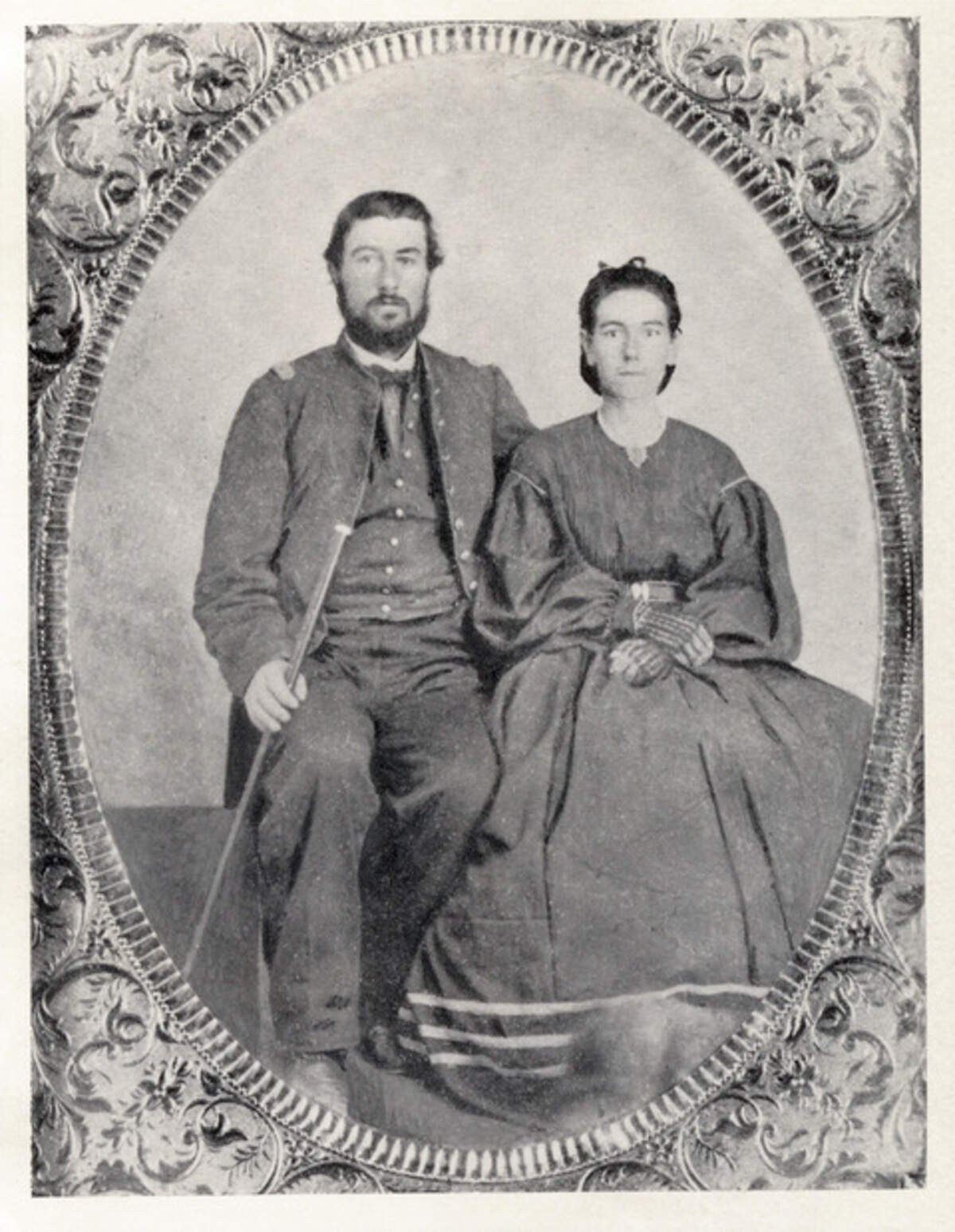
In “The Road to Santa Fe,” Oliva explains that as the railroad moved farther west, so did the starting point of the trail.
As late as 1865, that point remained Fort Leavenworth and Westport, then in 1866 it was Junction City. The railroad reached Hays in 1867.
Economically speaking, rail shipment was by far a better option than the combination of steamboat and wagon. Oliva calculated that to ship 50 tons of goods over 600 miles in 1865 would have cost $840 and taken 40 days by wagon. The exact same shipment would have cost $181 and taken three days by rail.
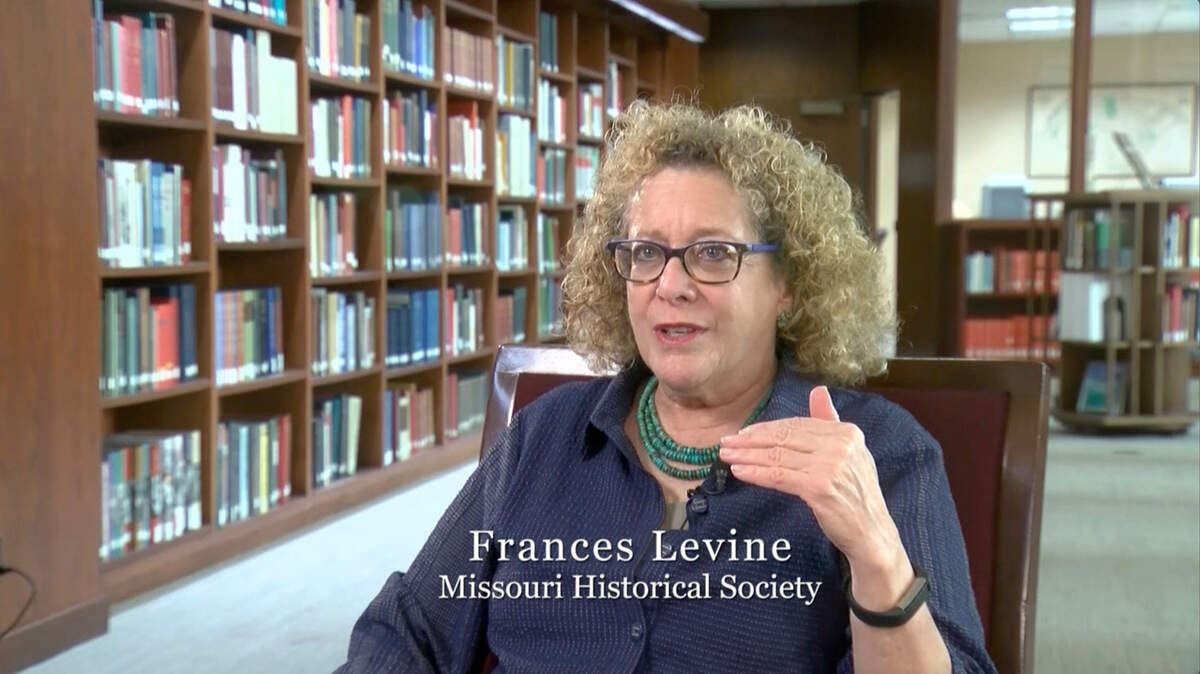
Levine of the Missouri Historical Society said in the film that the significance of the trail is the unique perspective it offers on American history.
“You’re joining the rich tribal histories of the West with that immigrant history of the middle of the nation, and that’s the crucible of change,” she said. “That is a fabulous perspective on how this country developed.”
Events
A number of events are planned for the Santa Fe Trail bicentennial. See SantaFeTrail200.org and click “events.” Coming up locally:
▪ Festival of the Trails, 8 a.m.-8 p.m. Sept. 11, multiple venues in Raytown (free).
▪ A festival with displays, speakers and music, 10 a.m. to 4 p.m. Sept. 18 at the Trailside Center, 9901 Holmes Road. 816-942-3581
Visit the history
Any place along the trail is a good starting place, but experts suggest these spots in particular to learn more about the Santa Fe Trail.
In the Kansas City area:
- The Arabia Steamboat Museum in the City Market.
- Westport: Look for historical markers throughout the district.
- The National Frontier Trails Museum in Independence.
- Old Town Independence
- The Savoy Grill downtown. Inside what was once a hotel, murals portray pioneers heading west.
- Wieduwilt Swales, at 85th Street and Manchester Avenue, offers the area’s most prominent swales, wagon wheel ruts from the Santa Fe, Oregon and California trails.
- Red Bridge in Minor Park, at Red Bridge and Holmes roads, offers trail murals and swales.
Fort Osage National Historic Landmark in Sibley in Jackson County.
Outside Kansas City:
- Council Grove, Kansas
- Arrow Rock, Missouri