
Hundreds walk on Troost to promote unity along Kansas City’s historic racial divide
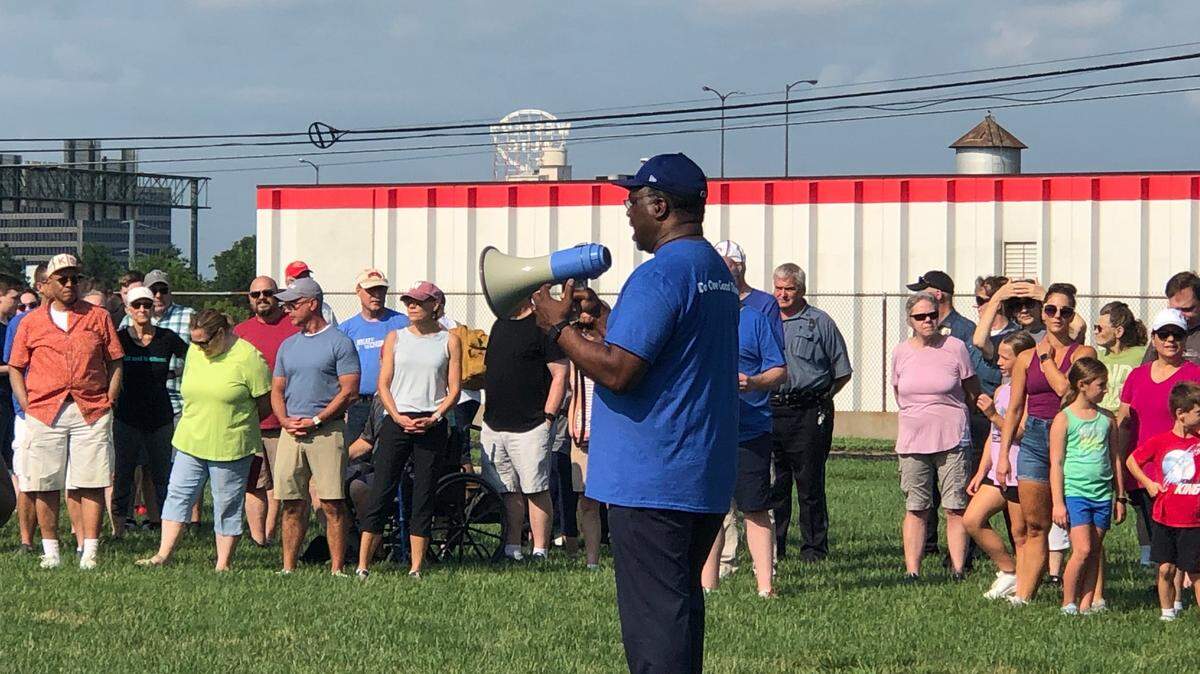
Hundreds of Kansas Citians walked along Troost Avenue, long known as Kansas City’s dividing line, to symbolize the segregation embedded in the history of the metro.
The Unite KC Walk for Unity on Saturday morning drew a diverse crowd of roughly 500 participants aiming to heal the city through community and spirituality.
The crowd’s path led them primarily down Troost Avenue, the route symbolizing the split between East and West Kansas City — a historically entrenched divide. They then headed East to the Kansas City MLB Urban Youth Academy.
Troost Avenue is named after a Dutch physician who owned six slaves. It is also the site of the Porter Plantation, where between 40 to 100 people were enslaved near the intersection at 31st Street.
Once a place where wealthy families flocked, the area was later the target of restrictive covenants in the early 20th century that drew a distinct line of separation — forbidding Black residents from buying homes in certain neighborhoods to the West.
Ray Jarrett, the executive director of Unite KC, which aims to heal racial divides in Kansas City using faith and community-building, said the gap is clear in the city’s institutions.
Years ago, a bank denied Jarrett’s request for a business loan, he said. Yet, it approved a loan for his white business partner, who applied using the same metrics.
“If you look at the everyday lives of Black people here in our city, there is a clear gap in education, there’s a clear gap in wealth,” Jarrett told The Star. “Opportunities are not equal across the board.”
Unite KC started last year when Dayton Moore, general manager of the Kansas City Royals, brought together faith leaders from 11 different industries to try to dismantle racial division in the city. They came up with the Walk for Unity to bring together residents from both sides of Troost and beyond.
“I’m passionate about letting people know that it’s a faith-based movement,” Jarrett said. “We’re commanded to love everybody.”
Organizers encouraged participants to meet new people and passed out cards with a list of conversation starters like “Where can you find the best BBQ in Kansas City?”
Multiple Johnson County residents, including Robin Gaona of Olathe, expressed their desire to escape what she called the “Johnson County bubble” and develop relationships with people outside their immediate community.
“I wanted to get out and experience life outside of that bubble,” she said. “We’re very spoiled and have different views of the world up there. It’s not always accurate.”
Volunteers outside the Youth Academy served free water, coffee and snow cones to attendees. Other booths included a coloring station for kids and a COVID-19 vaccine station offering shots of Pfizer and Moderna.
Dozens of participants wore blue Unite KC shirts with “do one good thing” written on the back.