
On The Vine: #VaxThatThangUp

I have a lot of issues with sports: the aspect of ownership, the way Black players are treated as property over people, and fans’ actions that often misconstrue the idea that players owe them something; that they are entitled to behave poorly, often with racism on full display.
I unabashedly love the Olympics because it was devoid of any of that. Maybe I’m naive, but I don’t think so.
The Olympics has, for me, always been an escape; a worldwide event that you could point to and say, “despite whatever hell is going on in my country, my people will persevere. My people will demonstrate. My people will show out.”
The Olympics have always been political — Jesse, Tommie and John taught me that. It’d be naive to think otherwise.
But the athletes were never hampered by the constraints of a (probably) white male owner. It was bigger than that, deeper than that.
When Sha’Carri Richardson runs, bright blue or orange hair fantastically keeping pace, I’m not simply cheering for the flag on her chest. I’m cheering for everything she represents and has overcome often in spite of that flag.
The International Olympic Committee’s (continued) rule — and then halfhearted walking back — to not allow Olympic athletes to visibly support, for example, Black Lives Matter, or to take part in displays of protest within the field of play and medal ceremonies is disheartening to say the least.
See also: Fact Check-All political demonstrations are banned under Olympic rules
But it’ll only make me cheer that much more.
Around the block
Two years after provoking outrage, changes coming to Jackson County property taxes
In 2019, the American Civil Liberties Union sued Jackson County, Missouri, on behalf of four Kansas City neighborhood associations — predominantly Black; historically underrepresented. The lawsuit accused the county of violating the federal Fair Housing Act and unfairly treating Black and Hispanic neighborhoods when it came to reassessing the value of homes in area for property tax purposes.
A judge dismissed the suit in November. However, this year — partly because of the pandemic, but also in an effort to make sure folks are paying a fair share — Jackson County made conservative estimates for property taxes.
The Star’s Cortlynn Stark reports:
Eloise Franklin-Magitt, 71, was behind on her property tax payments a few years ago and, if not for her children, she said, she feared losing her home...
Home ownership is key to building generational wealth, especially among Black families who have long faced systemic barriers — such as racially restrictive covenants, redlining and segregation.
Black people own homes at the lowest rate of any race in the United States at 45.1%, according to Census data from 2021’s first quarter. That compares to white Americans at 73.8%, Hispanic Americans at 49.3% and those including Asian, American Indian, and Pacific Islander at 57.1%.
A study published in June 2020 by the Washington Center for Equitable Growth, found that Black and Hispanic homeowners faced a 10%-13% higher tax burden. It also found that the outcomes of homeowners’ appeals vary by race.
In case you missed it...
Staff at Kansas City college say dating policy requires they out themselves
‘Ghetto,’ ‘boy’: former Kansas City VA employee files race discrimination lawsuit
History lesson plaque added to downtown Kansas City’s Andrew Jackson statue
Kansas City area birth center closes, limiting options for women of color, moms in need
The importance of Kansas City’s LGBTQ haunts, bars and fighting for safe havens for all
Kansas City gay bars have been a part of the city’s culture since they began gaining visibility in the late ‘50s and early ‘60s — a regional refuge.
When the pandemic hit, forcing gays bars across the country to cut off the lights — some for good — the importance of Kansas City’s LGBTQ scene, a haven also for surrounding rural regions, became more apparent.
Anna Spoerre writes for The Star:
Hamburger Mary’s is where Silas Gardner felt safe and seen. It’s where he felt like himself. Where, more than a year earlier, he came out as transgender.
Gardner began the process of transitioning in 2019, about six months later he came out. Roughly half a year after that, coronavirus began creeping into headlines.
“Without Mary’s I would have never transitioned,” Gardner said. “And I think a lot of people wouldn’t have either. So when the pandemic hit, it was, ‘where do you go from there?’”...
According to the Trevor Project’s 2021 National Survey on LGBTQ Youth Mental Health, more than 80% of the youth surveyed said COVID-19 made their living situation more stressful; 42% considered suicide.
Beyond the block
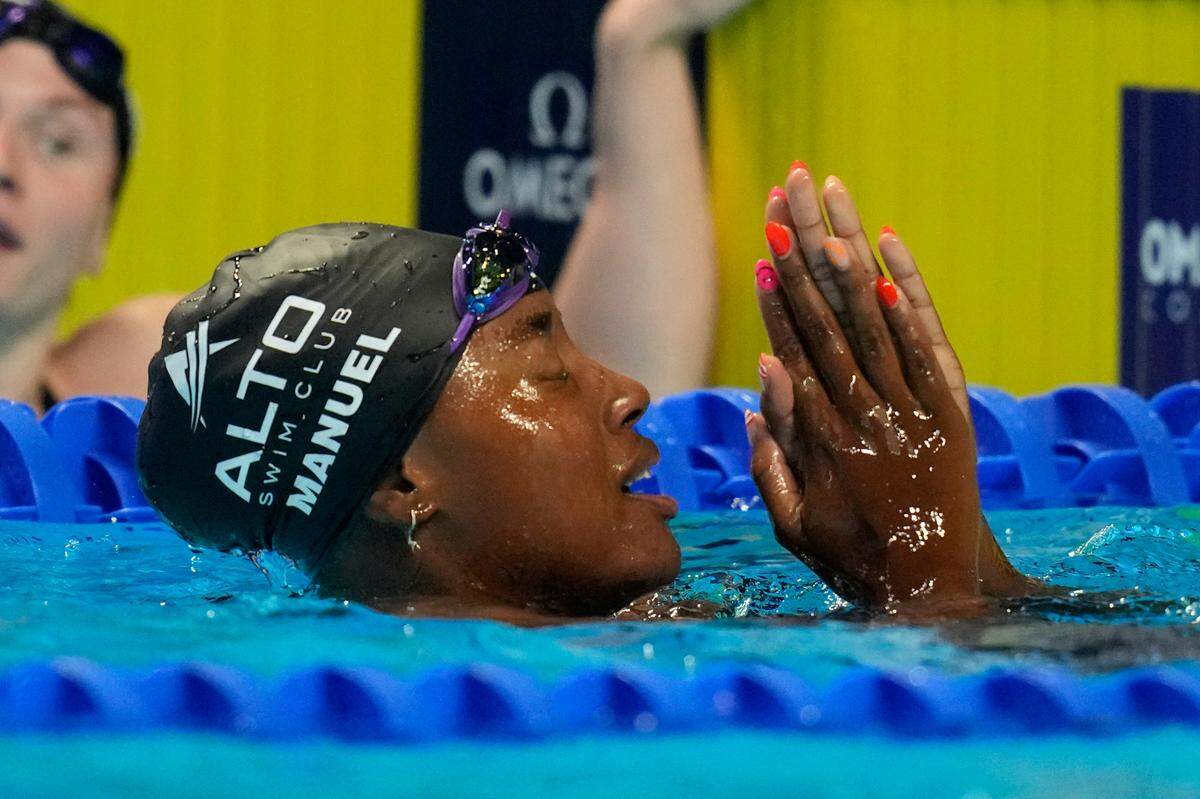
Swim caps for thick, curly hair not allowed at Olympics
In 2016, at the Olympics in Rio, Simone Manuel (pictured) became the first Black woman to take home an individual gold medal in swimming — she actually won two gold and two silver medals.
In 2021, at the Olympics in Tokyo, where Alice Dearing is set to become the first Black woman to represent Great Britain in swimming, the sport’s governing body has banned swim caps designed to accommodate Black and voluminous hair in an effort to make swimming more inclusive. The 24-year-old Dearing, whom I will certainly be rooting for now, is an ambassador for the swim cap brand Soul Cap.
The International Swimming Federation said last week it was barring swimmers from wearing the caps because they did not “following the natural form of the head,” and that that to their “best knowledge, the athletes competing at the international events never used, neither require to use, caps of such size and configuration.”
[Insert favorite “Are you kidding?!” GIF here]
The backlash was shift and (deservingly) sharp, so much so that FINA announced it would revisit its decision, while also reiterating, I guess, “There is no restriction on ‘Soul Cap’ swim caps for recreational and teaching purposes.”
Thanks but, you already did the racist thing.
Check this out...
Hours After Haiti’s President Is Assassinated, 4 Suspects Are Killed and 2 Arrested
‘Everyone is panicked’: Even the doctors and nurses in Haiti have yet to be vaccinated for Covid
Ohio Allows Doctors to Deny LGBTQ Health Care on Moral Grounds
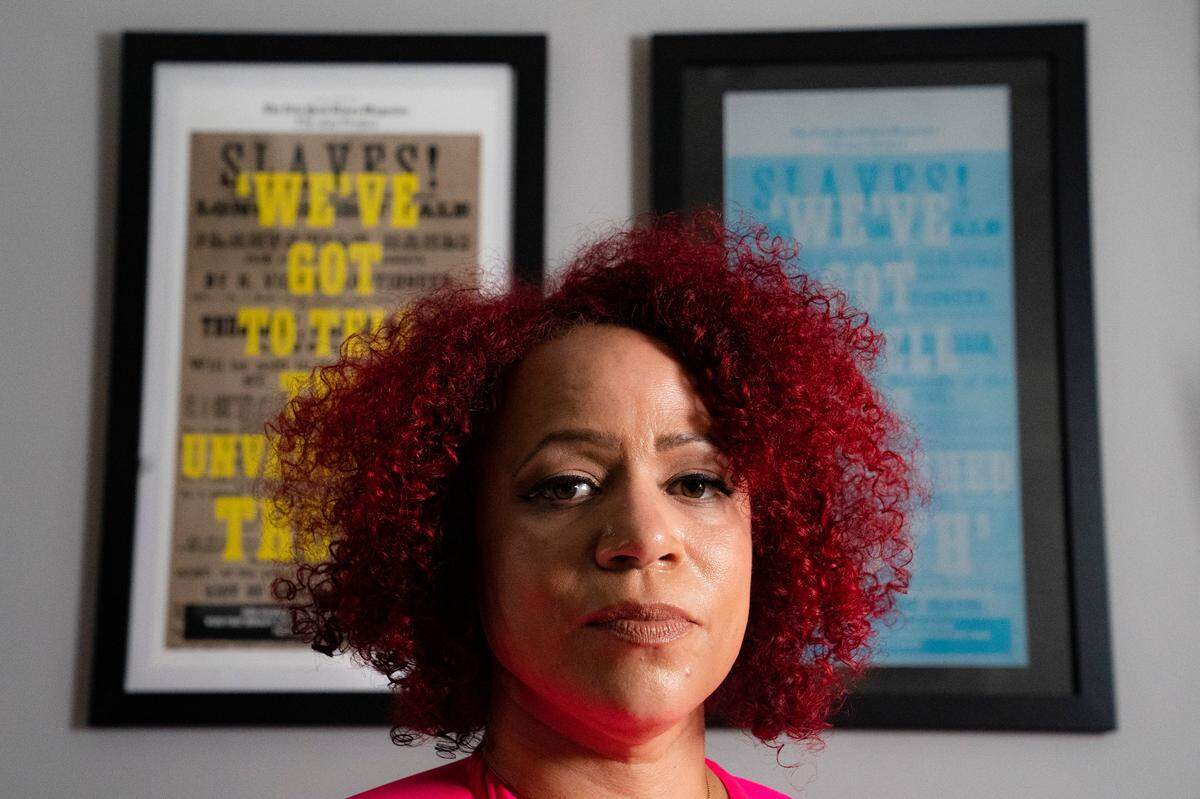
Nikole Hannah-Jones will join Howard University instead of the University of North Carolina
It was announced this week that Nikole Hannah-Jones, the Pulitzer Prize winning journalist for her work on the New York Times 1619 Project examining the legacy of slavery, would join the faculty at Howard University to help educate the next generation of Black journalists.
This, after a prolonged — I guess we’ll call it — fight at the University of North Carolina over Hannah-Jones’ deserved tenure.
The New York Times wrote in May:
Nikole Hannah-Jones, a Pulitzer Prize-winning writer for The New York Times Magazine, was denied a tenured position at the University of North Carolina after the university’s board of trustees took the highly unusual step of failing to approve the journalism department’s recommendation.
The decision drew criticism from faculty members on Wednesday, who said that the last two people in the position Ms. Hannah-Jones will hold were granted tenure upon their appointment...
The hiring of Ms. Hannah-Jones, who earned a master’s degree from the university in 2003 and a MacArthur fellowship in 2017, brought a backlash from conservative groups concerned about her involvement in The Times Magazine’s 1619 Project, which was named for the year that slavery began in the colonies that would become the United States. (Ms. Hannah-Jones won the 2020 Pulitzer Prize for commentary for her introductory essay.)
The 1619 Project ignited a continuing debate about the legacy of slavery, but has faced criticism from some historians over certain claims, and from conservatives who have labeled it “propaganda.” The Republican-controlled North Carolina Legislature appoints the university system’s Board of Governors, which has significant control over the university’s board of trustees.
For the culture

“Vax That Thang Up”
For the last 25 years, the undisputed song of the summer has been Mark Morrison’s singular classic “Return of the Mack.” This week it was dethroned.
Juvenile, backed by Mannie Fresh and Mia X — a sentence fragment that gives me immediate early 2000s flashbacks — released “Vax That Thang Up,” a remix to his 1999 banger “Back That Thang Up,” and the best remix since Ja Rule demanded that Jennifer Lopez spell for him his name on the “I’m Real” remix.
Everything about it is absolutely perfect.
The song and video is an ad for the Black dating app BLK, but to be honest, no one cares about that — though whoever came up with that deserves a raise for each booty shake in the video. The song, the video; chef’s kiss. It is now the song of the summer. Period.
“Girl you look good won’t you vax that thang up/You a handsome young brother won’t you vax that thang up,” Juvenile drawls, tossing CDC vaccination cards in the air like it’s an Atlanta strip club and the year is 2002.
“I just wanted to do something positive for my people and to stand in the front to show that I’m willing to sacrifice my life not just for me but also for my family,” Juvenile said in a statement. “We don’t know what we’re facing right now, but we really do all need to be vaccinated so we can continue to do our thing and survive.”
I love us.
Stay hot; get vaxxed
Did someone forward this newsletter to you? You can sign-up here. If you’d prefer to unsubscribe from this newsletter, you can do so at any time using the “Unsubscribe” link at the bottom of this message.
This story was originally published July 8, 2021 at 2:31 PM.