
More wild foxes roaming in Kansas City area neighborhoods. Here’s what you should do
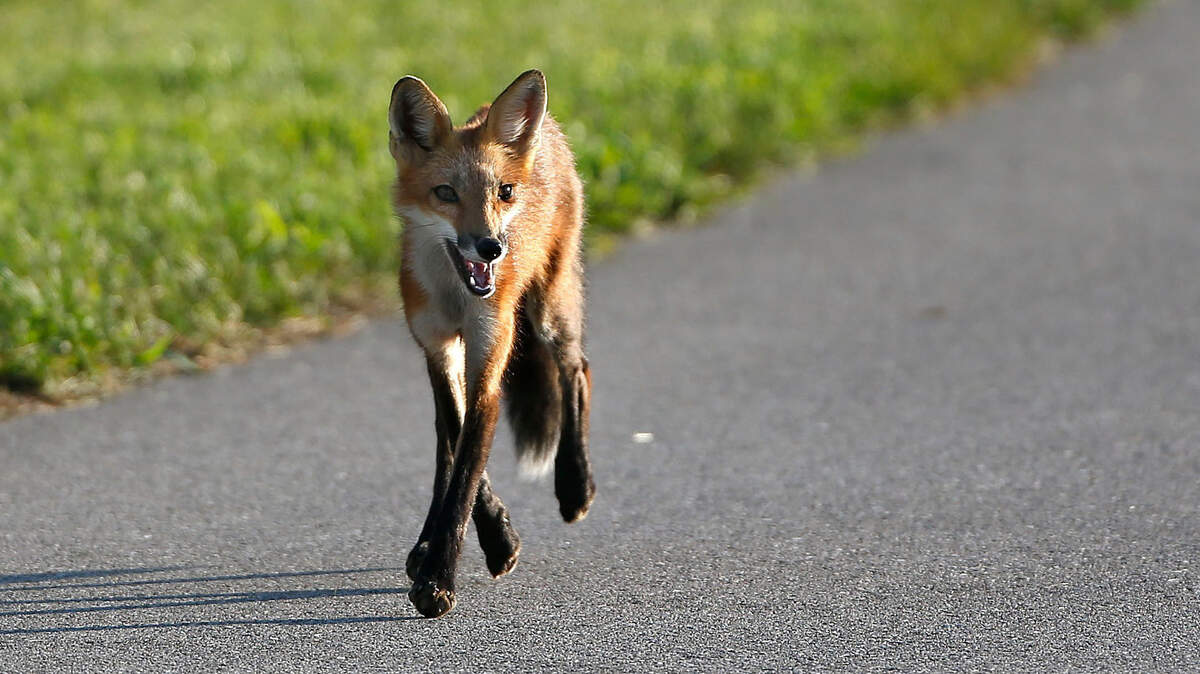
In the middle of the night, Liesl Christman woke up to screaming from her Shawnee backyard.
At first she thought the cry came from a woman or child, but she soon realized she had heard it before. The noise wasn’t human; rather, it came from a fox.
Such sightings are becoming more common in the Kansas City area as development encroaches on foxes’ habitats, experts say.
Kansas City metro residents have spotted foxes in parks, storm drains, backyards and on the street. Diane Johnson, the executive director of Operation Wildlife, a publicly funded clinic and wildlife rehabilitation service in Kansas, has heard of foxes stealing pet toys and shoes from yards, playing with deer, elk and raccoons and eating side-by-side with cats.
“I think they’re cool animals,” Johnson said. “The main thing is getting people past the fear of, ‘Oh my God, I saw a fox. It’s going to kill everything in the neighborhood.’”
Why are they here?
Jacque Blessington, interim director at Lakeside Nature Center in Swope Park, knows why we’re seeing more foxes.
“Every time we as humans deconstruct a wild area to build homes, it forces animals out,” said Blessington. “That’s temporary though. Once everything gets re-established, animals move back into the space because there aren’t all these other places where animals can go live.”
Foxes survive in human areas partly because they can feast on compost piles, garbage and pet food left outside. Urban environments also offer natural prey like birds, eggs, rabbits, mice and other small rodents.
“Our yards provide habitat for things that foxes eat,” said Juju Wellemeyer, an agent at K-State Research and Extension in Johnson County. “That naturally just attracts the predators that are going to target those prey items.”
Foxes’ small size lets them rear their young and build dens in little pockets of nature — or man-made structures. Laurie Dack of Overland Park has spotted foxes in window wells, under houses and in the middle of the street. Christman regularly sees a fox pop in and out of a storm drain as she drives by.
“I was out visiting with my neighbor, and in the middle of the street sunning themselves are six foxes,” Dack said. “If you’re on the sidewalk there might be one following you.”
A “Wilshire Fox” Facebook account, created by an Overland Park resident, posts pictures of foxes in the Wilshire Farms neighborhood group. One photo shows a fox strutting across the grass with the caption, “feeling foxy, might delete later, IDK.” A similar “Wilshire Babyfox” profile lists its job title as “Help Mommy Hunt.”
Will they eat my pets?
Foxes don’t seek out cats and dogs as prey. Similar to coyotes, they like to eat rabbit-sized and smaller animals.
“They’re pretty social animals,” said Johnson. “They might take the cat, play with the cat, but they’re not looking at the cat as food.”
Johnson had a fox den under her shed that sheltered a vixen — a female fox — and her six pups. The foxes and her 10 outdoor cats coexisted without any issues. Her toddler daughter sometimes even crawled within 15 feet of the den. The foxes didn’t mind.
“We never lost a cat. We liked her being there because she actually caught and killed more rats to feed her babies than the barn cats,” she said.
Foxes are about the same size as cats but look larger because of their long fur. Wellemeyer still recommends that pet owners leave their dogs and cats inside if a fox is roaming the property.
“Our pets are curious, so you wouldn’t want them to accidentally corner a fox,” Wellemeyer said. “So just letting the fox have their space and observing from a safe distance or from your window.”
Blessington also recommends keeping an eye on small dogs.
“If they have small dogs, then don’t (let) them out alone,” she said. “Take them on a leash or go out with them in the backyard or front yard.”
Foxes tend to hunt more when they have pups to feed. As the pups grow older, the vixen will take them with her to hunt. Foxes become the greatest threat to pets when they don’t have enough food.
“When there is a lack of food sources then animals become more opportunistic, but you also have to look at what is a natural prey species,” Blessington said.
What if they’re in my yard?
Foxes pose little safety risk to humans aside from rare rabies cases. However, humans pose great risk to foxes. The Lakeside Nature Center regularly treats foxes that have been hit by cars.
“They’re just trying to live as natural a life as they possibly can, and that usually does not involve interacting with humans,” Blessington said.
People who want foxes off their property should act like “disgruntled landlords” by clapping their hands, yelling and making noise, according to Johnson. They should also reduce potential den sites by removing lumber and brush piles and refrain from leaving out food, water and materials that may attract rodents, Wellemeyer said. However, not everyone wants foxes off their property.
“A lot of people really enjoy watching them, and if that’s the case, just don’t mess with it. Don’t bother it,” Johnson said.
Foxes tend to move away quickly when they see humans, but Wellemeyer recommends giving them plenty of space if they don’t leave on their own. If a fox seems unperturbed by the presence of humans and looks underweight and shabby, it’s best to call animal control. Those are signs the fox is sick.
Both Operation Wildlife and Lakeside Nature Center educate the public about wildlife and provide care to sick, injured or displaced animals. For example, the center places orphaned pups in fox dens with other pups that are about the same age. The vixen of the den will foster the pups even if they aren’t her own.
“Because of human population development and lack of habitat, they are coming more and more in contact and conflict with people,” Blessington said. “It’s just learning how we can coexist with wildlife.”