On The Vine: We’re listening; let’s talk

It’s a good thing I kept my mouth (virtually) shut leading up to the game last weekend — I even avoided engaging in NFL Twitter. So congrats to the city that raised me. I’ll even dig the red Arrowhead shirt out of the back of the closet and cheer on the Kingdom that disposed of my Bills.
Now that’s out of the way, this week is all about listening. Me listening to you. Tonight (Thursday, I don’t know when you’re reading this) is the first meeting of The Star’s new advisory board. The group of Kansas Citians, we hope, will be an invaluable resource in both informing The Star on the stories and communities we’re missing and flat out ignoring, as well as holding us to account when we inevitably take a misstep.
I won’t lie to you, I’m not entirely sure what to expect. I know what we want from this board, this charge we’re taking, but there’s no switch we can flip and likely no one thing like the “Truth in Black and white” project we’ll be able to directly point to to say: “Look we did the thing we promised.” Nah, it’s gonna take doing the work and it’s gonna take time. Rome wasn’t built in a day, and equity, well, seems we’re all still waiting on that.
Some of y’all have balked a bit at the collection of names and focus The Star has taken with the advisory board, and to a point I understand it. But we’ve got to start somewhere, and we’re trying. Yes, we need younger people involved, we need a wider variety of Kansas Citians — not the same go-to folks — and more than anything we need other communities represented on the board as it evolves. I hear you, The Star hears, and there’s always work to do.
On Wednesday, The Star held its “Truth in Black and white” event in conjunction with the Kansas City Library, for which some 450 of y’all signed up and attended. There was a lot asked of management and journalists at The Star, and it’s abundantly clear there’s work to do.
I also want to hear from y’all reading this email incursion you allow from me every week. Do you like the newsletter? How would you improve it? Shoot me an email: cewilliams@kcstar.com
Around the block
Trey Songz released after allegedly punching officer at Chiefs game
Let’s get this out of the way. There’s not a lot we know about the situation or how the case is unfolding, so I’ll keep it brief. Trey Songz was arrested during the AFC Championship game Sunday after he allegedly punched a police officer and put him in a headlock. Kansas City police said fans complained during the game that Songz wasn’t wearing a mask and not abiding by health mandates, though, from the comfort of my couch it looked like lots of fans weren’t (properly) wearing masks. Just saying. For what it’s worth, Songz did have a mask and even wore it for a photo with a security guard before the incident. There’s an argument that he’d taken his mask down to eat, which would be allowed. It’s gotta be said, however, that it wouldn’t be the first time Trey Songz was in some COVID hot water, though it’d be hard to say he was at fault for the Ohio concert violations, albeit irresponsible.
So there are questions still about what actually led to the scuffle and arrest, and what might have been at play. No charges have been filed, so there’s more that might come to light. But Songz spent the night Sunday in Jackson County jail before being released and jetting off to wherever it is multi million-dollar recording artists jet off to during a pandemic.
In case you missed it...
- Missouri bill would allow deadly force against demonstrators
- This city could become the first in Johnson County to decriminalize marijuana
- Young Kansas City poets stirred by inaugural poem, discover a tool for activism

Kansas cheerleader says she’s kicked off squad after coach says braids are too long
Stop me if you’ve heard this one before: A Black woman suffers unjust repercussions after being told her hair doesn’t fit some arbitrary standard... No? Well, either way I’ll continue.
Talyn Jefferson, a junior on the cheerleading squad at Ottawa University, told The Star she refused to remove her hair bonnet during practice, leading her coach to expectorate a racist rant about her nearly 3-foot-long braids. Jefferson said she was then kicked out of practice — and then kicked off the team.
“I got kicked off because I was standing up for myself against microaggressive comments that the coach made toward me, that made me and others very uncomfortable,” said Jefferson, who is Black.
She said that the coach, who is white, claimed she understands Black women’s hairstyles. “I do black people’s hair,” the tweet about the encounter quoted the coach saying. “I’m a cosmetologist! I lived with a black girl for five years. I do understand what it’s like to have hair like that.”
Hair, and who gets to wear it how, has been the subject of discrimination lawsuits nationwide. Last October in Kansas City, the City Council voted unanimously to enact the CROWN Act, which adds hairstyle and texture in the city’s definition of race discrimination. In effect, it bars businesses from discriminating against Black people who wear hairstyles such as dreadlocks, twists or braids.
A university spokesman told The Star the incident was being investigated, but officials at the institution also said it “had absolutely nothing to do with her hairstyle” and was not related to the cheerleading practice incident. Further, they said, “no student has ever been sanctioned or expelled for wearing box braids, bonnets, or any other hairstyle.”
Kansas City area to get over $30 million in rental assistance amid COVID-19 pandemic
The eviction crisis, both across the country and here in Kansas City, has been devastating, especially within the last year as people experience tenser economic times in the face of the COVID-19 pandemic.
In an attempt to alleviate some of that strain the Kansas City area will get more than $30 million in rental assistance as part of the COVID-19 relief package passed in December. Kansas City will receive $14.8 million, Jackson County was allotted $11.5 million and Clay County will get $3.6 million.
“I’m relieved to see the Biden Administration has placed a priority on assisting renters and responded to my calls for greater urgency by allocating critically needed rental assistance to avoid an eviction tsunami,” U.S. Rep. Emanuel Cleaver, II said.
Beyond the block

The Hammer laid to rest
Hammerin’ Hank Aaron died at the age of 86 last Friday. The man was undoubtedly one of the greatest baseball players of all time. His 755 career home runs — the 715th ensured we’d write songs about him — stood as the record for more than three decades. That doesn’t happen. I don’t have words to do justice the memory of Henry Louis Aaron, so here are some that other people put together...
- There Are Hall of Famers, and Then There’s Hank Aaron
Hank Aaron Forced America to Change. It Never Changed Enough.
‘A Japanese Schindler’: The remarkable diplomat who saved thousands of Jews during WWII
Wednesday was International Holocaust Remembrance Day:
“Today, we join together with people from nations around the world to commemorate International Holocaust Remembrance Day by remembering the 6 million Jews, as well as the Roma and Sinti, Slavs, disabled persons, LGBTQ+ individuals, and many others, who were murdered by the Nazis and their collaborators during the Shoah,” President Joe Biden wrote in a statement.
Part of remembering, is telling the stories that didn’t get their due in their time, or were never told to begin with. One of those stories is that of Chiune “Sempo” Sugihara, a Japanese diplomat who spoke fluent Russian and wrote more than 2,000 visas to help Jews escape German-occupied territories.
Today, descendants of those with Sugihara visas number between 40,000 and 100,000. One survivor dubbed him the “Japanese Schindler,” after Oskar Schindler, the German factory owner who saved 1,200 Jews.
When asked later why he did it, Sugihara said, “It is the kind of sentiments anyone would have when he actually sees refugees face to face, begging with tears in their eyes. He just cannot help but sympathize with them. … I knew that somebody would surely complain about me in the future. But, I myself thought this would be the right thing to do,” according to sociologist Hillel Levine in his book about Sugihara.
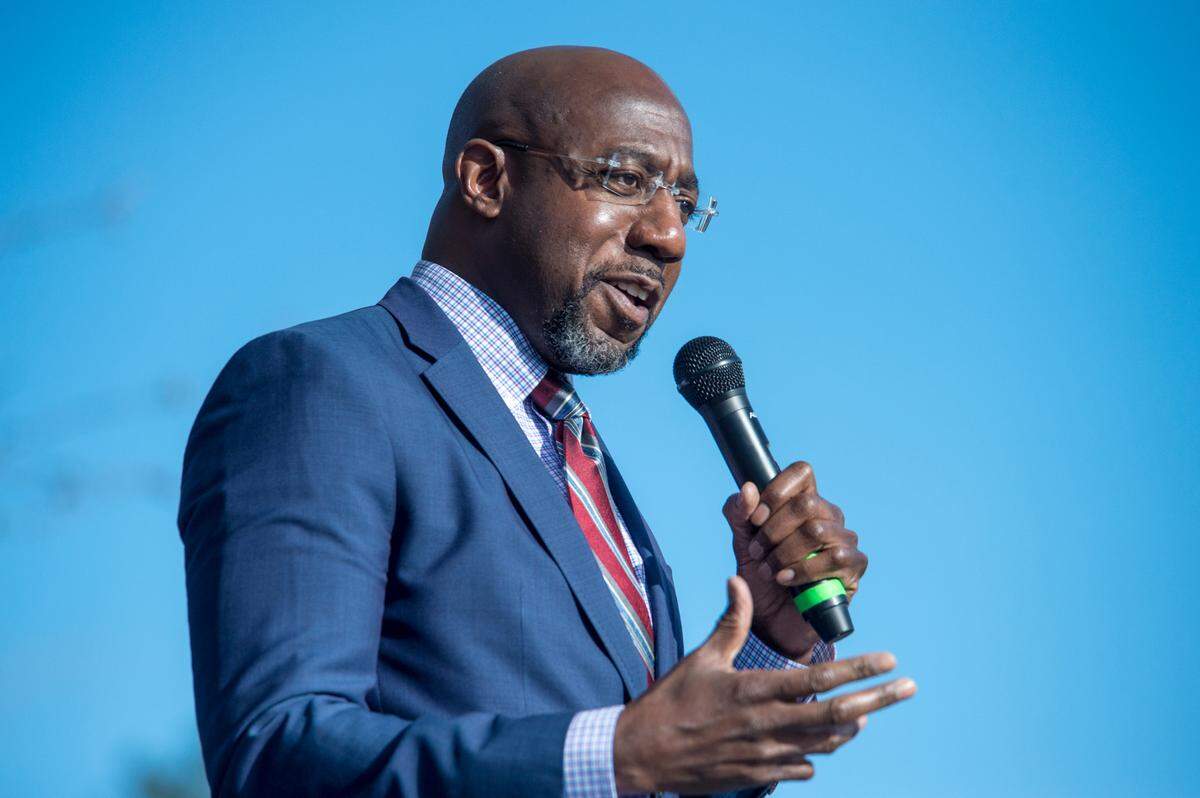
How Alvin the Beagle Helped Usher In a Democratic Senate
Rev. Rapael Warnock was sworn in last week as Georgia’s first Black senator, and he did so with the help of his beagle, Alvin. “The dog had a lot of work to do,” writes The New York Times’ Shane Goldmacher.
In perhaps the best-known spot, Mr. Warnock, a Democrat, deposits a plastic baggie of Alvin’s droppings in the trash, likening it to his rival’s increasingly caustic ads. The beagle barks in agreement, and as Mr. Warnock declares that “we” — he and Alvin — approve of the message, the dog takes a healthy lick of his goatee.
“The entire ad screams that I am a Black candidate whom white people ought not be afraid of,” said Hakeem Jefferson, a professor of political science at Stanford who studies race, stigma and politics in America.
Well, if that’s the theory, it worked. The most recent elections felt, maybe more than anything else, like a referendum on race. Warnock won by fewer than 100,000 votes, and while Goldmacher notes there’s no one thing you can point to as to what helped him win, there seems to be bipartisan agreement that Alvin the beagle played an outsize role in cutting through the clutter.
I gotta say though, it’s a wee bit demoralizing that’s what it takes — that a dog had to be the thing to humanize Warnock, to get people to relate to a Black man running for office. But that’s politics... I guess.
For the culture

Did anybody watch “Tiger,” HBO’s two-part documentary detailing the life of if not the greatest then for sure the most compelling golfer in the history of the sport? This is my obsession this week, so... sorry. I got around to finishing it the other day, and honestly watched in disgust. Not as any sort of reflection on the man — much like Tiger on a Sunday in April, been there, done that.
But where directors Matthew Hamachek and Matthew Heineman decided to shine their light brightest was troubling to me. There were in the first part of the doc references to Tiger’s race — his father was Black and his mother is from Thailand — as it related to exploring what struggles with identity he may have had. But the series really starts feeling itself in the second part detailing the “fall” of one of the most famous figures around the world.
- ‘He’s not going to like this sh*t at all’: Documentary shines new light on Tiger Woods’ life
HBO’s messy “Tiger” treats the controversial golf icon as salacious entertainment
The documentary kind of bathes in all of the salaciousness the incident drew forth, and the second part of the documentary almost embodies on screen the very characteristics of the tabloids it pulls from. And through it all, it fails — as far as I can see — to sufficiently examine the role his race played in everyone’s response to his struggles.
Tiger Woods has always meant a great deal in this household, not really for any of the ways he dominated on the golf course — never been on a course in my life, golf’s not my thing — but through his highest highs and lowest lows, especially those lows, Tiger’s life always seemed to me the perfect summation of the lesson my Black parents always drilled in me hardest: To reach even the same level as your white counterparts you have to be twice as good, work twice as hard.
Tiger Woods’ story, to me, was always so incredibly Black. Every single aspect — the intrigue around the rise and the fall. I was disappointed in the way in which it was portrayed. But, hey, maybe I’m wrong. Check it out and let me know what you think.
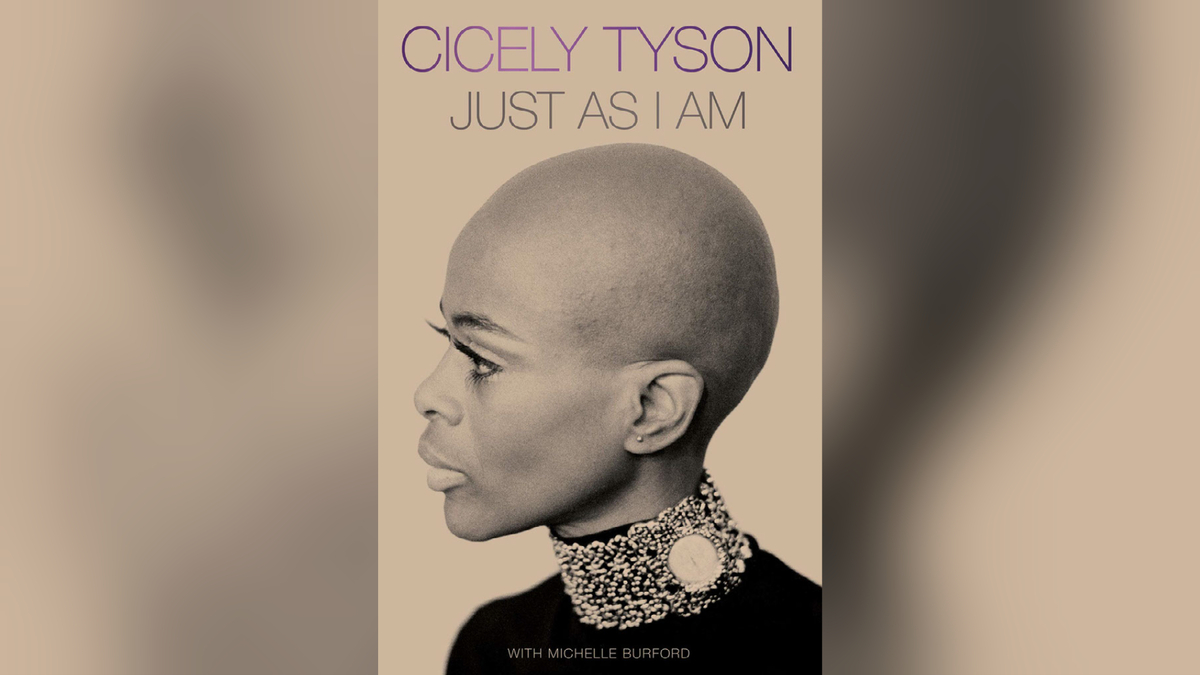
A Conversation featuring Miss Cicely Tyson & Whoopi Goldberg
I watch a lot (too much) of TV and movies, that’s my happy place — but I read, too. The queen, miss Cicely Tyson, has a new book out, “Just As I Am: A Memoir.” I haven’t had a chance to read it yet, it’s just out this week, but I don’t know, maybe we do a book club.
“’Just As I Am’ is my truth. It is me, plain and unvarnished, with the glitter and garland set aside. In these pages, I am indeed Cicely, the actress who has been blessed to grace the stage and screen for six decades. Yet I am also the church girl who once rarely spoke a word. I am the teenager who sought solace in the verses of the old hymn for which this book is named. I am a daughter and mother, a sister, and a friend. I am an observer of human nature and the dreamer of audacious dreams. I am a woman who has hurt as immeasurably as I have loved, a child of God divinely guided by His hand. And here in my ninth decade, I am a woman who, at long last, has something meaningful to say.” — Cicely Tyson
The book made the 55 most anticipated books of 2021 list from The Oprah Magazine, writing: “Readers too, will be amazed by this essential, passionate, raw, revelatory account of a woman who refused to allow any obstacle thwart her quest for excellence—racism, misogyny, poverty, single motherhood—and today stands as one of the greatest actresses of all time.”
And Rainy Day Books here in Kansas City is doing a live stream virtual conversation with Miss Tyson and Whoopi Goldberg TONIGHT. You can get tickets here.
Until next week!
Did someone forward this newsletter to you? You can sign-up here. If you’d prefer to unsubscribe from this newsletter, you can do so at any time using the “Unsubscribe” link at the bottom of this message.