The Kansas City Star removes name and image of its founder, William Rockhill Nelson
The Kansas City Star has stripped from its pages and website the name, words and image that recognized its first publisher and founder, William Rockhill Nelson.
The move comes after The Star’s Dec. 20 series investigating its own history of how it covered — and failed to cover — Black Kansas Citians. Star President and Editor Mike Fannin launched the project with an apology, saying the newspaper had “robbed an entire community of opportunity, dignity, justice and recognition.”
Another piece in the series examined the role of Nelson, whose support of developer J.C. Nichols enabled the proliferation of neighborhoods that explicitly banned Black Kansas Citians — a practice that laid the foundation for decades of racial segregation that still persists today.
Nelson died in 1915 but has been a mainstay of the newspaper since the first four-page edition of The Kansas City Evening Star hit the streets on Sept. 18, 1880. Since a 1998 redesign, the newspaper’s masthead has included a head shot of the founder along with his quotation, “A Paper for the People” in the opinion section.
“Nelson’s words were lofty but ultimately dishonest,” Fannin said. “The Star was not ‘A Paper for the People’ through much of its history. It was a paper for only some people, namely white people. Those values don’t square at all with The Star newsroom of today.
“And while it may only be iconography to some, we believe that who you choose to honor says something about your ideals and intentions. Today, we’re clearly stating those intentions: The Star is a paper for all the people in Kansas City.”
The late 2020 series was sparked by the May 25 death of George Floyd in Minneapolis and the subsequent protests for racial justice that spread across the nation. Star readers and staffers alike suggested removing Nelson’s image from the paper.
“It became really obvious that we needed to make a change,” said Colleen McCain Nelson, vice president and editorial page editor for The Star. “We hold him up as a beacon of sorts. And it felt like we were hitting a wrong note by continuing to do that when we had just reported how he contributed to racism in Kansas City.”
Last year, The Star’s editorial board called for the renaming of J.C. Nichols memorial fountain and J.C. Nichols Parkway near the Country Club Plaza as city leaders reckoned with the developer’s role in sowing racial division across the city. The board also urged the Super Bowl-winning Kansas City Chiefs to reconsider the use of Native American symbols and the team’s name.
“We continue to wrestle with these questions in real time,” said Nelson, no relation to the founder. “Obviously, we can’t erase history and change the fact that he is our founder. Nor are we trying to.”
In 1880, Samuel E. Morss and William Rockhill Nelson, both newspapermen from Indiana, launched The Kansas City Evening Star as Kansas City’s economy boomed with an infusion of out-of-state cash.
Morss would leave the Star only two years later, but Nelson quickly became a civic leader, leaving an indelible mark on the newspaper and the city, according to the 2006 book, “The Star & The City.”
Nelson was a vocal crusader for clean government, publicly owned utilities and economic growth. Colliers magazine declared that his influence “was perhaps greater than that of any newspaper publisher in the country.”
Like Nichols, Nelson was also a real estate developer.
He built homes, many for Star employees, on land north of Brush Creek and just south of his Oak Hall mansion, now the site of the Nelson-Atkins Museum of Art.
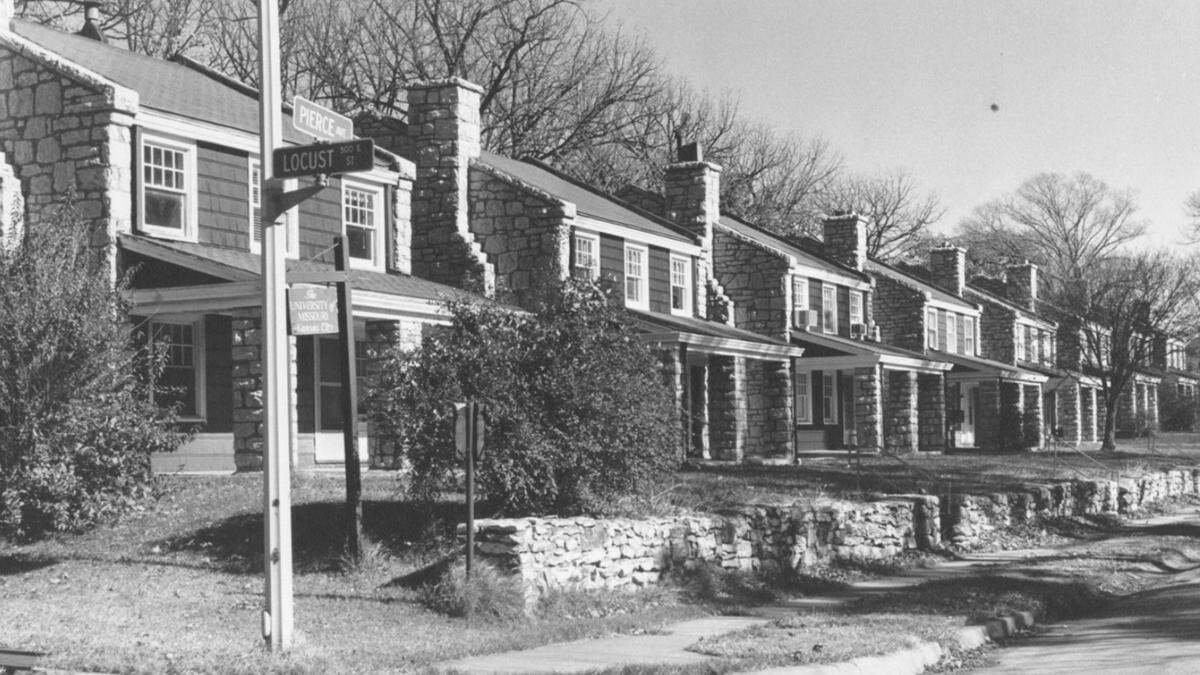
Forty years his senior, Nelson viewed Nichols as a protege, someone who shared his vision for a city filled with lush green boulevards, grand fountains — and segregated neighborhoods.
The residential developments of both visionaries came with racially restrictive covenants, according to historian William Worley, author of “J.C. Nichols and the Shaping of Kansas City.” The only difference was that Nelson’s expired after a period of years; Nichols’ did not.
For both men, “segregation of the races, like segregation of economic classes, was both a fact of life and an essential means of defusing sectarian conflict,” wrote Harry Haskell, grandson of Star editor Henry J. Haskell, in “Boss-Busters and Sin Hounds: Kansas City and Its ‘Star,’” his history of the paper.
“As a matter of record, he learned the real estate business almost literally at Nelson’s knee,” Haskell said of Nichols.
Going forward, Nelson’s name and image will not appear as a permanent fixture on The Star’s pages.
“Nelson was both a builder of the city and an architect of some of the structural racism that still exists today,” Fannin said. “We can’t erase history but we can embrace a more equal and inclusive present and future.”
This story was originally published January 10, 2021 at 5:00 AM.