‘My family’s not coming back for me.’ Student remembers the day he was left at Agape
When James Griffey’s aunt and uncle said they were taking him to a boarding school in Missouri, the 15-year-old shrugged it off.
“They said, ‘You’ve messed up, we gave you chance after chance, but you haven’t taken it. So you’re going to this school.’
“I didn’t believe they were actually going to leave me in the middle of Missouri. So I flew out there with no hesitation, no big deal. I even packed my own bag.”
The students were on work detail when he arrived from southern California in the summer of 1998, pulling weeds at the golf course by Stockton Lake. A staff member introduced Griffey to the student who would be his “buddy.” Stay within a few feet of him at all times, Griffey was told.
“I’m still thinking this is one big joke,” said Griffey, now 37. Though he was wearing nice clothes, he decided to show his aunt and uncle that this didn’t faze him one bit.
“I started going in there, getting all muddy, pulling all these weeds, working super hard,” he said. “I thought, ‘OK, I showed them.’ I turned around to look at my aunt and uncle, and they’re in their car driving off.”
He didn’t see his family again for two years.
That night, Griffey said, he made the mistake of speaking to a student on a nearby bunk, and his buddy ordered him to do 25 pushups. “I said, ‘Gosh, really?’ He said, ‘Another 25 pushups. You can’t say that.’ I said, ‘I can’t say gosh?’ He’s like, ‘Another 25 pushups.’”
Griffey said he tried to do the pushups, but his arms gave out. His buddy tacked on another 25, then marched him over to the staff and told them Griffey refused to do pushups.
“They told my buddy to go away, and I’m doing them and my arms just collapsed underneath me and I’m like, ‘Gosh, dang it.’ And the staffer said, ‘Don’t say that. You’re using God’s name in vain when you say that.’ And I said gosh again, then I said, ‘Oh, shit. Sorry.’
“And then I realized I really screwed up. And this big muscular staff member just pounces on me, throws me on my back and starts punching me in the face, pulling me in and headbutting me, saying, ‘Don’t you say my God’s name in vain.’ It took three staff to get him off of me. You could hear a pin drop in the dorm.”
One of the staff told Griffey’s buddy to go get him cleaned up.
“I remember looking in the mirror in the bathroom, the blood’s coming down my face, and that’s when it hit me,” he said. “My family’s not coming back for me. And I just started crying.”
Griffey said the staff member who beat him up was the one who ran his dorm.
“I had these big front teeth, and he called me ‘beaver teeth.’ He’d say, ‘I hate that smile. If I see those beaver teeth, I’m gonna knock them out.’
“It was a constant threat. It was just crazy. There’s this helpless feeling that there’s nothing you can do about it. So you almost get excited when a new kid comes and they’re getting all the negative attention, because now they’re not looking at you.”
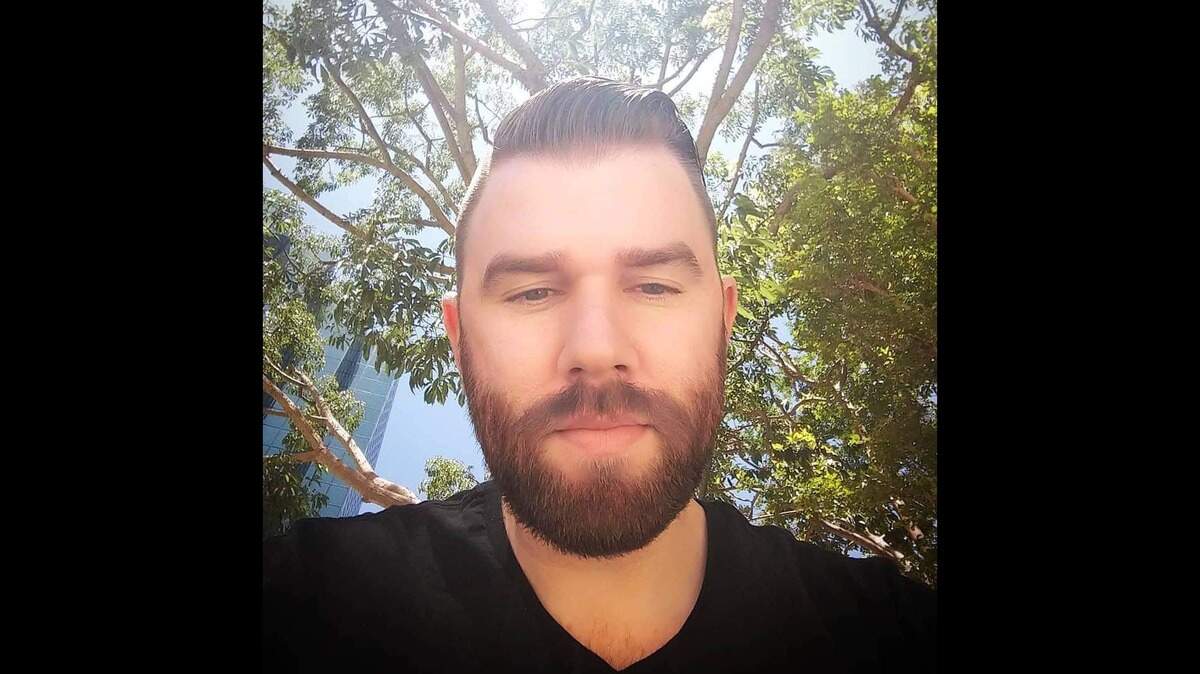
After two years at Agape, Griffey was allowed to go home for a two-week visit. His family spent one of those weeks at a Christian camp on an island off the California coast. At one point, he said, he hiked up to a large cross at the top of a cliff.
“And I stayed there for hours crying,” he said. “I literally wanted to jump off this cliff to kill myself, because it was a matter of days that I was going back to Agape. I was like, ‘I’d rather die than go back to that place.’ But if I killed myself, I knew based on what they taught me that I’d go to Hell.”
After turning 18, Griffey said, he was talked into becoming a staff member. That’s when he said he started reading the Bible more.
“And I said, ‘Wait a minute. This book doesn’t talk about a God of anger and frustration, it’s a God of love, and he loves children. You don’t treat children this way.’
“So I started preaching that stuff and treating children accordingly. And I remember being taken to the office and they said, ‘You can’t be saying this stuff. That’s not what we teach here.’ And I had to leave. This wasn’t my thing.”
Griffey said he worried what other former students would think of him when he recently came forward with his concerns about Agape.
“I was kind of hesitant at first,” he said. “Are they gonna think I’m a wussie? But I just picture that there’s kids at Agape right now, and there’s no one that’s their voice, no one trying to help them or do anything for them.
“And then I was like, ‘People need to know.’”