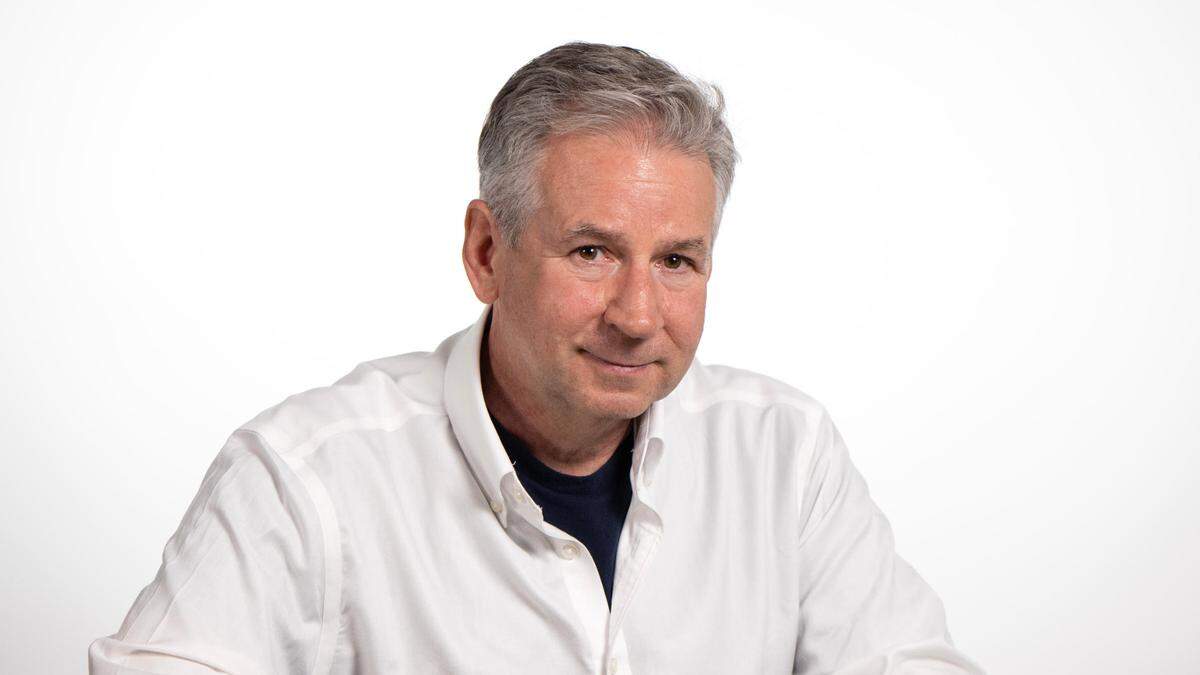
Strange call brings son to Kansas City for the funeral of the father he never knew
In San Francisco, the man’s cellphone buzzed with a strange number: 816 area code. Must be spam, just more telemarketing, he figured on this February day, so he let it go to voicemail.
Then he read the transcription.
“Hello,” he recalled the message saying, “if this is Patrick Hamada, I have information about your father. Can you please call me?”
Hamada, skeptical, was taken aback. His father?
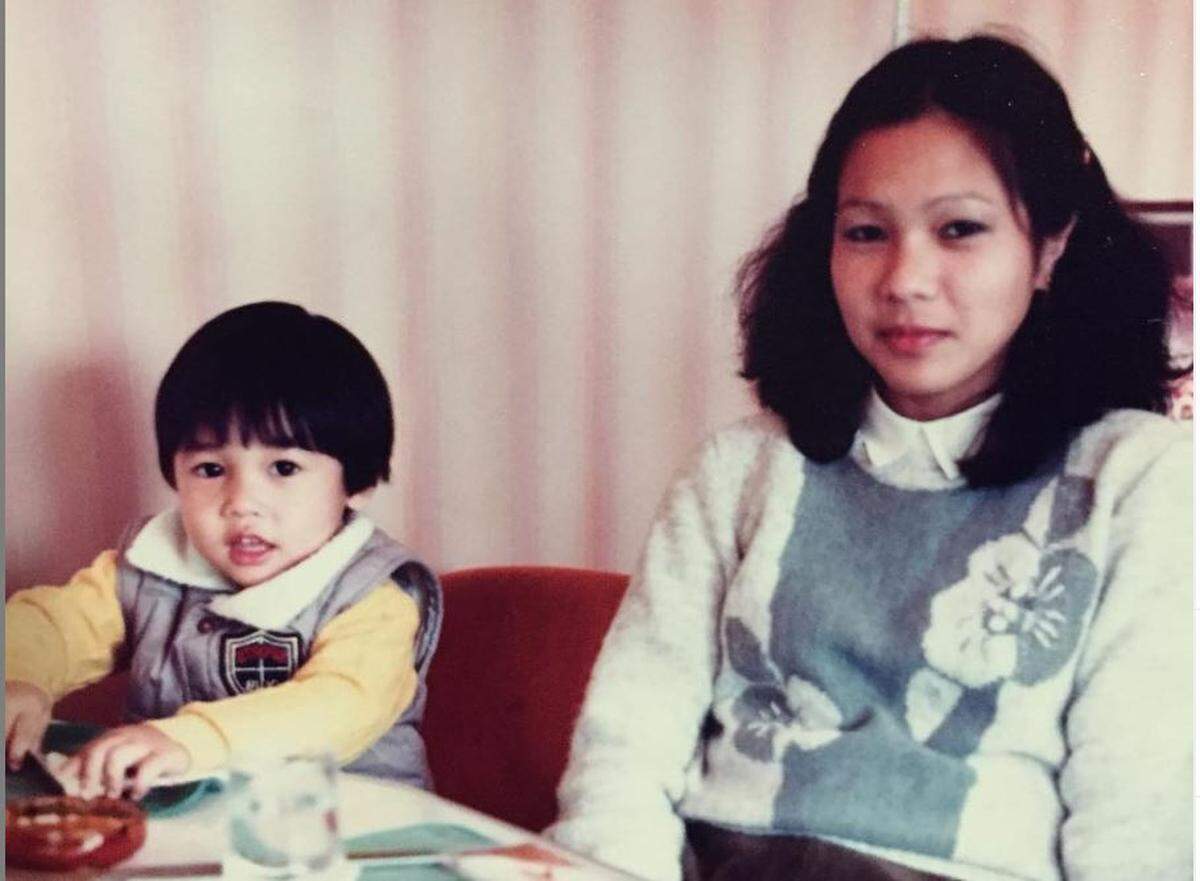
Hamada was 39 years old. The only true father figure he’d ever had was his maternal grandfather and, for a time, a stepdad who gave him a half sister, but then split from his mom when Hamada was a teen growing up rough in Los Angeles. His biological father: a phantom.
Thirty-five years ago, when Hamada was 4 or 5 years old, his father left his boy and never saw, spoke or reached out to him again. Hamada had attempted searches, scouring the internet for his father’s name, mining Facebook. He even thought once of hiring a private investigator, although it frightened him to think where those searches might lead.
“What if he doesn’t want to see me?” Hamada wondered.
All he knew for certain was that his dad, Japanese by birth, and his mom, Filipino, had met and married in Guam and divorced a handful of years later. They’d visited Japan once as a family, but the memory is fog. Then the man just disappeared.
“Who is this?” Hamada asked, returning the call, cautious about a possible scam.
“I’m a friend of your father, Ted,” the speaker said. Her name was Laura Watson from Kansas City.
For more than 30 years, Ted Hamada ran and later owned the Kabuki Japanese Restaurant in the Crown Center Shops, before it closed and moved to Brookside. Watson and her lawyer husband, Henri Watson, had eaten at Kabuki weekly. They’d known Ted for decades, did legal work for him, which is how Watson had finally found Patrick’s name on Ted Hamada’s 2006 naturalization papers.
“I don’t know a Ted,” Hamada shot back on the phone, still leery. “My dad’s name was Yasuhiko.”
Watson’s information jibed. “Yasuhiko” was on the document, along with Patrick Hamada’s birth in Guam and his mother’s maiden name, Cajulis.
Then she told Hamada what he didn’t know.
Yasuhiko “Ted” Hamada was dead.
He had died in his downtown apartment of a heart condition, unmarried and alone, nearly two months earlier on Dec. 11, one day before his 72nd birthday.
‘I have to pay respect’
Aiko Kelley, an employee, who in many ways cared for her boss like she was his daughter, had stopped by that morning to drive him to a doctor’s appointment. She found him in the tub, sitting up as if he had peacefully fallen asleep.
His death left her and others in a quandary. Although they knew a son existed, no one knew exactly who or where he was. Ted Hamada rarely spoke of him, except, Kelley said, when he had been drinking. He would cry and speak of guilt.
With no known relatives, and no one to claim the body or pay for a funeral, they looked to friends. In two months, 100 donors rolled $9,000 into two GoFundMe sites to pay for a cremation and funeral, scheduled for 2 p.m. Sunday, March 8, at the Johnson County Funeral Chapel & Memorial Gardens in Overland Park.
Uncovering the naturalization papers, they finally found his son, working as a chemical compounder and fitness coach; his Instagram account shows him with boccie ball muscles inked in tattoos. He was scheduled to fly into Kansas City on Saturday.
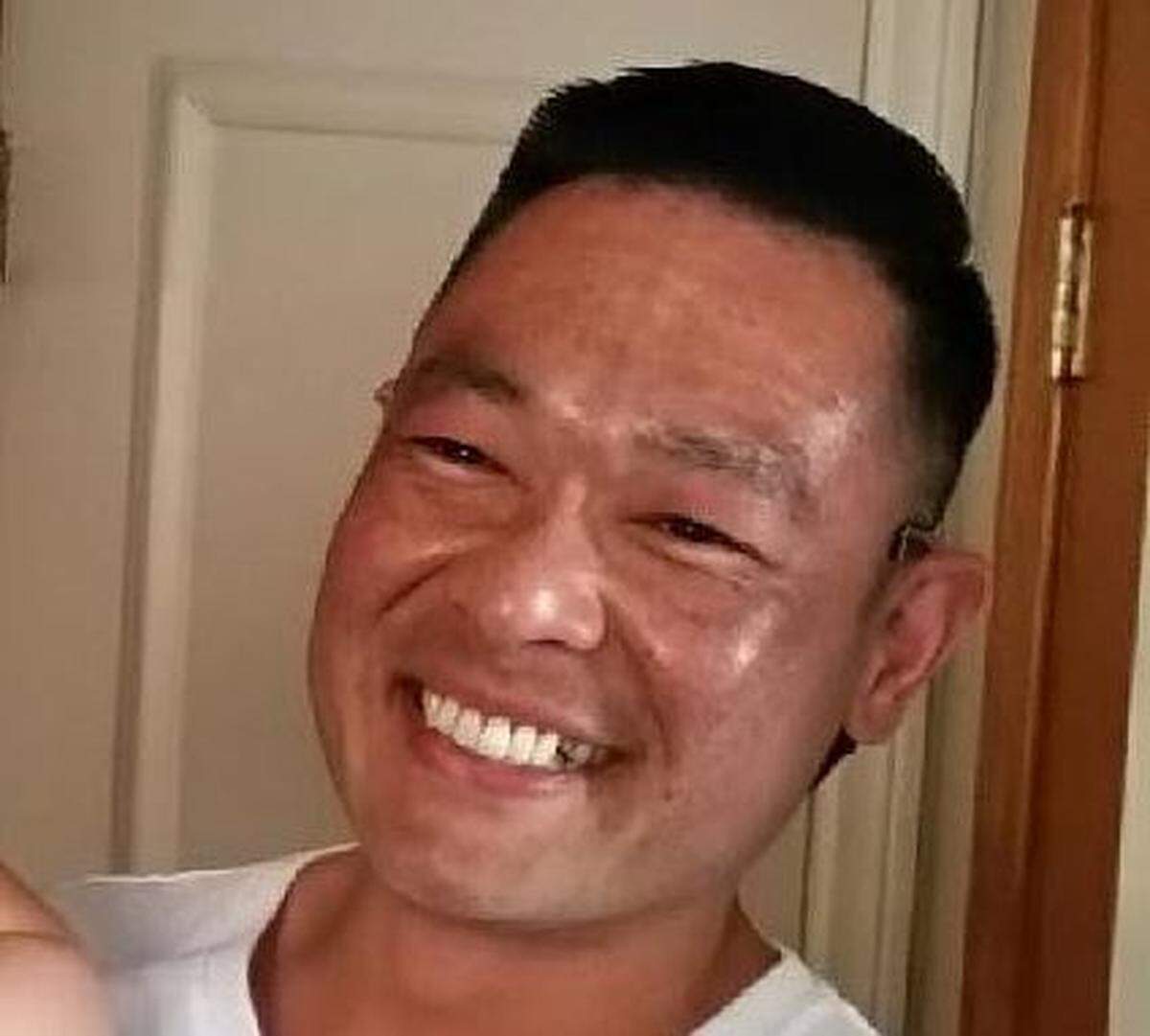
On Sunday, while others will attend the service to mourn and remember, Patrick Hamada will be there to connect to the father he never really knew.
“Growing up,” Hamada told The Star this week, “I didn’t even realize that, you know, I was missing a dad until after the separation of my mom and my sister’s dad. And then I started to think about, well, where’s mine?
“I don’t know if you know what it is to grow up without a dad or to grow up without a father figure. You’re kind of searching for your own persona.”
Even after he and Watson ended their call, Hamada remained skeptical, reasoning that the things that Watson knew might easily have been on the internet. So he looked up the man’s obituary and had Watson send him photos. A TV news segment about the GoFundMe effort showed a short video clip.
Hamada watched it and knew.
“That’s my dad,” he said. “It was part instinct. Part he looks like my dad. It just, you know, you get that feel.”
Hamada forwarded the video link to his mother, Kay Cajulis, who at 60, lives in Glendale, California, and works in a bank.
She’d never known her former husband as “Ted.” To her, he was “Yasu” or “Hamada.” But the video left no doubts: His face. His voice. “Especially when he was speaking Japanese,” Cajulis said. When they were young together, he spoke almost no English.
On their first dates, they stood out in striking contrast: Him, strong and sturdy at more than 6 feet tall, age 30, his wavy black hair swept back from his forehead; her, petite, pretty, only 18, standing 4-foot-11.
“His gestures and everything,” Cajulis said of the video. She recognized them instantly. It was him.
Word of his father’s death unsettled Hamada at first. Thirty-five years: Zero communication. If he felt angry or too resentful to attend the service, few would have blamed him. Instead, he leaned toward compassion and his own pull to know more.
“I mean I have to pay respect to my dad,” Hamada said, “because he was my dad, regardless of the relationship we had. We all do things in life. We’re just humans trying to be human, and it doesn’t necessarily mean that it’s wrong or right.
“I can’t blame him for anything that he did, because I don’t even know the history with him and my mom. And I can’t blame my mom. We do what’s comfortable for us.”
If anything aggrieved him, he said, it was the brief thought that maybe it was too late, and any opportunity that existed to get to know his father had died on the day Ted Hamada died.
“The only way I could sum it up is, I lost time,” Hamada said. Then he reasoned that he just needed to use time differently.
“Everything happens for a reason. I truly believe that,” he concluded. “If I have the opportunity to recover some time by learning about him through his friends, then so be it.”
The Kabuki restaurants
Maybe those friends would learn, too. There was much they also didn’t know. But what they could tell Patrick:
In public, as a restaurateur, Ted Hamada relished being a host. “People made him happy,” Kelley said.
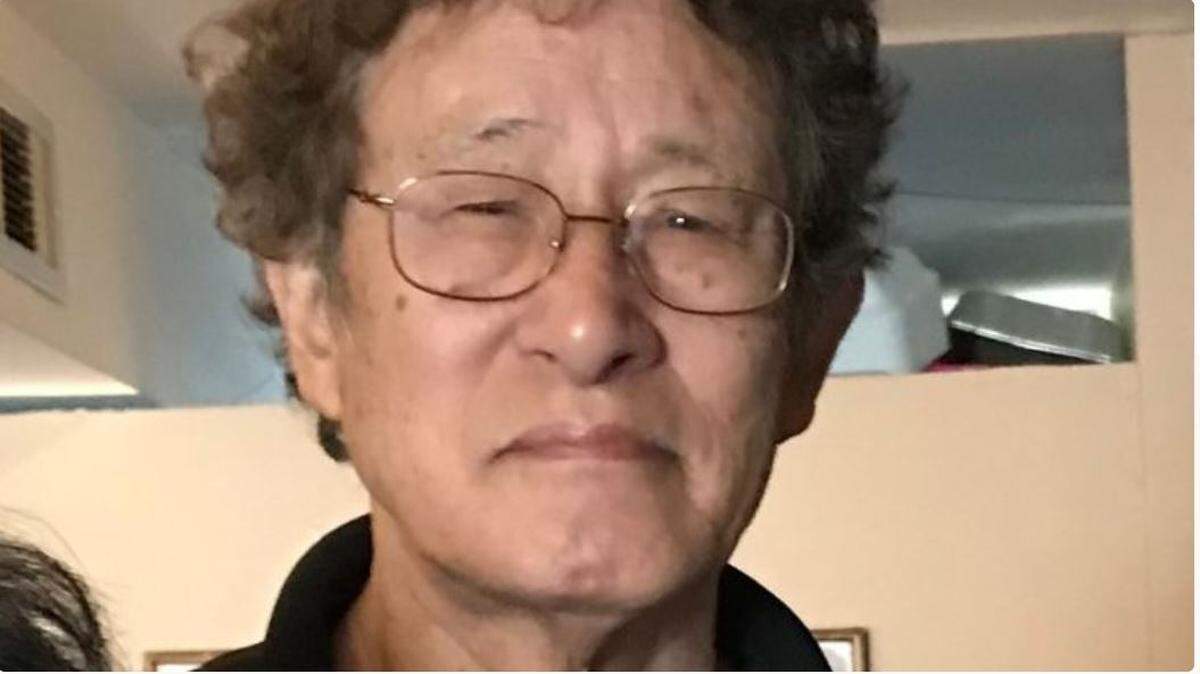
Not that he showed it much. Though hardly shy, he wasn’t openly vivacious or gregarious, his curly hair was often as rumpled as his clothes. But he greeted customers at the restaurant and sushi bar with a bow from the waist. If diners didn’t eat all they’d ordered, he fretted.
”If they left something, he’d say, ‘Maybe they don’t like it,’” Kelley recalled. “I’d say, ‘Maybe they were just full.’ He was always asking, ‘Did they eat it all?’ He just loved making people happy through food. He loved serving.”
He himself loved good food. It made him happy, as did poker and golf with his close friends, mah-jongg, drinking and smoking.
“Saké and cigarettes. That’s his life,” Kelley said. At Sunday’s service, her plan is to place a saké glass, a miniature bottle of saké and a pack of cigarettes inside her friend’s niche along with his urn.
“That’s what I’m going to do,” she said. “I mean, what else? I cannot think of anything else.”
Ted Hamada could come off as stern to those who didn’t know him. “To be honest,” Kelley said, “he was always like grumpy looking. … Getting to know him, you saw his real heart.”
His grumpy looks weren’t always unwarranted, as years and pages of Jackson County Court records show that the restaurant he came to own would perennially have liens and judgments against it for thousands of dollars in late, unpaid earnings taxes. He left Crown Center in 2014.
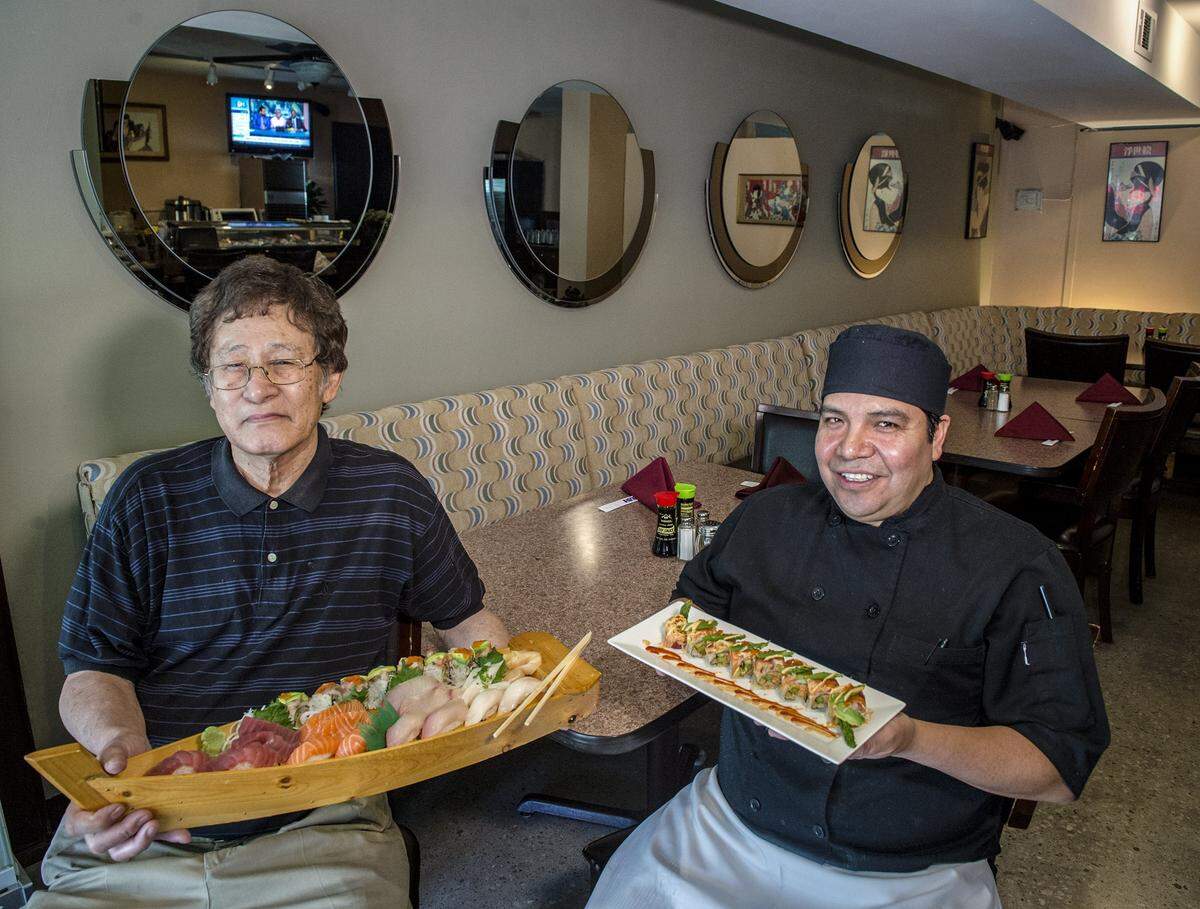
He would eventually learn to cook, and did some at Kabuki Sushi, which opened in 2017 in a small space at 333 W. Meyer Blvd. But when he first went to Kabuki at Crown Center in 1985, it was as a manager under then-owner Kinji Kaneda.
“He came in from California to help me,” Kaneda, 75, recalled. That’s when Ted Hamada left his son and former wife behind him.
Over time, owner and employee became lasting friends. Every week, the two played golf together at Dub’s Dread in Kansas City, Kansas.
“Ted is good,” shooting in the low 90s, Kaneda said. “I’m not too good.” He shot over 110.
In 2006, Ted Hamada became the owner of Kabuki. Over all their years together, none of his friends knew the details of his previous life.
They’d heard he’d been married, but didn’t know the name of his ex-wife or their son.
“He’s my best friend,” said Tatsu Arai, owner of Tatsu’s French Restaurant in Prairie Village. “We didn’t talk about marriage and divorce.”
The two, friends for 35 years, shared lunch nearly everyday at Tatsu’s.
“We try a couple of times,” Kaneda said. “But he doesn’t want to talk. We don’t ask. Never again. It’s not for man-to-man talk.”
Kelley said, “I don’t know why he didn’t talk about his Japanese family or his American family,” but she knew he carried great guilt around the subject.
“I think he was embarrassed,” she said. By Japanese family, she meant his relatives in Nagoya, Japan. After his death, his friends contacted the Japanese consulate to help locate and tell them.
But Kelley said that there were a few rare moments when Ted Hamada, himself, would mention his former wife and son
“When he was drunk,” she said, “He would say, ‘I have a son, Patrick.’”
“Also his ex-wife,” Kelley said. “He really apologized, like ‘I did really bad things to her. I was bad.’ He sometimes cried. He said, ‘She was really beautiful. She was good. I was dumb.’”
‘A lot of questions’
Back in California, Kay Cajulis said she doesn’t remember Patrick’s father being bad, or treating her ill. She talked of him being “always happy. He was always jolly,” she said. She used the word “charming.”
“He was a kind person to me,” Cajulis said.
When they met in Guam, she was still in high school. He, to the best of her recollection, worked for a Japanese company on the island. She was a cashier at a pharmacy. He met her when he came in for cigarettes or medicine.
He didn’t speak English. She didn’t speak Japanese then.
“So we were just like communicating, you know, like our expressions or hands or pointing,” she said, remembering it fondly. Him being so tall, with his wavy black hair, “I get attracted to him. He’s good looking,” Cajulis said.
“I remember that I could not attend my prom because I was busy with him already,” she said.
By 19, she was pregnant with Patrick — in Japanese they would call him “Toshio” — and married. They lived in a small house.
“The first two years were great,” Cajulis said. “He was actually a very good provider.”
As time passed, his job and entertaining customers forced him to be out night after night. Sometimes he failed to come home. They stayed together for five years. But, after a while, Cajulis wanted to move on.
“I wanted to better myself,” she said. Guam, she felt, was too small.
She and Patrick’s father divorced before she moved to Los Angeles to live with relatives, her Uncle Ted. Cajulis thinks it may be no coincidence her ex-husband would choose Ted as his American name.
“He came to California once to visit me and Patrick. That’s about it,” she said. She would marry again, have daughter, Pia, before that marriage ended after about decade.
Patrick would ask about his dad. Cajulis didn’t know what to say.
“I mean, he was asking for his dad, of course,” she said. “I said, ‘I don’t have, I wish I had a better answer, but I don’t have an answer.’ Patrick was aware that, you know, the last time that we actually saw each other was in LA in Japantown. And that’s about it.
“I didn’t know where he went — nothing at all. I don’t know what he wanted to do with us. Nothing. Did not connect anymore or anything like that.”
Then, just weeks ago, Patrick Hamada’s phone rang.
Cajulis said that she spoke to Laura Watson, who had just contacted her son. He is a strong man, but he’s sensitive, Cajulis noted.
“I called Laura and I said, ‘Laura, you’re opening up a lot of, you know, a can of worms and a lot of questions.’”
But she hopes that her son’s visit to Kansas City will turn out for the best.
“Patrick’s almost 40 years old and he has a very good heart,” Cajulis said. “I said, ‘Patrick, are you OK?’ He said, ‘Mom, I’m OK. I understand why my dad did not talk about me, you know, because he wanted to bury his memories, which probably hurt him a lot.’’
She told him that whatever happens in Kansas City, “you’ll have closure now.”
As his father’s next of kin, Hamada was already tasked with a remaining child’s duty, being the one to give legal permission to cremate his father. Before it was done, he also requested a lock of his father’s hair.
Kelley planned to be with Hamada over the weekend, bringing him to his father’s restaurant, introducing him to his friends, attending the funeral. On Monday, she’ll also take him to his father’s apartment.
Hamada’s expectation:
“I mean, yeah, like you want to know how far you fell from the tree,” he said. “Or if you even fell far from the tree.”
Hamada already senses that he may have inherited some of his father’s reticence. He’s trying to share his emotions more.
“Basically it’s kind of just to see, am I alike? Are we alike?” he said of this visit. “To see his personality. See the people that he was surrounded by. Talk to them, and you know, enjoy the memories that — if I couldn’t have — I could kind of absorb through them.”
This story was originally published March 7, 2020 at 5:00 AM.