K-State student leaders decry bigotry after report links group to white nationalism
Weeks after a watchdog organization’s report linked a new student group to white nationalism, the Kansas State University student government issued a resolution affirming the campus is open to everyone.
The resolution, sent to all students Tuesday, was passed last week by Kansas State University’s Student Governing Association and says “racism, sexism, and other forms of bigotry (are) reprehensible and harmful to society and individuals.”
That student government action comes after the America First Students group was launched by K-State student Jaden McNeil on Jan. 21. The organization’s first meeting was held a week later.
Soon after, a report published by the Institute for Research and Education on Human Rights said the student group was a test case for marketing white nationalism on college campuses.
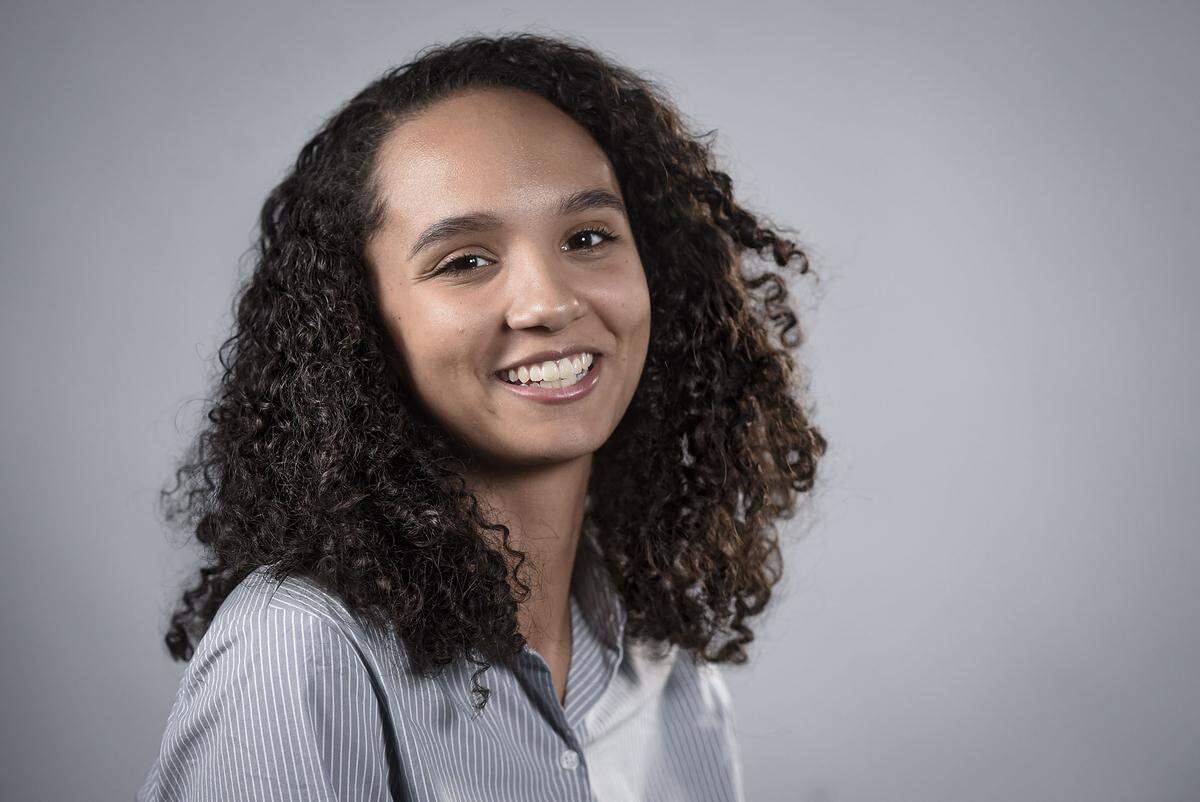
Student leaders have said they feel like they have to walk a tightrope between respecting free speech and condemning hate. K-State’s student body president and vice president made public statements opposing discrimination.
The student body president, Jansen Penny, said his statement was made on a personal level and does not represent the university.
“I strongly believe in what (the First Amendment) does as far as allowing everyone to share their views even if they do not align with my own,” Penny said. He added that “it’s when they start toeing the line with discrimination and racism and homophobia that is where I have a personal issue with it and where they may start actually breaking policies put in place by Kansas State University.”
McNeil has denied any connection to white nationalism. America First Students, he said, is meant to “create a space on campus to advocate for traditional American values and ideals, with the broader goal of defending America against globalism.”
McNeil did not respond to requests for comment from The Star. He has disputed the report that linked his group to white nationalism.
A follow-up report from the institute found McNeil has been involved with four people who participated in the Charlottesville, Virginia, Unite the Right rally. The report said McNeil has “amplified” white nationalist content on his social media.
Penny said he felt it was important to make a personal statement to let students in marginalized groups know he stands with them. In his statement, he said there is “no place” for organizations tied to national platforms with discriminatory views.
Students have to read between the lines, he said.
“These groups will claim on social media, claim to us, to journalists, that they’re not influenced by national influences or national organizations but they most certainly are,” Penny said. “On college campuses, they’ll craft a constitution of what they need to be on college campuses under the guise of talking about free speech.”
And then, “they exploit the platform the universities have to give them,” Penny said.
K-State officials declined a request for an interview about the new student group but pointed to an earlier statement by the university’s president, Richard Myers.
The university, he said, “is not immune” to “groups and individuals across the country seeking to sow sexism, racism and other forms of bigotry.”
As a public institution, K-State can’t interfere with expression of free speech.
Yet, according to a campus presentation on hate speech, there are exceptions. Those include true threats or criminal or illegal conduct. The university can prohibit discrimination, criminal threats and impose restrictions on time, place and manner.
‘They want to exclude us’
Diana Najera, a 22-year-old biochemistry major from Liberal, Kansas, was one of the students The Star spoke with on a recent visit to campus who had heard of the organization.
“Being a minority, sometimes it’s a little scary to think that a group of people are coming together to pretty much say we are celebrating this … conservative white tradition,” Najera said. “It’s just a little scary because it’s like they want to exclude us.”
One of her biggest fears before coming to K-State, Najera said, was that she would feel unwelcome because of her skin color or what she looks like.
So far, she said, she hasn’t had any problems. But now she’s afraid that will change.
Moises Alvarez, a 20-year-old psychology student from Liberal, said some of his instructors have mentioned the group and were checking to see if they could take any action.
“It just seems like a front for a hate group,” Alvarez said. “Walking around, I wonder if these people are thinking I shouldn’t be here.”
Students of color make up about a quarter of total enrollment, university statistics show.
In the fall semester, K-State reported having 701 African American students, or about 3 percent, enrolled of the 21,719 total students. It reported 1,587 Hispanic or Latino students, or about 7 percent.
The university has 16,439 Caucasian students — about 76 percent.
Students on the campus have experienced some racist incidents in recent years.
Last semester, Alvarez said, someone wrote “build a wall” in chalk on campus sidewalks. In 2017, a noose was found hanging from a tree and white nationalist posters were hung around campus. The year before, a former K-State student posted a Snapchat photo of herself in what appeared to be blackface and the written n-word.
Groups formed
In September 2018, McNeil founded K-State’s chapter of Turning Point USA, a national organization that promotes conservative viewpoints.
The K-State Collegian reported in April last year that student government allocated the campus chapter $3,000 to host speakers on campus. A Collegian investigation found that the national organization tried to influence elections at the university by offering money to student leaders.
In April, three speakers paid for by Turning Point spoke on campus. Students protested the event.
McNeil, along with other officers, resigned from Turning Point USA in October last year, saying “TPUSA constantly cedes cultural ground to the left.”
In January, he founded America First Students.
According to the group’s constitution, the organization “believes in putting America and its people first” and stands “in defense of Christian values, strong families, closed borders, the American worker, and the preservation of tradition.”
McNeil said it will emphasize “the importance of God and family above all else.”
In his announcement of the organization, McNeil said “Conservatism Inc. has brainwashed many students into believing that globalist policies — particularly free trade and mass immigration — constitute conservatism, when they clearly do not.”
The group says its purpose is to educate, empower, organize and mobilize students about “America first” policies. Also in its constitution is a required Kansas State policy of nondiscrimination.
Half of America First Students’ membership can come from the general public. It doesn’t have to have a faculty adviser because it is an independent student organization.
The organization, as with all other student groups, can apply for funding from Student Governing Association. All student organizations must have at least five student members.
“We are providing them a platform to come onto campuses to incite a lot of frustration … from students in marginalized communities,” Penny said. “There’s nothing we can do about it from the university or student government side.”
Penny said that while the university can’t take action, students can. He said that students who feel strongly about the organization can use their First Amendment rights to speak out. Students can also report discrimination through the Office of Institutional Equity’s online reporting form.
“Just as different people are empowered to say things that might hurt, that might make you feel uncomfortable,” Penny said, “you have that same power under the First Amendment to share your message and show your support as well.”