
Two people hit by a car in KC were blamed. After a complaint, KCPD changed the story
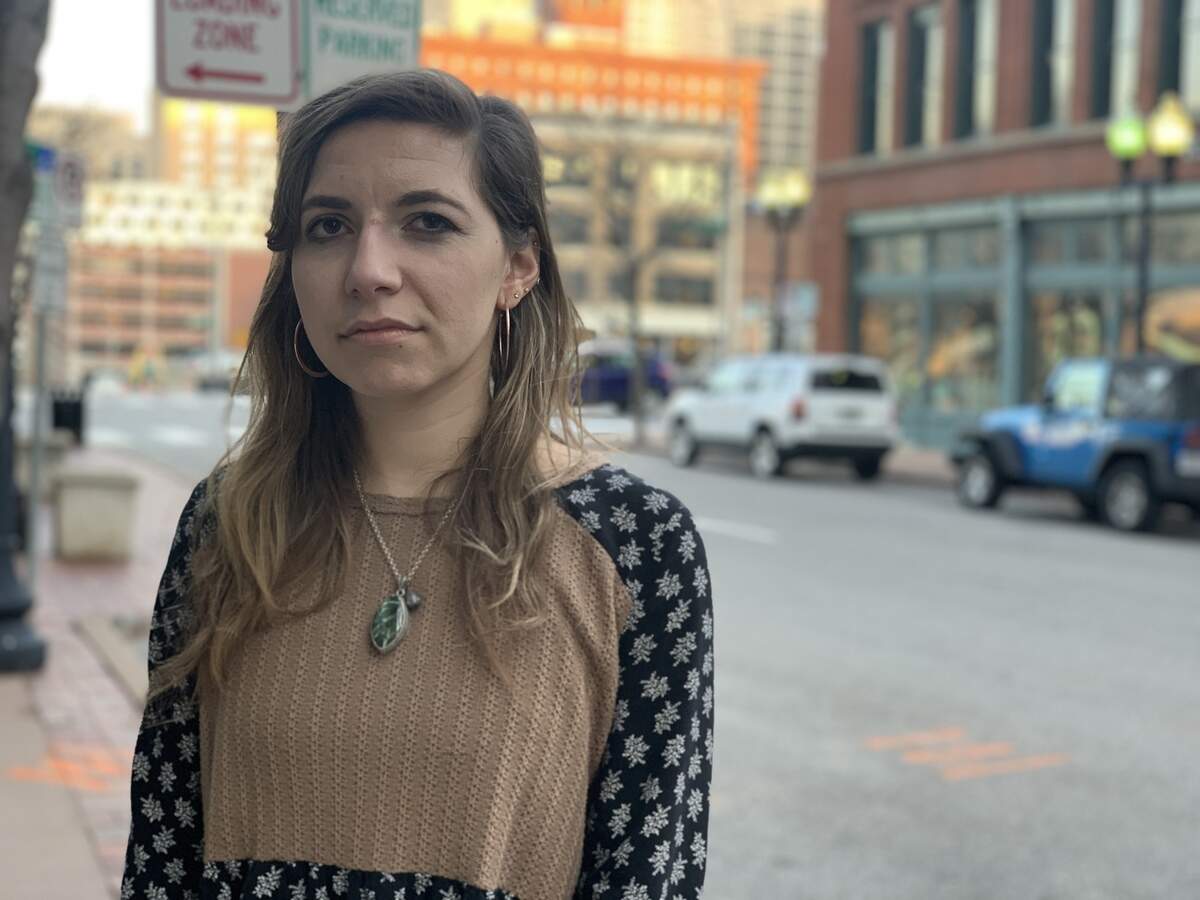
Nora Anzawi and Evan Payne were halfway across a Waldo crosswalk on a June Saturday night when a white Prius slammed into them, sending Payne flying 20 feet.
For Anzawi, everything went black.
The crash shattered part of Anzawi’s leg. Some of her hair was stuck to the car, police said.
Now, Anzawi says a “botched” police report that wrongly blamed her has caused a fight with her insurance company over thousands of dollars in medical bills.
After she filed a complaint against the officers who investigated her crash, the Kansas City Police Department revised its report. Where the report had blamed the pedestrians, it now also blames the driver. But police never told Anzawi.
Anzawi said she sees a larger pattern, one where pedestrians and bicyclists are blamed when vehicles hit them, even if they do everything right.
She compares her experience with that of a Kansas City bicyclist who was hit by a car on Christmas Eve and died five days later. In that case, BikeWalkKC, a bicyclist-pedestrian organization, said the police description of that crash bordered on “victim blaming.”
In 2019 Kansas City recorded 14 fatal crashes with pedestrians and two involving bicyclists. Data on the total number of pedestrian-involved crashes was not available.
In Anzawi’s complaint, she alleges that police officers failed to properly interview witnesses to her crash, did not accurately document what happened and did not properly assess the driver’s involvement.
Sgt. Jacob Becchina, a KCPD spokesman, said police would not discuss Anzawi’s complaint.
The driver of the Prius was Joe Perez, a former Kansas City Chiefs player and current owner of the Artego Pizza restaurant at 900 West 39th Street. In a written statement given to The Star, Perez said it was an “unfortunate incident” and he is “happy everyone was safe.”
In the crosswalk
On the night of the crash, Payne and Anzawi were celebrating her sister’s birthday at Dodson’s Bar & Commons in Waldo. They had a few drinks and then left to get an Uber, Anzawi said.
Around 12:30 a.m. on June 2, Anzawi said, she looked both ways before she and Payne started crossing Wornall Road at 74th Terrace.
One car heading south yielded to them.
Halfway across, the Prius hit them.
Anzawi remembers fading in and out of consciousness. The impact sent Payne flying, but she could see he was bleeding profusely.
“What’s his name, what’s his name?” someone asked. “You got hit, you got hit,” another voice rang out.
After the crash, Perez pulled over to wait for police. He told officers he tried to stop, according to the report.
As Anzawi lay in the street and a crowd gathered, she realized her left side was numb and her right leg was in pain.
Doctors told Anzawi she shattered her right fibula. She later learned she also had a concussion. She now has post-traumatic concussion syndrome, which can cause headaches and dizziness for months.
Payne had a hairline fracture in his left elbow, road rash and sprained wrists.
At the hospital, Anzawi said, a police officer asked her what she remembered — then asked if she had been drinking.
What happened that night
Billie Pichardo, listed as a witness in the police report, was in the car that yielded to Anzawi and Payne. She gave a statement to police, but didn’t see them write down what she said. They did take down her name and number.
“I felt like this wasn’t going to go right,” Pichardo said. “We heard the car hit him. I was pretty sure he was going to be dead … I saw (the driver) coming through the light and my husband was like, ‘I don’t think he’s going to stop.’”
Police reported that Pichardo said the two pedestrians were stumbling and carrying alcoholic beverages. Pichardo says she never said that.
The initial police investigation said Anzawi and Payne were crossing at an “unmarked crosswalk.” It also listed alcohol as a probable contributing circumstance for Anzawi and Payne. It did not list any contributing circumstances for Perez.
Perez, who was on the Kansas City Chiefs roster in 2000, before an injury, gave The Star a written statement: “I believe that if there are better measures to be taken to prevent these types of events in the future, then they should be implemented.”
Perez said he has volunteered for the Missouri Federation of Bicycling and Walking. “I believe strongly in advocating for effective municipal planning to better support bicycling and walking in Kansas City.”
According to the police report, Perez said he was traveling about 30 mph that night when he saw Anzawi’s friend with “sagging” pants, “leaned over as if he had tripped and was falling.”
“They were literally trying to place blame on the guy,” said Pichardo. “I feel like they were trying to use terms like that to make them be seen in that lesser light.”
Officer Doaa El-Ashkar, a police spokesperson, directed questions about the language in the report to Perez.
“It is standard procedure to put the driver’s and witness statements in our reports, she said.
In August, Kansas City police conducted a follow-up investigation, correcting errors “inadvertently made in the original report.”
The original police report said Pichardo described both pedestrians carrying “what appeared to be alcoholic beverages.” The follow-up investigation changed that to say Payne “had a glass.”
It’s not clear how the errors occurred.
Additionally, the probable contributing circumstances should be “failed to yield” for all three of those involved, police said.
The subsequent investigation also corrects the type of crosswalk from “unmarked crosswalk” to “marked.” The crosswalk at 74th Terrace and Wornall Road has been in place for 10 years, according to Kansas City’s Public Works Department.
The 74th and Wornall crosswalk has pavement lines as well as crosswalk signs on either side of Wornall.
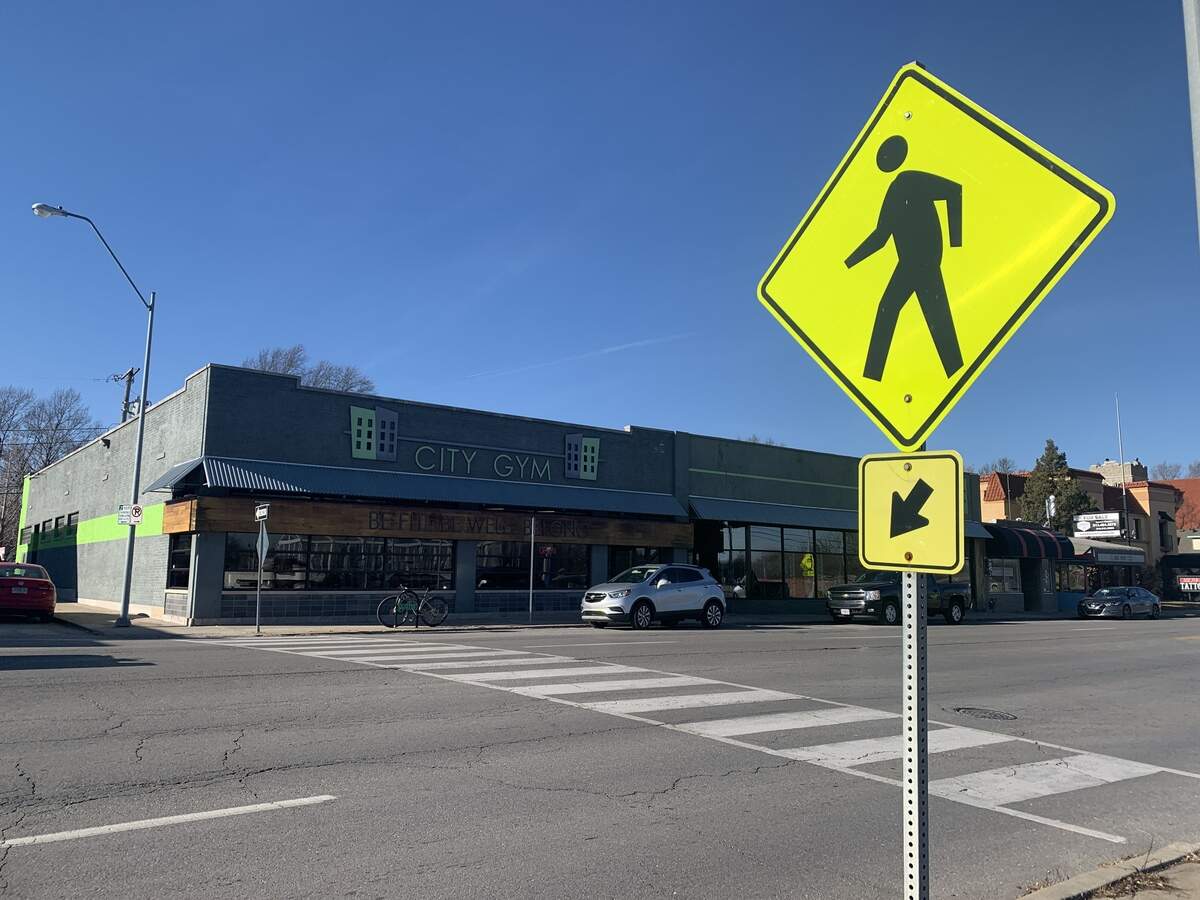
According to public works spokesperson Maggie Green, an unmarked crossing would mean an intersection crossing with no paint. Green said the department was not familiar with the term “unmarked crosswalk.”
After the crash, Anzawi called to verify Perez’s insurance. She was told the policy didn’t exist.
Police later found Perez did not have valid insurance. He was cited.
A complaint
Shortly after the crash, Anzawi filed a complaint with the Office of Community Complaints, the board responsible for receiving complaints made against the KCPD.
“No one wants to hear your opinion; no one’s even going to listen to you,” Anzawi said, describing how she felt dealing with the aftermath.
“Having that come from so many different people after being a victim of something that was completely not my fault and no one being faulted except for me, it seems absolutely absurd and it makes you feel like you’re crazy.”
The day after the crash, Pichardo posted on a Waldo Facebook group, asking if anyone had seen the crash and if they knew the pedestrians. She was eventually connected with Anzawi and told her what she saw.
Anzawi said when she received the police report weeks later, she called Pichardo worried because what was in the report wasn’t what Pichardo told her after the crash. Pichardo told The Star that she thinks police deliberately reworded her statement to make the pedestrians look bad.
“About 50 percent of the report is just focused on Evan being black,” Anzawi said. “And trying to frame it like he is being disobedient or not behaving with the officers when he’s had a brain injury, a traumatic brain injury … just trying to make him look like a ne’er-do-well kind of citizen.”
Looking forward
Brent Hugh, executive director of the Missouri Bicycle and Pedestrian Federation, said the best way to reduce these crashes is to change the system.
“When we look at pedestrian safety and road safety in general, when a particular collision happens, we tend to start blaming victims and also blaming the driver,” Hugh said. “One of the most profound things we know from studying how these crashes are reduced … you’re never going to change human nature. What you have to change is the environment.”
In the meantime, Hugh suggested drivers go 5 mph under the speed limit, rather than over, and not be distracted. Pedestrians, Hugh said, should be sure to use a crosswalk and look both ways.
Changes are coming to the area where Anzawi and Payne were injured.
The city plans to reconstruct Wornall Road from 74th Street to 79th Street to improve traffic flow and accommodate pedestrians.
Anzawi could not work for three months after the crash. She wants officials to make the city safer.
She has since returned to work at mySidewalk, a startup that helps track and analyze city data, but she still hasn’t fully recovered.
“I know I’m not the only person that this happens to,” Anzawi said.
“I understand there are other things on the docket. … But you have to accommodate if you want people to live here. If you want people to prosper, they’re going to want to be in areas they can walk and not be killed by cars.”
Her biggest concern is that what happened to her will happen to someone else.
At least, she said, she can still talk about it.
This story was originally published January 14, 2020 at 5:00 AM.