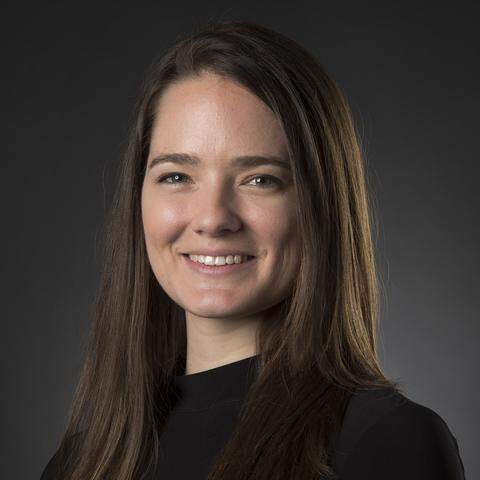
Two JCCC staffers knew of hungry students. They came up with a way to help, discreetly

The high-schooler was visiting Johnson County Community College with a class when he was caught stealing food.
The teenager’s friends had stopped to order items in a campus cafe, but he didn’t have money to eat.
And while campus staff ultimately set up the potential student with some food, stories of other students experiencing hunger prompted two colleagues — Claudia Martin-Ayoade, campus dietician, and Jason Arnett, a dining services manager — to start serious conversations about how to help.
“We knew we needed to do something, we just needed to figure out how to make it work,” said Martin-Ayoade, who knew some students struggled to eat and live in Johnson County even when their books and tuition were covered by financial aid.
Their brainchild — a meal share program that puts $7 a day in meal accounts of qualified students so they can purchase food anywhere on campus — grew from there.
It’s not unusual for students who qualify for financial aid to receive meal funds at four-year colleges. But such programss are less common at two-year colleges.
When Martin-Ayoade and Arnett started making inquiries in May 2017, they said they were heartened by how quickly school staff helped plans get off the ground.
By summer, the financial aid department had set up a way to discreetly transfer funds to student ID cards that can be swiped for purchases. The college foundation put up money, and some faculty members made donations.
Meanwhile, the pair spent the next semester finalizing other details. They were adamant about setting up the program in a way that didn’t identify students, particularly to cashiers who are often also students.
“We wanted to protect their privacy,” Arnett said. “And we wanted to protect their dignity.”
The program launched in January 2018.
Here’s how it works: Students apply for the meal funding through the financial aid department or on the food services website. Applications include a short essay about their needs and details about their income.
The school uses income guidelines similar to ones used to determine who gets free and reduced lunch in secondary schools. But students don’t have to have financial aid to be accepted.
Selected students must take a free, online course developed by Martin-Ayoade called “Eating Healthy on a Budget,” and write a thank you note to the college foundation before they receive their funds.
Students have $7 to spend each day — unused funds don’t carry over — and must reapply each school year.
But the program can only support as many people as it has money for, and fundraisers such as Giving Tuesday can’t support the program long-term. Last semester, funds covered about 85 students. Nearly 150 people applied this school year.
For now, Arnett said, dining services is covering some costs, while funds from the foundation, a community sponsor and grants keep it going.
The program costs roughly $25,000 a semester. It will need more donations to continue.
Martin-Ayoade said ideally, she wants to support as many students per semester who apply and demonstrate a need. For now, students must apply between July 1 and Aug. 1 for next school year.
“My ultimate goal is to have it so that we don’t ever have to close the application,” she said. “We want students to be able to get on whenever they have a need.”
She knows firsthand what it’s like to be hungry.
A native of Jamaica, she spent her childhood selling T-shirts and hats to tourists to help support her struggling family.
“It affects everything,” she said about hunger. “You don’t function. You can’t absorb the things you normally would if you are fully fed.”
But Martin-Ayoade was a bright kid who studied geography and loved to read. At 12, she caught the attention of an American woman named Norma Hill, who traveled each year to Jamaica with her niece.
As the years passed, Martin-Ayoade would join the pair on vacation activities and trade classic books with Hill, who introduced her to Maya Angelou.
When Martin-Ayoade graduated from high school, Hill gave her an offer she couldn’t refuse — a chance to live and study in Kansas City with her sister’s family.
“I feel like some people have the ability, they just need the opportunity,” Martin-Ayoade said. “I always say I’m the perfect example of that.”
She’d go on to get a bachelor’s degree from Webster University and two master’s degrees after attending Penn Valley College. At a recent board meeting, where she and Arnett won the Innovation of the Year Award from the League for Innovation in the Community College for the meal-share program, she spoke about how “growing up with nothing, almost” fueled her passion for this program.
Hunger, she told the audience, can take away “the opportunity for something great” in students’ lives.
Arnett said he’s also seen the quiet impact of the program. Recently, he helped host a culinary class in Cafe Tempo, a dining area in the campus’ Nerman Museum. As a colleague lectured students, a student tapped his arm.
“I’m on the meal share program,” she said to Arnett, “and I can’t thank you enough.”