
Cool and wet defined 2014 summer weather in KC area
What felt and looked like the best summer ever is, by the numbers alone, unimpressive.
Ryan Cutter fired up his weather computer and ran the data. He was looking for those statistical benchmarks that would reflect how a Kansas City summer could possibly allow grass to remain green into September and make long afternoon walks a pleasure.
“And the survey says...,” quipped Cutter of the National Weather Service station in Pleasant Hill, Mo.
The survey said not much.
The summer of 2014, coming after a string of crackling dry years that ruined trees and driveways, will go down in the books as the 21st wettest since 1888, the 26th coolest and firmly middle-of-the-road in terms of heat advisories and thunderstorm warnings.
How could that be?
Sometimes lovely can’t be measured.
Meteorology has served up the heat index, the wind chill and all sorts of ways to quantify miserable weather, Cutter noted, “but I don’t know of anyone who’s come up with a comfort index.”
All that Alan Branhagen needs to do is look out his office window at Powell Gardens.
There’s an oak tree, in that spot about 15 years, that he felt compelled to measure last spring. It was 30 feet tall back then and appearing a bit glum.
“It’s grown to 35 feet this summer,” said Branhagen, director of horticulture at the gardens southeast of Kansas City. “That’s amazing.”
So many non-native trees in the region have over the years turned to toast — victims of what he called “fire blight” — or been broken under heavy snows.
But the oak outside his window, being of these parts, just needed the 17 inches of rain that fell this summer to stretch out and enjoy life.
“Our weather changed on a dime this year,” Branhagen said, “as it always does around here.”
There are other ways to put a number to a mild summer.
Try 10,000. As in Missouri deer that didn’t die.
An insect-borne disease called bluetongue was suspected in recent summers to have claimed that many deer annually. Their carcasses typically turned up in shallow ponds where flies carrying the virus also would lurk, said Joe DeBold of the Missouri Department of Conservation.
The mingling deer and diseased midges would swap the virus “anywhere they could find water,” DeBold said, “and you had such limited water resources from which they could choose.”
This summer suspected cases of bluetongue plummeted, he said.
Countless other critters are apt to benefit in the coming months from a bumper crop of nuts and berries, he said: “The wild blueberry production, the acorn production — all across the board, it’s going to be huge.”
Ask bird man Mark McKellar to devise a “comfort index” for the summer and he’d say, how about four?
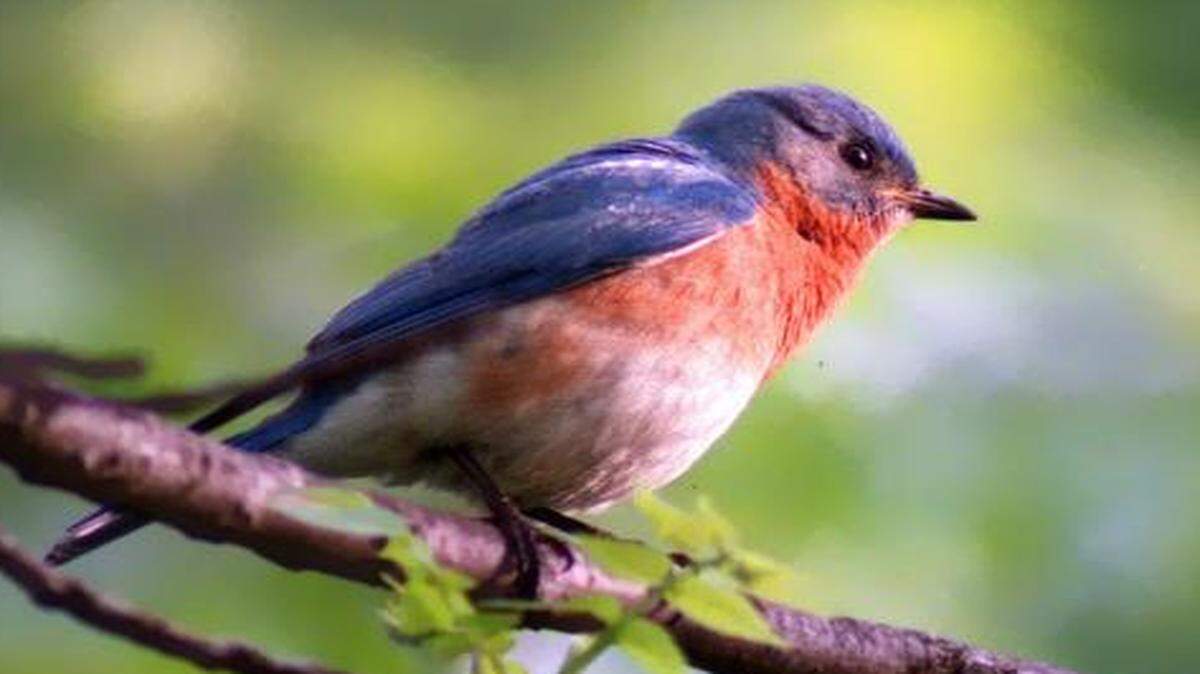
“I had a customer come in the other day saying, ‘I can’t believe I’ve got my fourth nest of bluebirds,’” said McKellar of Backyard Bird Center in Kansas City, North. Typically, he said, bluebirds in this region will attempt three nests — in April, early June and sometimes August — before moving south.
“This year the birds are thinking, ‘Hey, I can feed more mouths yet this season,’” he said. “Moisture is quite often the savior of many things.”
The mild conditions may even have thrown a temporary lifeline to the dwindling population of monarch butterflies. According to Monarch Watch, a conservation campaign at the University of Kansas, more than twice as many butterflies now migrating from the north could be spending the winter in Mexico than had clustered there last year.
All through the migratory path of monarchs, from Texas through Minnesota, favorable weather this year fluffed up flowering plants that produced the nectar the insects need.
Meantime, you’ve been saving on your water bills.
Johnson County Water One customers consumed 7.8 billion gallons of water from June through August. That’s almost a half-billion gallons fewer than they used last summer and just two-thirds of the water that flowed, much of it onto lawns, during the 2012 summer drought.
This summer hasn’t officially ended. But during what weather people call the “meteorological summer,” being June through August, the timing of the rains were as critical as the amounts.
In the gauges at Kansas City International Airport, the longest stretch without rain lasted 11 days.
That was in late July, which was the fourth-coolest July on record. The highest temperature all month was 96 degrees, and never during the meteorological summer did the mercury reach triple digits.
At Kauffman Stadium, the bluegrass in the outfield required about a third less sprinkling than normal to keep its emerald color, said groundskeeper Trevor Vance.
“We’re pushing a plant that wants to shut down in the summer,” he said. “The more water you give it, the more you have to fertilize. The more water and fertilizer, the more fungicide you need to put down....
“We saved on all of that.”
He’ll let Mother Nature do her job any day rather than rely on plumbing beneath the field. Groundskeepers know that an August lightning storm provides nitrogen that greens up the grass.
“There’s nothing better in summertime,” said Vance, “than a good, dirty rain.”
To reach Rick Montgomery, call 816-234-4410 or send email to rmontgomery@kcstar.com.
This story was originally published September 11, 2014 at 9:29 AM.