
Belton School District investigating bullying and hurtful emails
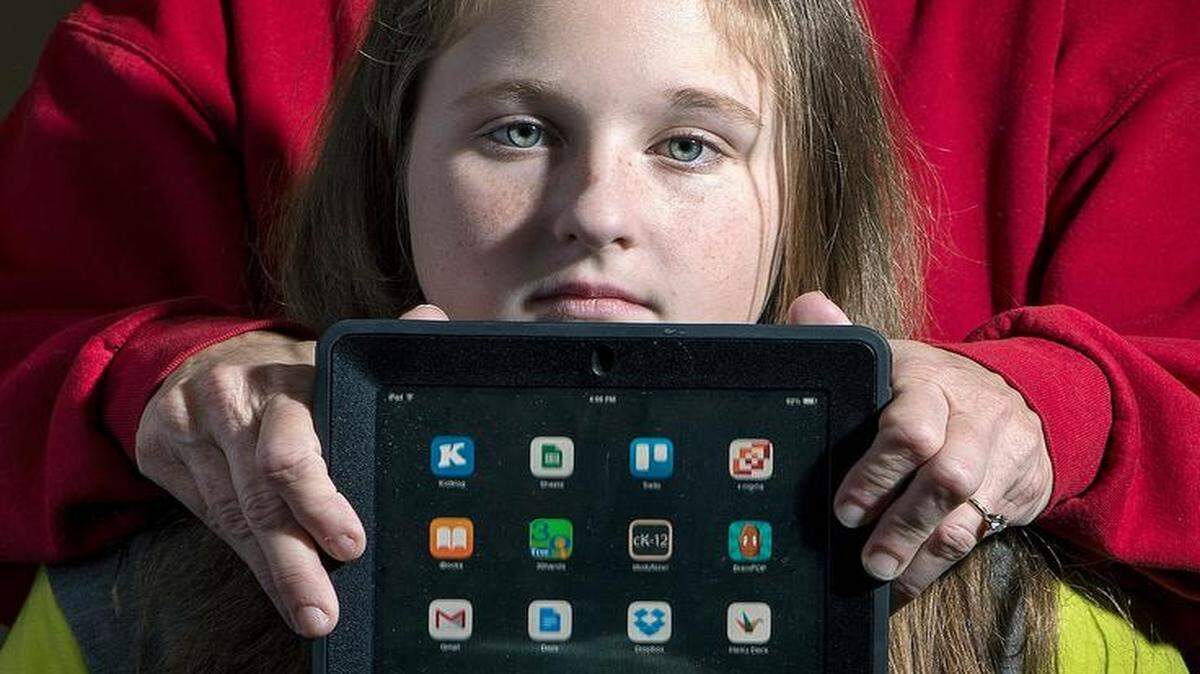
Earlier this month, an email received on her school-issued iPad shocked Belton seventh-grader Kersten Laughlin.
“You’re a f------ b---- nobody likes!” it said. The writer also implied that Kersten was so overweight that if she tripped and fell, she was in danger of falling through the floor.
The message appeared to have come from the school district email address of a friend, but that friend denied sending it.
“I called my mom and I was crying so hard, I couldn’t believe it,” said Kersten, who attends Belton Middle School/Freshman Center.
Belton School District officials have launched an investigation into hurtful and bullying emails that several district students have reported receiving through their school email addresses. In each case, the apparent sender denied sending the message.
Administrators think somebody has found a way to send the emails and make them appear as if they are coming from student email accounts.
It’s upsetting to district officials, who have made fighting bullying a priority for several years with measure such as setting up an online system that allows students to report bullying instances discreetly.
And it’s equally troubling that the attacks are coming through district-issued iPads meant to help students work more efficiently and creatively, administrators said.
District technology employees think some of the messages are coming from the same phone.
“The person using that phone can access somebody’s email account if they have an email address and password,” said Superintendent Andrew Underwood.
Underwood added that a student was recently suspended for attempting to disable the school district’s online system.
“We caught him as he was trying to do it,” Underwood said.
In an effort to thwart the middle school bully, administrators have told students to change their iPad passwords, Underwood said.
“We are proactive against bullying in Belton,” he said.
Although young people long have bullied one another, the digital revolution has made new methods available.
About 95 percent of American teenagers are online, according to the Cyberbullying Research Center at Florida Atlantic University. Of those, three-fourths can access the Internet on a mobile device.
Using smartphones or tablets, adolescents not only can send bullying messages but also take photos or videos and upload them for others to see, rate or forward. That allows an ever-larger number of individuals to be involved in the victimization.
In Belton, poor student password security could be contributing to the issue, Underwood said.
Belton students in grades seven through 12 began receiving school district iPads more than two years ago. Students use them to receive assignments from teachers through their school district email addresses.
When students received their iPads last fall, they also received generic passwords for them.
“But some students are still using those generic passwords,” Underwood said. “Our middle school principal has directed that all students be sure to have their passwords changed.”
Some of the cyberbulling in Belton sounds familiar, said one national expert, who thinks poor password security among students has led to the same problems elsewhere.
“Every time I have spoken to a youth audience, one of the questions I have asked is, ‘How many of you know somebody’s password,’ and a majority of hands will go up,” said Sameer Hinduja, co-director of the Cyberbullying Research Center.
“I then tell them that whether they do this out of convenience or as an act of bonding between friends, it is a bad idea.”
Middle and high school is a fluid time for friendships, Hinduja said.
“What kids don’t realize is that child and adolescent friendships can turn on a dime, and the next day that friend may be your worst enemy, and then what do you think your worst enemy is going to do with your password?”
It’s also easy for a student to learn four-digit pass codes by watching classmates type them into their digital devices, which may have email or social media applications already up and active, Hinduja said. Then that person can “borrow” the device and send emails under that student’s name.
“Kids are very trusting and can leave their devices on their desk, a lunch table or in the side pocket of a backpack,” he said. “If those kids are already logged on, somebody else can quickly type out a message.”
The Cyberbullying Research Center estimates that about 25 percent of 10,000 young people age 11 through 18 surveyed in recent years reported they had been cyberbullied at least once. About 17 percent admitted to cyberbullying others.
Victims can experience feelings of low self-esteem and academic difficulties.
Kersten first noticed the nasty emails at the first of the month. Her mother, Amy Laughlin, wondered at first if they were an April Fools’ joke.
Since then, her daughter’s friends have received similar emails, Laughlin said. She contacted school district officials.
Another parent told The Star that her son also received an inappropriate email.
In some cases, the person sending the email writes about what students were eating for lunch, who they sat with and what they wore, Laughlin said.
“I feel like I’m a bad parent, sending her to school when she gets these emails in class,” she said. “I almost want to say, ‘Let’s get rid of the iPads,’ but students use them for all of their schoolwork.”
To reach Brian Burnes, call 816-234-4120 or send email to bburnes@kcstar.com.
This story was originally published April 26, 2015 at 12:28 PM.