
Union Station celebrates survival at 100 years
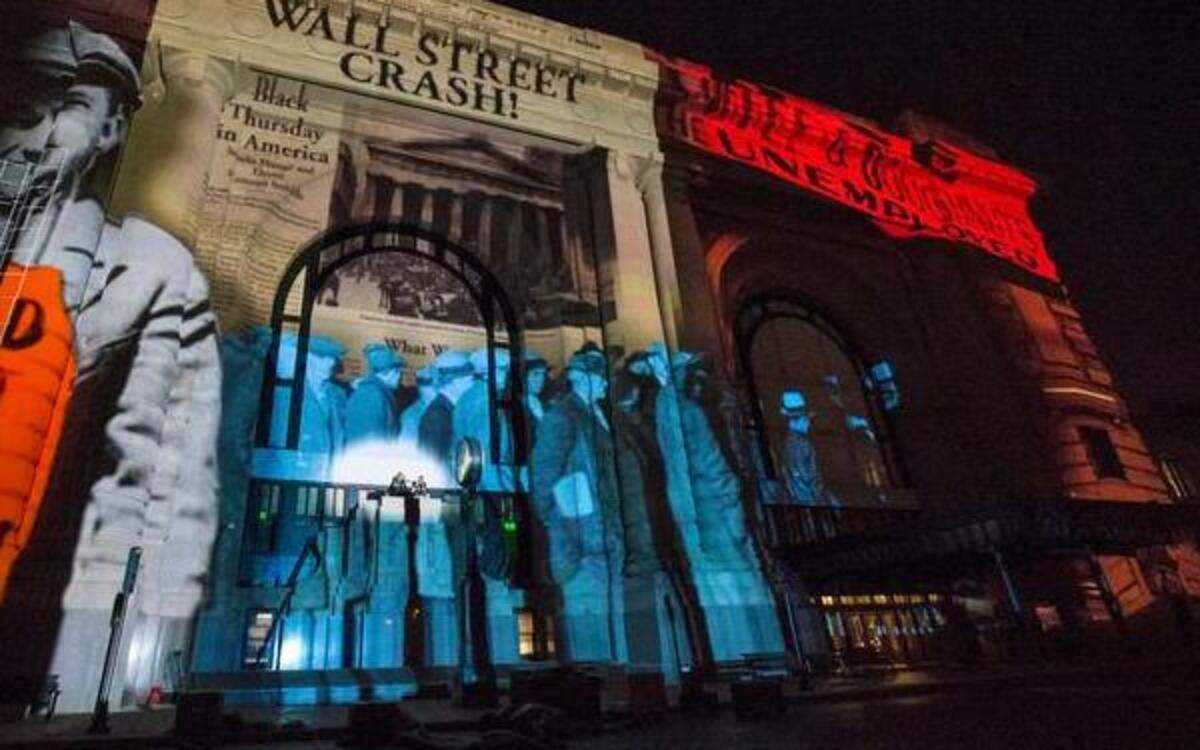
Union Station opened 100 years ago as an island of grandeur in a sea of muck.
“And what have we got?” asked a Union Pacific executive who had encouraged his fellow railroad barons to lavish $50 million on a new depot for Kansas City. “A monumental building set in a mudhole, looking out on mud banks, a canyon and some cheap stores.”
Streets leading to the new station were not paved. The south view was a wall of clay. The city planned to spend just $30,000 for beautification, which station architect Jarvis Hunt dismissed as “a picayunish pittance.”
“Why does this town,” he grumbled, “want to stay on the bum?”
We got past all that and, despite times of peril, Union Station remains a treasure in the city’s heart and memories. On Friday, thousands will gather for a centennial bash in front of the survivor.
“It’s a smashing success,” Union Station board hairman Bob Regnier said of the station’s financial turnaround after years of red ink and ridicule.
But nothing about Union Station can be taken for granted. There is virtually no endowment left and no other safety net other than a line of credit at the bank.
Union Station’s story really begins in 1869 with the Hannibal railroad bridge over the Missouri River, which secured Kansas City’s ascendance over other river towns. The old Union Depot in the West Bottoms quickly became overwhelmed by the tremendous growth in rail traffic. Seedy commerce that grew up around the depot offered a poor welcome mat for the city.
After the flood of 1903, a consortium of 12 railroad companies agreed on a site for a new station on higher ground at 23rd Street. Construction began in 1911.
They rerouted a creek and removed 670,000 cubic yards of dirt and rock. Five workers died on the project.
Union Station opened on Oct. 30, 1914, as the third-largest rail depot in the country. The two larger stations were both in New York. The main building was 850,000 square feet. The ceiling in the Grand Hall was 95 feet high, and its three chandeliers weighed about 2 tons each. The North Waiting Room was 352 feet long.
“I don’t believe the railroads will ever go to such expense again to build a structure of such mammoth proportions and artistic designs as the one they give to Kansas City today,” the president of the Missouri Pacific Railway said on opening day.
An estimated 100,000 people showed up for the dedication.
Other things were going on locally in the fall of 1914. Loula Long was winning ribbons at the Kansas City Horse Show. U.S. Secretary of State William Jennings Bryan was making a whistle-stop tour across Kansas. The Kansas City chapter of the American Red Cross was raising more money per capita for war relief in Europe than any other city in the country. A major issue in the November election was whether Jackson County and Kansas City should go “dry.” Didn’t happen.
The “ins” at City Hall were criticized for failing to spruce up the surroundings for such a magnificent railroad station. But voters began to address that with a bond issue in 1915 and, after World War I was over, the question of what to do with the hill south of Union Station was resolved with the construction of the Liberty Memorial.
In 1917, more than 79,000 trains passed through Union Station, 271 in just one day.
The eyes of the nation turned to Kansas City on June 17, 1933, when four lawmen and convicted mobster Frank Nash were gunned down in what became known as the Union Station Massacre. It spurred the creation of the modern FBI.
Passenger traffic through Union Station peaked at more than 678,000 in 1945 as servicemen and women returned home from World War II. But it was downhill from there as air travel gradually eclipsed rail. The Fred Harvey Co. folded, and the Westport Room closed in 1968.
Union Station was placed on the National Register of Historic Places in 1972, but traffic was down to just six trains a day by 1973.
The next two decades were marked by decay. The station literally crumbled. A Canadian company was hired to redevelop the building and ended up getting sued by the city for its failure to do so. A settlement paved the way for a bistate tax to renovate Union Station that was established by voters in Jackson, Clay, Platte and Johnson counties.
Union Station reopened in 1999 after a $263 million restoration that included building Science City. But disappointment quickly set in. The station ended year after year in the red and devoured a $40 million endowment. It costs a lot to heat and cool that place.
As recently as 2009, there was talk of boarding up the station and admitting defeat. But a strategy of minimizing costs (layoffs, outsourcing, etc.), maximizing lease opportunities within Union Station (the Greater Kansas City Chamber of Commerce, the Kansas City Area Development Council, etc.) and a string of blockbuster exhibitions (Dead Sea Scrolls, Princess Diana, King Tut, etc.) stabilized the station’s financial situation.
Union Station ended the last four years with cash surpluses before depreciation, and there is no longer talk about seeking taxpayer support to keep the doors open.
“I can remember when we said we’ll never survive without some sort of public subsidy,” Regnier said. “I’d love to tell you we sat down for two days and came out with a great plan. We all just knew we had to improve all the individual elements.”
Eventually, tax-increment financing payments that Union Station receives from the city (stemming from the Internal Revenue Service relocation to Pershing Road) will end, removing several hundred thousand dollars from station income.
But Union Station still has one undeveloped asset to the east, above the parking lot north of Washington Square park. There are preliminary discussions with the city parks department about ways that area could be reconfigured, opening up potential for development as well as improvements to the park.
Meanwhile, Union Station CEO George Guastello set a goal of raising $1.3 million for the centennial with a gala on Oct. 30. As of last week, the station had nearly $2.4 million in commitments and climbing.
That means managers have at least $1 million to begin rebuilding an endowment for Union Station’s future.
“Nobody believes we’re on easy street,” Regnier said. “But after some false starts, we’ve found what we think is a sustainable model. We’ve got to keep it going.”
To reach Matt Campbell, call 816-234-4902 or send email to mcampbell@kcstar.com.
This story was originally published September 4, 2014 at 9:46 PM.