
Hospitals put an end to early delivery of babies for convenience sake
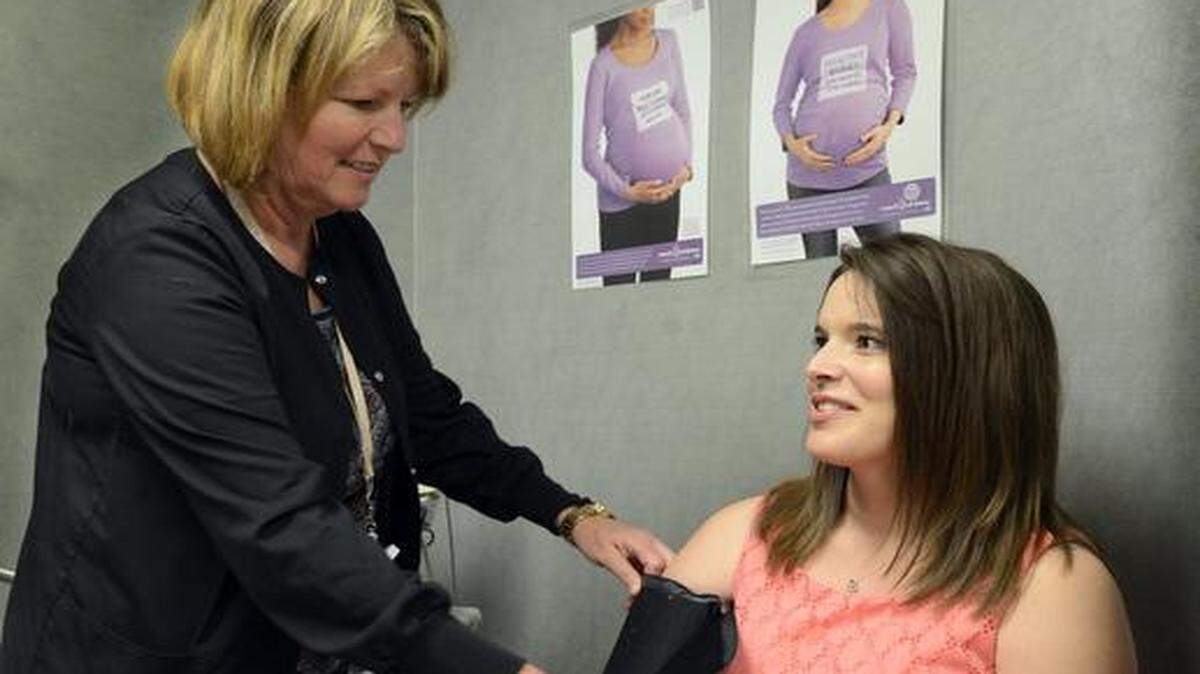
The contractions weren’t a sign she was in labor yet, but they were starting to make Nicole Hendrix uncomfortable, and not a little worried.
So she asked her doctor’s office whether they would deliver her baby by cesarean section right away. After all, she was already scheduled for a C-section about 10 days later, when she would be 39 weeks into her pregnancy.
But Hendrix, 33, of Kansas City didn’t get the answer she was hoping for.
“They said, ‘No. Until you’re at 39 weeks, we don’t do anything. No place in Kansas City will,’” she said.
That’s the new rule for childbirth in Kansas City and the rest of the nation. When mothers and fetuses are healthy, increasing numbers of doctors and hospitals are insisting that deliveries wait until 39 or 40 weeks, when pregnancies have reached full term.
This “hard-stop” rule is bringing a swift end to the days of “babies on demand,” when mothers and doctors scheduled deliveries that might take place weeks before babies were due. The practice grew out of improved technology and people’s insatiable demand for convenience, and helped fuel a steady rise in premature births in the United States from 1990 through 2006.
Babies born before their time are more likely to wind up in neonatal intensive care and suffer a variety of preventable maladies — underdeveloped lungs, problems feeding and regulating temperature, underdeveloped brain circuits.
Experts have long advised doctors against performing early elective deliveries — births through C-section or induced labor at 37 to 39 weeks gestation — that aren’t medically necessary.
Even so, it’s only been in the past few years that large numbers of hospitals have been putting a halt to the practice.
Public reporting of early elective delivery rates, a campaign by the March of Dimes and new research on how critical even the final few weeks are to fetal development have brought a quick turnaround in childbirth policies at hospitals nationwide.
“This has really been one of the most dramatic shifts in health care that I’ve seen in my career,” said Leah Binder, president of the Leapfrog Group, a national nonprofit organization that publicly reports quality and safety data on more than 1,400 hospitals that volunteer the information.
When the Leapfrog Group began reporting hospitals’ early elective delivery rates in 2010, 17 percent of all births between 37 and 39 weeks gestation were medically unnecessary.
“Some hospitals were shocked at their own rates,” Binder said. At one hospital with a rate of 35 percent, she recalled, the chief of obstetrics asked, “What were we thinking?”
Newly released numbers for 2013 from the Leapfrog Group show the national rate has fallen to 4.6 percent. Leapfrog Group had set a goal of 5 percent.
Recent data from the Missouri Hospital Association also show quick success. Among the 31 hospitals that took part in an association-sponsored quality improvement project, the overall early elective-delivery rate dropped from 17.2 percent in 2012 to 1.1 percent last year. By the second half of 2013, most of the hospitals weren’t doing any early elective deliveries.
The hospital association calculated that since January 2012, the hospitals in its project avoided 737 unnecessary early deliveries and saved more than a half-million dollars by delivering healthier babies who didn’t need intensive care.
Eugenia Pallotto, medical director of the intensive care nursery at Children’s Mercy Hospital, said she used to see more early elective-delivery babies being admitted to the hospital. They would need intravenous fluids, feeding and breathing tubes, and incubators to keep them warm.
“Thankfully, it’s decreasing,” Pallotto said.
The growing availability of highly effective neonatal intensive care units may have masked some of the problems associated with early elective deliveries, according to Edward McCabe, chief medical officer of the March of Dimes.
“We were doing so good in the NICU. The babies were doing so much better,” he said. “I think we were seduced by that. But these babies really do have problems.”
Babies born at 37 weeks gestation used to be considered full term, but recent research has bumped that up to 39 to 40 weeks, McCabe said. Babies born at 37 or 38 weeks run a 50 percent higher risk of dying before their first birthday.
Another hazard of early elective deliveries, researchers have found, is that estimates of fetal age are off about 20 percent of the time. That means many babies who were thought to be at 37 weeks gestation when they were delivered electively actually were at 35 or 36 weeks.
“The dating of pregnancy is not a perfect art,” McCabe said.
Babies born at 38 weeks don’t look any different from full-term babies.
“But sometimes, 38-week babies could be very sick with respiratory distress syndrome,” said J. Anthony Heit, an obstetrician/gynecologist at Overland Park Regional Medical Center.
Hospital safety advocates credit Overland Park Regional’s parent corporation, the HCA chain of hospitals, with pursuing aggressive policies to reduce early elective deliveries in recent years.
“When you look back at it, it makes sense to wait” to deliver, Heit said.
But waiting is hard, particularly for a woman late in her pregnancy who’s becoming increasingly uncomfortable.
Many doctors and nurses see their patients as having been the main motivators for early elective deliveries. There was the discomfort and the desire to schedule out-of-town relations to be there at the birth. Among new mothers who had their labor induced, 19 percent said they had wanted to get their pregnancy over with, a 2011-2012 national survey found.
But doctors also have taken advantage of the convenience factor.
Late in 2002, Katie Porter Gardner was pregnant with her daughter, Morgan. Morgan was in breech position, so a C-section was going to be likely, but she wasn’t due until Jan. 9, 2003.
That’s not when she was born.
“They had to schedule it on Dec. 20 because the doctor was going to California on vacation,” Porter said.
When Porter received Morgan in the recovery room to nurse her for the first time, the baby stopped breathing and turned blue.
Morgan was quickly resuscitated and is now a healthy 11-year-old. But Porter still has questions.
“How well were her lungs developed?” she asks. “And why was it not an option for me to go into labor naturally and then have a C-section?”
Getting physicians to change long-used practices can be hard, but that hasn’t been the case among obstetricians around Kansas City.
“I don’t think it was a hard sell,” said Annette Hinton, the clinical nurse manager of the maternity center at St. Luke’s East Hospital. Hinton’s hospital and others in the St. Luke’s Health System began a coordinated effort to reduce early elective deliveries about three years ago.
A committee of St. Luke’s doctors reviewed the research to determine what conditions, such as a mother’s uncontrolled diabetes or a placenta situated in a way that causes bleeding, may make an early delivery medically necessary.
Now, Hinton and her counterparts at other St. Luke’s hospitals review the records of all early deliveries that are scheduled.
“If I don’t feel it meets medical indications, I take it back to the physician,” she said.
Hospitals that haven’t curbed their early elective deliveries yet will likely find new incentives to do so. Already, Medicaid programs in Texas and South Carolina have stopped paying hospitals for these deliveries. The federal Medicare program now requires hospitals to report the deliveries and may make it one of the quality measures it uses to determine how much hospitals get paid.
But with March of Dimes posters in doctors’ offices and childbirth and breast-feeding classes all addressing the early elective deliveries, many expectant mothers are getting the message.
“I don’t know of many patients who even bring it up now,” said Ian Rosbrugh, an obstetrician/gynecologist who led the effort at North Kansas City Hospital to curtail early elective deliveries. For those who do, Rosbrugh has a quick answer:
“You’re rolling the dice, I tell them. Most people back off really quickly. They don’t want their baby in the NICU.”
To reach Alan Bavley, call 816-234-4858 or send email to abavley@kcstar.com.
This story was originally published August 12, 2014 at 8:37 PM with the headline "Hospitals put an end to early delivery of babies for convenience sake."