
Yosemite’s giant sequoias were saved by forest-thinning. Here’s why some want it stopped
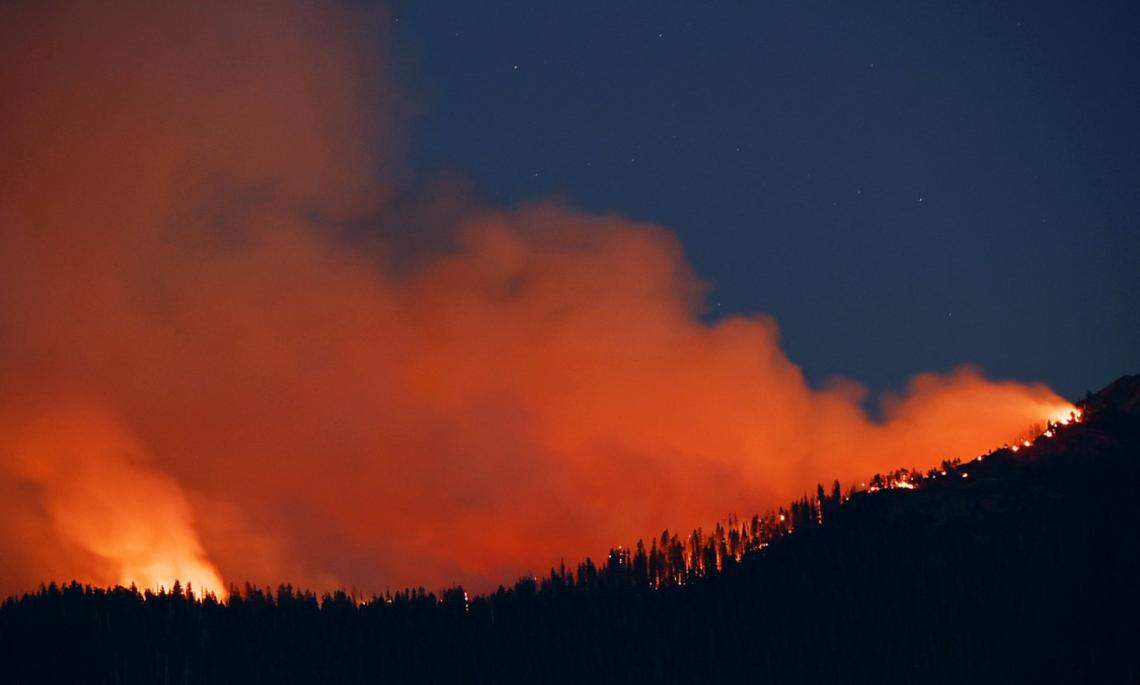
The wildfire burning in and around Yosemite National Park was threatening the park’s fabled Mariposa Grove and a nearby small community.
But the park’s forest ecologist saw plenty of good news when he inspected the Washburn Fire early last week: A forest-thinning project that had removed trees and dense undergrowth was helping tame fire behavior. The fire had burned under the trees that loggers had left standing — instead of climbing into their canopies and devouring them.
And the sequoias of the Mariposa Grove were standing, with minimal damage.
“It was exactly what it was supposed to be,” said the ecologist, Garrett Dickman.
There’s a growing consensus among wildfire scientists and forest ecologists: Many of California’s 33 million acres of forests are unnaturally overgrown with small trees and brush. To keep fires from exploding into catastrophic infernos, crews with chainsaws and chippers need to come in and thin out the undergrowth. Then in the years that follow, workers with drip torches need to set so-called “prescribed fires” every so often to burn away what grows back.
Yet just a month ago, a Berkeley environmental group called Earth Island Institute sued the National Park Service to demand a halt to a new round of thinning projects getting underway in Yosemite, in the general vicinity of the Washburn Fire.
The suit said the projects consisted of “extensive logging,” targeting trees of as much as 20 inches in diameter on more than 2,000 acres in the southern part of Yosemite. Earth Island accused the Park Service of violating federal law by neglecting to conduct studies of the projects’ likely environmental impact.
The lawsuit appeared to have its origins when Chad Hanson, director of an Earth Island affiliate called the John Muir Project, received a photo in May from a volunteer of trees being cut in Yosemite. Earth Island filed its lawsuit a month later in U.S. District Court in Fresno.
Hanson, who is Earth Island’s frequent partner in litigation, then submitted a written declaration with the court explaining why “these destructive operations” had to be stopped.
An ecologist who’s tangled with federal and state officials over forestry projects for years, Hanson wrote that the Yosemite work would mar the forest’s natural beauty, destroy vital wildlife habitat — and actually make the forest more vulnerable to wildfire by eliminating shade and windbreaks.
Removing live trees and downed logs would damage “the forest’s ecological composition” and bring harm to such creatures as the black-backed woodpecker and spotted owl, he wrote. “The damage to the forest will be akin to a clear-cut in its effects aesthetically as well as to the habitat viability of many local species.”
Wildfire season has begun in earnest — more than 4,000 fires have started this year, according to Cal Fire — and so has an incendiary debate over how California should protect its increasingly flammable forests during the climate change era.
On one side is a host of mainstream fire scientists and ecologists, and a growing number of environmental groups, such as the Nature Conservancy. They argue that thinning overgrown forests, coupled with intentionally set prescribed burns, eliminates the heavy fuels that have turned the woods of California into unnaturally volatile tinderboxes in recent years.
In a rare bit of bipartisanship, the administrations of former President Donald Trump and the current administration of President Joe Biden share management strategies that largely align with the scientific consensus when it comes to thinning California’s overgrown forests.
Just weeks before the Washburn Fire started, several members of Congress, a mix of Democrats and Republicans, introduced a bill called the “Save Our Sequoias Act” that would streamline procedures for approving forestry projects in the hopes of ramping up the scale and pace of forest thinning.
And, at the state level, Gov. Gavin Newsom has persuaded the Legislature to appropriate millions for thinning projects, such as the kind the park service is crediting for saving the sequoias from the Washburn Fire so far.
“Deeply thankful to the firefighters on the frontlines of the #WashburnFire protecting the majestic sequoias,” Newsom’s Natural Resources Secretary Wade Crowfoot wrote Monday in a tweet. “And for the prescribed fire & forest (management) done in recent years to help firefighters make this stand.”
On the other side is a faction of environmentalists, such as Hanson, who say these thinning projects — which usually include removing dead trees and brush and cutting down selected live trees — wrecks the forest ecosystem and actually increases fire risk. Philosophically opposed to almost all logging on public lands, these environmentalists will lodge administrative protests against projects being planned, and will take state and federal agencies to court if need be to stop them.
In an interview Wednesday with The Sacramento Bee, Hanson said his critics “are people who want more logging, for their own economic and political interests.”
The Earth Island lawsuit over the new Yosemite forestry work has achieved its goal, at least for now. On June 30, the two sides made a standstill agreement that will limit the scope of the Park Service’s work, including a stop to tree cutting in a portion of the project area. The deal will remain in place until Judge Anthony Ishii rules on Earth Island’s demand for an injunction, probably in mid-August.
Earth Island and Hanson trumpeted the agreement in a news release headlined, “Logging Halted in Yosemite.”
Hanson said the agreement doesn’t prevent the Park Service from cutting down trees near places such as Wawona, a community of 111 people completely surrounded by the park. But it puts strict limits on any logging activity in other parts of Yosemite, he said.
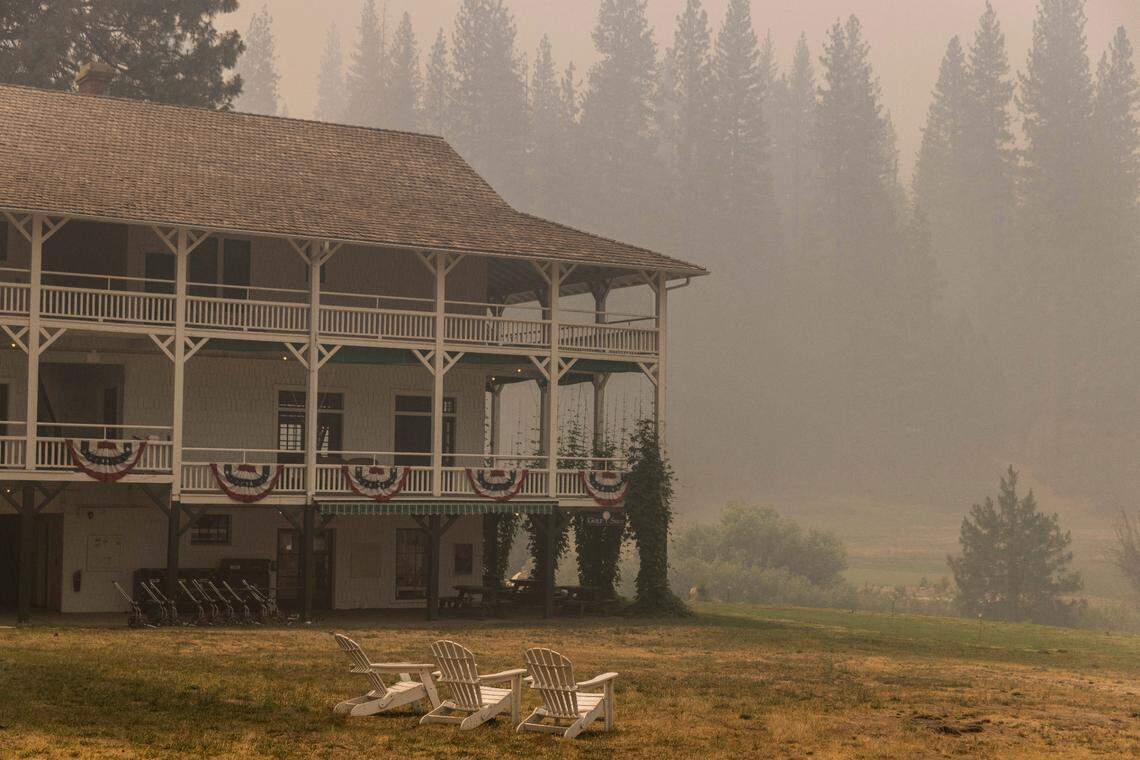
Hanson said that it’s unclear how many trees already have been cut.
“This whole thing has been a black box,” he said, arguing that Park Service officials have refused to provide details about the work. “We know that some of the logging has occurred.”
He added that the Washburn Fire’s footprint “doesn’t intersect” with the areas affected by the lawsuit, and said the fire doesn’t change his mind about pursuing litigation.
Nancy Phillipe, a spokeswoman for the Park Service, declined comment on the thinning projects and the litigation. Cicely Muldoon, the Yosemite park superintendent, didn’t respond to emails seeking comment.
But park officials have warned for some time that Yosemite was highly vulnerable to fire — and its woods needed to be thinned.
A Park Service document completed last August offered the agency’s justification for pressing on with the projects that are now under litigation: “Impacts from this action are expected to be beneficial to forest health and intended to thwart the potential negative, extensive impacts from large, catastrophic fire, which could result from not taking action.”
Melinda Barrett, who runs an organization that coordinates forest-thinning projects around Yosemite, said Earth Island’s lawsuit could stymie future work as well — setting the stage for an ecological and human catastrophe in a region that has millions of highly flammable dead trees still standing after they died during the last drought.
“There are massive amounts of fuel that need to be removed,” she said.
Environmentalists fight California forestry work
The lawsuit against the National Park Service is the latest in a series of legal attacks launched by Earth Island, the John Muir Project and other environmental groups that oppose forest-thinning projects. They call them little more than clear-cuts and commercial logging operations in disguise.
Sometimes the lawsuits, which usually allege forest officials didn’t follow proper environmental reviews, force government agencies to kill the projects or scale back the scope of their work. Last year, Earth Island and a group called Sequoia Forestkeepers obtained a court order that significantly limited the U.S. Forest Service’s ability to remove trees in a portion of the Sequoia National Forest, three hours south of Yosemite.
The very threat of lawsuits often delays forest thinning for years. For a fire-fuels project that covers even a few hundred acres, government officials typically must create hundreds if not thousands of pages of scientific and legal analyses to explain and justify the work. If the environmentalists sue, those files will need to be reviewed by a judge — a process that can take years, even if the judge ends up siding with the government.
In their legal arguments, the environmentalists often invoke research work performed by Hanson, who has a doctorate in ecology from UC Davis.
Hanson is often quoted in news articles and has written a book on forest management called “Smokescreen: Debunking Wildfire Myths to Save Our Forests and Our Climate.” Hanson has also authored and co-authored numerous articles on forestry and fire management in academic journals.
“We go to court to stand up for science,” Hanson told The Sacramento Bee last fall.
But dozens of fire scientists and ecologists are standing up to Hanson and his allies in recent years. At least 111 scientists have signed their names to 41 different academic papers attacking Hanson’s and his colleagues’ arguments about forest health and wildfire behavior.
Last summer, in a series of articles in the journal Ecological Applications, fire scientists Crystal Kolden of UC Merced and Scott Stephens of UC Berkeley, along with other co-authors, blasted Hanson’s scientific methods and conclusions.
“I and my colleagues are getting really tired of the type of activism that pretends to be science and in fact is just self-serving garbage,” Kolden told The Bee last year in an interview.
Wildfire suppression raised forest dangers
Fire scientists say that in much of the Sierra and in the other forests dominated by pines and firs in dry inland Northern California, the woods are in terrible shape, due in large part to a century of aggressive logging and fire suppression.
Before the Gold Rush, California’s forests were dominated by trees large and sturdy enough to survive wildfires that burned through the woods every decade or so — started by lightning or set intentionally as a land management tool by the region’s Native American tribes.
The fires burned with far less intensity than today’s infernos. They cleared the undergrowth, downed limbs and pine needles.
After white settlers arrived, fire was excluded from the landscape to protect lucrative timber stocks. Much of the sturdy old-growth forest was cut down for lumber, and what grew back in its place were dense stands of small trees and brush.
The stage was set for an era of catastrophic fires of the sort California is experiencing practically every year.
The lawsuit over the Yosemite forestry work, like others filed by Hanson and his allies, is counterproductive to what is needed to get the woods back into ecological balance, said Brandon Collins, an adjunct professor at UC Berkeley and U.S. Forest Service scientist who’s published research on wildfire issues in academic journals.
“We need to really scale up how we’re dealing with these forests,” Collins said.
Collins is among those advocating for aggressively sending crews into the woods to clear out the smallest trees and brush below the biggest trees that are still on the landscape. Then foresters need to embrace what the Indians did: Set fires every few years or let the fires that ignite naturally do the work of thinning the brush and small trees that grow back.
Collins said the Park Service at Yosemite has been doing more of this ecologically important work than other land-management agencies are conducting elsewhere in California. Dickman, the Yosemite ecologist, said the forest treatments conducted by the Park Service saved the giant sequoias from the Washburn Fire.
“They’ll certainly survive it,” Dickman said. “It’s just some black bark.”
Dickman said the Park Service has been treating the Mariposa Grove for years — mostly with prescribed fire to remove underbrush, but with some selected culling of smaller trees.
“It’s like removing Christmas trees,” he said.
Still, Collins said more needs to be done.
He said the ancient sequoias are at risk — and not just from fire leaping from dense stands of overcrowded trees that surround them.
With yearslong droughts becoming increasingly common, he said there’s also a real concern the sequoias could get starved of water from the surrounding root systems of so many trees unnaturally crowding the landscape.
“If we’re thinking out the next 20 or 30 years, to try to … preserve these large sequoias,” he said, “we’ve got to give them all the room they can take, so they’re not being competed with for moisture.”
Yosemite wildfire re-ignites criticism
In the meantime, the Washburn Fire continues to burn — and the criticism against Hanson and Earth Island intensifies.
Barrett, executive director of the Mariposa County Resource Conservation District, said the environmentalists are mischaracterizing what’s happening.
Barrett’s agency has received about $15 million in grants from Cal Fire and the California Wildlife Conservation Board to carry out thinning projects around Yosemite.
She said the last drought killed 10 million trees in Mariposa County alone, creating a severe fire risk.
To make local fires less severe, many of those dead trees need to be removed. Also a problem are the dense stands of undergrowth that are so unnaturally thick in places it’s impossible to walk through, Barrett said.
“I’m frustrated that I feel they don’t portray accurately what is going on,” she said of the environmentalists’ latest lawsuit. “They use words like ‘commercial logging’ and ‘clear cutting’ and things that inflame people’s emotions. And I don’t think it accurately describes what we’re doing.
“We’re not just plowing the forest down,” she said. “We love the forest. That’s why I live here. We’re really careful.”
Most of the woody debris from the thinned area is chipped and sent to a local biomass power plant. Other wood is shredded and turned into animal bedding. The few larger logs removed that have a commercial value are sent to sawmills. Any profits go back into future restoration projects, Barrett said.
The fire, which began July 7, burned 4,822 acres as of early Saturday and was 37% contained.
Officials said the fire was burning slowly and was moving east, away from Mariposa Grove — a stand of more than 500 giant sequoia trees, many at least 2,000 years old. Wawona, which had been evacuated, also appeared to be out of danger and officials said the evacuation order could be lifted Sunday.
“Mariposa Grove has shown little to no advancement of fire,” incident team operations chief Matt Ahearn said late Thursday. “The grove itself is in a very good place.”
Park officials took extraordinary measures to protect the grove. They installed portable sprinklers around the Grizzly Giant, an iconic 3,000-year-old, 209-foot-tall sequoia.
The grove came under federal protection under a law signed by President Abraham Lincoln in 1864, a quarter century before Yosemite became a national park.
The grove “is really the root of the whole national park system,” Muldoon, the park superintendent, said last week at a town hall meeting with Yosemite-area residents.
This story was originally published July 17, 2022 at 7:00 AM with the headline "Yosemite’s giant sequoias were saved by forest-thinning. Here’s why some want it stopped."