
There’s a ‘summer surge’ of COVID in Kansas City. See the data & latest on new vaccine
COVID-19 is on the rise once again across the U.S. and in the Kansas City area in what experts are calling a “summer surge” of the virus. But acquired immunity and the availability of antiviral treatments are making this wave more manageable than previous surges.
Ginny Boos, the director of infection prevention at Saint Luke’s Health System in Kansas City, noted that while the viral load in local wastewater samples is high, hospitalizations and deaths from COVID-19 remain low.
“The virus is very contagious and very prevalent in communities across the state, but not in ways that it’s causing people to be hospitalized,” she said. “They (the current strains) don’t cause as much of a severe response.”
The rise in infections could soon coincide with respiratory illness season as kids return to school and the weather cools down for fall.
But new protection from the latest variants isn’t far off. James Mansi, the vice president of medical affairs for Moderna, said the pharmaceutical giant is expecting “imminent” FDA approval of its newest COVID-19 vaccine.
“One of the key objectives was to ensure that the COVID vaccines were available at the beginning of the respiratory vaccination period, and to coincide with influenza,” Mansi said.
Here’s what to know about the status of COVID-19 in the Kansas City area.
What does the data show us about COVID-19 in Kansas City?
There is progressively less data available about how COVID-19 is circulating in local communities compared to earlier in the pandemic. County-level data on new cases, hospitalizations and deaths is no longer published regularly, and the CDC no longer reports test positivity rates on a state-be-state basis.
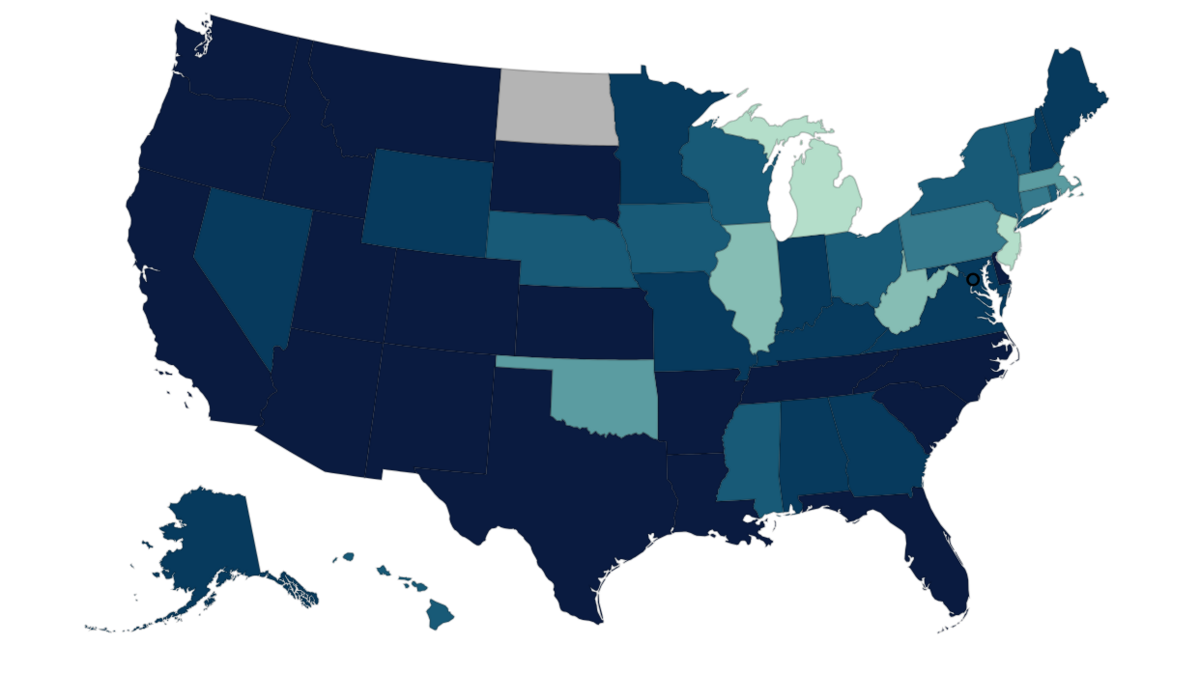
Wastewater tracking provides a valuable glimpse into state-level COVID-19 trends. Currently both Missouri and Kansas are in the “very high” category, according to the CDC’s National Wastewater Surveillance System. Both Kansas and Missouri rank slightly higher for viral presence than the rest of the Midwest, although they currently both fall slightly below the national average.
According to the CDC’s COVID Data Tracker, there’s a roughly 18.1% test positivity rate for symptomatic people in the region that includes Kansas and Missouri. That’s almost a 1% increase compared to last week in the region, and is slightly above the national average of 17.6%.
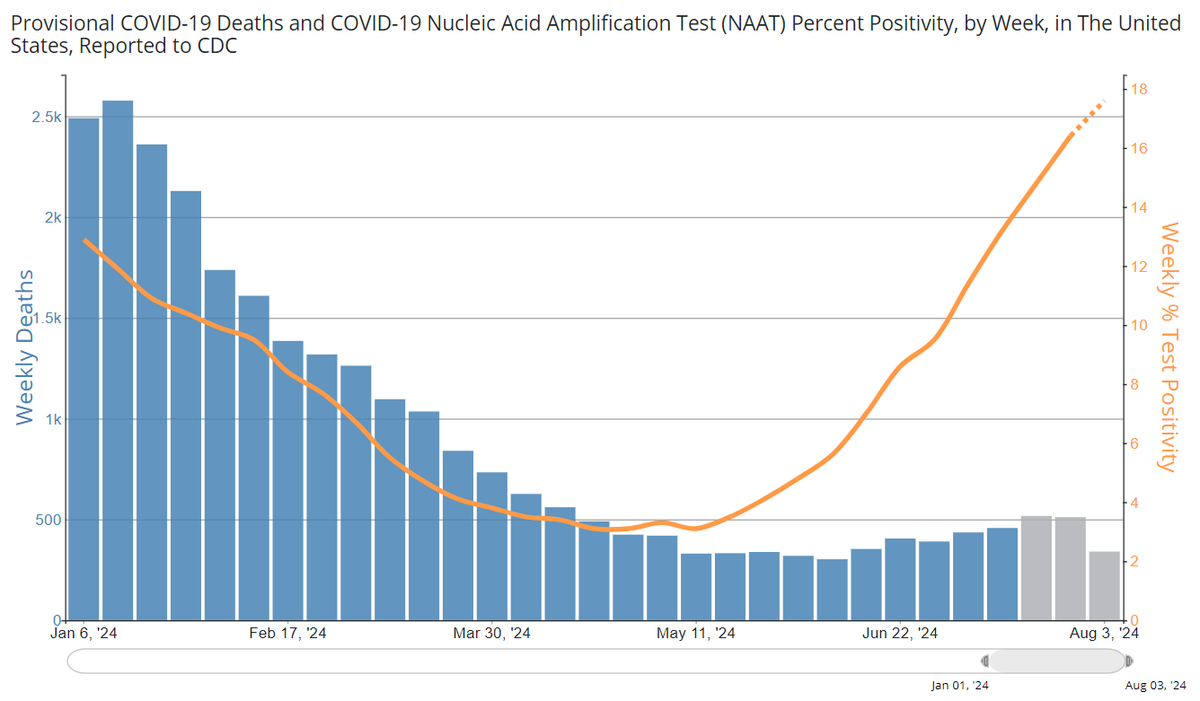
But these indicators of widespread infection aren’t necessarily leading to significant numbers of hospitalizations or deaths. Boos said that St. Luke’s has around 26 patients hospitalized for COVID-19 across its health system, which she said is far lower than during previous surges.
And while hospitalizations are up nationwide compared to earlier this spring, they’re still only at around half the rate seen last winter.
Deaths are reliably low, too. The CDC’s COVID-19 death tracker shows that deaths aren’t rising nationwide in tandem with increased test positivity rates. Missouri has reported 72 COVID-19 deaths in the last three months, while Kansas has reported just 28. That comes out to less than one death per 100,000 people in both states during that time period.
When will the new COVID-19 vaccine be available?
The predominant subvariant of the virus that causes COVID-19 currently circulating in the U.S. is called KP.3.1.1, a lineage of the omicron variant. In addition to being highly contagious, this strain has taken hold as most people’s defenses against the disease are declining.
“The immunity that we have gotten from either the prior infections or from vaccines definitely has waned, (and) that contributed to the current surge,” Boos said.
But Mansi told The Star that an updated vaccine is on the horizon.
“This is a monovalent vaccine that targets the KP.2 (variant),” he said. “The good news is that we believe it’ll cover that cluster of KP.3 and KP.3.1.1. So we anticipate that the updated vaccine will provide clinical protection against what’s currently circulating.”
Last year’s COVID-19 vaccine got FDA approval in September, so it’s likely we’ll see another approval in the coming weeks. Mansi added that the timing of this year’s vaccine was important to Moderna so the public could get their flu shot and COVID shot simultaneously. He credited mRNA technology for facilitating the quick turnaround.
“We’ve established the efficacy of the vaccine in our phase three clinical trials, and now it’s simply maintaining that composition,” he said. “That mRNA platform allows us to pivot quickly to adjust to what’s circulating and ensure that there is a sufficient vaccine supply at the beginning of the respiratory season.”
He added that the vaccine should be free for all Americans, either through their private health insurance or through government-funded programs for the uninsured. Once the newest vaccine is approved by the FDA and goes into production, you can find one near you at most pharmacies and local health departments.
Do you have more questions about the spread of COVID-19 in Kansas City? Ask the Service Journalism team at kcq@kcstar.com.
.jpg)