
COVID case numbers and hospitalizations stagnate in Kansas City at the end of January
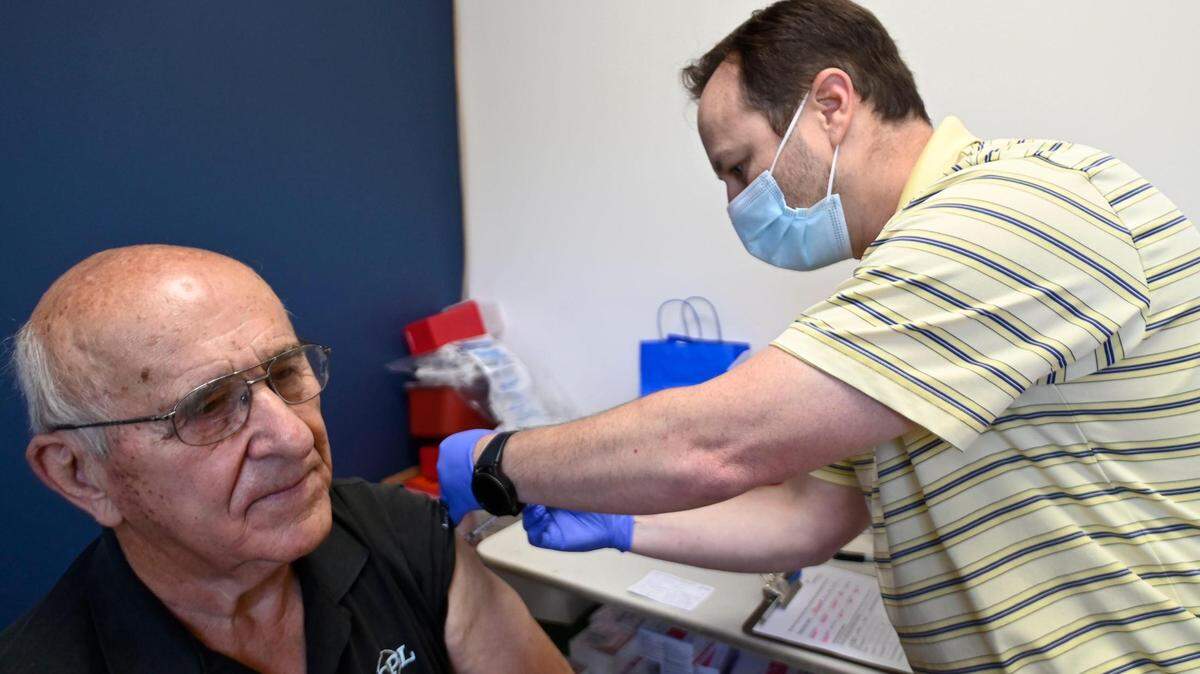
COVID-19 cases remained relatively steady in the metro this week as hospitalizations for the virus wane slightly. Experts are still recommending the latest bivalent booster shot to help protect against the latest COVID-19 strains.
“We have to remember that COVID is still with us along with the other respiratory viruses. influenza and RSV, this season,” said Dr. Wissam El Atrouni, an infectious disease physician at the University of Kansas Health System, in a Monday news briefing. “Fortunately, the numbers are going down nationally and (are) stable at KU as far as hospitalizations.”
Here’s the latest COVID-19 data in the Kansas City area.
What does Kansas City’s COVID-19 data look like this week?
Local health departments reported 879 new COVID-19 cases in the past week, down from 895 the previous week. That brings the metro’s seven-day average down to around 126 new cases per day, compared to around 128 per day the previous week.
Since many people are taking COVID tests at home, which aren’t publicly recorded, experts say real case totals are likely anywhere from two to five times higher than what data shows.
The state of Missouri is no longer reporting death counts at the county level. Johnson County reported four new deaths since our last update, while Wyandotte County reported two. That brings the Kansas City metro area’s death total up to at least 4,460 since the pandemic began.
How are hospitals holding up?
The University of Kansas Health System is treating 25 patients with active COVID-19 infections, down from 30 patients last week. Six patients were in the ICU yesterday with all six on ventilators, compared to six ICU patients and four on ventilators last week.
“Unfortunately, COVID remains an unpredictable virus. The other respiratory viruses are more seasonal,” El Atrouni said. “I’m hoping (COVID) will become a seasonal virus where you can time your vaccine before the surge. But we’re not there yet.”
MARC hospitalization data shows an average of 19 new hospitalizations per day in the Kansas City area as of Monday, down from 28 per day last week.
What are the COVID-19 risk levels in the Kansas City area?
Clay, Platte and Jackson counties fell to a “low” community level of COVID-19 this week, joining Johnson County. This classification means that medical care is readily available for COVID-19.
Wyandotte County remained at a “medium” community level. This classification means that the CDC recommends maintaining good ventilation, getting up to date on your vaccines and boosters, and wearing a mask if you are immunocompromised or indoors with someone who is.
Clay, Platte, Jackson and Johnson counties remained at a “high” transmission level of COVID-19 in the past week, while Wyandotte County remained at a “substantial” transmission level. Both of these rankings mean that your risk of catching COVID-19 in public is elevated due to the robust spread of the virus.
How vaccinated is the Kansas City area?
Part of Kansas City’s defense against the most active COVID-19 variants are the new bivalent booster shots, which are available at clinics around the metro. These boosters offer protection from both the original COVID-19 and several strains of the omicron variant.
The vaccine is also thought to be effective against the new XBB lineage. According to 17 researchers who wrote in to the New England Journal of Medicine on Dec. 21, “Persons who received the BA.5-containing bivalent booster had better neutralizing activity against all omicron subvariants (especially against BA.2.75.2, BQ.1.1, and XBB) than those who received either one or two monovalent boosters.”
While this new variant is somewhat more evasive to antibodies than prior variants have been, the bivalent booster shot is still thought to provide some protection from the XBB strain.
Anyone who has received an initial COVID-19 vaccination, including children as young as five years old, can get one of these new shots. The shots, which became available last fall, can be found at local health departments, clinics and pharmacies around the metro. These single-dose shots are only meant to be taken once.
MARC data on local vaccination rates has not been updated since Wednesday, Jan. 4. The data shows that 65.89% of the population is fully vaccinated in the Kansas City region. Eastern Kansas has a higher vaccination rate, at 75.28%, than western Missouri does at 58.90%.
Do you have more questions about staying safe from COVID-19 in Kansas City? Ask the Service Journalism team at kcq@kcstar.com.
.jpg)