
Llama blood may protect against COVID and its variants, study says. What to know
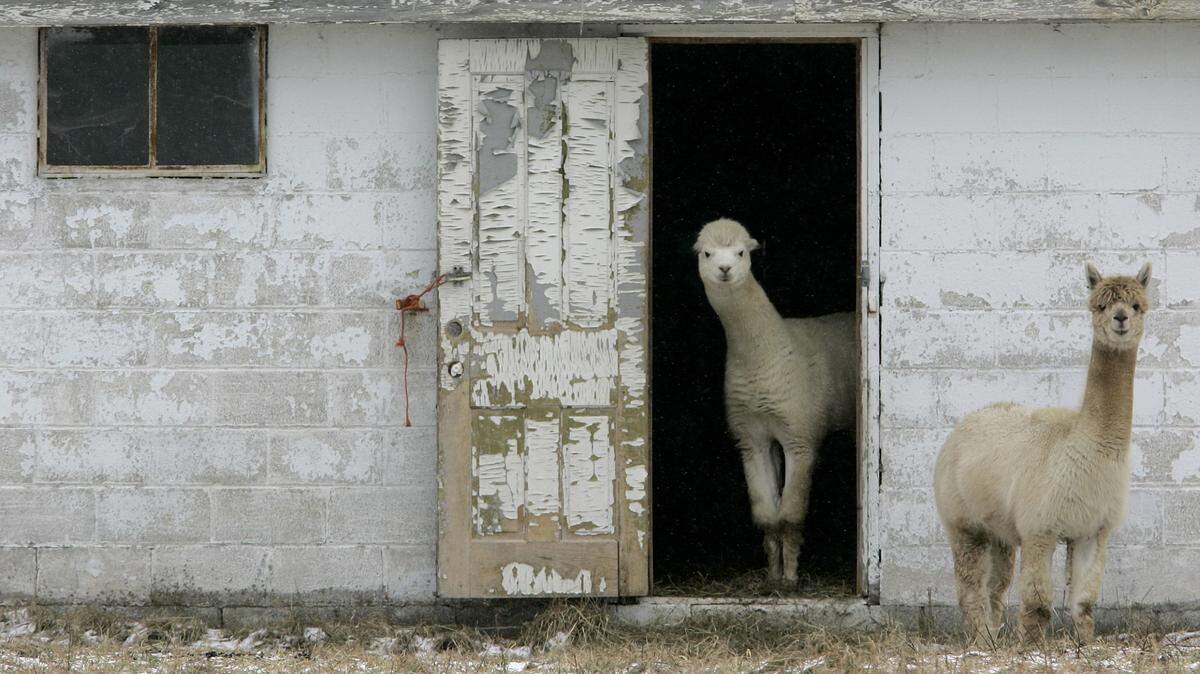
Llama blood may offer protection against COVID-19 and all of its variants, including the ever-changing omicron variant, a new study found.
The findings also suggest that the potential protection llama’s blood can provide is not limited to just COVID-19 — it may extend to 18 related viruses, according to a June 28 news release on the study, which was published in the journal Cell Reports.
The work involved a team at Mount Sinai Hospital in New York and a llama named Wally.
Here’s what to know:
Llama’s blood contains “super-immunity” particles, or nanobodies, that could be used in future inhalable, COVID-19 antiviral treatments in people, according to the researchers. These particles have neutralizing abilities.
A llama, as well as camels and alpacas — all belonging to the Camilidae family — have special immune systems that produce much smaller antibodies compared to people, the news release notes. As a result, the antibodies can strongly attach onto parts of an infecting disease such as COVID-19.
The “super-immunity” nanobodies found in llama’s blood are “single-domain” antibodies, according to ScienceDirect.
Due to the llama’s “unique” immune system, “researchers can readily link multiple nanobodies like a daisy chain, so if a virus attempts to escape by mutating, another nanobody is ready to keep it in check,” the news release explained.
Study co-author Dr. Ian Wilson, a Hansen professor of structural biology, said in a statement that “we learned that the tiny size of these nanobodies gives them a crucial advantage against a rapidly mutating virus.”
“Specifically, it allows them to penetrate more of the recesses, nooks, and crannies of the virus surface, and thus bind to multiple regions to prevent the virus from escaping and mutating.”
Wally the llama develops super-immunity
In the study, a llama named Wally was given shots of a small piece of SARS-CoV-2, the virus which causes COVID-19 infections in people.
Wally was given one shot followed by three smaller doses, according to the research. Then, a blood sample was collected roughly two months later, the study said. Afterward, Wally was given four more smaller doses of the shots before blood was collected again.
Ultimately, the repeated shots led Wally to develop super-immunity because Wally made nanobodies that identified SARS-CoV-2 as well as similar coronaviruses, according to the researchers.
Based on these findings, study authors used the results to help design a molecule that can be formulated into an inhalable COVID-19 treatment, the news release said.
“While more research is needed, we believe that the broad protection, ultrapotent nanobodies we were able to isolate in the lab can be harnessed for use in humans,” study lead author Dr. Yi Shi, an associate professor of pharmacological sciences at Mount Sinai’s Icahn School of Medicine, said in a statement.
“Winning the race against the current pandemic, as well as future viral outbreaks, will depend on fast development and equitable distribution of an arsenal of cost-effective and convenient technologies.”
Shi added that the team of researchers “believe that the novel, inhalable, and extremely potent nanobodies we’ve discovered can meet that demand on a global scale, particularly in developing countries that are most vulnerable to viruses and the lack of therapies to treat them.”
The team’s research is similar to a prior study that found sharks may also protect against COVID-19 with antibody-like proteins found in their bodies that can stop SARS-CoV-2, McClatchy News previously reported. That study was published Dec. 16.
This is because, similarly to llamas and other camelids, sharks also have tiny antibodies compared to ones found in people.
This story was originally published June 30, 2022 at 2:41 PM with the headline "Llama blood may protect against COVID and its variants, study says. What to know."
.jpg)