
As COVID-19 transmission rates remain high in Kansas City, hospitalizations rise
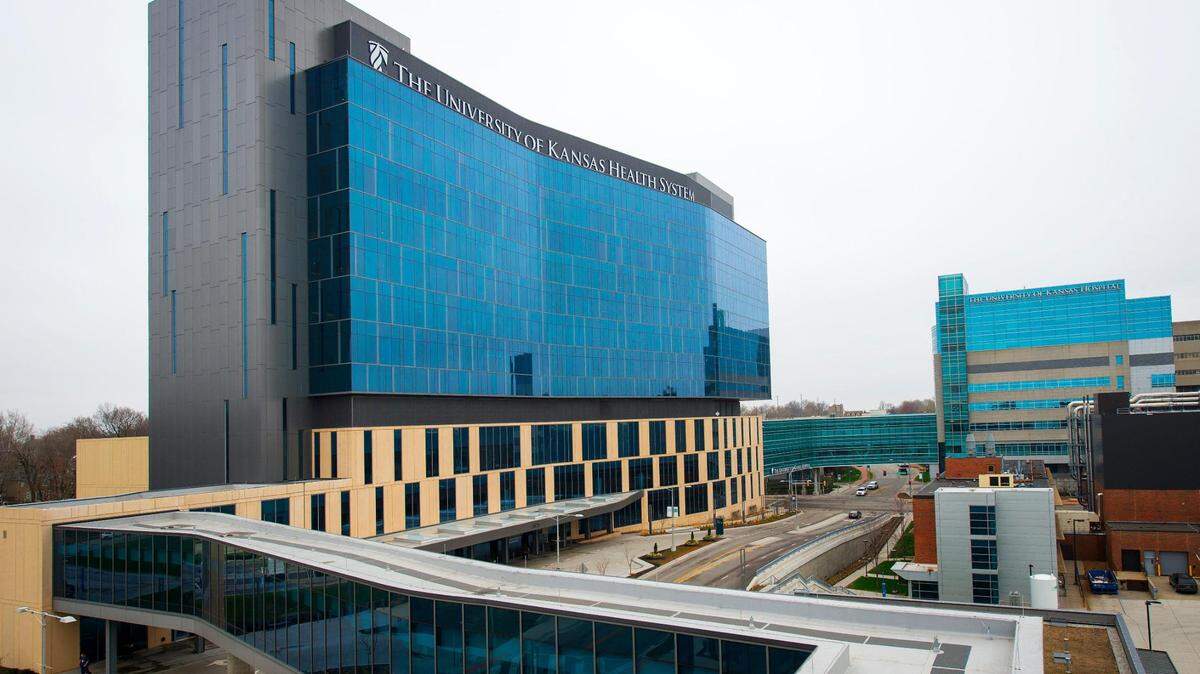
COVID-19 hospitalizations are up this week in Kansas City as case numbers remain uncertain because of a lack of reported testing.
While The University of Kansas Health System is treating significantly more patients than it was at this time last week, the numbers are still far lower than the previous surge.
How are hospitals holding up?
The University of Kansas Health System is treating 18 patients with active COVID-19 infections, up from six at this time last week. Three of these patients are in the ICU, and one is on a ventilator.
“Although we haven’t seen a large trend in the increasing recorded cases… we have seen a significant increase in the number of people hospitalized at the Health System,” said Dr. Dana Hawkinson, the hospital’s medical director of infectious disease prevention and control. “But overall, those numbers continue to be much lower than they were in the most recent surge.”
He added that vaccines for children under age five are expected to roll out later this month, and encouraged parents to get their young children vaccinated against the virus.
What does Kansas City’s COVID-19 data look like this week?
Officials reported a total of 2,327 new cases in the Kansas City area over the past week. That’s lower than last week’s total of 2,577 new cases. This past week saw an average of around 332 cases per day in the metro area, while the previous week’s average was 368 cases per day over seven days.
While these numbers may offer a small glimpse at the true prevalence of COVID-19 in Kansas City, experts say real case totals are likely anywhere from two to five times higher than what data shows. Some residents – though we don’t know how many – have recently caught the virus for the first time after avoiding it for over two years.
The state of Missouri is no longer reporting death counts at the county level. Johnson County reported two deaths in the last week, while Wyandotte County reported none. That brings the Kansas City metro area’s death total up to at least 4,326 since the pandemic began.
What are the COVID-19 risk levels in the Kansas City area?
The CDC classifies COVID-19 levels by county in two ways. “Community levels” tell us how easy it is to access care for COVID-19 in your area, using statistics like hospital bed availability and ICU capacity. “Community transmission levels,” on the other hand, give a sense of how likely you are to catch the virus while out in public.
All the counties in the metro have “low” community levels Friday except for Jackson County, which is listed at “medium.” However, all local counties have “high” transmission levels. That means that while medical care for COVID-19 is easy to access right now, your risk of catching COVID-19 is elevated.
How vaccinated is the Kansas City area?
Vaccination rates in the area are rising slowly, with 62.68% of the population fully vaccinated in the Kansas City region. Eastern Kansas has a higher vaccination rate, at 71.11%, than western Missouri does at 56.40%.
Getting vaccinated and obtaining a booster shot is still the most effective way to protect yourself and others from COVID-19. Both mRNA booster shots (Pfizer and Moderna) are safe and effective at reducing the risk of severe illness, hospitalization and death.
Do you have more questions about staying safe from COVID-19 in Kansas City? Ask our Service Journalism team at kcq@kcstar.com.
.jpg)