
New COVID subvariants are taking over in Kansas City, but case numbers have dipped
Reported cases of COVID-19 declined slightly this week in the Kansas City area, while local doctors noted new subvariants of the omicron strain gaining prominence.
Experts at the University of Kansas Health System said Friday morning that omicron BA.2 has largely given way to its close relative, called BA.2.12.1, and that small amounts of the new subvariants BA.4 and BA.5 are evident in the Midwest as well.
“SARS-CoV-2 has the ability to mutate rapidly, especially when there’s widespread community transmission,” said Dr. Steve Stites, the hospital’s chief medical officer. “We’re going to have to expect to see this ongoing evolution.”
However, these new subvariants are very similar to their earlier relatives. They cause largely the same cold-like symptoms as BA.2 and the original omicron, and have not yet caused a spike in hospitalizations in the metro.
What does Kansas City’s COVID-19 data look like this week?
Officials reported a total of 2,227 new cases in the Kansas City area over the past week. That’s a little lower than last week’s total of 2,478 new cases. The past week saw an average of around 318 cases per day in the metro area, while the previous week’s average was 354 cases per day over seven days.
The state of Missouri is no longer reporting death counts at the county level. Johnson County reported three deaths in the last week, while Wyandotte County reported none. That brings the Kansas City metro area’s death total up to at least 4,322 since the pandemic began.
Local experts met last Tuesday at The University of Kansas Health System to discuss the latest pandemic wave. Infectious disease expert Dr. Dana Hawkinson estimated that the metro is actually experiencing between two and five times the number of cases that are being officially reported.
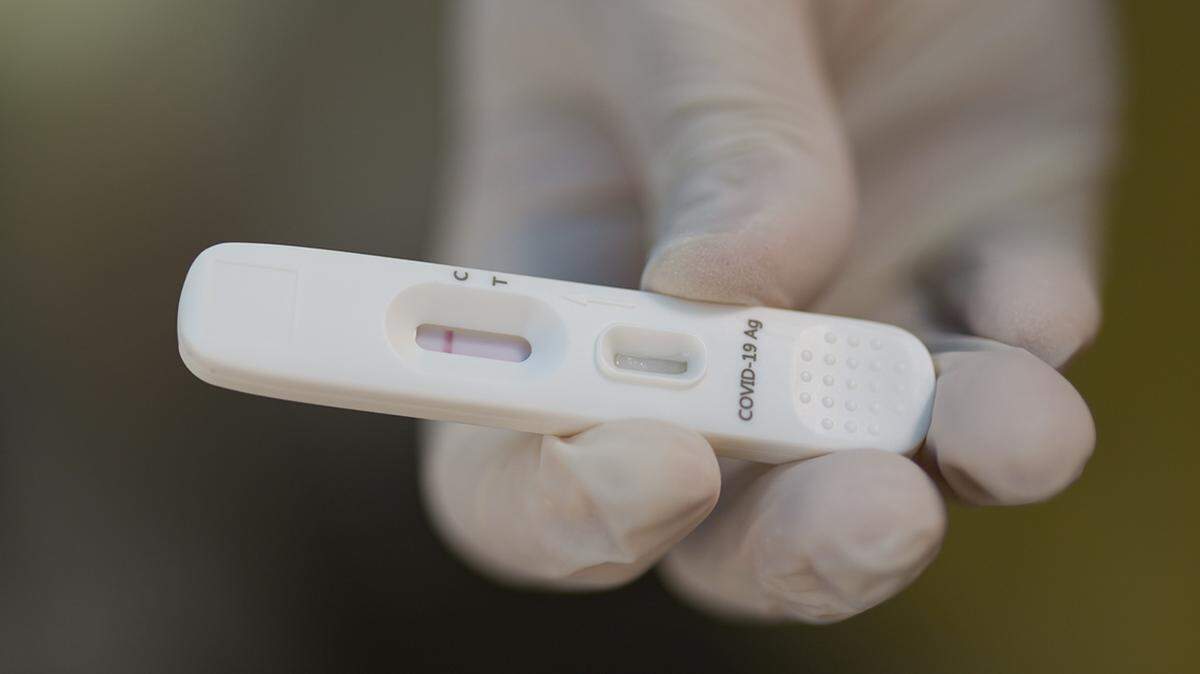
Underreporting is due to the prevalence of home tests and a decline in mass testing events that report new cases directly to state authorities and the federal Center for Disease Control and Prevention.
How are hospitals holding up?
The University of Kansas Health System is currently treating seven patients with active COVID-19 infections, down from nine at this time last week. Two of these patients are in the ICU, but none are on a ventilator.
Stites said that currently, hospitals are not seeing a spike in patient numbers due to the current wave. He added that preventative measures like mask wearing, social distancing and vaccination are still the best way to slow the spread of the virus.
What are the CDC risk levels around KC?
The CDC classifies COVID-19 levels by county in two ways. “Community levels” tell us how easy it is to access care for COVID-19 in your area, using statistics like hospital bed availability and ICU capacity. Currently, all the counties that make up the Kansas City area are in the “low” category on this map.
“Community transmission levels,” on the other hand, give a sense of how likely you are to catch the virus while out in public. On this map, all the counties comprising Kansas City are in the “high” category.
Low community levels with high transmission levels mean that while medical care for COVID-19 is easy to access right now, your risk of catching COVID-19 is elevated.
How vaccinated is the Kansas City area?
Vaccination rates in the area are rising slowly, with 62.33% of the population fully vaccinated in the Kansas City region. Eastern Kansas has a higher vaccination rate, at 70.54%, than western Missouri does at 56.21%.
“Every person that chooses not to be vaccinated is contributing to a hole that puts patients at risk,” said Dr. Gary Doolittle, an oncologist at the hospital. He added that he still wears a face covering in public to protect his cancer patients from the virus.
The FDA has also placed restrictions on the Johnson & Johnson COVID-19 vaccine after reports of a very rare side effect that causes blood clots. It now recommends only using the J&J vaccine if you are over 18 and do not have access to any other COVID-19 vaccination options.
Getting vaccinated is still the most effective way to protect yourself and others from COVID-19, and experts recommend using increased caution if you are not yet vaccinated.
Do you have more questions about staying safe from COVID-19 in Kansas City? Ask our Service Journalism team at kcq@kcstar.com.
.jpg)