‘We have lost political will’: Omicron’s wave comes for KC, but will mandates return?
As COVID-19 lashed the Kansas City metro area in August, Wyandotte County implemented a mask mandate. Even after cases stabilized and other cities and counties dropped their orders this fall, local leaders stubbornly held on.
But last Thursday, they let go. County commissioners voted 6-4 to end the mandate.
“We have lost political will in our community,” commissioner Andrew Davis said before the vote. Four days later, health officials identified cases of the omicron variant in the county.
The next great wave of the pandemic has arrived in Kansas City. But the response from government will look different this time.
Beaten down by ferocious resistance from segments of the public and its elected leadership, localities appear less likely to turn to mask mandates and other mandatory precautions. The ability to impose vaccine mandates and masking for schoolchildren has also been systematically weakened across Kansas and Missouri this fall.
Without that authority, health officials are essentially left to plead with the public, imploring residents to use the now-familiar mitigation strategies.
“At this point it’s exhausting to continue,” said Ray Dlugolecki, assistant health director for Jackson County. “I mean, the mitigation measures are all the same, right? It’s vaccines, boosters, mask-wearing, getting tested and then trying to social distance.”
Last week, the county legislature voted 5-4 to reject a return to required indoors masking. The decision came days after Missouri Attorney General Eric Schmitt threatened to sue over it.
COVID-19 hospitalizations in the metro were rising even before omicron and have matched levels not seen since this summer’s delta surge. Case numbers, which typically precede hospitalizations by a few weeks, are now higher than this summer — prompting alarm among hospital leaders who must lead exhausted doctors and nurses into battle yet again. The Centers for Disease Control and Prevention already estimates 30% of new cases in the four-state region of Kansas, Missouri, Nebraska and Iowa are omicron.
More than 40% of the population of Kansas and Missouri remain less than fully vaccinated, according to the CDC. Just under a third of those fully vaccinated have received a booster.
“To me ultimately, the answer is we’re all going to have to take self responsibility,” said Clay Goddard, a former director of the Springfield-Greene County Health Department.
In Kansas, the GOP-controlled Legislature, with Democratic Gov. Laura Kelly’s signature, passed a bill requiring businesses to respect a broad, no-questions-asked religious exemption if they order their employees to get a COVID-19 shot.
In Missouri, Schmitt, who is running for U.S. Senate, has engaged in what Jackson and St. Louis counties call a “campaign of litigation terror,” threatening schools that require masks and quarantine exposed students and raising the prospect of lawsuits against municipalities that issue public health orders. Some rural health departments have abandoned their virus response efforts altogether.
Federal vaccination rules are all enmeshed in litigation. These include mandates for federal contractors, most health care workers and test-or-vaccinate regulations for large employers. Lawsuits, including some championed by Schmitt and Kansas Attorney General Derek Schmidt, have resulted in a patchwork of legal rulings that has created confusion.
Most of the regulations have been effectively ground to a halt for now, though an appeals court last week reinstated the rules for large businesses, illustrating the uncertainty surrounding the legal battles.
Alan Cobb, CEO of the Kansas Chamber of Commerce, said businesses are preparing to comply with federal COVID-19 vaccine requirements as the mandates continue to work through court. Cobb said it could be months before businesses have clear answers.
“They’re probably talking to their lawyers about how to sort though complying with the state” and where disagreement might exist with federal regulations, Cobb said.
Hospitalizations rising
Many public health professionals in the region have no plans to seek new mask orders or other mandatory measures. They’re keenly aware that local elected officials either wouldn’t support them or the public wouldn’t comply.
“The general tone of ‘Yeah, everyone’s done. Everyone’s done with COVID now, even if COVID’s not done with us,’” said Dennis Kriesel, director of the Kansas Association of Local Health Departments, summing up what he’s heard.
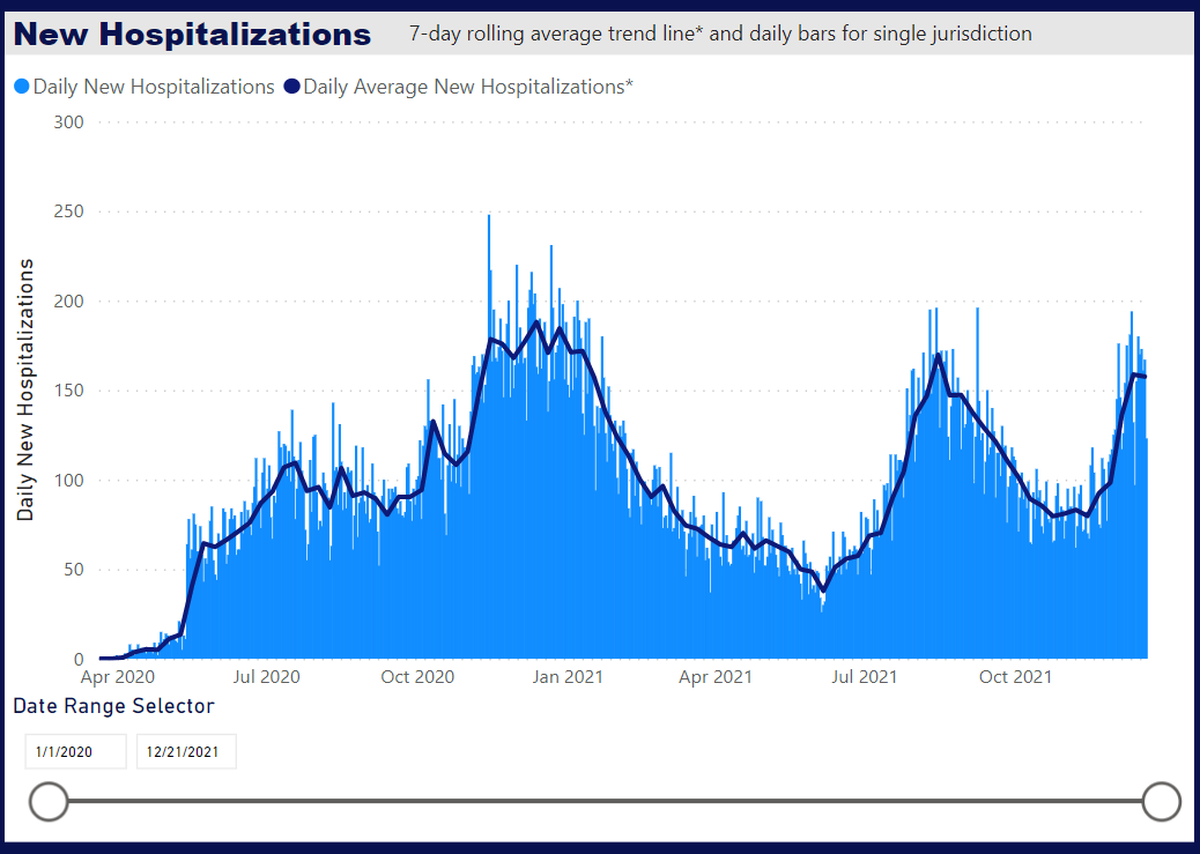
Indeed, COVID-19 isn’t done with Kansas City. The average daily number of new hospitalizations in the metro was 159, according to data compiled by the Mid-America Regional Council. That’s up from an average of 80 on Nov. 14.
The hospitalizations data is approaching peaks set during surges this summer and last winter. The highest average was set on Dec. 13, 2020, with 188 new admissions.
Some research suggests omicron produces milder illness, but the variant is easily spread from one person to another. Full vaccination appears likely to provide substantial protection against severe illness, though mild breakthrough cases are more likely than with delta.
But even if omicron proves to be milder, the contagiousness of the variants means the sheer number of people likely to become infected may still lead to enough severe cases that hospitals are pushed to the breaking point.
“Hospitals are full. There’s no place to go. Our staff are tired. We’re going to run out of travelers (traveling nurses) and omicron is at our doorstep. This is a tornado warning to our community,” Steve Stites, chief medical officer of The University of Kansas Health System, said during a virtual news conference last Friday.
The pandemic has led to widespread staffing shortages nationwide. Demand for traveling nurses has soared in turn, leading to an expensive scramble among hospitals to secure temporary help.
Alan Morgan, the CEO of the National Rural Health Association, said workforce issues in rural hospitals have only grown more urgent as the latest wave of the pandemic begins.
While the concerns — high mortality rates in rural America and overtaxed hospitals — remain the same, Morgan said “everything is misaligned” this time around as the region enters a wave without significant public health measures. The result, he fears, will be unprecedented levels of infection and death.
“We’re all tired of COVID, unfortunately, at a point when we’ve got the most transmittable variant circulating and we’re at the most precarious position for workforce in these rural hospitals,” Morgan said. “The hope certainly is that this particular strain isn’t as serious as the past.”
Rising patient counts, coupled with short staffs, have once again placed extraordinary pressure on hospitals that is rippling across the health care system, even before the region has felt the full brunt of omicron. Motient, a company contracting with Kansas to help manage patient transfers, has said the situation is worsening after improving somewhat this fall.
Richard Watson, founder of Motient, told the Associated Press on Friday that long-distance transfers and extended waits for beds are becoming commonplace as the pandemic ends its second year.
“There aren’t any more crazy stories,” he said. “It’s already as crazy as it can be. When you are talking about moving people from Minnesota to Kansas City for treatment. It’s like Mayo Clinic in reverse.”
At the national level, the White House announced Tuesday the Department of Defense will prepare 1,000 federal troops – doctors, nurses and other medical personnel – to deploy to hospitals in January and February. An additional 100 federal medical staff will go to six states immediately (Kansas and Missouri aren’t among them).
The White House also announced plans for pop-up vaccination clinics in areas of high demand and new federal testing sites. and said The United States will purchase 500 million at-home tests that will provided to Americans for free.
As omicron arrives, no mandates so far
Omicron has so far not prompted Republicans opposed to mandates and other orders to reconsider, however. Conservative officials continue to cast mandatory rules as unwarranted intrusions on personal freedom.
“The presence of new variants does not change the law or excuse the federal government from following it,” said John Milburn, a spokesman for Schmidt.
Some have alternatively encouraged vaccination. U.S. Sen. Roger Marshall, a harsh critic of vaccine mandates, on Tuesday appeared in a bipartisan public service announcement urging individuals, especially seniors, to get a booster shot.
Milburn said Schmidt, the likely Republican nominee for governor, has been vaccinated and encouraged Kansans to get a shot. Still, “as he has said for nearly two years, there is no pandemic exception to the Constitution or the rule of law, and the government’s disregard for the law should distress us all,” Milburn said in a statement.
Missouri Attorney General Schmitt, like other Republicans, cited reports of less severe omicron hospitalization rates in South Africa to bolster his position that public health orders would be inappropriate.
“As we’ve said previously, people should have the ability to choose for themselves whether or not to wear a mask, or whether or not to get a vaccine, and it should not be the government’s role to mandate masks or vaccines on its citizenry,” Schmitt spokesman Chris Nuelle said in an email. “It’s far past time that we acknowledge that COVID-19 is endemic, and that we’re going to experience seasonal peaks and valleys in case rates.”
Both attorneys general on Tuesday signed on to a lawsuit challenging the federal vaccine mandate for Head Start, the early childhood program.
A spokeswoman for Missouri Gov. Mike Parson, a Republican who has encouraged vaccinations but refused to issue a statewide mask mandate earlier in the pandemic, didn’t respond to questions.
Democrats and others more sympathetic to public health orders have painted themselves as either constrained by politics and public opinion when it comes to mandates or promised to redouble efforts related to vaccination and testing.
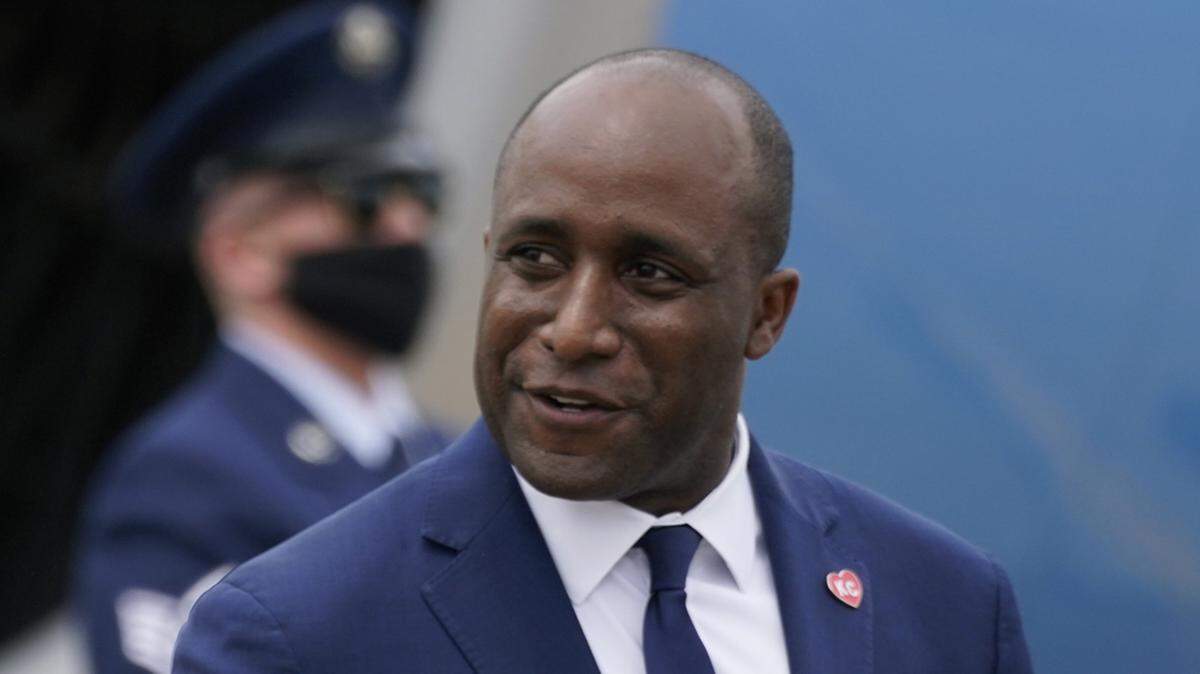
“It is clear from Kansas City’s public health guidance that a full round of vaccinations and boosters are key to reducing the risk of serious illness and death from the rapid spread of the Omicron variant,” Kansas City Mayor Quinton Lucas’s office said in a statement.
“As we have done throughout the COVID-19 crisis, we will collaborate with and trust our public health community and hospital leaders to increase vaccination and disease mitigation efforts in the Kansas City region.”
Kansas Gov. Kelly said in an interview Monday that her office had moved beyond mandates.
Kelly has criticized a federal rule that would require businesses with more than 100 employees to test their workers weekly or ensure they’re vaccinated. She also signed a bill making it easy for workers to receive a religious exemption from COVID-19 vaccine mandates issued by workplaces.
“It’s not a message that people can hear, if anything people probably ... become even more resistant, more dug in,” Kelly said.
Kelly, who faces a tough race for re-election next year against Schmidt, said cities, counties and school districts should implement recommendations from the Centers for Disease Control and Prevention that make sense for their area. Kansas has been “pulling out all the stops” to encourage vaccinations, she said.
“But we know that there is a percentage of folks out there who are just not going to get vaccinated. We know that and what we’re trying to do is get the other ones … to recognize that to protect themselves and their family they need to do that,” Kelly said. “And then we have to figure out how we can move on and progress.”
A new state law passed in Missouri this year requires legislative approval for public health orders. Schmitt contends that a recent Cole County court ruling that struck down state disease-control regulations invalidates the authority of local health departments to implement mask mandates. But other local legislators said elected officials an still vote to enact their own ordinances.
An attempt to challenge the ruling is pending in court.
Dlugolecki said Jackson County will increase testing offerings from three to five days a week. The county is also recommending personal mitigation measures such as masking and limiting gatherings, and Dlugolecki said the department is working to provide free at-home test kids for residents.
“There’s a couple of areas that we’re trying to address this from but it’s also important to acknowledge that individual level strategies often fall short of addressing those population health level problems,” he said. “I think for the first time, really, in this entire pandemic, we’re preparing for a potential surge on top of a surge.”
This story was originally published December 21, 2021 at 2:52 PM.