
Kansas City area parents worry about kids’ COVID shots. Here’s what doctors tell them
When her oldest child turned 12 in August and became eligible for the COVID-19 vaccine, Laura Mulcahy hesitated. Michael, like everyone else in the family, already had COVID, so she figured he had natural immunity.
“I thought, ‘Do I really need to get him vaccinated, because obviously his body was able to fight off COVID,’” said Mulcahy, who lives in the Northland. “So I wasn’t entirely sure that it was necessary.”
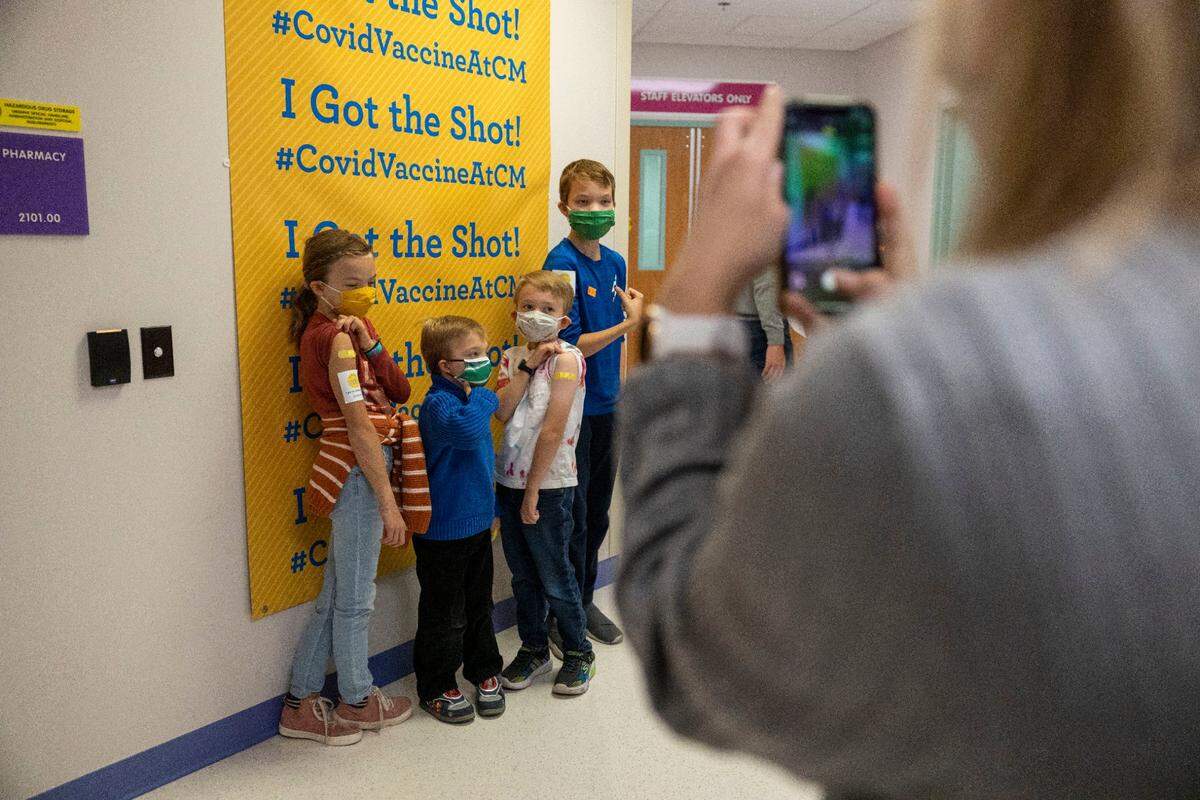
Last week, when children ages 5 through 11 became eligible for the Pfizer vaccine, parents jumped to fill the first appointments around Kansas City.
But they could be in the minority.
The Kaiser Family Foundation recently reported that about 27% of parents with children 5 to 11 were eager to get their kids vaccinated, while another third planned to wait to see how the vaccine worked. Another 30% said they would not have their children vaccinated.
“I 100% understand the questions and the hesitation,” said Mulcahy. “It’s scary to make any decision for kids. … You want to do the right thing all the time.”
Pediatricians around Kansas City urge parents to get the vaccine for their children. But they are also busy fielding questions from hesitant parents like Mulcahy.
Children’s Mercy offers a COVID-19 facts page on its website — as do other hospitals and health departments.
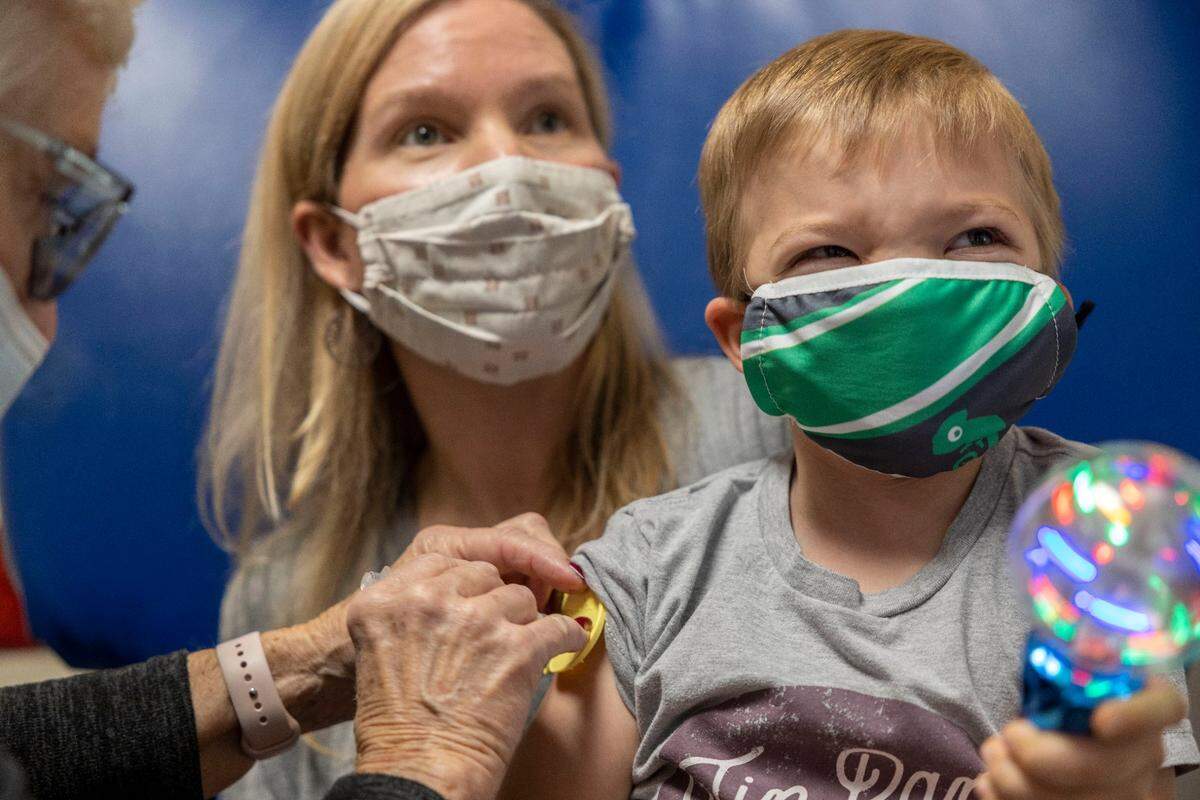
Doctors say parents worry about side effects and reports of heart problems in adolescent boys. The No. 1 concern Dr. Joanne Loethen hears is about unknown health issues down the road.
“We can’t tell parents to vaccinate their kids unless we really understand what their concerns are and we address those head on, acknowledge them and then try to steer them toward credible sources and the data that we have which is very clear on the benefits of the COVID-19 vaccine,” said Loethen, a pediatrician with University Health, formerly Truman Medical Centers/University Health.
“I think it’s so important and we will get there but it’s tough to be the first ones,” Johnson County mom Emily Gafford told The Star this week.
She shared those concerns recently in a blog post for the Kansas City Mom Collective, a local parenting website.
“This has been a hot topic of conversation at our house,” Gafford wrote on the group’s website. “My daughter wants to get it, and initially I wanted it as soon as possible but now having a few reservations. If it meant no more masks, I would do it immediately so they could get back to normal learning. She will get it, but we may not be the first ones in line.”
‘Nobody wants to hurt their kids’
Dr. Agustina Boehringer has spent weeks getting Kansas Citians vaccinated since becoming chief medical officer at Heart to Heart International earlier this year.
When the pandemic restricted travel, the global humanitarian organization focused on its home base here, doing COVID testing and then vaccinations in underserved areas of the city.
“There’s a lot of reasons why people may be hesitant. We aim at educating what I like to call the movable middle,” people who usually are scared, said Boehringer.
For some parents, the decision comes down to “whether they perceive (COVID) to be a real risk or not,” said Boehringer.
“Nobody wants to hurt their kids. I don’t think that’s ever the case. But (COVID) is a real risk, and the more people that are vaccinated, of any age, the fewer hosts there are for the virus to keep mutating into new strains and then the closer we get to the end of the pandemic, which is I think everybody’s shared goal.”
She has talked to a lot of people who think children are immune to COVID, or think little ones don’t get seriously sick from the virus, “which is absolutely not true,” Boehringer.
“Children have, thankfully, not proven to get as severely sick as adults, but they certainly are a huge vector of infection and furthermore, they also have a fairly high rate of long-hauler COVID syndrome.”
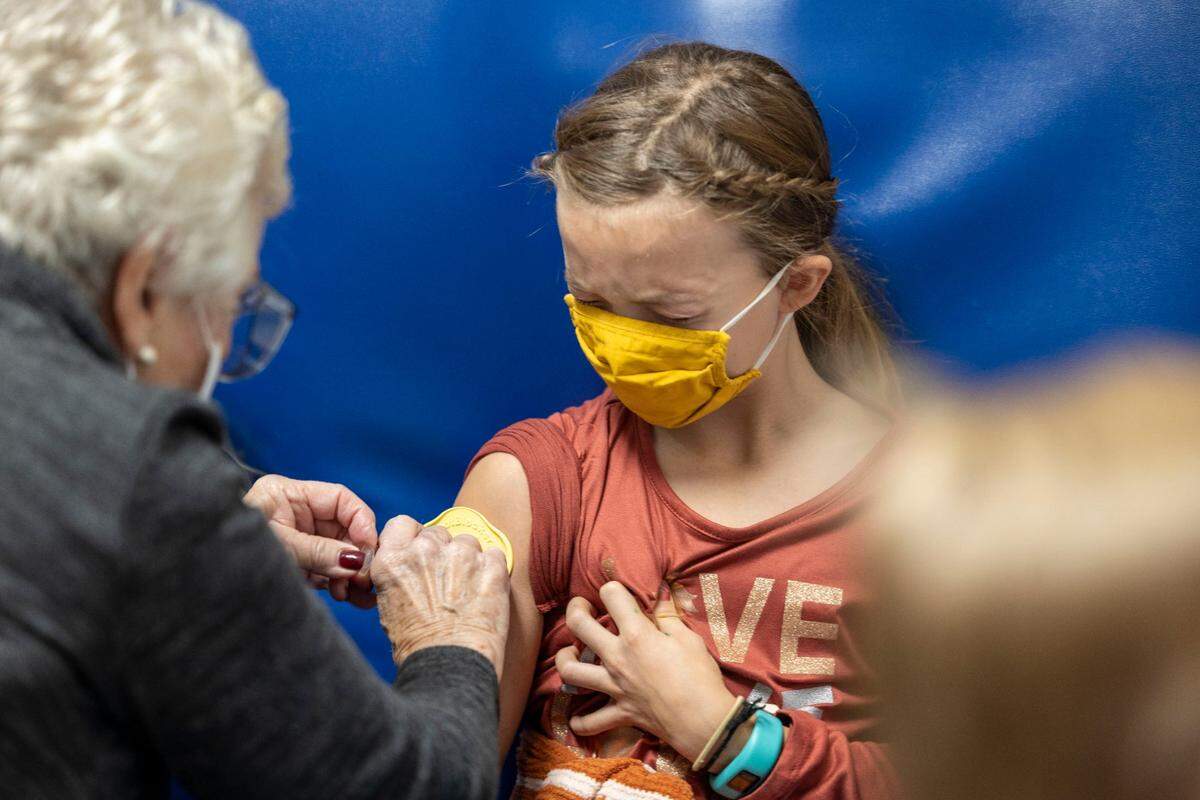
What about heart problems?
Pediatricians understand concerns about what they say are rare cases of myocarditis, inflammation of the heart muscle, and pericarditis, inflammation of the heart’s outer lining, in vaccine recipients — mostly in male adolescents and young adults and more often after the second vaccine dose.
According to the Centers for Disease Control and Prevention, the rate of myocarditis within seven days of vaccination has been less than 10 per every million doses, but higher among males younger than 20. Two-thirds recovered fully within six weeks, the CDC says.
“I would acknowledge that concern. But it becomes a benefit-risk question,” said Loethen. “We also know that getting the COVID infection can cause heart problems.”
According to Children’s Mercy, the common side effects seen in children have been similar to those in adults, especially mild pain at the injection spot. Other common reactions include fatigue, headaches, muscle pain and chills. Fever is more uncommon.
And long term?
“Based on all we know about the safety of these available vaccines, and all we know about how vaccines in general work to train your own immune system to fight infection, no long-term side effects of the vaccine are expected,” says Children’s Mercy.
A mother’s decision
Even people who already had COVID-19 should get vaccinated, Children’s Mercy advises.
The hospital points to one study that found that people who had previously been infected but not vaccinated were twice as likely to get it again than those who got COVID-19 and been vaccinated.
Mulcahy’s pediatrician “strongly encouraged” her to have her three children vaccinated.
Michael was a tougher sell than his mom was.
“When we explained to him that if he got the vaccine that would mean he would no longer have to quarantine after an exposure at school … he kinda looked at it like it was his get out of jail free card. So that is what convinced him,” Mulcahy said.
Michael was vaccinated in August, and Mulcahy’s youngest two had their first doses this week. She kept an eagle eye on 10-year-old Joseph after he got his first shot at a Hy-Vee pharmacy after school. Out of everyone in the family, COVID-19 hit him hardest; symptoms lingered for weeks.
“There was this little bit of like, ‘OK, I hope I’m doing the right thing,’” Mulcahy said. “But then again, I trust the experts.”
.jpg)