
Got COVID in Kansas City? You may be eligible for same infusion treatment Trump got
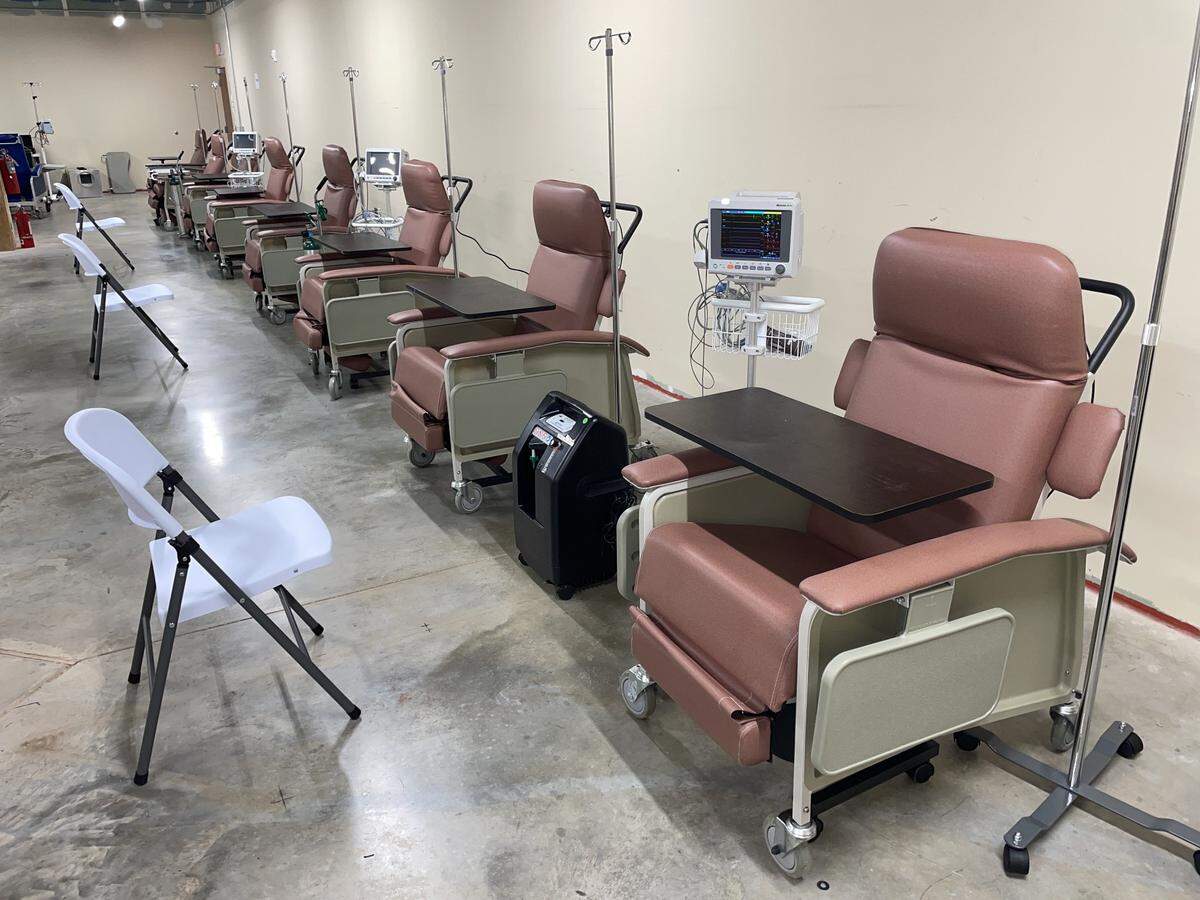
Truman Medical Centers/University Health has started offering free COVID-19 treatments to eligible metro residents as part of Missouri’s effort to prevent people from being hospitalized, and dying of the virus.
On Wednesday, the health care system began giving infusions of monoclonal antibodies to people with mild to moderate COVID symptoms who are high-risk — which includes anyone 65 or older and people with chronic health problems. Residents do not have to live in Missouri to be eligible.
Four infusions were given Wednesday and more came on Thursday as Truman officials spread the word to local hospitals that the treatment is now available.
“We can do up to 32 a day, and obviously the goal is to try to max it out. And it’s going to be running seven days a week, 7 a.m. to 7 p.m.” said Dr. Mark Steele, Truman’s executive chief clinical officer.
The new Regional Infusion Center, on Truman’s main campus at 2211 Charlotte St., is one of several sites the Missouri Department of Health and Senior Services is setting up statewide, including two planned for the greater St. Louis area.
This is the first time the treatments, which have been offered by some hospitals including Truman on a limited basis, are being offered to the general public in Missouri, said state health department spokeswoman Lisa Cox. The first infusion center the state helped set up was in Springfield.
The state estimates the infusion centers, which will operate for 30 days, could treat up to 4,000 COVID-19 patients. Truman is the only site in the metro.
The infusions should not be seen as an alternative to getting vaccinated, Steele said. Health officials in Missouri and Kansas, where hospitals are short on beds and staff, still struggle to get more residents to take the shots.
Currently, 44.4% of residents in Missouri, and 44.8% in Kansas, are fully vaccinated.
“This is not more important than vaccinations, and getting people vaccinated,” said Steele. “Vaccinations are the most important thing because the goal is to have people not contract the virus at all.
“So this doesn’t take the place of getting people vaccinated. But, assuming that you do end up getting COVID and you’re at high risk, this is another tool in our tool belt to deal with this. And it has shown to be effective.”
What is a monoclonal antibody?
Truman is distributing the Regeneron therapeutic cocktail — a combination of the medicines casirivimab and imdevimab — that former President Donald Trump received after he tested positive for COVID-19 last year, said Steele. It has emergency use authorization from the Food and Drug Administration.
The federal government has distributed the drugs to the states since last winter. But, the Associated Press reports, the treatments were underused because physicians didn’t know about them, the public wasn’t interested and the logistics of setting up areas to give them to patients via IV infusion proved difficult.
Persistent COVID testing delays also meant many people didn’t get their results for a week or more — making it too late to be treated. Since then, many cities have set up locations to administer the drugs, which are free for many mostly because the federal government buys and distributes them.
Monoclonal antibodies are lab-made proteins that mimic the immune system’s ability to fight off viruses. They attack the virus and reduce its ability to spread throughout the body.
If administered to high-risk individuals soon after diagnosis, they’ve been shown to reduce the risk of severe disease and hospitalization — which increases your chances of being able to recuperate at home.
The infusions are most effective for people who have symptoms for no more than 10 days, health officials say.
Since December, Truman has been giving the infusions to COVID-19 outpatients — the treatments are not authorized for hospitalized patients who are more ill.
“This is really trying to catch people early in the process, knowing that they are potentially at high risk for developing more severe disease,” Steele said.
Data from clinical trials shows that high-risk COVID-19 patients treated with monoclonal antibodies reduced their risk of progressing to severe disease, or hospitalization, by 70% compared to patients who weren’t treated, according to the U.S. Department of Health and Human Services.
“When you walk out of the infusion center, your symptoms are not going to be magically gone,” said Steele. “But I think there is some evidence that it may speed up the resolution of those symptoms.
“The biggest thing is preventing the hospitalizations and future deaths.”
Eligible for a infusion?
People must meet eligibility requirements, which make the treatments available to generally the same at-risk groups that received the first doses of the COVID-19 vaccines.
“The sooner that one has tested positive for COVID and they think they meet the criteria, we would encourage people to reach out sooner than later,” said Steele. “If your symptoms have been going on 10 days or longer you won’t be eligible for it. But the earlier into your symptoms the better.”
Eligible high-risk patients include people who are obese or overweight (a BMI greater than 25), or who have chronic kidney disease, diabetes, heart disease or hypertension, sickle cell disease, cerebral palsy or other neurodevelopmental disorders, or belong to high-risk ethnic groups, including Latino or Black people.
Patients are advised to get a referral from their physician or health care provider.
Missouri health officials signed a contract with SLSCO of Galveston, Texas, to provide infusions at centers in Jackson, Pettis, Scott, Butler, and Jefferson counties.
“It is our hope that these infusion centers will help relieve hospital strain and health care worker fatigue as we move forward with our efforts to get more Missourians vaccinated,” Gov. Mike Parson said in a statement.
The state’s partnership with the Texas company will provide the staff needed to make the infusions available to more people, which was “a limiting step for us,” said Steele.
Three-hour clinic visit
Since the treatment is most effective when given right after symptoms appear, patients are advised to get tested for COVID-19 as soon as possible.
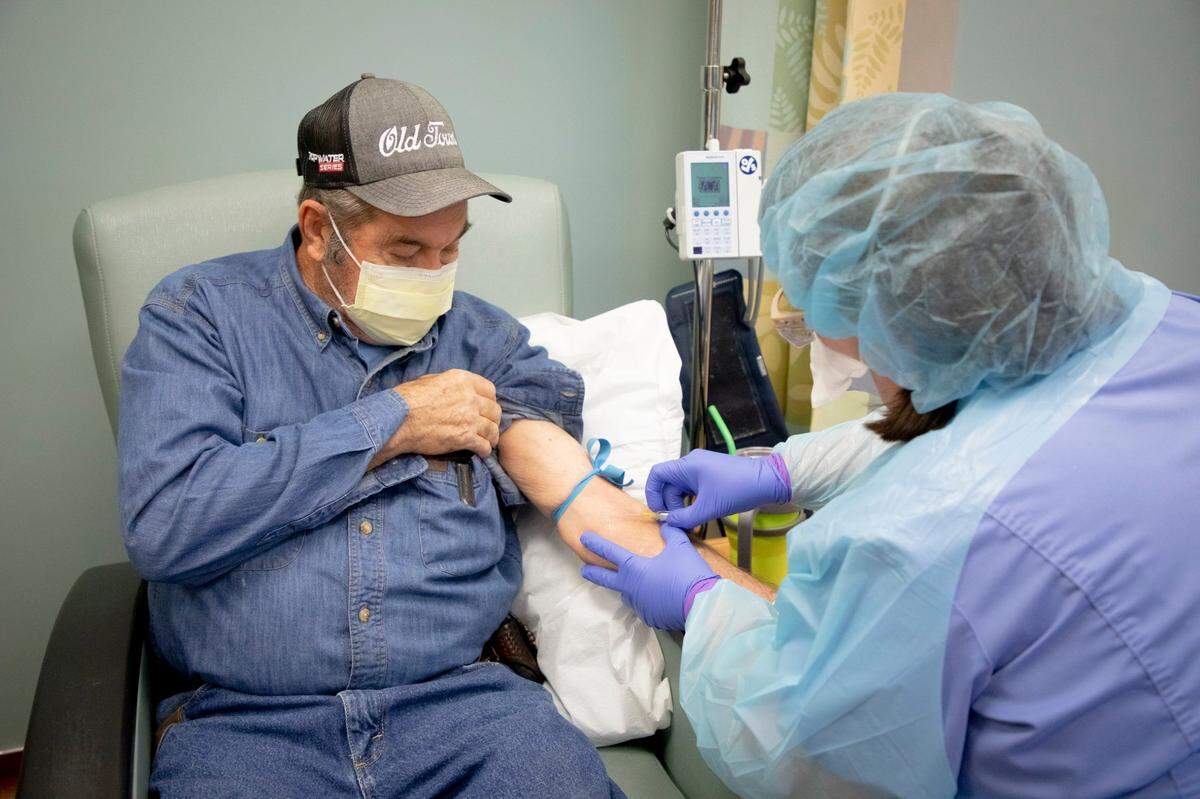
The treatment is an infusion through an IV. The process can take two hours, Steele said, so patients are booked for three-hour appointments.
Health officials say an infusion of any medicine can cause brief pain, bruising, bleeding, soreness, swelling and possible infection at the infusion site.
In Steele’s experience, patients have had little to no side effects. “Theoretically you can have an allergic reaction to it,” he said. “And I think there have been some reported across the country. But those are uncommon. Very uncommon.”
The infusions do not contain any live virus, so there’s no risk that you will get COVID-19 from them, health officials say.
If you receive a treatment you still have to follow COVID-19 isolation requirements.
And if not vaccinated, you’ll need to wait 90 days after the treatment to get a shot.
The infusion center at Truman is set up for 30 days.
“After that, I guess we’ll see where we’re at,” said Steele. “If it seems to be really successful, and we continue to have ongoing cases, hopefully there will be some consideration to continue funding for this kind of thing.”
Appointments are necessary and can by made by calling (660) 829-6647. For COVID questions, call 816-404-2273 (CARE).
This story was originally published August 26, 2021 at 3:30 PM.
.jpg)