Coronavirus weekly need-to-know: Spring break, ventilators, second doses & more
Each week, we offer you a round-up of our noteworthy coronavirus coverage.
More than 28.9 million people in the United States have tested positive for the coronavirus as of Saturday, March 6, according to Johns Hopkins University. That includes more than 523,000 people who have died nationwide.
Globally, there have been more than 116.3 million confirmed cases of the highly infectious virus, with more than 2.5 million reported deaths.
About 54 million Americans have received their first dose of either the Pfizer-BioNTech or Moderna COVID-19 vaccine as of March 4 — about 16% of the total population, a Centers for Disease Control and Prevention tracker shows. More than 27.7 million of them have been inoculated with their second dose, or about 8% of the total population, meaning they’ve received maximum protection against the coronavirus.
It’s unclear how many people have received the recently authorized single-dose Johnson & Johnson vaccine in the U.S.
Here’s what happened between Feb. 26 to March 4.
Can you skip second dose of coronavirus vaccine if you’ve had COVID?
Mounting evidence suggests people who have recovered from COVID-19 could harmlessly skip their second dose, potentially freeing up millions of vaccines for others who have not been infected and are thus more vulnerable to developing severe disease.
But telling the nearly 30 million people in the U.S. who have been infected with the coronavirus to forget everything they were told and skip their second dose is more complicated than it seems, experts say.
Here’s what studies have found.
Spring break brings worries of COVID-19 spikes
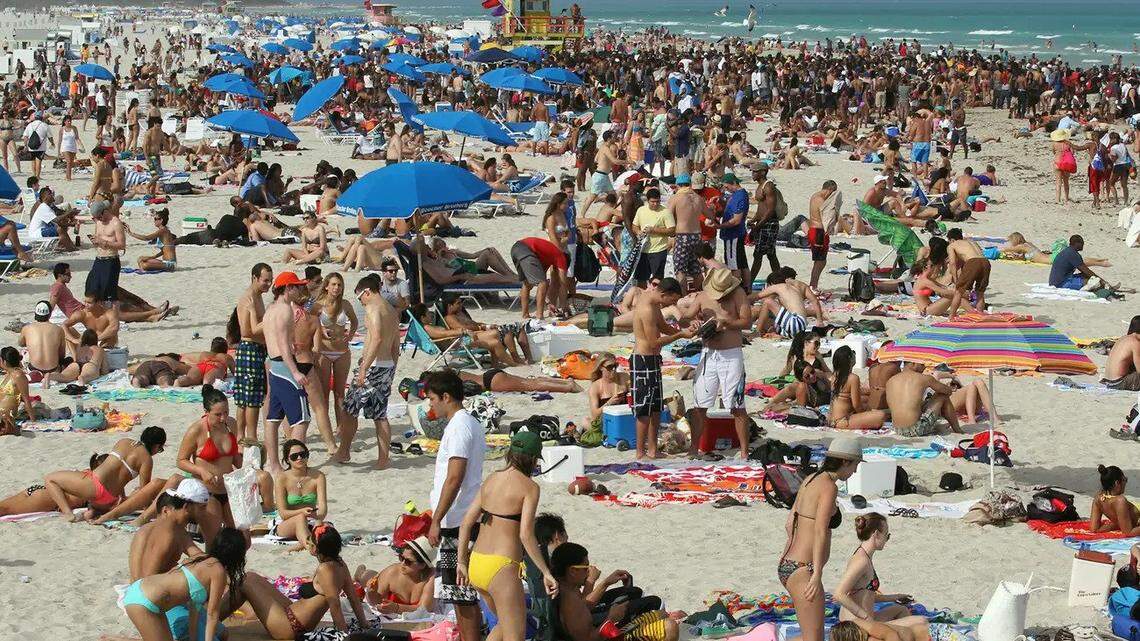
Spring break season has started, sparking fears of COVID-19 spread as more states ease coronavirus-related rules.
The Transportation Security Administration on Tuesday said it’s taking steps to prepare for a possible surge in airline passengers during the spring break travel period, which lasts through April.
But health officials continue to warn about trips as they cite the pandemic’s ongoing risks.
Do all 3 COVID-19 vaccines offer similar protection?
Clinical trials showed the most recently authorized Johnson & Johnson vaccine was overall 66% effective at preventing moderate to severe COVID-19 in the lab as early as 14 days after getting jabbed. Specifically in the U.S., efficacy jumped to 72%.
While federal health officials have deemed the shot safe and effective, some vaccine prospects worry it’s not as protective as those from Pfizer-BioNTech and Moderna, which demonstrated 95% and 94.1% efficacy against symptomatic COVID-19, the disease the coronavirus causes
However, experts say there’s no need to worry because the prevention of coronavirus-related hospitalization and death is most important, and all three authorized COVID-19 vaccines offer absolute protection against it.
What you need to know.
How soon after coronavirus infection should you get COVID-19 vaccine?
Health officials say people who have recovered from COVID-19 should still get vaccinated, citing the unknowns about natural immunity and reinfection, which is even more cloudy now that more contagious coronavirus variants are on the loose.
But how long should people wait after infection to schedule their vaccine appointment?
Continue reading to learn what health officials suggest for those who recently caught the coronavirus.
Pfizer COVID-19 vaccine cuts need for ventilators in older adults
New preliminary data adds real-world evidence that coronavirus vaccines can reduce severe COVID-19 cases on a national scale.
In about three months, the Pfizer-BioNTech COVID-19 shot lowered the need for mechanical ventilation among people 70 and older by 67%, compared to those younger than 50. The study was conducted in Israel, which has the highest per capita vaccination rate in the world.
The findings align with results from clinical trials, and add promising evidence that the shots work among real-world populations — a scenario that could not have been tested in controlled lab settings.
States ranked based on protections for kids amid pandemic
A new report on American families reveals just how difficult the coronavirus pandemic has been on children in every state and at every income level — highlighting racial, demographic and economic disparities that have been plaguing marginalized communities long before the onslaught of COVID-19.
The child-focused organization Save the Children analyzed U.S. Census and Centers for Disease Control and Prevention data collected between August and December to determine the states where kids are faring the best and worst during the pandemic based on access to food, tools for remote learning and ability to make ends meet.
The best states for children in terms of being able to reach their full potential with minimal barriers are Minnesota, Utah, Washington and New Hampshire — states that don’t necessarily have the lowest COVID-19 rates — while the worst are Louisiana, Mississippi, Texas and New Mexico.
Read on to learn what else the report found.
Fauci says he’s baffled at Texas, Mississippi lifting mask mandates
Dr. Anthony Fauci, the nation’s top infectious diseases expert, slammed Texas and Mississippi for loosening COVID-19 restrictions, including mask mandates, calling the move “really quite risky.”
“That’s a dangerous sign because when that has happened in the past, when you pull back on measures of public health, invariably you’ve seen a surge back up,” Fauci said.
One archdiocese urges Catholics to avoid newest COVID-19 vaccine
The Archdiocese of New Orleans has advised Catholics against receiving the new Johnson & Johnson coronavirus vaccine, calling the one-dose shot “morally compromised.”
In a statement Friday, the religious organization said the new vaccine should be avoided due to its link to an “abortion-derived cell line” used in the vaccine’s development and production phases.
Here’s everything to know about the research behind the Johnson & Johnson vaccine.
In other coronavirus coverage...
Great apes at San Diego Zoo become first non-humans to receive COVID-19 vaccine
Scientists inch closer to explaining the mysterious ‘brain fog’ symptom of COVID-19
Millions of Americans Qualify for the COVID-19 Vaccine Based on BMI. Why Should We Apologize for It?
Hydroxychloroquine, once touted by Trump, should not be used to prevent COVID-19, WHO experts say
Pfizer vaccine: Single dose reduces asymptomatic COVID-19 cases four-fold
This story was originally published March 5, 2021 at 9:00 AM with the headline "Coronavirus weekly need-to-know: Spring break, ventilators, second doses & more."