
KC health officials want COVID vaccine for all. Here’s why they worry it won’t happen
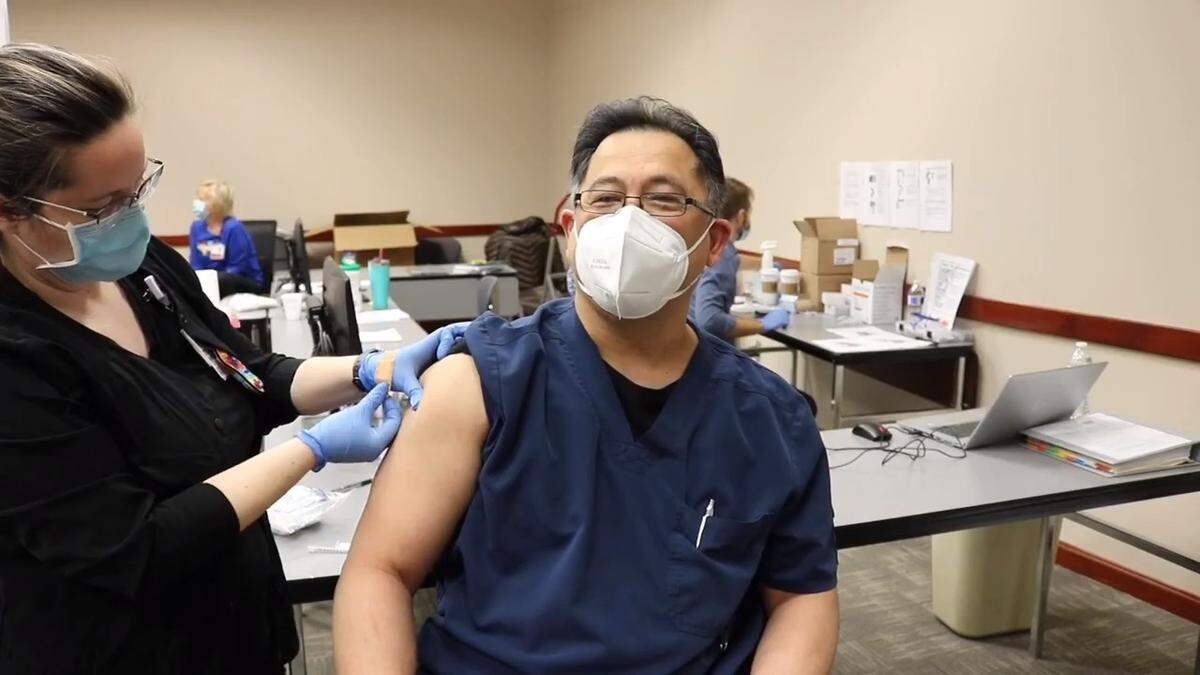
With the arrival of the COVID-19 vaccine, Dr. Ramilo Gatapia has been getting plenty of questions from staff at the long-term care facilities where he makes weekly rounds.
“Are you going to take it?”
“Should I take it?”
The employees, from nurses to housekeepers, are predominantly minority. Knowing that many of them don’t even like getting a flu shot, much less this new vaccine, Gatapia, who was born in the Philippines, decided to offer a little show-and-tell.
So last week, the St. Joseph Medical Center physician made a video to show his social media following what it’s like to get a COVID-19 shot, hoping especially that his co-workers would share it with their families, creating a “ripple in the water” of vaccine acceptance that would eventually touch the community at large.
Health care advocates in the Kansas City area have mobilized to answer questions like the ones Gatapia has been hearing and ensure that the vaccine distribution is fair and equitable when it comes to Black and Hispanic residents who have been hit hard by the pandemic.
Underlying those efforts is the goal that minorities don’t get the short end of the stick from a health care system many already don’t trust. There’s worry about whether there’s enough time to repair deep-seated mistrust that will prevent some from taking the vaccine, decisions that ultimately will affect everyone.
There is cause for concern. On Friday, Business Insider reported that in six states that have high percentages of Black residents, white people have so far gotten a disproportionate share of the COVID-19 shots. Missouri and Kansas were not among the six states examined.
“Everyone must have a fair and just opportunity at health, especially when it comes to recovery from COVID-19,” said Qiana Thomason, president and CEO of the Kansas City nonprofit Health Forward Foundation.
“And for us that means equity needs to be entered in both our vaccination distribution plans as well as our vaccination education and information plans.”
How to distribute the vaccine?
Getting the vaccine to minority residents has been central to planning at state and local levels. What that process will ultimately look like is unclear at this point, with many decisions yet to be made.
“There’s a lot of discussion about how we’re going to arrange drive-thru and walk-up clinics to facilitate giving the vaccine, lots of talk about translation and accommodations that may be needed for people who maybe can’t leave their homes or they have difficulty with the technological aspects of registering for the vaccine,” said Alex Kimball Williams, health equity planner for the Lawrence-Douglas County Health Department.
“There’s lots of discussions around equity and reaching marginalized populations.”
Health advocates in Kansas City are recruiting “trusted” messengers — including Black physicians — to have one-on-one conversations with people about the vaccine. The Black Health Care Coalition launched a campaign last week to get information about the vaccine to 45,000 Black residents. The group plans to host weekly discussions for the public.
But there’s already frustration about how much isn’t known about how this process will unfold, including when the vaccines will be available.
“What is the distribution going to look like? What is the access going to look like?” said Melissa Robinson, president of the Black Health Care Coalition and a City Council member. “Where are they going to get the vaccine and how’s that going to play out?
“I am concerned about the access, that we build up all this ‘oh you gotta go get it and this is the reason why and it’s really important,’ and then when you try to go get it, you have to wait in line for four hours to do so, which doesn’t work for our community because a lot of people are essential workers and they can’t take off all day to go stand in a line to get vaccinated.”
Kansas Gov. Laura Kelly announced the state’s final vaccine distribution plan on Thursday, five phases that begin with people most at risk of infection or getting seriously ill, and end with the general public. Health care workers and residents and staff of long-term care facilities are currently being vaccinated as part of the first phase.
The fleshed-out Phase 2, which includes residents 65 and older, gives priority to “high-contact critical workers,” a massive category that encompasses firefighters, police officers, grocery store workers, teachers and child care workers, employees of food processing plants, transportation workers, people who work in retail and agriculture and Department of Motor Vehicle employees.
Missouri’s distribution plan is similar. Health care workers and long-term care facility residents and staff are being vaccinated now. Next, in Phase 1B, come first responders, essential workers — including teachers, child care workers and food and agriculture workers — and high-risk individuals ages 16 to 64 and anyone over 65.
Health advocates who work with Black and Hispanic residents have given close attention to that category because minorities work in so many of those jobs.
“What we are most interested in, after our very necessary need for health care workers to get vaccinated first, and seniors, but that our target population, those of the essential workers, our grocery store workers, our bus drivers, our farm and migrant workers, that they are first in line to get the vaccine among the general public because they are the ones that are carrying the disproportionate burden of infection and mortality, mortality especially with people of color,” said Thomason.
Many of the people in those high-risk groups will likely receive a shot through their public health department or health clinic.
Vibrant Health in Wyandotte County received doses to vaccinate its staff members a few days before Christmas, a signal to its leaders that the state recognizes the clinic’s role in that distribution chain. Vibrant is a member of the county’s health equity task force.
“For them to ensure that we received the doses that we received I think should give confidence that they are recognizing that we need to make sure that we’re giving it to high-risk patients, and these are the routes that the high-risk patients are going to use to receive it,” said Brandi Finocchario, chief administrative officer for Vibrant Health.
Can’t reach herd immunity?
Whether efforts succeed to get Black, Hispanic and other hesitant populations to take the vaccine ultimately will affect everyone. Epidemiologist Debra Furr-Holden, associate dean for public health integration at Michigan State University, has done the math.
If Black and Hispanic people — who have already revealed reluctance in surveys — don’t take it, the nation cannot reach herd, or community, immunity, she said.
“That vaccine needs to be readily available to people,” said Furr-Holden. “But we’ve got so much valid medical mistrust in the community, people don’t even trust that the vaccine won’t harm them.”
In a recent Kaiser Family Foundation poll, about a third of Black respondents said they would probably or definitely not get a COVID-19 vaccine, though overall willingness to get vaccinated increased from 50% in September to 62% in December.
‘We as African American people, because of historical and current racial issues within the health care system, are not the ones raising our hands first to seek any medical treatment or prevention,” said Robinson. “So that’s very real.”
Black people make up almost 13% of the U.S. population, “Hispanics almost over 18%. So put us together we’re 30% of the population,” said Furr-Holden, who has conducted research in the Black community for 20 years. “We can’t get to herd immunity without those folks.
“That doesn’t include when you look at the rest of the population and start to factor in hesitancy and rejection in non-minority communities. And then when you start to layer on people who are unemployed or don’t have high school diplomas, have chronic or preexisting conditions who are also high on hesitancy, we’ll never get there.
“So we’ve got to just do the work, the same way we developed the vaccine at warp speed, we’ve got to do the work to reestablish or establish trust and credibility at warp speed. Because if we don’t move the needle on vaccine hesitancy, we are going to lose a very important layer of protection to help us get this pandemic under control.”
‘Trusted messengers’
It’s important to begin understanding, said Thomason, why people of color are so hesitant to take the vaccine. “We know it’s both from historical and present-day lived experience with the health care system that’s quite earned,” she said.
“We also know that people want to be healthy. And when presented with accurate, reliable information, people often make the best choices for themselves.
“So we are focusing on engaging Black and brown practitioners who will lend their voices in our essential worker community, especially those of color, to help them understand the science and address any levels of hesitancy or mistrust that they may possess.”
The Kaiser Family Foundation poll that measured vaccine hesitancy also reported that 85% of Americans believe their personal health care providers more than most national, state or local messengers when it comes to COVID-19 vaccine information.
The Centers for Disease Control and Prevention, the U.S. Food and Drug Administration, Dr. Anthony Fauci and local public health departments were also viewed as highly trustworthy.
It found that 34% trusted President Trump, while 57% said they trusted President-elect Joe Biden.
Gatapia said doctors “have been demonized in this whole pandemic. Before, whenever you had an issue, you turned to your doctor for advice. If you had skin cancer you’re not gonna turn to a politician.
“I come into contact with a lot of staff members and I work with a lot of people of color and I understand my role in the community. And as a physician I feel it’s my responsibility to share information and knowledge.”
Health Forward plans to host town hall meetings about the vaccine when its delivery gets closer, Thomason said. “We don’t want to have those conversations too early when they cannot get the vaccine because you create urgency and then there’s a delay in the general public being able to get the vaccine,” she said.
“We want to create a demand but we also want to time it right.”
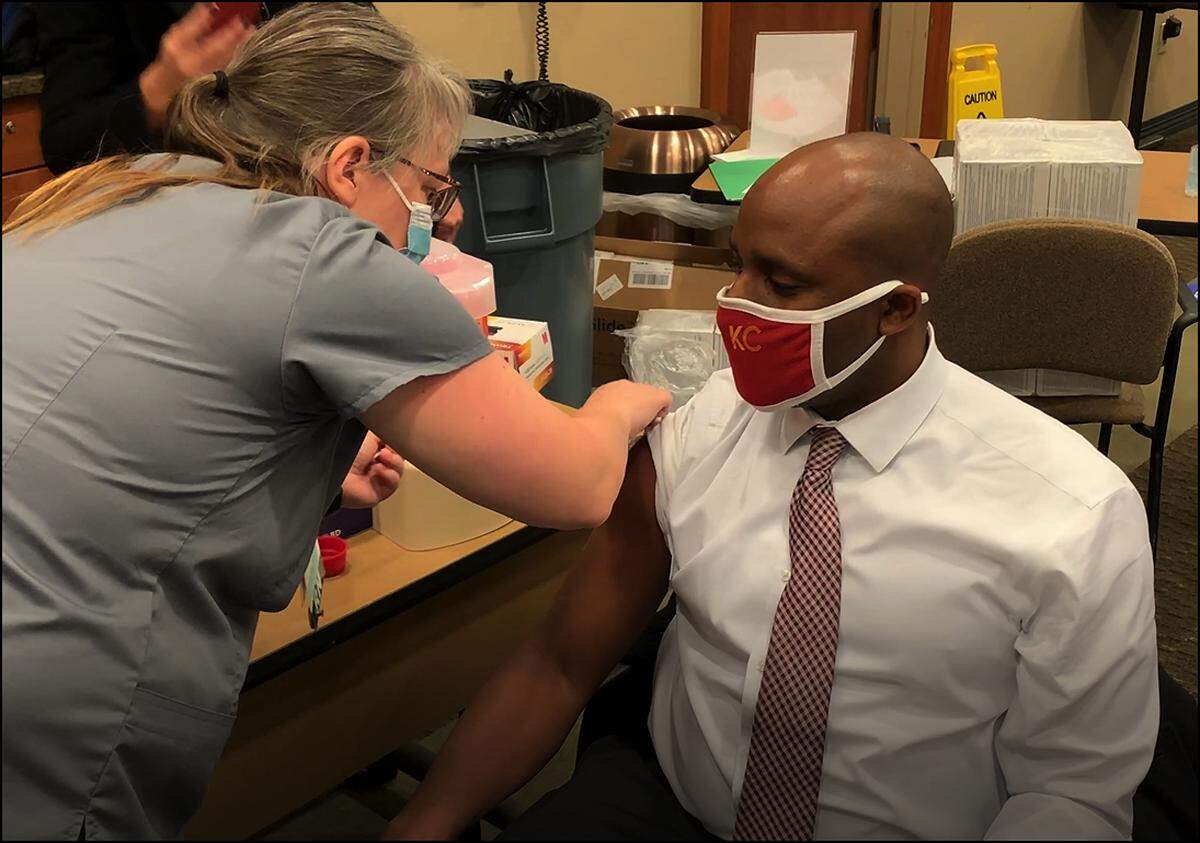
Kansas City Mayor Quinton Lucas shared news that he had gotten the first of two doses of the Moderna vaccine on New Year’s Eve day, partly to encourage Black residents to do the same. He said the city would focus on equitable distribution of the vaccine.
In the video Gatapia posted about his shot, he reported that 24 hours later, other than having to take some ibuprofen for pain around the injection site, he felt good.
“So get your vaccine, and stay safe,” he said in signing off. “Protect yourself and your loved ones.”
.jpg)