
Human Subjects No. 8 and 14: Inside the trials for a COVID-19 vaccine in Kansas City
Twice this spring, Heather Wiley let a doctor inject an experimental COVID-19 vaccine into her arm, not knowing if it might have side effects but willingly accepting the risk.
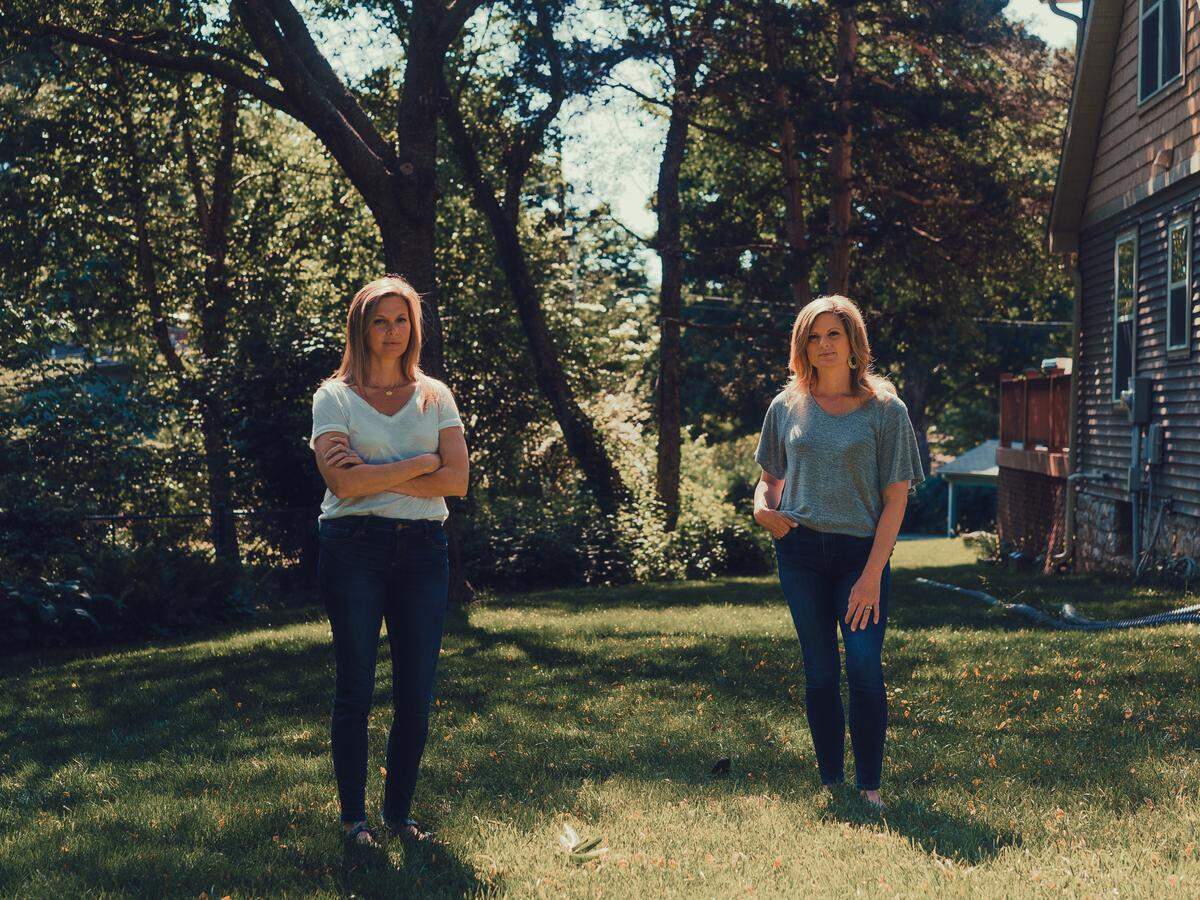
She was Human Subject No. 8.
She couldn’t sleep in those first days of lockdown in March, worried about the threat this unknown virus posed to her family, and the world. Hanging out on the internet at 2 a.m. one night she stumbled across information about a vaccine trial looking for volunteers in Kansas City.
She thought about the essential workers risking their lives every day while she was safely hunkered down in her Independence home. “I felt like there was more that I needed to do because I was able to,” said Wiley, 50, an art director for a Kansas City software company.
More than a dozen COVID-19 vaccine studies in the United States are in various stages of recruitment, according to ClinicalTrials.gov, a federal registry of privately and publicly funded clinical trials around the world.
At least three drug companies are conducting vaccine trials in the Kansas City area, according to the database, one of which may soon need more than 1,000 participants.
“Of the 800 plus trials that we’ve done, these ones that we’ve done with COVID-19 are by far and away the most important,” said Dr. John Ervin at the Alliance for Multispecialty Research, which is running the trial Wiley signed up for.
“This is the first pandemic we’ve had since the 1918 flu and we’ve got 200,000 people dead in the United States, and how many millions that have suffered and been in the hospital? It’s really a situation we just haven’t faced in our lifetime before.”
He can hear the clock ticking as pharmaceutical companies, scientists and governments around the world rush to find a safe vaccine that works. On Friday, President Donald Trump said the United States, running Operation Warp Speed, will produce enough vaccine for every American by April, with at least 100 million doses before the end of the year. That contradicts administration health officials who project the country can’t reach that point until mid-2021.
And 62% of Americans worry that political pressure from the administration will cause the U.S. Food and Drug Administration to rush approval for a vaccine before it’s safe and effective, according a Kaiser Family Foundation poll this month. Even if a free vaccine becomes available before election day, 54% of Americans won’t take it, the poll showed.
Even though she volunteered to have an unproven vaccine injected into her body, Wiley worries too. She would not want anyone in her family taking a vaccine before it had completed Phase 3 of a clinical trial, the phase involving thousands of participants the FDA usually requires before approval.
“I am not OK with any of these vaccines being rushed through and being approved before Phase 3,” she said. “They need to get through all the phases just like they normally would.”
Volunteering requires a commitment of time and full-throated acceptance of the risks.
Those risks were underscored when a study in the United Kingdom of an AstraZeneca vaccine was temporarily paused after a female participant suffered neurological symptoms similar to those of transverse myelitis, a serious spinal inflammatory disorder.
British health officials have since allowed the study to continue. But the FDA has yet to allow trials in the United States to resume. The University of Kansas School of Medicine, working with Children’s Mercy, is one of 62 trial locations in the country. Researchers here will need 1,250 local volunteers for the Phase 3 trial.
There won’t be any COVID-19 vaccine without people wiling to help study it, Ervin said. Finding participants doesn’t appear to be a problem in Kansas City. He only needed 20 people for the first phase of the Inovio Pharmaceuticals study — 90 people wanted to sign up. Another vaccine trial underway in Johnson County has a waiting list for participants.
“The whole process is a little scary because there’s a lot of unknowns,” said Wiley.
She did homework about Inovio before signing up. Her nephew, a pharmacist, helped her research the company’s track record with other clinical trials.
“I really went into the study knowing that I was going to be safe,” Wiley said. “I believe in vaccines, and I believe in science, and the more I read about this particular study the more I believed in the technology behind it. And the more I read about it, the more I wanted to be a part of it.”
When Wiley told her family, her sister, Ellie Lilly, a seventh-grade teacher in Lee’s Summit, decided to sign up, too.
She was Human Subject No. 14.
“You know, I’m a history teacher, so being part of the history, that’s pretty cool,” said Lilly, who is 46 and the mother of two teenagers. “I can say to my grandkids, ‘Well, your grandma was a part of history.’”
How a study begins
The process for Wiley and her sister began with a phone screening about their health histories. “It was a Phase 1 so it’s pretty strict,” said Wiley.
Then they had “top to bottom,” physicals, Wiley said, that included echocardiograms. The study needed healthy adults, and both sisters fit the bill.
In general, clinical studies have criteria for who can and can’t participate. Some need participants who have the disease or condition being studied; others only want healthy participants, which could disqualify people with pre-existing conditions. A clinical study can have age requirements, too.
Johnson County Clin-Trials in Lenexa is recruiting adults with “no known history of COVID-19,” but who are at high risk of COVID-19 infection, for a trial of a Moderna vaccine. There’s currently a waiting list.
High-risk in this case means adults — you must be 18 to participate — “whose locations or circumstances put them at greater risk of exposure” or people who are at risk of having severe COVID-19 because they are 65 or older, or have underlying medical conditions.
When the AstraZeneca trial resumes at KU, mobile clinics will hit the road to enroll people from at-risk populations in the metro, including elderly, Black and Hispanic residents.
The ClinicalTrials.gov website has information about more than 350,000 research studies in every state and 216 countries. You can search for one by the disease or condition being studied and the location.
Federal health officials recommend that participants ask about money issues upfront.
Will participating in the study cost you anything? For example, would you have to pay for certain tests or procedures, or the study drug? Would it be covered by health insurance?
If you are harmed while participating, who pays for any necessary medical care?
“The pharmaceutical company pays for anything having to do with side effects or presumed side effects related to the trial,” said Ervin, though some companies cover whatever is not covered by a participant’s health insurance.
Compensation varies from study to study, ranging from hundreds to thousands of dollars. Ervin said volunteers in studies he’s led get paid from $100 to $150 a visit.
But a new study he’s working on now is paying participants $250 a visit. “It blew our minds when we got the budget,” he said.
Informed consent
On its website, the U.S. Department of Health and Human Services walks people through the process of how medical research is done on humans, with videos explaining clinical trials and a printable list of questions to ask researchers.
Who is funding the study? Who has reviewed and approved the study? Will you have to go somewhere to participate? How will your personal information be used or shared?
What are the short- and long-term risks or potential side effects? What are researchers doing to minimize those risks?
Participants must sign an informed consent document that shows they were given information about risks involved and that they understand them.
“Your first appointment is really all about information. You get a physical, but you also have 33 pages of this document to read,” said Lilly. “You read it on your own and then they go through, step by step, everything with you. They talk about risks and side effects.
“You’re signing things, you know there’s risk. So you can’t really do this without obviously knowing that there’s risk involved.”
The consenting process takes a few hours, the sisters said.
“We’ve had people that have been a little anxious because (we) have to mention every possible side effect, even if it’s unlikely,” said Ervin.
They’re told everything possible that could go wrong, even if certain side effects are unlikely, and some of the information “can be scary,” said Ervin, who tells participants that if they are still anxious after he answers their questions, he recommends they not sign up.
Wiley said participants have access to a 24-hour phone line and are assigned a point person who checks on them regularly during the study.
Participants can withdraw at any time, even before the study is finished. Sometimes personal issues get in the way. Some people have been known to drop out so they can enroll in another study. AMR retains about 90% to 95% of its trial participants, Ervin said.
“What they kept telling me, which I so appreciated, in that first appointment … they kept saying if there’s any moment where you feel like this is not something you want to do, just let us know and we’re totally fine with it,” said Lilly. “Even if you get the first round of shots and decide you don’t want the second round of shots, it’s OK.”
It takes time
The sisters received two doses of the vaccine and now return every couple of months to give blood and urine samples. The study ends next April. By then they estimate they will have spent more than 15 hours at the AMR offices on State Line Road.
“You can’t really do it if you’re not willing to go in and get checked out,” said Lilly. “You have to be willing to go to the office. It’s a commitment and you can’t blow it off. You have to do it.”
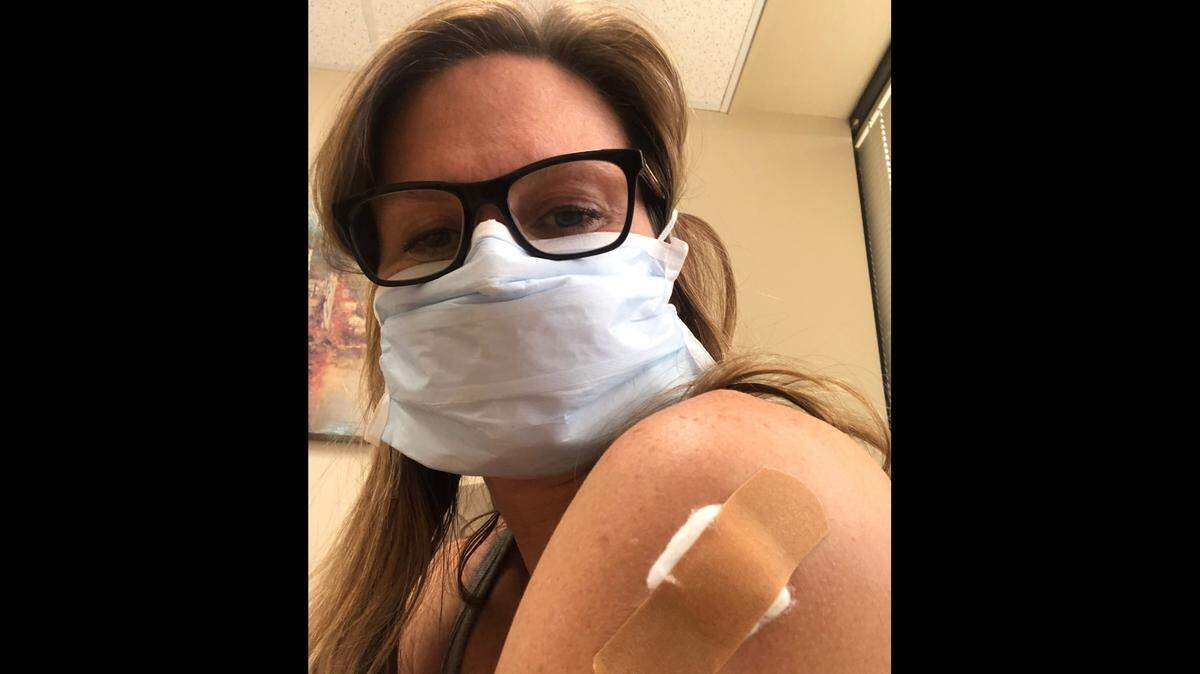
They were both a little nervous about the first doses. The Inovio vaccine is an experimental DNA vaccine that uses electroporation, a process that applies an electrical pulse to a living cell that makes it more permeable. The electrical pulses are delivered at the injection site after the shot, which wasn’t as deep as a flu shot and didn’t hurt, said Wiley.
“I think if you don’t like needles, this is a really good way to vaccinate people because you don’t really feel like there’s a needle involved,” Wiley said. “My arm sort of tingled for about five minutes, but then you don’t have any of that odd arm soreness that you get after the flu shot.”
Dose days were long because they had to stick around after getting the shots in case they had side effects. Wiley watched the Colin Firth movie “The King’s Speech,” while she waited after her first dose, remembering the day as “one of the most exciting things I’ve ever been a part of.”
Some of the participants, like Wiley, got one shot at a time. Others, including her sister, received double the dose to show which dosage was most effective.
“The first time we got the first injection you’re there for three hours. I think I was so mentally exhausted by the end of that day. I was really tired and they tell you to pay attention to fatigue,” Lilly said. “It’s emotional. It’s definitely emotional, just feeling really hopeful that it works.”
No side effects
The sisters were warned about possible side effects. Swelling and tenderness where they were injected. Fever. Nausea.
They had none.
“Literally, my dose days I came home and ran three miles and had a cocktail,” said Wiley.
But they know that’s not the experience of all participants in COVID-19 vaccine trials. They’re keeping track of them through social media groups, “and a lot of the other volunteers have had some pretty intense side effects,” Wiley said. “We’re talking about fever, fatigue, headaches.
“I understand that when you volunteer for these studies that’s a risk. And I was willing to take on that risk. But I just think my sister and I got into the right study.”
The news about the participant in the AstraZeneca trial in the United Kingdom hit close to home. That volunteer had to be hospitalized.
“As a fellow volunteer you know that the process can be frightening, and you know they’re probably like we were, which was, I accept that there’s going to be risks with this. But we felt the benefit outweighed the risks.’ We really just felt bad for them,” said Wiley.
“But also, this is why we do drug trials. This is the exact reason that we do this, so we can catch this stuff and figure out what’s going on.”
Lilly said she didn’t realize she would be paid to participate.
Lilly said she and her sister will earn about $1,400. “The money, of course was not the main goal, but it was kind of nice,” said Wiley.
Inovio announced earlier this month that a peer-reviewed paper discussing Phase 1 results is coming soon. Early news is that participants have demonstrated immunity with few or no side effects.
Wiley can offer anecdotal evidence of its effectiveness. Her teenage daughter tested positive for COVID-19 in early July.
Wiley isolated with her and took care of her for two weeks. She never got sick.
This story was originally published September 20, 2020 at 5:00 AM.
.jpg)