
As snooping controversy builds, Uber may need adult supervision
Like Google and Facebook before it, Uber may now be in need of adult supervision.
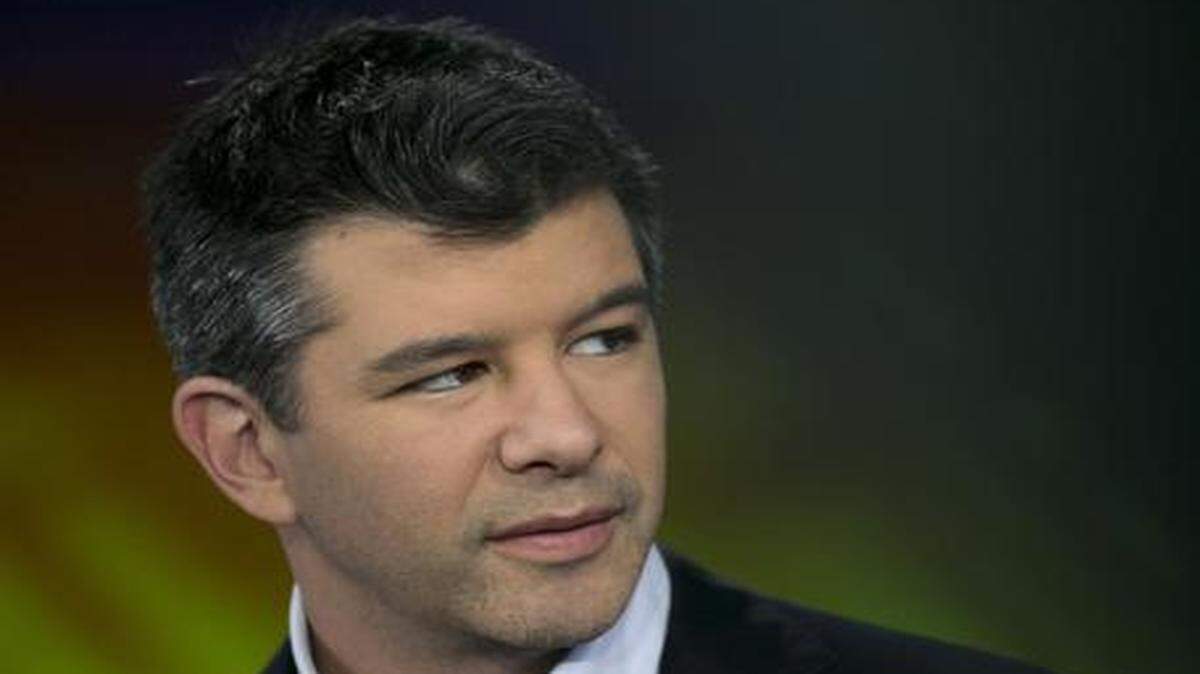
Chief executive officer Travis Kalanick is dealing with a wave of criticism this week from remarks that Emil Michael, Uber’s senior vice president of business, made about snooping on journalists.
Michael was speaking at a dinner in New York last week that included BuzzFeed editor Ben Smith, who reported on the comments Tuesday in his online publication. Michael suggested the San Francisco-based company was willing to spend a million dollars to look into journalists’ personal lives, according to BuzzFeed’s article.
Michael said in a statement that he regretting making the remarks, which he said were “borne out of frustration during an informal debate over what I feel is sensationalistic media coverage of the company.”
The executive focused in particular on reporting by Sarah Lacy, the editor of PandoDaily, a technology news website. Lacy, who said Michael also had apologized to her, had written several stories critical of Uber’s business practices.
The situation didn’t get any better when BuzzFeed also reported that one of its woman reporters was tracked by an Uber Technologies Inc. executive without her permission. Uber is now investigating that manager.
Uber, which, like Lyft, lets people use a smartphone app to connect with one of its drivers, also has been questioned about how well it screens its drivers. Recent reports include one driver being fired after sending abusive texts to someone requesting a ride and another being dismissed after showing a woman fare a photo he had previously taken of her on the street.
Uber, thanks to reporting by Lacy and others, also has come to be known for its aggressive business tactics, including rating its employees on “fireceness,” “super pumpedness” and “scale,” meaning increasing its numbers of users. It also has tried to undercut its key rival, Lyft, by poaching its drivers.
Uber in August hired David Plouffe, a former adviser to President Barack Obama, who now directs communications for Uber. The deepening debate suggests that Kalanick might need even more experienced hands to guide him and the San Francisco-based company, which is the most highly valued technology startup in the U.S.
“Uber has earned some frat culture publicity and could benefit from hiring a woman on the board or an Eric Schmidt type of executive,” said Brian Solis, an analyst at technology research firm Altimeter Group, referring to the former Google CEO who was brought in to aid founders Larry Page and Sergey Brin in the search company’s early years.
Other startups that haven’t installed experienced executives have run into trouble. Groupon, the daily deals site formerly led by CEO Andrew Mason, turned down a $6 billion acquisition offer from Google in 2010 and went public in 2011, only to see its shares plunge more than 60 percent after a series of missteps. Mason was fired last year and replaced by an older co-founder, Eric Lefkofsky.
An Uber representative declined to comment and referred to 14 tweets by Kalanick that tried to distance the company from the controversy by calling the situation “terrible” and saying that he and his executives could learn from their mistakes.
Uber’s investors, who have pumped more than $1 billion into the company, defended the company’s management.
“I don’t believe Uber management needs to be replaced,” said Shawn Carolan, a partner at Menlo Ventures, which invested in Uber and where he is a board observer. “People don’t appreciate how stressful it is to grow at that speed; it’s just crazy. They aren’t sleeping and, absolutely, they are making mistakes, but generally they are very ethical and working very hard.”
Yet Uber’s stumbles this week are part of a pattern of missteps. Kalanick in an interview that ran in the March issue of GQ referred to the company as “Boob-er,” suggesting that running Uber had helped him meet girls. He also admitted in a recent article in Vanity Fair that he tried to interfere with efforts by rival Lyft to raise funds from investors.
The controversy comes at a delicate time for Uber. The company is in early talks to raise about $1 billion at a higher valuation than the $17 billion it reached in June, when it garnered $1.2 billion from investors, including Fidelity Investments. Uber is expanding quickly and is now in more than 220 cities worldwide.
Uber and its investors need to send a message to the public and fix its culture, said Paolo Parigi, an assistant professor in sociology at Stanford University who does research on the so-called sharing economy that is enabled by applications such as Uber.
“Each company has a culture, and my impression is that Uber’s culture is perceived to be sexist and bullish,” Parigi said. “Regardless of whether this is accurate, this perception could hurt them economically in the long run. Bringing somebody like Sheryl Sandberg (Facebook’s chief operating officer) on the board or in a top management position could go a long way to fix their issue.”
This story was originally published November 19, 2014 at 7:33 PM with the headline "As snooping controversy builds, Uber may need adult supervision."