The Tax-Free Retirement Account More People Are Opening (And How to Set One Up)
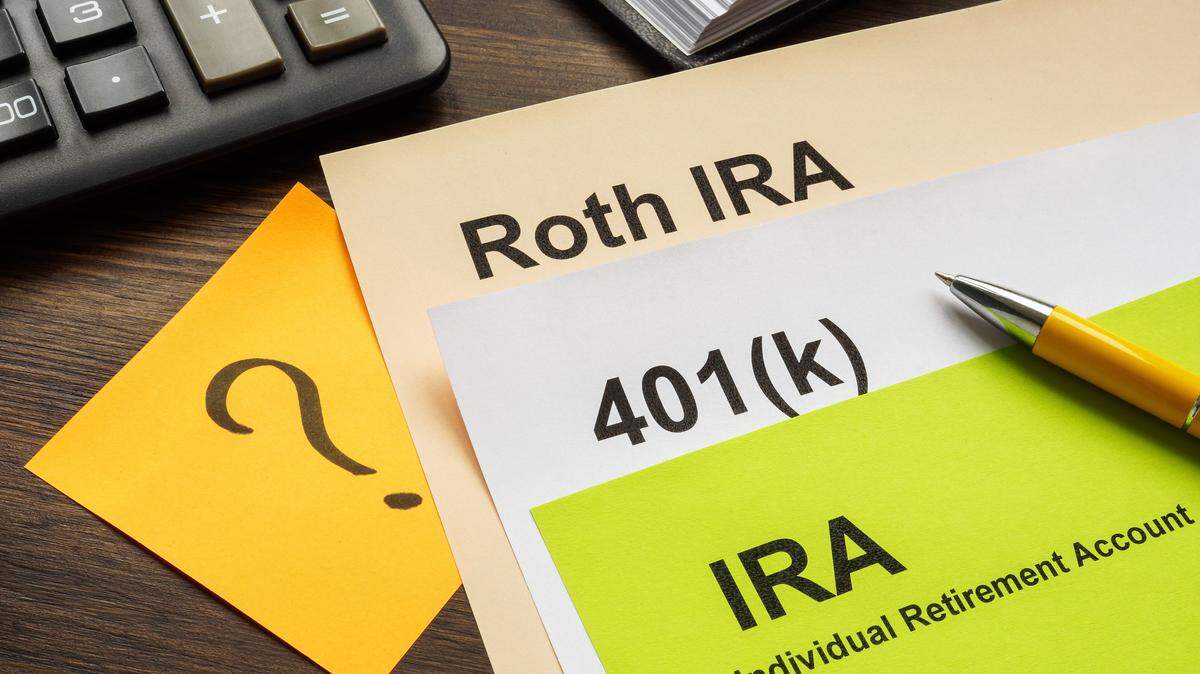
If you’re between 62 and 70, you’re no stranger to financial decisions that come with hard deadlines and real consequences for getting them wrong. You’ve likely spent hours decoding enrollment windows, comparing plans, and trying to figure out which choices will cost you — or save you — thousands of dollars over the coming decades. The Roth IRA catch-up contribution for 2026 is exactly that kind of decision: time-sensitive, tax-sensitive, and designed to reward people who act with precision rather than procrastination.
The IRS just made it easier to accelerate retirement savings after 50, and the math favors acting now.
What You Need to Decide — and Why It Matters at This Stage
A Roth IRA (Individual Retirement Account) is a retirement savings account funded with after-tax income that allows investments to grow tax-free and be withdrawn tax-free in retirement if certain conditions are met. For 2026, the IRS has set the total Roth IRA contribution limit to $8,600 for those 50 and older, up from $7,500 for everyone else. That’s a $100 increase in the catch-up contribution, up from $1,000 in prior years.
Receive your free Pre-Retiree’s Guide to Protecting Wealth in a Volatile Market here.
On its own, it won’t single-handedly fund a retirement. But compounded over 10 to 15 years of tax-free growth in a well-allocated portfolio, it adds meaningful weight — especially because every dollar of qualified growth comes out untaxed.
For anyone in the 62-to-70 window who is already making consequential financial choices about healthcare coverage and retirement income, this is another lever worth pulling. And like many of those other decisions, the cost of delay compounds.
The Core Mechanic: Pay Taxes Now, Never Again
The core mechanic here is simple: you pay taxes on the money going in, and qualified withdrawals later are not taxed. Not the contributions. Not the growth. Nothing.
That structure flips the usual retirement savings playbook, where you get a tax break today but owe taxes on every dollar you pull out later. If you’re someone who is carefully managing your income in retirement — particularly because income levels can affect what you pay for other benefits and premiums — understanding this distinction matters.
No One Forces You to Withdraw
What makes the Roth IRA distinct from its traditional counterpart is the absence of required minimum distributions during the account holder’s lifetime. Traditional IRAs force withdrawals starting at age 73, which means less control over your tax bill in retirement.
A Roth IRA gives you the option to leave your money invested and growing tax-free for as long as you live. If you don’t need the money at 73, you don’t have to touch it. If you want to pass it along to heirs, it remains in the account on your terms.
This is a significant consideration for anyone who is already thinking carefully about how taxable income in retirement affects their overall financial picture. Having an account that doesn’t force distributions — and doesn’t create taxable events you didn’t plan for — gives you a degree of control that a traditional IRA simply cannot match.
For someone building savings later than planned, the Roth’s structure means no future tax bill eating into returns during the years that matter most.
For more on how the IRS defines Roth IRAs, visit the IRS Roth IRA overview page.
Is This Account for You? A Quick Decision Framework
Rather than wading through pages of fine print, here’s how to decide whether a Roth IRA deserves your attention right now:
If you’ve done the math on your retirement savings and felt the gap, this account structure addresses that directly with catch-up provisions designed to accelerate contributions.
If you want predictable, tax-free income in retirement without being forced to withdraw on the government’s timeline, the no-RMD feature gives you that control.
If you care about keeping more of your investment growth rather than sharing it with a future tax bill, the Roth’s after-tax-in, tax-free-out structure is built for that.
If you’re looking for estate-planning flexibility, a Roth IRA lets assets remain invested and passed to heirs without mandatory drawdowns during your lifetime.
If any of those statements describe your situation, keep reading. The steps below are designed to move you from consideration to action.
Step 1: Confirm Your Eligibility First
Roth IRA eligibility depends on your Modified Adjusted Gross Income (MAGI). This is the threshold that determines whether you can contribute directly, and it’s not negotiable. Here are the 2026 thresholds:
Single filers:
- Full contribution allowed: MAGI under $153,000
- Partial contribution (phase-out range): MAGI between $153,000 and $168,000
- Not eligible: MAGI over $168,000
Married filing jointly:
- Full contribution allowed: MAGI under $242,000
- Phase-out range: MAGI between $242,000 and $252,000
- Not eligible: MAGI above $252,000
If your household income approaches the upper end, particularly with dual earners filing jointly, calculate your MAGI precisely before contributing. The IRS published these thresholds at this newsroom announcement. The official contribution limits are also confirmed at the IRS contribution limits page.
For people in the Medicare decision-making age range who may have income from multiple sources — including pensions, part-time work, or investment income — getting your MAGI calculation right is essential before you commit a dollar.
Step 2: Open the Account
Opening a Roth IRA is done through a brokerage firm or financial institution, and it’s straightforward.
Choose a brokerage. Common providers include Fidelity, Vanguard, and Charles Schwab. These platforms allow accounts to be opened online with low or no minimum balance requirements.
Provide personal information: your Social Security number, employment information, and a bank account to fund contributions.
Fund the account through a lump sum deposit or automatic monthly contributions. The annual limit is $8,600 if you’re 50 or older in 2026.
Step 3: Pick Your Investments (Don’t Skip This Step)
This is where many people stall, and it’s the step that makes or breaks the entire strategy.
A Roth IRA is an investment account, not a savings account. Typical investments include index funds, exchange-traded funds (ETFs), mutual funds, and individual stocks. Simply depositing money into the account without selecting investments means your contributions may sit as cash, earning little.
This is where the tax-free growth actually happens, so choosing and allocating investments is the step that makes the Roth worth opening. For someone in their 60s, the investment choices you make here should reflect your timeline and risk tolerance — but the critical point is that you must make a choice. Cash sitting uninvested in a Roth IRA is a missed opportunity.
Step 4: Understand the Withdrawal Rules
To withdraw earnings tax-free, you generally must meet two conditions: be age 59½ or older, and have held the account for at least five years.
That five-year clock matters, and for this age group, it’s worth paying close attention. Open a Roth IRA at 49, and you’ll satisfy the holding period by 54. Wait until 55 and you won’t clear the five-year rule until 60. Starting sooner gives you more flexibility.
If you’re 62 or older and don’t yet have a Roth IRA, the five-year clock starts the moment you open and fund one. That means every year you delay is a year further from full flexibility on your withdrawals.
One nuance worth knowing: contributions (your principal) can be withdrawn anytime without taxes or penalties because that money was already taxed when you earned it. It’s only the earnings that carry conditions. If earnings are withdrawn early and don’t qualify for an exception, a 10% additional tax penalty may apply.
Common exceptions include first-time home purchase, disability, qualified education expenses, and birth or adoption expenses. The IRS details these exceptions at their early distribution exceptions page.
Step 5: Know the Roth vs. Traditional Trade-Off
If you already hold a traditional IRA or are deciding where to direct future contributions, here’s the essential comparison:
Roth IRA uses after-tax dollars. Traditional IRA contributions are often tax-deductible. Roth IRA withdrawals are tax-free. Traditional IRA withdrawals are taxed. Roth IRAs require no distributions during the owner’s lifetime. Traditional IRAs require distributions starting at age 73.
The traditional IRA gives you a tax break today. The Roth gives you a tax break in retirement. For someone with a clear runway of working years ahead, the Roth’s tax-free growth and withdrawal structure often presents a compelling case.
For people in the 62-to-70 age range, this trade-off is particularly important. If you expect your income to remain relatively stable or increase in retirement — or if you simply want to avoid forced taxable events from required minimum distributions — the Roth structure offers a meaningful advantage.
For a detailed side-by-side comparison, the IRS provides information at their Traditional and Roth IRAs page, and Vanguard offers additional perspective at their Roth vs. Traditional IRA resource.
Acknowledge the Trade-Offs
No account is perfect. A Roth IRA has limitations, and you should weigh them clearly:
No upfront tax deduction. Your current-year tax bill stays the same. Income limits can disqualify higher earners from direct contributions. Annual contribution caps, even with catch-up provisions, restrict how much can be invested each year.
These are real constraints. But for those who qualify, the long-term tax-free growth and withdrawal flexibility typically outweigh the absence of an immediate deduction — especially for someone already managing a complex retirement income picture.
The Bottom Line: Act With Precision
If you’re the kind of person who understands that financial mistakes in this window of life compound for years — and you probably are, if you’ve been navigating healthcare enrollment decisions — then the Roth IRA catch-up contribution deserves your attention now.
Confirm your income eligibility. Open the account. Fund it to the maximum. And invest it deliberately.
The IRS provides comprehensive information on individual retirement arrangements at their IRA overview page.
Every year you delay is a year of tax-free compounding you don’t get back. You already know how to make high-stakes financial decisions under a deadline. This is one more — and the math says it’s worth getting right.
Receive your free Pre-Retiree’s Guide to Protecting Wealth in a Volatile Market here.
Production of this article included the use of AI. It was reviewed and edited by a team of content specialists.
This story was originally published March 17, 2026 at 8:38 PM.