The Complete Guide To Choosing The Right Kansas City Neighborhood For You
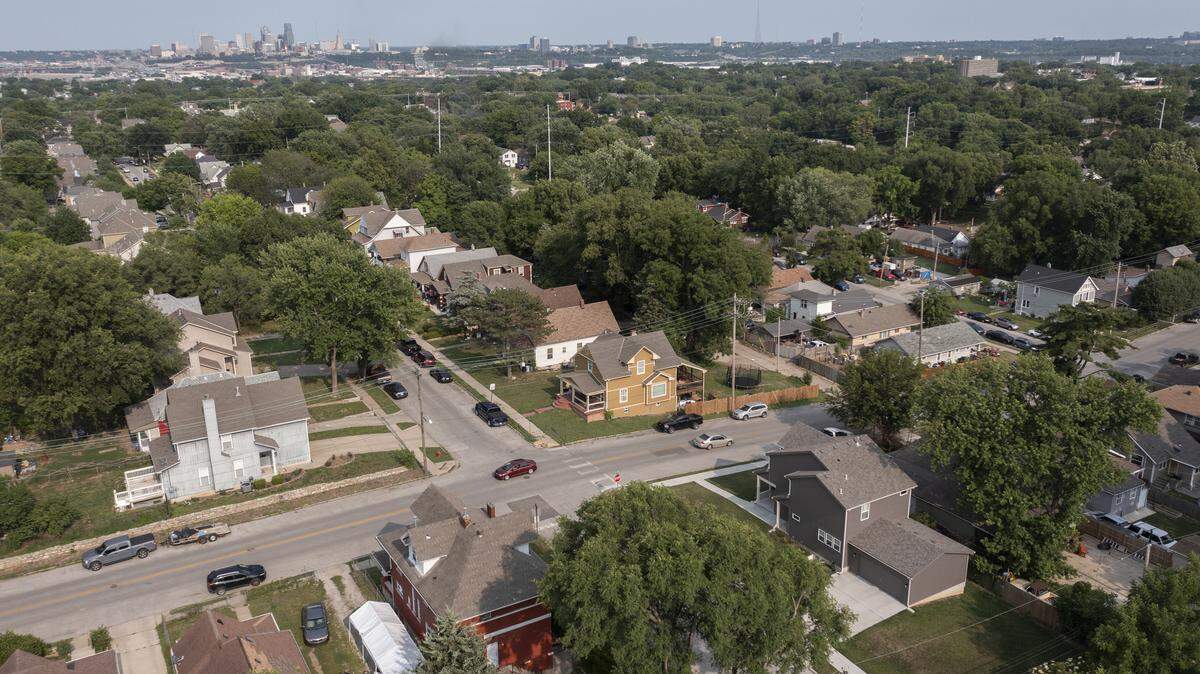
The Kansas City housing market rewards people who do their homework early. While most buyers chase the same handful of neighborhoods everyone already knows about, the real opportunity lies in understanding how to evaluate any area systematically — then making your move while others are still scrolling through generic “best neighborhoods” listicles.
Kansas City spans two states, dozens of municipalities, and hundreds of distinct neighborhoods. That complexity intimidates some buyers. For you, it’s an advantage. Once you understand the framework for evaluating neighborhoods, you can spot value and lifestyle fit that others miss entirely.
Here’s the decision-first approach that separates informed buyers from everyone else.
What “Kansas City” actually means (and why it matters for your search)
First, the geography lesson most people skip. When someone says “Kansas City,” they could mean any of several things:
Kansas City, Missouri (KCMO) is the largest city in the metro, encompassing downtown, the urban core, and sprawling into areas like the Northland and neighborhoods extending south toward Lee’s Summit.
Kansas City, Kansas (KCK) sits directly across the state line, with its own city government, tax structure, and school districts. The Johnson County suburbs on the Kansas side — Overland Park, Olathe, Leawood, Prairie Village — are technically separate municipalities but often get lumped into “Kansas City.”
This distinction matters for your wallet. Missouri and Kansas have different property tax calculations, different school funding mechanisms, and different regulatory environments. A house at the same price point can cost you meaningfully different amounts monthly depending on which side of State Line Road it sits.
For mapping purposes, KCMO maintains an official neighborhood boundary dataset through Open Data KC that shows you exactly where one neighborhood ends and another begins. This matters because real estate marketing often uses neighborhood names loosely. A listing might say “Brookside” when it’s technically in a different, adjacent neighborhood with different characteristics.
The five-step framework for choosing your neighborhood
Skip the “best neighborhoods” rankings. They’re usually based on vibes and marketing budgets rather than factors that affect your daily life. Instead, work through these five decision points in order.
Step one: Pick your lifestyle lane
Before you look at a single listing, decide which category fits how you actually want to live:
Urban core means walkable streets, shorter commutes to downtown employers, smaller living spaces, and more apartments or condos than single-family homes. Think Downtown, River Market, Crossroads, and portions of Midtown. You’ll trade square footage for convenience and access to restaurants, entertainment, and transit.
Urban-adjacent gives you neighborhood character while staying close to the action. The Plaza area and Brookside/Waldo corridor fit here. You get more single-family homes mixed with smaller multifamily buildings, tree-lined streets, and a sense of community identity — but you’re still 10–15 minutes from downtown rather than 30-40.
Suburban prioritizes space, newer construction, and often school district quality. Johnson County’s Kansas suburbs, the Northland on the Missouri side, and Lee’s Summit fall into this category. You’ll need a car for nearly everything, and your commute will be longer, but you get more house for your money and access to highly-rated school districts.
There’s no wrong answer here. But if you’re honest with yourself about which category fits your life, you’ll eliminate 60-70% of the metro from consideration immediately — which makes the rest of your research dramatically more focused.
Step two: Run the commute reality check
Most people underestimate how much their commute affects quality of life. A 45-minute drive each way sounds manageable until you’ve done it 500 times.
If you’re trying to live car-light or car-free, Kansas City offers more options than its reputation suggests — but you need to be strategic. The KC Streetcar runs through the urban core and recently expanded its route. Living within walking distance of a streetcar stop genuinely changes your transportation math.
For bus service, RideKC provides route maps and schedules. Some corridors have frequent service; others run once an hour. The difference between “near a bus line” and “near a useful bus line” is significant.
If you’re choosing between close-in and farther-out neighborhoods, calculate the actual time cost. A $50,000 price difference on a house might seem like obvious savings until you realize you’re trading 200+ hours per year in commute time. That’s five full work weeks annually spent in your car.
Also consider flexibility. If you change jobs, does your neighborhood still work? Urban and urban-adjacent locations typically offer more commute resilience than suburban areas locked into specific highway corridors.
Step three: Evaluate schools with state data, not reputation
School quality drives neighborhood selection for many buyers, but most people evaluate schools based on outdated reputation rather than current performance data.
Here’s the smarter approach: use official state report cards as your primary source, then cross-reference with third-party sites if you want additional perspective.
For Missouri schools, the Department of Elementary and Secondary Education publishes detailed data through their school data portal. You can drill down to individual buildings using the MCDS Report Card tool. This shows you actual performance metrics rather than reputation-based ratings.
For Kansas schools, the Kansas Report Card from KSDE provides comparable information. Johnson County districts generally score well, but there’s meaningful variation between individual schools within the same district.
One thing most buyers don’t realize: attendance boundaries can shift. The school you think you’re buying into might not be the school your kids actually attend in five years. Verify current boundaries directly with the district, and ask about any pending boundary reviews.
Step four: Understand the Missouri versus Kansas tax math
The “which side is cheaper” debate misses the point. What matters is understanding how property taxes are calculated so you can compare actual costs.
Missouri residential property is assessed at 19% of true market value, according to the Missouri State Tax Commission. So if your home is worth $400,000, your assessed value is $76,000. Your tax bill is that assessed value multiplied by your local levy rate. Jackson County provides a plain-language breakdown of how this works.
Kansas residential property is typically assessed at 11.5% of appraised value. The Johnson County Appraiser’s office explains how assessed value multiplied by mill levy determines your bill. The state also publishes a Homeowner’s Guide to Property Tax that walks through the calculation.
The lower Kansas assessment percentage doesn’t automatically mean lower taxes — mill levy rates vary significantly between jurisdictions. Run the actual numbers for specific properties you’re considering rather than relying on general “Kansas is cheaper” or “Missouri is cheaper” assumptions.
This matters for resale value too. Monthly payment pressure from taxes, insurance, HOA fees, and commute costs shapes buyer demand over time. Neighborhoods where total ownership costs creep up faster than incomes can see price appreciation slow or stall.
Step five: Check safety at the block level, not the city level
Citywide crime statistics tell you almost nothing useful about whether a specific block is a good place to live. Kansas City neighborhoods vary dramatically in safety within just a few blocks.
For KCMO, the police department maintains crime mapping tools and crime statistics dashboards that let you see recent incidents near specific addresses.
For KCK, the Community Crime Map provides similar functionality.
Look at incidents near addresses you’re actually considering, not neighborhood-wide averages. A “high crime” neighborhood might have blocks that are perfectly safe, while a “safe” neighborhood might have problem intersections.
Matching your priorities to neighborhood archetypes
Rather than ranking neighborhoods (which would be arbitrary), here are four buyer archetypes and how to evaluate options for each.
The car-light urbanist
You want walkability, transit access, and proximity to entertainment. Your priorities are streetcar proximity, parking costs (or the ability to skip car ownership entirely), building amenities, and noise levels.
Evaluate using the KC Streetcar route map and RideKC routes. Pay attention to condo HOA rules around rentals and pets if you’re buying, since these affect both livability and resale.
The neighborhood character seeker
You want a sense of place — tree-lined streets, local businesses you recognize, neighbors who wave. You’re willing to be close to urban amenities without living in the thick of them.
Evaluate using the KCMO neighborhood boundaries dataset to understand exact boundaries. Check KCMO Area Plans to see what development is planned or underway. Look at housing stock age and renovation quality — older homes have character but can have expensive surprises.
The school district optimizer
Your kids’ education drives the decision. You’re optimizing for district performance, specific school programs, extracurricular offerings, and peer groups.
Evaluate using KSDE Kansas Report Card and MO DESE School Data. Verify current attendance boundaries directly with districts. Factor in commute time — a great school district doesn’t help if you’re never home to see your kids.
The value-plus-upside hunter
You’re comfortable with some uncertainty in exchange for better pricing and potential appreciation. You’re buying where change is happening, not where it already happened.
Evaluate using the KCMO Market Value Analysis, which maps patterns of market strength and reinvestment across the city. Cross-reference with the HUD Comprehensive Housing Market Analysis for Kansas City for supply and demand context. Understand that you’re accepting short-term volatility for potential long-term gains.
How to evaluate resale potential before you buy
Even if you plan to stay forever, buying with resale in mind protects you from getting stuck.
For metro-wide price trends, the FHFA House Price Index for the Kansas City MSA provides long-range context from a credible government source.
For neighborhood-level signals, Redfin’s Kansas City housing market data shows median sale prices and days on market — two key liquidity indicators. If homes in an area are sitting for 60+ days, that tells you something about buyer demand.
Zillow’s Kansas City home values page offers another perspective, though you should understand what their methodology actually measures before treating it as gospel.
For understanding where values might change, KCMO’s planning documents are underutilized resources. The Area Plans map shows corridor development priorities and land use changes that can shift neighborhood trajectories over 5–10 years.
Your one-hour research checklist
Before you tour any property, spend an hour with these tools:
Find the official neighborhood boundaries using Open Data KC. Confirm the listing is actually in the neighborhood it claims.
Check planning context via KCMO Area Plans. See what’s planned for the corridor.
Map your commute options using RideKC routes and the KC Streetcar route.
Verify school performance with KSDE report cards or MO DESE school data.
Check recent crime near the specific address using KCPD crime mapping or KCKPD community crime map.
Sanity-check resale signals with price trends and days on market from Redfin and macro context from FHFA/FRED.
This framework won’t tell you which neighborhood is “best” — because that depends entirely on your priorities. But it will help you evaluate any neighborhood systematically, spot opportunities others miss, and make a decision you won’t regret when the market shifts.
Production of this article included the use of AI. It was reviewed and edited by a team of content specialists.
This story was originally published February 18, 2026 at 11:57 AM.