Saint Luke’s finalizes merger plans with BJC in St. Louis. What do patients need to know?
Two of Missouri’s biggest healthcare systems will merge in 2024.
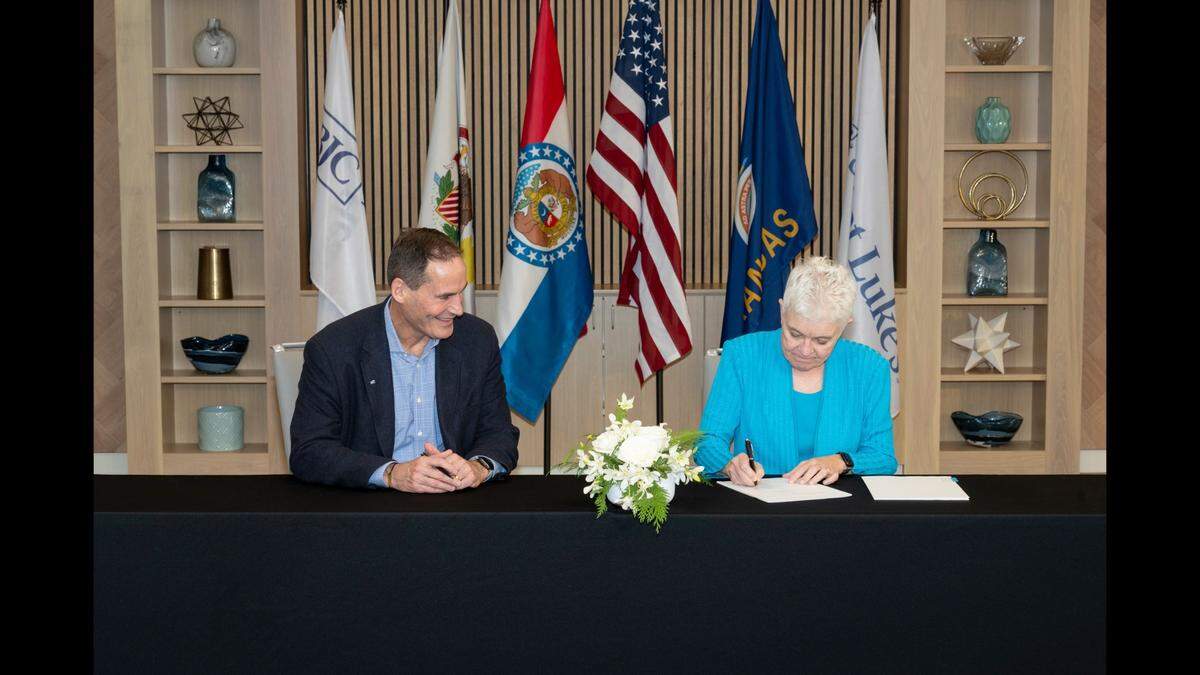
Saint Luke’s Health System of Kansas City announced on Wednesday that it will integrate with BJC Health System of St. Louis starting on Jan. 1. The agreement follows a letter of intent signed in May.
BJC President and CEO Richard Liekweg will serve as CEO of the integrated health system. Saint Luke’s CEO, Melinda Estes, said she will retire at the end of the year after delaying her planned 2021 retirement to see Saint Luke’s through the pandemic.
According to a news release, the system’s combined revenue of $10 billion includes 28 hospitals and hundreds of clinics and service centers. Both will continue to operate under their respective names.
Can patients in the Kansas City area expect service changes? Here’s what we found out.
Are Saint Luke’s patient services changing with the merge?
St. Luke’s patients, who use the health system’s 14 hospitals and hundreds of physician practices in the Kansas City area, can expect their services to remain the same, according to Laurel Gifford, senior director of media relations at Saint Luke’s Health System.
“First and foremost, there will be no interruption to patient care or access to resources upon the close of this transaction,” Gifford said. “BJC and Saint Luke’s will continue to serve their respective communities, and all hospitals, clinics and facilities will continue their day-to-day operations as usual.”
Patients who use Saint Luke’s or BJC for their health services will not have to move their information from one system to the other, Gifford said. Both healthcare systems use the Epic electronic health records software, and their initial integration work is focused on integrating both platforms.
Why did Saint Luke’s merge with BJC?
With the merger, Saint Luke’s and BJC are planning to advance their positions as a patient-first industry leader in care delivery, Gifford said. The two healthcare systems are hoping to create more value for the patients who live in the communities they serve.
The healthcare systems will “deliver extraordinary clinical care to patients, recruit top talent, expedite medical innovation and create healthier communities,” according to the news release.
Their focus for now is on integrating their existing processes and over time, the system will consider new models of care, like expanding virtual health care capabilities and alternative care sites that may benefit their broader community, Gifford said.
This story was originally published December 1, 2023 at 1:22 PM.