
Ticks multiplying in Kansas and Missouri. Here’s how you and your pet can stay safe
Kansas City summers always have a particular bite. The bad news is that ticks are becoming even more plentiful in our neck of the woods, and their seasons are growing longer, now extending into fall.
“I don’t think we’re seeing new species. We still have the three to four species of ticks that we’ve had for quite some time,” said Dennis Patton, horticulture agent with Johnson County K-State Research and Extension. “But what I think we are seeing is just increasing numbers of ticks.”
Well, that sucks.
The good news is you can prevent becoming a blood meal for these tiny parasitic arachnids that carry several diseases.
“I’m not saying you should be worried about ticks all the time, but we need to recognize them for what they are,” said University of Missouri epidemiologist Ram Raghavan, who spent three years collecting ticks around Pittsburg, Kansas, said to be the most comprehensive study of its kind in the Midwest. “They do transmit some very nasty diseases to people, and it can be prevented.
“And also, we should remember that it’s not just us, it’s our pets. Any precautions that we take for ourselves we should also make for our pets because they can also bring ticks home without you knowing it.”
His research has found increases in both the number and severity of tick-borne diseases, such as Lyme disease, in the Midwest, including humid Kansas and Missouri.
Some might have assumed that the record cold winter would have cut down their numbers.
“But a lot of times those cold temperatures during winter have very little bearing on insect populations,” said Patton, who writes the weekly KC Gardens column for The Star. “Same way with mosquitoes. Insects have survived for thousands of years and they know how to protect themselves from the elements.”

Where ticks wait
They’re out there — in tall grass, weeds, pastures, bushes — waiting for a host to brush past, whether it be a rodent, raccoon, possum, a dog or you.
Ticks can’t fly or jump, and they don’t fall from trees, contrary to one popular misconception.
Instead, they assume a position known as “questing,” where they rest on the tips of grasses and shrubs, their upper legs stretched out, waiting to grab a ride.
Backyards aren’t necessarily natural habitats for ticks if you don’t have tall grass or weedy areas. But people with yards that back up to more natural areas might find ticks more problematic.
“Ticks’ main food is going to be other mammals, not humans,” said Patton. “When we invade their territory we become part of their food chain.”
But you can still get bit in your own backyard, said Raghavan, a professor in MU’s College of Veterinary Medicine and School of Health Professions
“You may think you’re living in this urban jungle, but wherever there’s vegetation there’s going to be some small mammal, and those small mammals can potentially be hosting ticks,” Raghavan said.
“And sure enough, if your dog goes out, they come back with fleas and ticks.”
Even if your dog is on flea and tick medicine, he can still carry the buggers into the house, where they’ll be more than happy to become attached to you.
What to wear
Covering up when you venture into tick territory is essential — long sleeves and pants, which is the opposite of what many people do when it’s hot.
Tucking pant legs into socks will make it harder for ticks to find their way to your skin. Some people use rubber bands to hold their pant legs closed tight. Also, light-colored clothing will help you see the ticks — tiny brown dots.
Clothing treated with the insecticide permethrin wards off many species. You can treat your clothing yourself, or buy it pre-treated.
Back home, wash the clothes you wore in tick country right away or throw them in the dryer.
Shower with a washcloth, sponge or loofah — don’t forget your hair — to dislodge any ticks. They’re super tiny, like a mole or freckle, and can be difficult to see, said Patton. (Unless they have the chance to feed on your blood a couple of days and grow engorged.)
“They also, and you might not want to think about this, tend to gravitate toward and like darker spaces on your body, cracks and crevices. So that’s why a lot of times you’ll see them in armpits, the groin, back of the knees where your legs are bent and it’s dark,” Patton said.
He suggests a tick check. You’ll need a buddy with a flashlight who can look where you can’t, like your backside.
Timing is everything. It takes 24 to 48 hours before a tick becomes fully attached and starts to feed — and possibly transmit disease.
How to remove a tick
Removing a tick that’s latched on doesn’t involve slathering it with Vaseline or, heaven forbid, torching it with a match.
“What you don’t want to do is apply heat, or I’m going to use the word chemicals — I’ve heard fingernail polish remover, alcohol, the burnt match head, all those things,” said Patton.
“Because yes, that may cause the tick to release, but what’s going to happen potentially is it’s going to create what I call a gag reflex of a tick. It’s going to cause the tick to regurgitate, throw up into your body. So you’re going to increase potentially the likelihood of disease transmission.”
Instead, use a pair of fine tweezers to grasp the tick as close to the skin as possible and pull it slowly, gently and straight away from the skin. Don’t smash it. Don’t twist it.
“What you’re wanting to do is let the tick kind of start releasing so you don’t leave body parts in your body,” said Patton.
Monitor the bite site. If it starts getting warm or develops a red bullseye appearance, and certainly if you start feeling sick, you should see a doctor.
Why the uptick?
In more than 10 years of studying ticks, Raghavan has found that ticks in this area are becoming active earlier, in mid-March, and staying active longer, into October.
“Not a lot of people would like to hear this, but whether or not we did it, or whoever did it, climate has actually changed over the last 10 years to the point where we’re starting to see some of these shifts,” he said.
He focused his most recent research around Pittsburg because data from state health departments in Kansas and Missouri showed that region — near the four corners with Oklahoma and Arkansas — was “kind of a problematic area for ticks.”
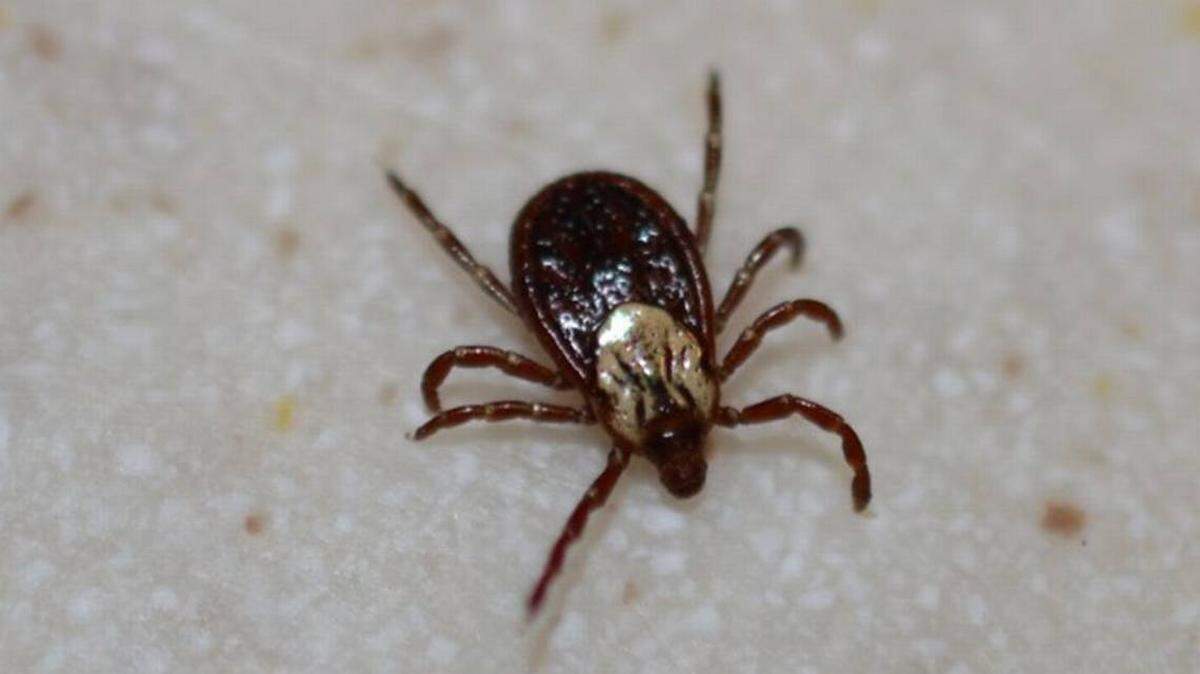
In our part of the country, the lone star tick is the most common — the female has a characteristic white spot. Also common: the American dog, and brown dog ticks. The blacklegged tick, or deer tick, the known spreader of Lyme disease, is found more often in the Ozarks, Raghavan said.
The Gulf Coast tick, mainly found along the Atlantic Coast and Gulf of Mexico, which can spread a spotted fever similar to Rocky Mountain fever, is slowly moving into our area, Raghavan said.
“Now we know what ticks are here and when they’re active, we can advise the public to use precautions based on what diseases they may expect to see,” said Raghavan.
“And also veterinarians. As much as it is a problem to humans, dogs can also come down with a lot of tick-borne diseases.”
How to keep dogs tick-free
Does this scenario sound familiar? Your dog walks through tall grass or the woods and then …
“You sit down beside the dog, it curls up in your lap, it sleeps in bed with you,” said Patton. “That ticks crawls off the animal and can crawl onto you.”
It’d be nice, Patton joked, if there was a tick collar for humans.
Most flea and tick medications, properly applied, keep ticks from attaching to your dog.
Veterinarians recommend that you check your dog for ticks as soon as he gets inside. The American Kennel Club advises carefully running your hands over the dog’s body to check for small bumps.
Remove and check under his collar.
If you find a tick, remove it the same way you would from your own body, with tweezers, slowly.
Here are a few other places to check:
▪ Head and ears. Look on the outside of the ears and deep inside where ticks can go unnoticed. A signal that something might be wrong: Your dog starts shaking his head and scratching at his ear.
▪ Toes and armpits. One sign: Your dog is licking or chewing his feet. Also check your dog’s so-called armpits, where the legs meet the body.
▪ Tail. Use a comb to search through thick fur. Don’t forget to check around the genitals, too.
▪ Eyelids. That might be a tick, not a skin tag.
If your dog starts showing signs that he’s sick, such as lack of appetite or low energy, call your vet.
This story was originally published May 29, 2021 at 5:00 AM.
.jpg)