
Here’s what this ‘radvocate’ wants women to know about breasts and a new Missouri law
The worst medical diagnosis Jackie Murtha ever received in 65 years of life came on Jan. 2, but it became the “best experience” because of the woman who told her “I think you may have cancer.”
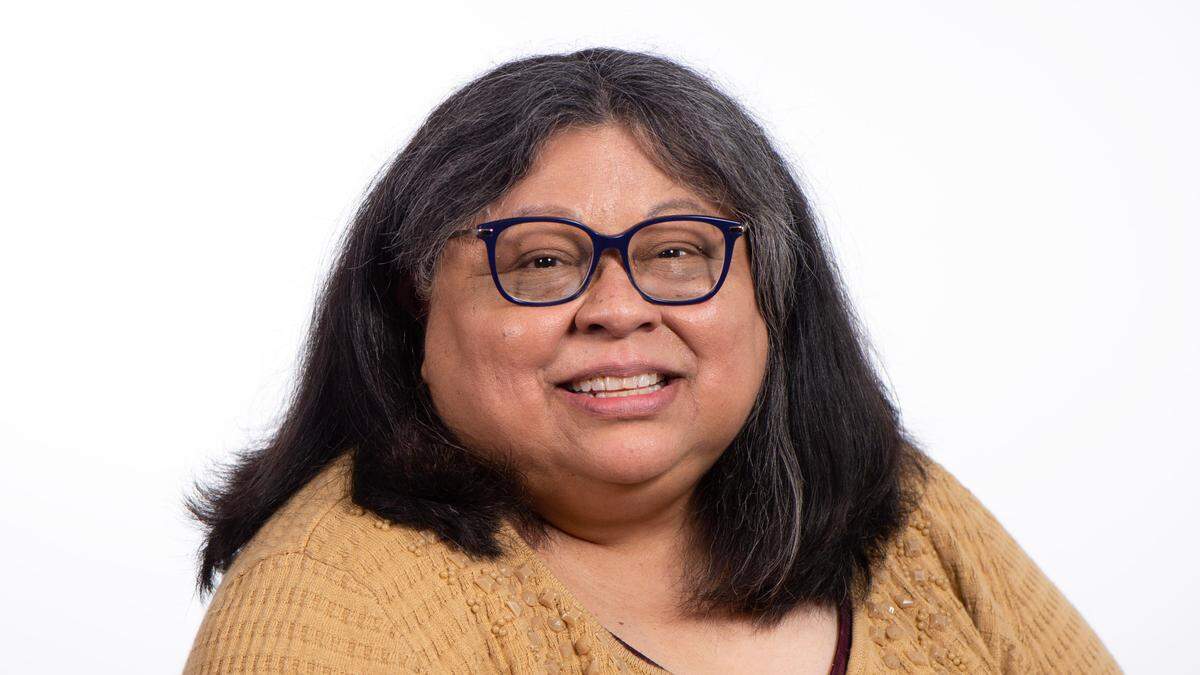
The lump in Murtha’s left breast turned out to be an aggressive cancer. Murtha is forever grateful that the news came from Dr. Amy Patel, medical director of women’s imaging at Liberty Hospital.
The breast radiologist and her staff made Murtha feel like she was “their No. 1 person,” said the Liberty bank manager. “I always felt like I was the only one they were working with and I got all their attention.
“And that part in itself is amazing, that somebody who is so busy takes their time to talk to me and to tell me what’s going to happen and go from there.”
Those relationships with patients and her imaging prowess helped earn 35-year-old Patel the reputation as “a Michael Jordan” in her field. But then there was her political advocacy in Jefferson City this year, too, that improved health care for young women in Missouri, a state that ranks higher than most in breast cancer death rates.
Just two years ago she was teaching radiology at Harvard Medical School. But she was born and raised in Missouri, and those roots have pulled her home.
There’s hardly any place Patel won’t go to talk about breast cancer — on Twitter and Instagram, in churches, in front of her radiology colleagues nationwide. That requires getting out of her darkened office where she studies images of breasts on computer screens to talk to people as often as she can — and not just for October’s Breast Cancer Awareness Month.
She’s encouraging other radiologists across the country to do the same. The young guns have a hashtag: #radvocates.
She also just launched a website — dramykpatel.com — where in big bold letters she encourages visitors to “take charge of your breast health.”
Earlier this year Patel sat in front of a state Senate committee and helped convince lawmakers they should pass legislation that takes an aggressive approach to detecting breast cancer in younger women.
Current guidelines from the American Cancer Society say women at average risk of breast cancer should begin yearly mammograms by age 45 — it used to be 40 — and can transition to every other year beginning at age 55, if they wish.
But Missouri’s new law, which went into effect Aug. 28, requires insurance companies to cover screenings for women ages 25 to 29 if they are at higher risk, as well as screenings every six months from age 30.
Laws like this, being passed by state legislatures across the country, are considered lifesaving because they give these women access to services not typically covered by insurance.
“Missouri is not the first state to pass such a law, nor the last,” said Shawn Farley, director of public affairs for the American College of Radiology.
“However, it is among a growing number of states that have acted to make sure that women have covered access to this care. Colorado, Washington, D.C., and Minnesota passed such laws in 2019. Pennsylvania and Missouri passed similar laws in 2020. Kansas has yet to pass a such a law.”
Breast cancer is the second most common cancer among women in the United States. Missouri and Kansas are in the second-highest category of new cases of female breast cancer in the country, according to the Centers for Disease Control and Prevention.
The most current data, from 2017, showed Kansas with 133.3 new cases per 100,000 women — nearly 2,300 cases. Missouri that year recorded 131.9 cases per 100,000 women — 5,100 in all.
Black women and white women in the United States get breast cancer at about the same rate, according to the CDC, but Black women die from breast cancer at a higher rate. Patel’s concerns over that racial disparity and the level of breast health care available to rural women brought her back to Missouri.
“Clay County is in the top three for highest breast cancer death rates in Missouri for Black and Hispanic women,” she said. “So we have a lot of work to do.”
From Harvard to home
Patel’s colleagues in the American College of Radiology, which has more than 39,000 members in the United States, have honored her for her work. They like to hear her speak, too.
Once, when Ted Burnes, director of the group’s bipartisan political action committee, asked her to make a pitch at an event for money for those efforts, she made a quick speech, “then all of a sudden she had some Biggie Smalls rap playing in the background about money,” said Burnes.
“And I was like, ‘did she just really do that? That’s crazy.’ You would never see that in a radiology circle. She just has a very uniquely, energetic realness to her. … It’s energy, it’s passion, and it’s a realness that she’s able to convey that is able to capture people’s attention a little bit better than a traditional speaker.”
Burnes said she is “really good on engaging her colleagues to understand the value of advocacy, what it means. I think the other thing that’s probably most under the radar about her, but what I respect the most from a professional perspective, is that she’s a fantastic mentor, primarily to women, to the residents in training.”
Patel said she’s always had a passion for women’s health. She didn’t see many female physicians, or doctors focused on women’s care, growing up in Chillicothe.
In her second year of med school she shadowed a breast radiologist, and she was hooked. After a diagnostic radiology residency at the University of Kansas School of Medicine’s campus in Wichita, and training in breast imaging at the Mallinckrodt Institute of Radiology at Washington University in St. Louis, she left the Midwest for Boston “to see what’s out there.”
She took a job in the breast imaging department at Beth Israel Deaconess Medical Center, and the teaching job at Harvard. But the pull to come back to Missouri remained strong. “I felt immense guilt. There’s so much work to be done at home,” she said.
She got her chance when she got a job with Alliance Radiology, running the division that works out of Liberty Hospital. From there she also oversees breast imaging at seven rural hospitals in northwest Missouri and Samuel U. Rodgers Health Center in Kansas City. “Quite a swath,” she said.
She has a goal to provide access to the gold standard of 3D mammography to all those rural patients.
“Unfortunately the rural areas tend to be the last to adopt the 3D technology,” she said. “And a lot of times it comes down to cost or, unfortunately, there are people overseeing the facility that may not really know how to bring that to their hospital.”
Screening matters
Patel got one of her first tastes of political advocacy during a fellowship with the national radiology group when she shadowed Burnes and his colleagues on Capitol Hill in Washington. “From that moment on she kind of got the bug, and she was full throttle after that,” said Burnes.
Who should get mammograms and when is an ongoing debate that reached peak controversy when the U.S. Preventive Services Task Force said women at average risk for breast cancer should be screened every two years starting at age 50 instead of annually. The group is an independent panel of volunteer medical experts.
Two years ago the radiologists’ group and breast surgeons recommended that women of color be assessed for breast cancer risk by the age of 30, and, “if you’re deemed high risk by age 30, you should be receiving heightened surveillance,” said Patel.
Being deemed high-risk “means you have a 20% or greater lifetime risk of breast cancer,” said Patel.
The model she uses calculates a patient’s breast cancer risk based on several factors, including family history, age, breast density and obesity.
Because so many of her patients are in those high-risk groups, “I was recommending earlier screening, additional supplemental screening, and women were getting denied by insurance providers,” said Patel. “And patients were so upset because a lot of them couldn’t afford it.”
The making of a law
She said wheels started turning in her head.
Maybe she would invite a legislator from the area to visit the hospital, see its breast imaging services, and have a conversation about how to solve that lack of coverage.
That’s how Missouri state Sen. Lauren Arthur got an invitation to visit Patel at work last year.
She remembers Patel “talking about some of her patients who came to her with advanced breast cancer, and a lot of those women had forgone screenings because they couldn’t afford the out-of-pocket costs.”
Patel and Arthur worked over the summer of 2019 to write the language for the proposal. Then Arthur filed the bill, not sure how it would fare coming from a Democrat in a Republican-run Senate and knowing it would run into “some pretty strong headwind” from insurance companies that typically balk at government mandates.
They detailed the need — that breast cancer death rates for most racial/ethnic groups in Missouri have been higher than national averages, and that Missouri trails “many of our neighboring states, including Kansas and Arkansas, in mammography rates for women 40 and older,” Arthur said.
“This lends itself to the idea that Missouri women with an above-average risk who are under 40 may also be under-screened compared to our neighboring states.”
Arthur, a Democrat running against Republican Mickey Younghanz in her bid for re-election next month, was a little shocked when the bill passed during a legislative session upended by the COVID-19 pandemic.
Even insurance lobbyists who didn’t like the legislation didn’t want to oppose it publicly. One insurer supported the measure because preventative screenings ultimately lead to cost savings if they head off more expensive cancer treatment, Arthur said.
She watched Patel in action. “Her real ability is being able to take sort of technical, scientific information and translate it for legislators and the general public, and I think that’s a really rare and useful skill,” Arthur said.
“She helped a non-science person like me understand why this was so important. She was able to relate it to real people and I think that left an incredible impression on the committee that heard the legislation, and also really inspired me to take up this cause as well.
“I really admire Amy. She’s eminently qualified. She has every opportunity or option available to her and … she came back to make her corner of Missouri a little better. So what’s not to love about that?”
This story was originally published October 19, 2020 at 5:00 AM.
.jpg)