
Daisy Coleman worked hard to save others. But in the end, she couldn’t save herself
The phone call came the night of Aug 4. Earlier in the day, Ella Fairon had what would be her last conversation with her best friend and future bridesmaid, Daisy Coleman.
Something seemed wrong, and when a mutual friend called later, Fairon was afraid to answer. So she didn’t. But she answered when the friend called again, and it was the worst possible news.
Daisy was dead.
Fairon fell to the floor, sobbing.
“I was like, ‘No, I don’t think that’s true. I need proof,’” said Fairon. “I just kind of … it’s very blurry to me. But I just cried the whole night. I still feel like it hasn’t really fully hit me yet.
“Some days I feel like it has, but other days I still feel like I can text her.”
Fairon and 23-year-old Coleman were sisters of survival. They met while Coleman was being filmed for the 2016 Netflix documentary “Audrie & Daisy,” a gut-wrenching look at teenage sexual assault, cyberbullying and suicide that won a prestigious Peabody Award.
The film shows what happened to Coleman and her family after she said she was sexually assaulted at age 14 by a fellow high school student in Maryville, Missouri, in 2012.
The case vaulted a daddy’s girl who never met a stray she didn’t want to adopt onto a national stage she never sought. But over the last few years of her brief life she used that spotlight to start important and necessary conversations across the country about teenage sexual assault and rape.
Daisy bloomed into a passionate advocate, willing to share her story even when conjuring a painful past — a trauma that triggered several unsuccessful suicide attempts. She believed that voices of survivors were key in stopping violence toward women, that survivor stories needed to be told. She called it her “movement.”
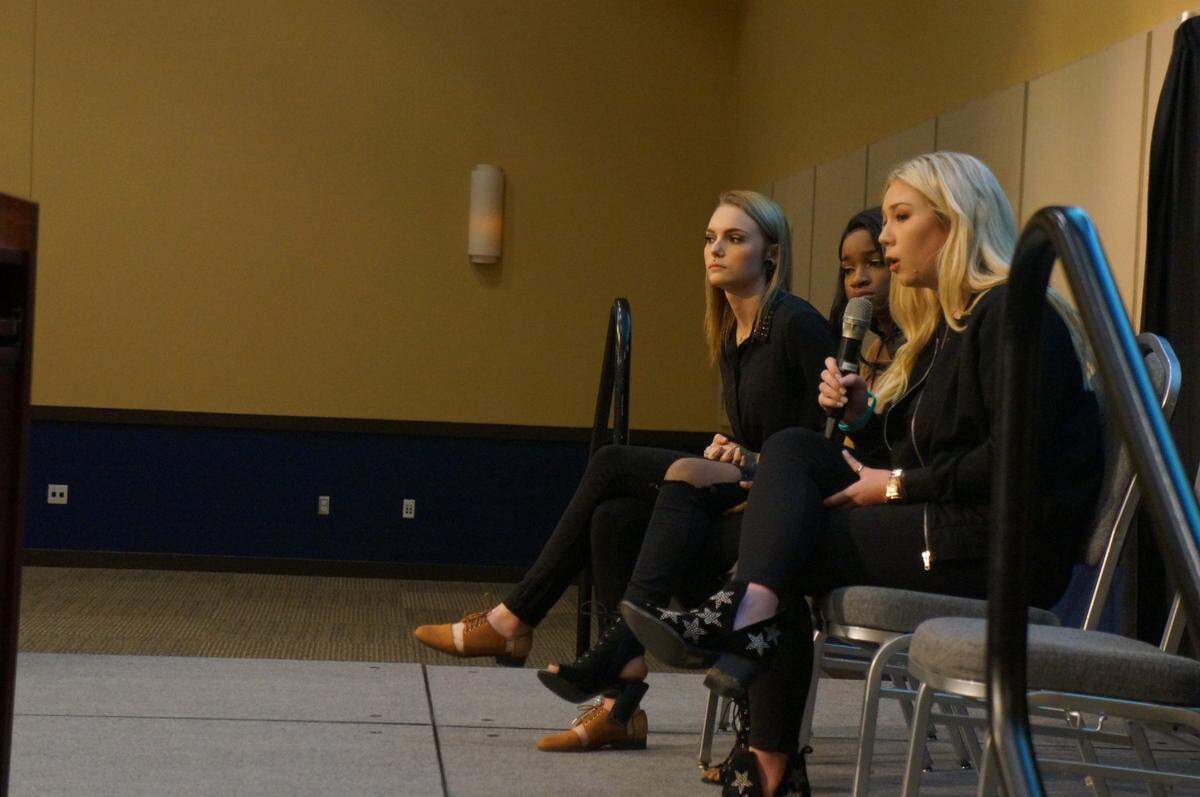
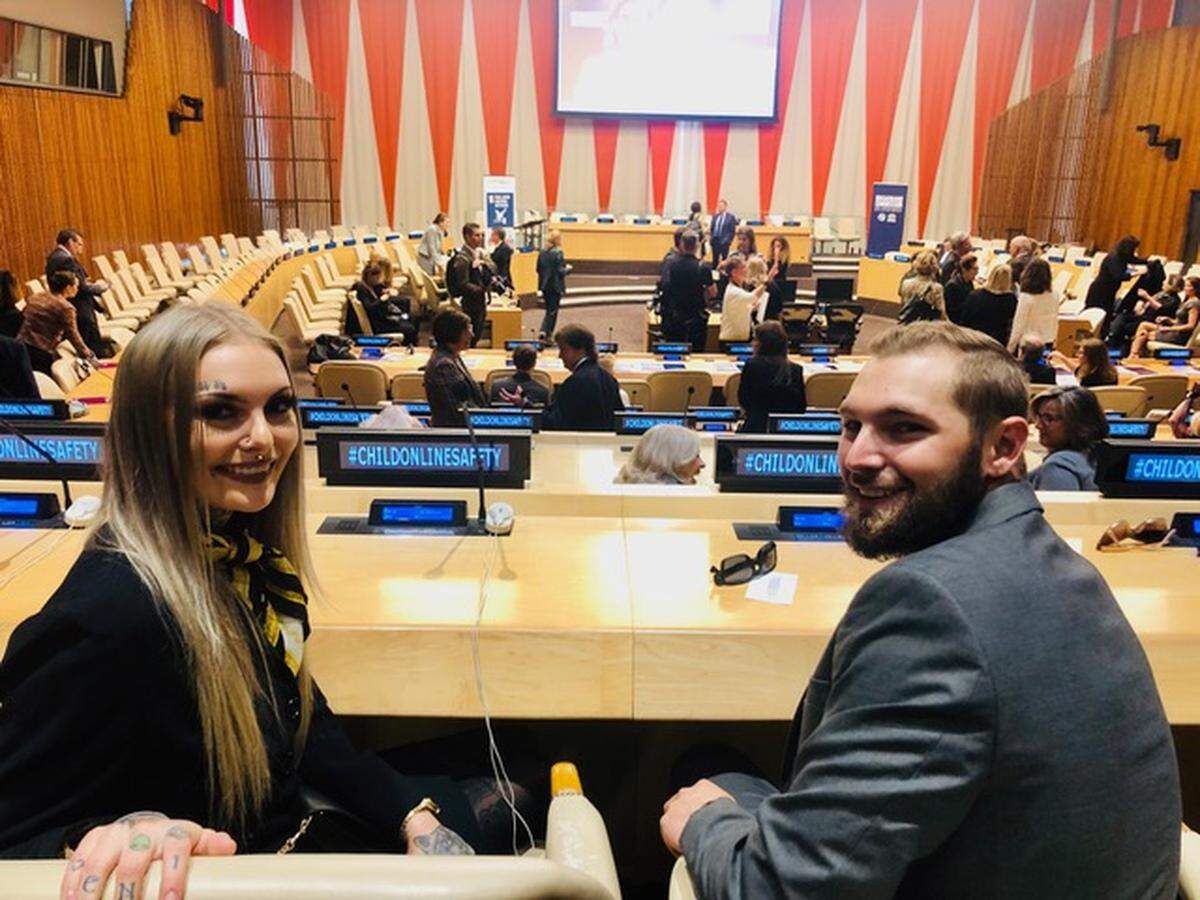
She and Fairon helped create SafeBAE — Safe Before Anyone Else — a national peer-to-peer group working to stop sexual assault among middle and high school students. Coleman spoke to thousands of people through her work with the group and promoting the documentary.
“She literally turned herself into a walking billboard to make sure that crap didn’t happen to somebody else while she was grieving her own thing,” said Coleman’s older brother, Charlie Coleman, one of SafeBAE’s founders. “She was selfless with it.”
But even as Coleman worked to save others, she struggled to save herself.
Two years ago, Coleman moved to Colorado to make a new life. She was busy, chasing a dream of tattoo artistry and writing and recording songs.
There was another documentary coming, too. She and Fairon, a budding filmmaker who lives in California, had finished filming more than 100 hours about Coleman’s experiences in therapy.
“I need help. I’m not going to make it if I don’t get help,” Coleman told Fairon. She started therapy after her younger brother died in a car accident in 2018, and by most accounts it seemed to be helping her deal with demons still haunting her.
Then, on the night of Aug. 4, Coleman shot herself at home.
“I can’t tell you when the train came off the tracks. I wish I could. It’s something that I think we’re all really struggling with,” said Shael Norris, the executive director of SafeBAE.
“But she really believed in her own survival. And she was really committed to it. And she was actually doing really, really well in the treatment that she was doing for it.”
No one can know how many lives Coleman changed or touched. But her older brother has an idea from all the messages that have come his way since his sister died two months ago.
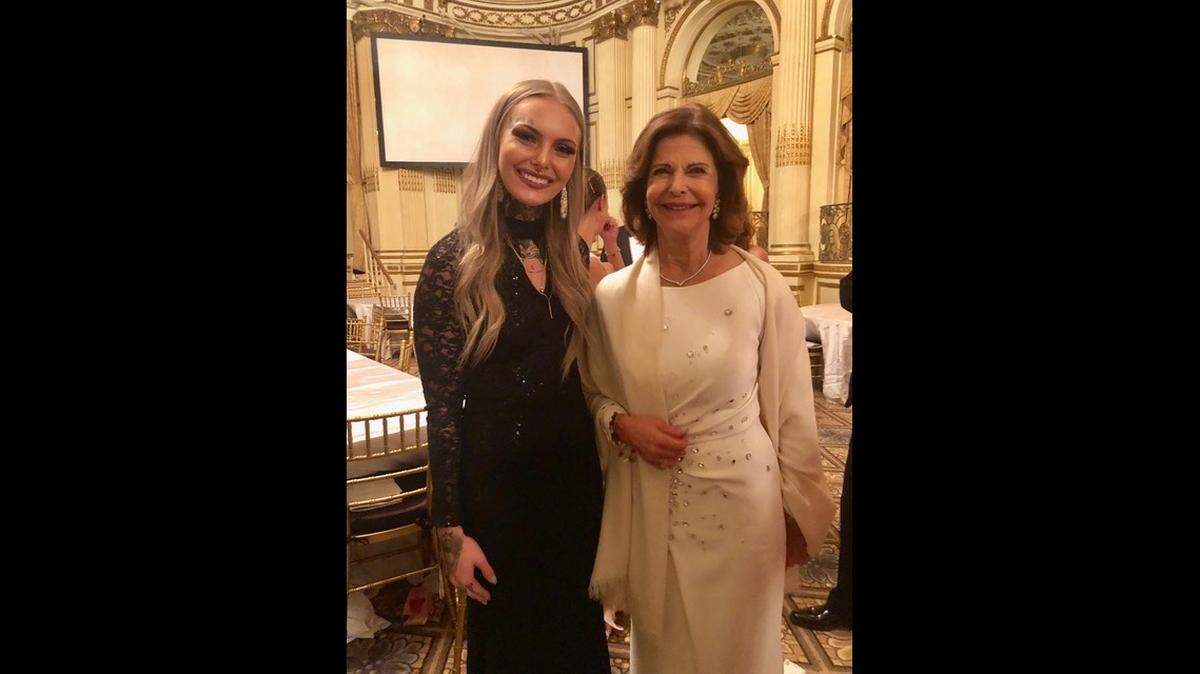
Condolences flooded social media, too. Mourners included scores who knew Coleman’s work on behalf of survivors — teenagers and educators across the country, fellow advocates, actress Amy Schumer — Coleman worked on the set of one of Schumer’s movies — and even the royal family of Sweden.
Daisy and her brother met the queen of Sweden in New York City last year at an event where Coleman spoke about their work with SafeBAE. After Coleman died, Princess Madeleine of Sweden honored her on Instagram, writing “today we lost one of our brightest stars.”
“She had some of the worst things ever happen to her and she fought a long, hard fight,” said Coleman’s brother, who lives in the Northland.
“And I think that she’s going to continue affecting people and she’s going to continue moving people because her story is still being told, it’s still on Netflix and there’s another one coming.
“People are talking about her everywhere because they know she’s still helping everybody.”
That night in Maryville
“Daisy’s story unfolds, through candid interviews with family members and using her own illustrations, to reveal a deeply scarred young woman coping with the aftermath of sexual assault and harassment.” — Peabody Award judges.
It started in January 2012. Coleman and a friend, both teens at the time, alleged they were sexually assaulted at the home of Matthew Barnett, then a 17-year-old Maryville High senior and the grandson of a former Missouri state representative.
Afterward Coleman, inebriated, was left barefoot in her yard in freezing temperatures. In “Audrie & Daisy,” Charlie Coleman remembers picking up his sister’s cellphone from the snowy ground and drying it on his pants leg. He said he “started going through it and the first name I saw in there was Matty B. And I knew, I freaking knew, that was ... Matt Barnett.”
Barnett was arrested on charges of sexual assault and endangering the welfare of a child. Another boy there that night admitted to taking a cellphone video of Coleman and Barnett together, though authorities said they never found it.
The incident sparked outrage in the northwest Missouri community, with the brunt directed for months at Coleman and her family. They eventually moved away to escape the harassment, much of it on social media.
The Nodaway County prosecutor at the time, Robert Rice, dropped felony charges against Barnett, citing a lack of evidence and, later, a lack of cooperation on the part of the alleged victims’ families. The mothers of both girls insisted they were willing to cooperate with authorities until those charges were dropped.
The case made international news. Protesters and reporters descended on the small town. Jackson County Prosecutor Jean Peters Baker was appointed special prosecutor and in 2014, Barnett pleaded guilty to misdemeanor child endangerment, not sexual assault.
“I am ready to move forward,” Coleman, then 16, said in a statement after the plea. “To all those who supported me, I promise that what happened on Jan. 8, 2012, will not define me forever.”
Still playing on Netflix
“Audrie & Daisy” is also the story of California high school sophomore Audrie Pott, who was sexually assaulted at a party in 2012.
Boys at the party undressed Audrie, who was inebriated, and drew on her breasts and other parts of her body with Sharpies.
While she was still passed out, they allegedly penetrated her with their fingers and took pictures of her on their phones. When those photos made the rounds at school she was cyberbullied, like Coleman.
Just days later, 15-year-old Audrie tied a belt to the shower head in her bathroom and hanged herself.
Both cases attracted attention from husband-and-wife filmmakers Bonni Cohen and Jon Shenk. Only a handful of sexual assault cases involving teenagers ever become public, Cohen said during a discussion of the film at the Aspen Ideas Festival in Colorado after its debut.
“Most teenagers aren’t out about these stories. They and their parents choose to remain anonymous for obvious reasons,” Cohen said. “Our first choices were these families right here because of how they had appeared in the media and the kinds of things that they had said and the kinds of things they were exploring as families and just the sheer bravery that that took.”
Shenk, who made the documentary “Lost Boys of Sudan,” said the number of families willing to share these stories is “a shockingly small club, even though statistics have shown us that one in four girls by the time they finish high school are either the actual victim of sex abuse or at least the attempted victim of sex abuse.
“Those numbers are quite high, but the ones who are willing to fight back, so to speak, are really low.”
Coleman, who appeared at that festival with the filmmakers, explained that when she heard about Audrie she “decided that someone really needed to step up to the plate and talk about these issues and if no one else was going to do it then I sure was, and that something needed to be done.”
Daisy, the rock star
Around the country, students would get excited to hear that none other than Daisy Coleman herself was coming to their school for a SafeBAE presentation. They knew her from “Audrie & Daisy” and social media.
Coleman had 67,000 Instagram followers. That’s rarefied air; only about 1.2% of Instagram users have 50,000 to 100,000 followers.
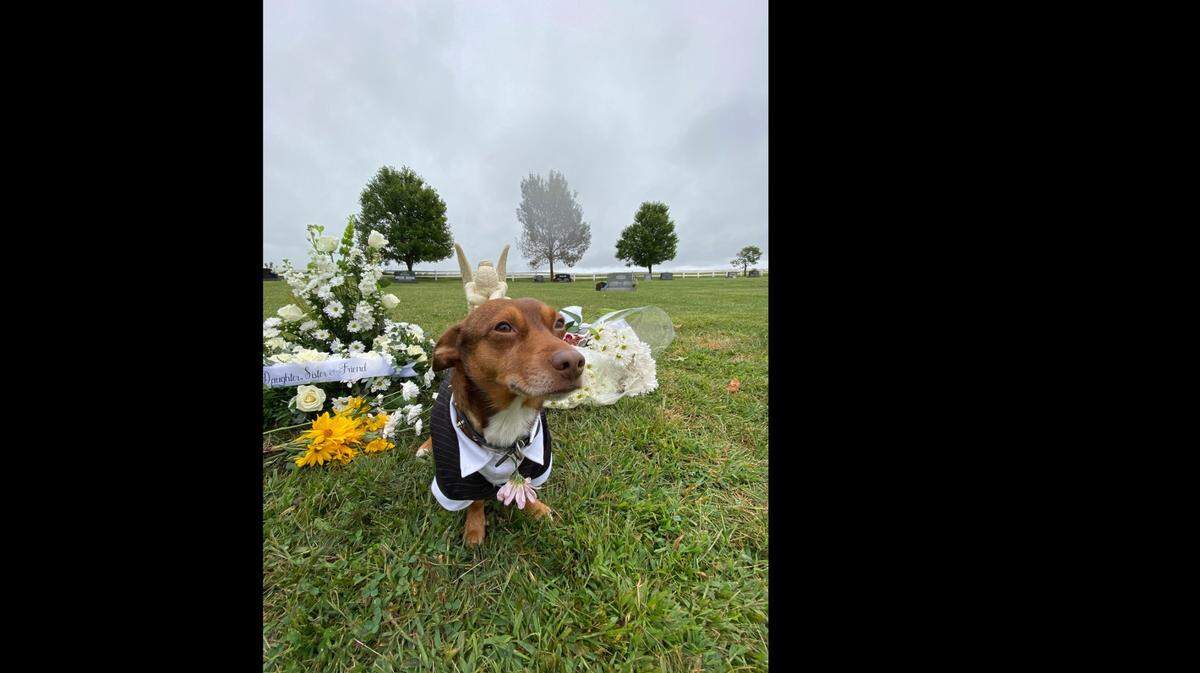
Family and friends tell how animals of all kinds seemed to be drawn to Coleman, the daughter of a veterinarian who once talked her mom into letting her have a flying squirrel as a pet.
“She was obsessed with animals,” said Jillian Chavez, owner of Phoenix Tattoo Co. in Denver where Coleman worked at the time of her death.
One of her newest pets, Chavez said, was a stray pit bull she found in Missouri and took to Colorado. “He was really aggressive, but loved her,” said Chavez, who helped find new homes for Coleman’s two dogs after she died.
People were charmed by her, too.
She was charismatic and poised with a regalness about her, said Norris of SafeBAE, who used to tease Coleman that all those years her mother put her in beauty pageants “really paid off.”
“People were like, ‘Oh my God, she’s beautiful,’ and they’d just stare at her. I’ve seen it a million times,” said Norris. “Then, she’s covered in tattoos, so they’re like, ‘What’s going on with her tattoos?’ And everybody’s trying to lean in and read what her tattoos are.”
There really are no words, Fairon said, “to put how freaking beautiful she was. She was just stunning.
“But it always made me so sad because you could just see how, even though she had a ton of bricks on her shoulders constantly, she literally carried them around like it was nothing. She walked around so freely, so lightly, her energy was just so, it was just so loving.”
Survivor stories
Norris had spent years working with colleges across the country on sexual assault prevention and education programs by the time she met Coleman and Fairon. It turned out to be a harmonic convergence. The teens were wrapping up their work in “Audrie & Daisy” and Norris was feeling a pull to start reaching out to younger students.
So, with lifelong experience in the field, she guided Coleman, Fairon and fellow teen survivor Jada Smith from Houston in starting up SafeBAE in 2015. Norris made it clear it was their group. Student-focused. Survivor-driven.
Fairon was already involved in advocacy. When she was 14 and living in small-town Texas, she says she was beaten, drugged and raped by a boy she considered her boyfriend. Like Coleman and Audrie Pott, she was harassed, shamed, bullied — blamed.
Her family moved back to Newport Beach, California, where Fairon started her own non-profit, Buttervly, to bring attention to sexual assault and to help rape victims.
“We were from two totally different worlds, yet we had this kind of inseparable bond from the things that we went through,” Fairon said of Coleman.
“Actually (we) had a lot more in common than just the traumas we went through. I’ve met a lot of people and I’ve met a lot of survivors. I’ve been an advocate literally since I was 15 years old, not by choice, just because I had no other choice. I had to speak up about what I had went through. We all felt the same way about that.”
Fairon, Coleman and the other SafeBAE members created social media campaigns, posters, pamphlets and videos. They hit the road, meeting with students and having blunt conversations they wished more adults would have with teens.
“It’s a taboo topic, still, particularly with this age range,” said Norris. “The last thing parents want to think about is their kid in any sort of sexual connotation, let alone something where it’s non-consensual.”
They don’t sugarcoat their stories. What is it like to date after sexual assault? What is consent? What should you do as a bystander if you see an assault? What are an assault victim’s rights under the federal civil rights law, Title IX?
They talk about the ugly aftermath for the victims — post-traumatic stress disorder, drug addiction. Suicide.
“The single most difficult thing about discussing these issues is that in general many adults refuse to acknowledge that they’re happening at all or among children this age,” Coleman said in a 2017 interview with The Pixel Project, a global nonprofit working to end violence against women.
“It makes it impossible for administrators to be open to new, effective educational materials and preventions because they are all so nervous about parents being outside of their offices with torches and pitchforks because they are corrupting their youth.
“It’s so sad that as a society we can’t just be honest and acknowledge that these things are happening, and they need to be addressed as early as possible.”
Norris watched as Coleman and her fellow survivors grew stronger the more they spoke out.
“I think that the more success they had in seeing how powerful they could be with this, the more they just became emboldened to do more and absolutely take no shit from anybody,” said Norris.
“They were like, ‘We’re gonna tell this like it is. We’re not going to do some after-school special that schools are going to like. We’re going to tell the real story and we’re going to give real, authentic content to kids so that they can do this work with us.’”
SafeBAE had a full slate of appearances set up for 2020 when the coronavirus pandemic brought the country to a standstill in March. With schools closed, the work slowed. Lockdowns and social distancing kept Coleman and her SafeBAE colleagues apart. Norris had planned a birthday getaway in New York City for her, and that was scrapped, too.
The tattoo shop in Denver where she was working shut down for a while.
Was all that isolation just too much, friends wonder?
“She’s been through so much, as we all know. But she’s also done so much work on her healing,” Fairon said. “And anyone who knew her recently knows how healthy and well she was doing. And it just doesn’t make sense to me, and maybe that’s because I’m biased and I want to believe that she was doing better than I thought.
“But I even have text messages from her … ‘I feel so much healthier. Everyone I talk to says that I look so healthy.’ And I’m just so confused still. I don’t understand what happened. Like what did I miss? What signs did I miss?”
Ink in her blood
After Coleman graduated high school in Albany, about 30 miles from Maryville, in 2015, she went to Missouri Valley College in Marshall, where she wrestled on the women’s team.
“In high school she was an excellent student. She was also a cheerleader and wrestler. She loved wrestling. Probably due to the fact she had 3 brothers who all wrestled and lived in a household of daily grappling sessions and take downs,” her obituary said.
“And yes, we had a wrestling room complete with mats. She was always a very talented artist and saw art and beauty in everything.”
Some of her former teammates, among the Missouri friends she stayed in touch with, attended her funeral in August.
While she was in college she got an apprenticeship with a tattoo artist in Marshall, Charlie Coleman said.
Ink, it turns out, was in her blood, and it changed her path in life.
“She kind of made the choice that she wanted to go full-blown into the tattoo industry and to just stop doing school, because obviously if you’re going to go into a trade that you’re going to learn firsthand you’re wasting your time getting an arts degree in college,” he said. “So she left college and went with her passion and went with the tattooing.”
Coleman had so many tattoos on her body that even those who spent the most time with her lost track of what they were and what they meant. Viking tattoos. A sparrow that she got after making “Audrie & Daisy.” Her brother remembered one of the first tattoos she gave herself in high school, a DIY inking of a long squid on one of her thighs.
“I was kinda mad, actually, I was like, ‘You’re in there tattooing yourself, do you know what you’re doing?’” he said. “But I was like, wow, that’s actually really good for somebody sitting in their bedroom.”
Her most eye-catching tattoo circled her neck like a choker. No one is quite sure what it was supposed to be. Part human? Part animal? Coleman wanted it to mean balance. Some people thought it had something to do with devil worship, her brother said.
“Her neck tattoo was obviously one of her biggest statement pieces,” said Fairon. “She is the only chick I know that could pull that off that well.”
Coleman made tattooing part of her work with SafeBAE. In some of the towns they visited, Norris would arrange for Coleman to do tattoos at a local shop. The call would go out on social media before they arrived, “and it was gangbusters,” Norris said.
Coleman inked people from New York to Wyoming. Some were sexual assault survivors.
“What isn’t her legacy?” Norris said. “Every single body that has her artwork on it? Every single child who gets up every day and lives to see the next day.”
Norris saw catharsis in the tattooing for both Coleman and the survivors she decorated. “You’ll talk to rape survivors and they describe the actual moment is like they left their body. … When you disassociate from your body for a long time your body autonomy is taken away from you.
“What happens in tattooing is you’re trusting someone with your body, almost like what I call a re-entry point to that body autonomy.”
Life as Cat
There’s a lot that Coleman’s family and friends don’t know about why she took her life. They can only speculate.
Friends knew she was scared of a man she said was stalking her. Some think she wasn’t hanging out with the best of people in Colorado. “Shady stuff,” Chavez called it. Some details her brother didn’t want revealed in public.
Like Fairon, Chavez talked to Coleman the night she died and Chavez described her mood as “manic.” She also seemed distressed on Facebook that day.
Chavez, who had only known Coleman a few months, said Coleman was still being harassed about what happened eight years ago. “They would talk crap to her over what happened in Missouri,” she said.
Everyone knew she was still distraught over the death of her 19-year-old brother, Tristan, who died in June 2018 when he was driving back to Missouri after helping her move to Colorado. Their mother, Melinda Coleman, who was riding in the car, survived the one-vehicle crash on Interstate 70 in western Kansas.
“Ever since the release of Audrie and Daisy I have had so many of you survivors come to me and ask advice on healing. The truth is I haven’t healed the way I need to,” Coleman wrote on Instagram a few months later when she announced she was getting therapy.
“For years I have struggled with my demons and I’ve put on a brave face because I simply cannot let down all of the survivors who look up to me. I felt a responsibility to carry this weight so no one else would feel hopeless like Audrie did.
“I didn’t come face-to-face with this until I lost Tristan. I have been using so many unhealthy coping mechanisms so I could carry on and keep doing the work I’m doing. I have been living a life where I am constantly triggered for as long as I can remember.
“I can’t even remember the times where I wasn’t living in constant pain and dealing with panic attacks or flashbacks. I’m not drowning, but just floating until something pulls me under water once more. I can’t live like this anymore and I need to start this journey of healing.”
People in Colorado knew her as Cat. Coleman’s parents named her Catherine Daisy.
When Fairon met her five years ago, Coleman went by Daisy. “Toward the end, like the last few years, I was calling her Cat,” she said.
“As she was kinda, almost reinventing herself, she wanted to go by Cat, and that was kind of her way of letting go of who Daisy was, and who everyone knew Daisy to be and all the trauma that she endured.
“She wanted to start fresh and have people know her for all the other great things that she was, which was an artist, she was a musician, she was an adventurer, she was a little witch as she would like to call herself.
“She was so many different things than just the trauma was attached to her name. And that’s what I really wanted to help her show the world.”
Coleman painted too, and when Chavez helped the family pack up her apartment after Coleman died, she found a painting of an angel without a face. “I don’t know if it was finished,” Chavez said, “or if that’s the way she wanted it.”
Coleman dreamed of being a star tattoo artist, the next Kat Von D.
“We had this whole plan where if we sold our movie for anything, we would open up a female-run tattoo shop in Santa Monica,” Fairon said.
Now, the future of their documentary is up in the air. Fairon needs money and a new partner. “It’s too much for me to do this on my own,” she said. “I really want to finish this for her, but it’s just so tough.
“And it’s a tough piece to want to talk about suicide. Suicide in any film piece is extremely risky because any time anyone even talks about suicide, even in the news, suicide rates go up.
“I’m a rookie at best. Like, I just graduated from film school with my bachelor’s in entertainment business. I am doing my best, but I just need support and it’s really hard to do this without her.”
The women named the documentary “Saving Daisy.”
“There was a great interview I had with her, the last interview I ever did with her, she talked about how she felt like there was no saving Daisy and that was OK because she was Cat now. And Cat is a really cool person and she loves who Cat is,” said Fairon.
“It’s been very hard to find a light at the end of this tunnel.”
If you need help
▪ The National Suicide Prevention Hotline is available 24 hours a day, seven days a week. The free help is available in English and Spanish. 800-273-8255.
▪ The National Sexual Assault Hotline is free and confidential, available 24 hours a day, seven days a week. Live chat is available at Rain.org. 800-656-4673 (HOPE).
▪ SafeBAE — SafeBAE.org — is a student-led organization, co-founded by Daisy Coleman, working to end sexual assault among middle and high school students. It gives students tool to become activists and raise awareness about dating violence, sexual harassment and assault, Title IX rights and bystander intervention.
.jpg)