
‘I wouldn’t put anyone through this,’ says daughter of Johnson County COVID-19 victim
The coronavirus stole Cathy Moffett’s mother from her.
The “invisible, sneaky virus,” ravaged her mother’s lungs, suffocated her every last gasp for air. For hours at her mother’s hospital bedside, Moffett watched, helpless, like seeing someone drown with no lifeline to throw.
Nancy Moffett was 95 years old when she died four days before her birthday on March 27, the second person to succumb to COVID-19 in Johnson County and the fifth victim in Kansas.
Her daughter, a retired paramedic, would not wish that agony on anyone. That’s why she’s worried now and speaking out.
Americans have stayed at home for weeks trying to slow COVID-19’s death march. Now, talk has turned to reopening society, letting people go back to work, maybe go to sporting events again. No one knows exactly what reentry will look like.
On Thursday, Kansas City Mayor Quinton Lucas extended the city’s stay-at-home order until May 15. It was set to expire on April 24. Both Kansas Gov. Laura Kelly and Missouri Gov. Mike Parson extended their statewide orders until May 3.
With fresh grief weighing on her heart, Moffett wonders: What if restrictions are relaxed too soon and infections peak again? “It could be easy for people to have a false sense of security,” she said.
She does not want to see more lives lost, more people left to grieve their loved ones in isolation, as she is.
She couldn’t get a hug from her own husband for two weeks because she was exposed to the virus and isolated herself in their Lenexa home.
“The medical experts are going to make decisions that are medically sound,” says Moffett. “Everybody wants to go back to work, everybody wants to make sure they have income … everybody wants that. But do you want a second peak? How long do you want this to drag out?
“What you do today takes away somebody’s tomorrow. And if we move too fast, there are going to be way too many tomorrows gone. I wouldn’t put anybody through this. It’s a horrible disease.”
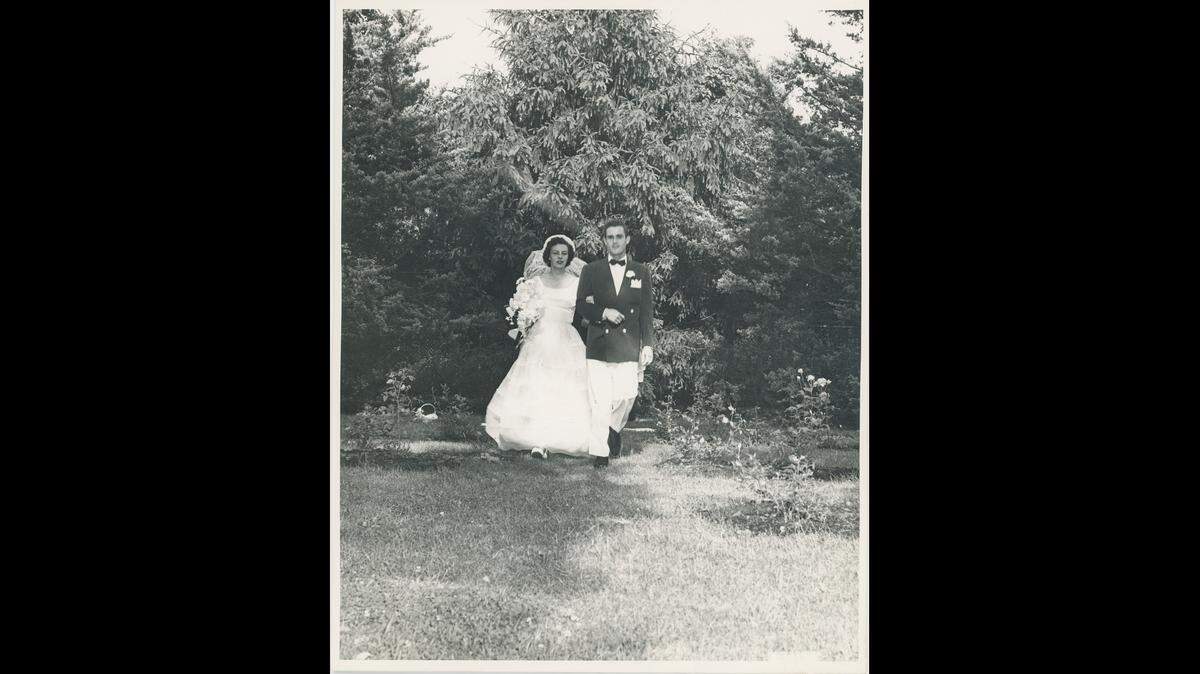
Married in Antioch Park
Moffett’s parents were married 70 years. Bill Moffett moved into a memory care facility in December.
He has dementia and does not understand that his wife has died. He loved her so. He called her “Wonder Woman.”
They married in 1949 in the rose garden on the estate belonging to Nancy’s aunt and uncle. That land is now Antioch Park in Merriam; the rose garden where they exchanged their vows is the playground.
Bill sold cars with his father, O.D. Moffett, then became a banker, eventually opening Centennial Bank in Mission, which today is Mission Bank.
Moffett says her mother “was brilliant and could have been anything she wanted to be.”
When she was 16, that meant learning how to fly a plane. She studied at Duke University, then came home and finished her bachelor of arts degree at the University of Kansas. She and Bill had two children, Cathy and Steve.
She found many ways to serve others — tutoring GED students, serving as a “shepherd deacon” at Village Presbyterian Church, volunteering in the library and the “What Not” shop at her retirement community, Lakeview Village in Lenexa.
She worked at being healthy her entire life. She walked every day — so fast that her feet “sprayed gravel,” her husband used to say — and preached the benefits of a good stroll to anyone who would listen.
Moffett quotes her mother at age 75: “You have to work out on the NordicTrack at least 45 minutes a day.” And she did.
She golfed for decades, playing at several clubs, competing in this tournament and that. She and Cathy competed every year in the Milburn Ladies Sunflower Member/Guest Golf Tournament, and they won in 1999. “Mom was so tickled she looked like a school girl,” Moffett said.
Even with faltering vision in her late 80s, she could drive a golf ball straight down a fairway.
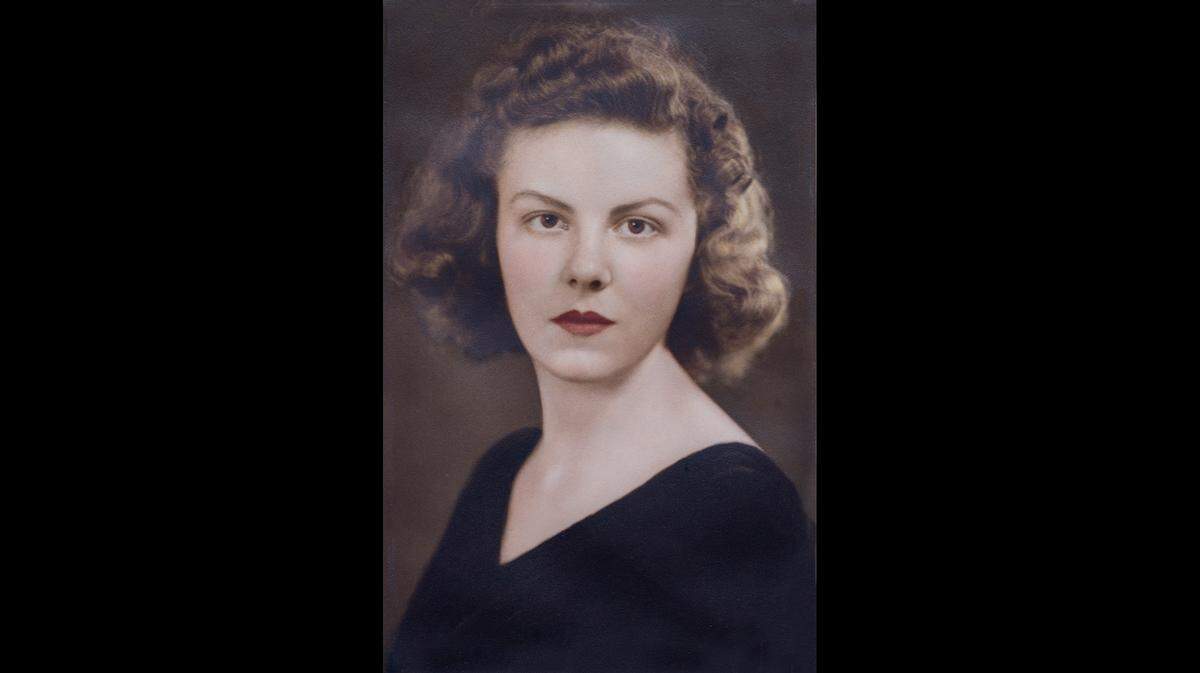
.jpeg "Nancy_Moffett_Elegan_fitted (1).jpeg")
A false negative
“It’s still hard to believe that COVID-19 killed her,” says Moffett.
On March 21, Moffett’s brother and his wife took a Stroud’s fried chicken meal to Nancy’s apartment at Lakeview. He was concerned about his mother and called his sister.
Moffett told him to take her temperature.
It was 101.
They drove Nancy to a nearby emergency room and had to leave her there, alone, because hospitals have banned most visitors in the COVID era.
“This is such a disease of isolation,” said Moffett.
The hospital tested her for the coronavirus and it came back negative. Moffett believes it was a false negative.
A chest X-ray revealed her mother had pneumonitis — lung tissue inflammation — and hallmark COVID-19 symptoms, including that fever, a cough, shortness of breath and chills.
The family alerted Lakeview — which had already taken social distancing precautions, shutting dining rooms and leaving meals outside residents’ doors — and phoned people she might have had contact with.
Combined, Lakeview Village, Homestead of Olathe Memory Care and Forest Creek Memory Care had seen more than 30 coronavirus cases and at least seven deaths as of a week ago, according to county health officials. As of Friday, there were 85 COVID-19 cases, and 16 deaths, in 10 long-term care facilities in the county, officials said.
When Nancy Moffett was tested a second time, the results were inconclusive.
A third test came back positive.
“We’re still learning much about testing and recognition of this virus,” said Moffett.
Her mom spent six days in the hospital. She never understood how sick she was.
“She really thought she was getting better until that last day,” Moffett said.
Then she was gone
On the last day, a nurse from AdventHealth Shawnee Mission — where Moffett said her mother “received excellent care every step of the way” — called and asked Moffett if she wanted to sit with her mom “because we were getting real close,” she said.
Most hospitals that prohibited visitors when the pandemic began made exceptions for patients at the end of life.
Moffett wanted to be there, as she was when her mom had a kidney infection. As she was two years ago when her mom had colon cancer surgery. Moffett got up every morning at 5 a.m. and headed to the hospital to see the doctors on their early rounds.
She knew she risked exposure if she sat with her mom one last time. She wore a gown, mask and gloves into the room.
As a paramedic, Moffett has seen people die. But this was Mom. And she had never seen anyone die like this.
She understood, medically, what was happening. Her mother’s lungs were filling with fluid, making it impossible to draw deep, life-giving breaths.
“The thing that’s really hard is they put a mask on those patients,” she said. “And when you can’t breathe, you think if you take the mask off you can get more air in, but you can’t.”
Years ago the family had signed do-not-resuscitate orders for Nancy and her husband. So she was not intubated. She was not on a ventilator. The family chose palliative comfort care.
Nancy received drugs to keep her comfortable, and toward the end it took more and more to calm her agitation. Moffett knew her mother was suffering.
The virus was winning.
“As much as we tried,” she said, “there aren’t enough drugs on this planet.”
She held her mom’s hand.
“She’s a fighter,” said Moffett. “She was going to fight it every step of the way. Finally, I realized … I didn’t feel like she could leave while I was still there.”
So Moffett left.
Thirty minutes later, a nurse called.
Her mother was gone.
‘What you touch, touches someone else’
Moffett is spending retirement as a student, taking classes at Johnson County Community College, where a consistent 4.0 average has earned her membership in the Phi Theta Kappa honor society.
After her mom died, friends shared information about the 1918 Spanish flu, and as she learned more she became concerned about a second peak of coronavirus infections.
Historians say that more than 100 years ago, Kansas City was slower to respond with safety measures than other cities, bringing about higher mortality rates here.
Having now witnessed the worst consequence of this new pandemic, Moffett hopes people listen to scientists and keep in mind that with COVID-19, individual actions can affect the lives of many.
She knows what her mother would say: “What you touch, touches someone else.”
And that echoes a message about personal responsibility that came from doctors with the University of Kansas Health System during a media briefing on Friday, the day after the White House unveiled guidance for states and communities as they reopen.
Dr. Steve Stites, chief medical officer for the health system, called what will happen over the coming weeks a “balancing act between making sure people stay employed, which, that’s good for your health, and trying to stay safe from the coronavirus.”
But he was clear on this point: “When we do reopen society, the rules around infection control have not changed.
“And that is the behavior you have to keep. You gotta wash your hands. Don’t touch your face. Cough into your elbow and maintain social distancing. Those are the reasons we started to bend the curve.
“If we reopen and people don’t follow that and they act like they can do just as they did two months ago, then we will see a surge. Because the number of people who have been affected in our area is still very low, it’s still probably around 1 or 2 or 3%. That means 97% of the people haven’t been affected yet.”
Sen. Jerry Moran, R-Kansas, who also spoke at the briefing, said “people are anxious to return to normal,” but said more testing must come. That will be a challenge in Kansas, which is said to rank 49th out of all the states for testing per-person.
“I think there’s a set of people out there who, if the president or the governor says it’s safe to return, they will return to work,” said Moran.
“But there’s also a lot of people out there who are still going to be wondering, is it really safe? And if I make a mistake, what are the consequences to my kids, or the neighbors next door or my parents if I go see them? And that, in my view, is where testing … deserves a high priority.”
‘Unforgettable’
On that last trip to the hospital Moffett took very little with her to avoid getting anything contaminated. She had a fanny pack, her phone and a $5 bill.
When she got home she threw the money into a lingerie bag, washed it like laundry in the washing machine, then threw it in the dryer “because I would hate to hand that to somebody.”
The family is living a post-COVID life.
Moffett recently finished 14 days of a “hard” quarantine, sleeping away from her husband in a separate bedroom in their split-level home, using a separate bathroom, sitting several feet away from him during meals. They’ve been wiping down surfaces around the house, a lot.
For the holidays, her brother tucked masks and gloves into his grandchildren’s Easter baskets.
On March 31, on what would have been Nancy Moffett’s 96th birthday, “everybody got on Zoom and we all talked together and told stories about her and drank a toast,” with her favorite Yellow Tail chardonnay, Moffett said.
She plans to have some of her mother’s ashes turned into a diamond. At some point, “we will have some fabulous celebration for her,” she said.
Maybe, her husband’s jazz band will play.
Her mother loved when the band played during Lakeview happy hours. The last concert was planned for March 20, the day before she went into the hospital, but it got canceled because of new social distancing rules.
Sometimes the band would play “Nancy (With the Laughing Face).”
But Moffett has another song in mind for the memorial.
“I want them to play ‘Unforgettable.’”
.jpg)