
‘It hits close to home’: Kansas City EMT’s death from COVID-19 heightens anxiety
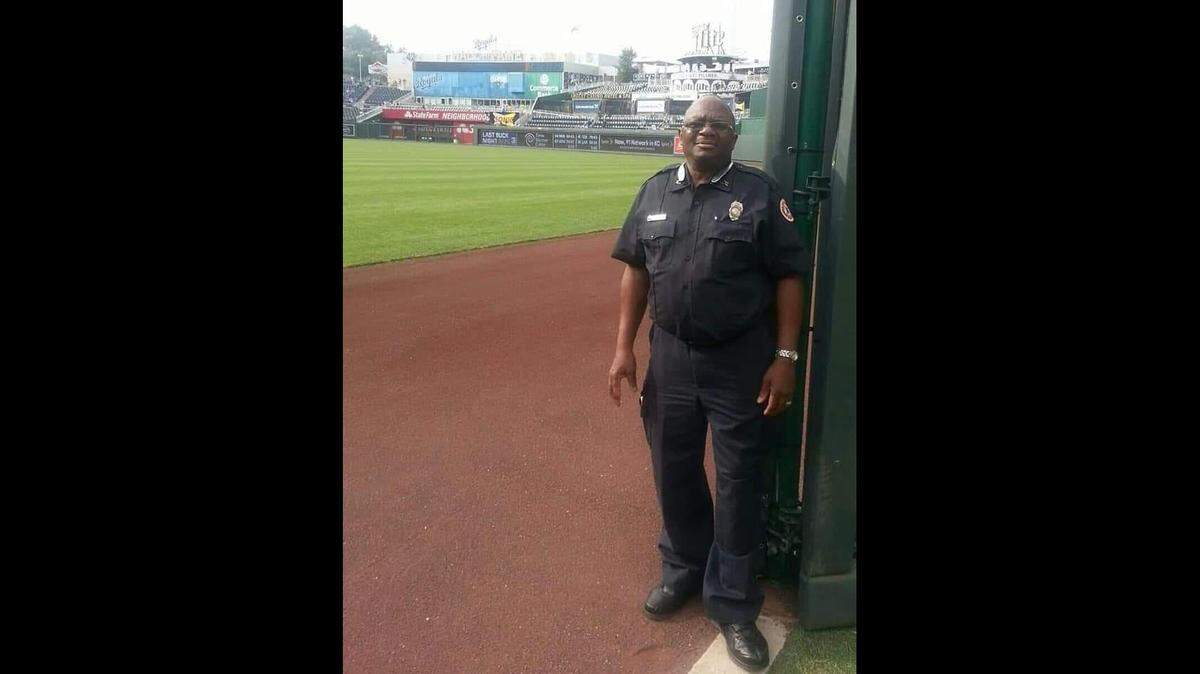
The death of a Kansas City Fire Department EMT from COVID-19 complications underscored the peril faced by first responders working on the front lines of the coronavirus pandemic.
“I think that what happened with the death of Billy Birmingham … will really increase the conversation about making sure that we protect those people that are on the front lines,” Dr. Marc Larsen, incident command operations chief for the Saint Luke’s Health System, said Tuesday.
Saint Luke’s offers drive-thru coronavirus testing for first responders who work in more than 40 departments across the metro. It plans to open a fourth location on the Country Club Plaza on Thursday.
On Monday, Birmingham was the first person in the city to die in what Kansas City Mayor Quinton Lucas called the “line of duty” in the coronavirus outbreak.
“We all must continue to remain vigilant in our efforts to prevent any further spread of this terrible disease and to best support our first responders and health workers who give it all for us,” Lucas said.
First responders — police officers, paramedics, firefighters and EMTs — are at high risk for coronavirus infection.
A spokesman for Kansas City’s fire department said Tuesday that eight employees have tested positive, none as seriously ill as Birmingham was, and all are doing well.
Four Kansas City Police Department officers and four civilian employees have tested positive, Chief Rick Smith said Tuesday. None were hospitalized and all are recovering at home. At the police academy, 65 cadets and instructors have been quarantined.
Nothing about the work of a first responder is the same anymore. During traffic stops, KCPD officers are taking pictures of people’s driver’s licenses so they don’t have to touch them.
“I think you could say that there is a high level of anxiety,” said KCPD spokesman Capt. Dave Jackson.
“Where you might (have) come into the station and had roll call, now you show up to the station and have your temperature taken. Roll call is taken outside. When they go on these calls for service, just like they always have, and then they go home, they take off all their clothes in the garage. They wash their clothes every night.
“Officers have all that and they don’t want to bring this home to their loved ones. This is a danger that brings their family risk as well. It’s stressful, but that’s what they come on to do. We don’t have anybody quitting.”
‘We knew there was disease out there’
Last month, Saint Luke’s set up drive-thru coronavirus testing for patients and employees at three locations in the metro and recently began offering that service to first responders. Forty first responders have been tested thus far, a hospital spokeswoman said.
On Thursday it is opening a fourth location, a walk-up testing site, at its hospital on the Country Club Plaza. The testing is only for patients, employees and first responders with referrals, and is not available to the general public.
Larsen said that once the health system could run tests in-house and not have to use private labs, “we realized that we had plenty of availability to do additional tests.”
“And we thought, who are the most at-risk people out there in the community? And we thought that was really our first responder partners.”
At that point, KCPD was waiting a week to 10 days to get test results back on its employees, Larsen said, “a significant hit to their workforce. So they really needed a way to get their testing done more efficiently and with a faster turnaround time.”
The hospital system also reached out to departments in Johnson County and found similar needs for more and faster testing. Larsen said Saint Luke’s can get test results in 24 hours.
“They were depending on their state and local health departments and the very specific criteria to get testing,” he said. “But this is where some of the shortages in the state labs were affecting us at the ground level and those people who were taking care of patients.”
Saint Luke’s could make testing available to people who perhaps didn’t meet requirements set forth by the Centers for Disease Control and Prevention, Larsen said.
The criteria for first responders, who have to go through their human resources departments before they get tested, include a cough, shortness of breath, body aches, diarrhea and lost of smell or taste.
In the first weeks of the outbreak, testing eligibility depended largely on someone’s travel history and exposure to someone who had tested positive for the virus. Saint Luke’s did away with the exposure requirement, partly because testing was so limited it was difficult to tell who had been exposed and who hadn’t.
“We felt like once we started hearing more and more about the disease being prevalent — specifically in the Johnson County area where we first started seeing cases — we knew there was disease out there,” said Larsen.
“The … thought process was if we don’t test and if we don’t offer to test, then we will never know what the prevalence of the disease is. So we decided to test everybody that we feel is potentially at risk.
“We feel just like not testing and saying you don’t meet criteria is just kind of burying your head in the sand knowing that that disease is out there. And we really wanted to be aggressive in identifying what our prevalence was in the community.”
‘Everything is contaminated’
Larsen was an EMT before he became a physician and knows the risks that first responders are facing in this moment.
“If you are a first responder, paramedic or EMT and you are in the house of a patient that potentially has been sick, and is coughing, then you have to think about everything in that house being potentially contaminated,” he said.
“The first thing you learn is to protect yourself and make sure that the scene is safe before you go in there. So you put on your personal protective equipment, your gown … your gloves and your mask. You’re walking into this area where you think everything is contaminated.
“Meanwhile, you have a patient that needs your help, and may be in severe respiratory distress, maybe actively coughing, maybe not breathing.”
Then, the first responder climbs into the back of an ambulance with the patient.
“Now you take this patient who is potentially sick and infected and put them in the back of a closed box that is no more than 6 by 8 (feet) long with minimal air flow, just a regular air conditioner,” Larsen said. “And this person is coughing and potentially having additional oxygen flowing that maybe is spreading that disease around a little bit more around as well.”
‘It’s a sad deal’
Should a first responder test positive, Larsen said, “we ask them to stay at home … quarantine at home.”
“If they have come into contact with any of their partners, if it’s a partner-based crew, or EMS, or fire, or PD where they are in direct contact with potentially one or three or four people, we ask those people to closely monitor their symptoms, wear masks at all times at work, and get tested if they have symptoms,” he said.
He said he would tell first responders to treat all patients as if they have COVID-19.
“If you think of that, if it’s always in the back of your mind, and you practice good hand hygiene and you wear a mask, then I think those are going to be the biggest things that keep you safe,” he said.
Jackson said Birmingham’s death hit first responder brethren on the police force hard.
“It hits close to home and makes you realize you’re not invincible,” said Jackson. “It’s a sad deal.”
This story was originally published April 14, 2020 at 5:30 PM.
.jpg)