
‘Locked down’: Coronavirus forces Kansas City area nursing homes to ban family visits
Laura Armato Tyler knew the change was coming.
She received a letter early last week from McCrite Plaza in the Northland, where her 91-year-old father lives. It explained that visitors would be screened. A few days later she got a phone call: Visits were cut off entirely.
“I understand why they’re doing this. It’s to protect the residents,” said Tyler, who lives in Kansas City, North. “But I’m afraid for him to not be able to see any of us for however long it’s going to be. Emotionally, that’s going to be very, very hard on him.”
With the spread of the new coronavirus, nursing homes and assisted living facilities across the country are banning visitors to protect residents, many of whom are the most vulnerable because of their age and pre-existing health problems.
The first coronavirus-related death in the Kansas City area, announced last week, was a man in his 70s living at a Wyandotte County nursing home.
Families in the area began receiving letters and phone calls last week informing them about new rules prohibiting them — volunteers, too — from visiting. Nursing homes posted signs in the buildings and notices on their websites and social media accounts.
Elaine Garrison of Kansas City said her mother’s assisted living center in Trenton, Missouri, was “nearly locked down. No one in, no one out except employees.”
Some families were told the ban is indefinite, and others say they were caught off-guard; in one case, a wife had to leave a note for her husband inside.
Shutting out loved ones, however, is a complicated challenge that advocates are watching closely now. Family members aren’t just there for companionship. They often step in and help with feeding their loved ones, doing their laundry and keeping close watch on the care they’re getting.
Facilities that began the week screening visitors by taking their temperatures and asking questions about their travel ended the week by banning them outright after the Centers for Disease Control and Prevention issued new aggressive visitor recommendations to the nation’s long-term care facilities.
Also last week, the Department of Veterans Affairs, which runs 134 nursing homes with more than 41,000 veteran residents, adopted a “no visitor” policy except for residents in their last stages of life on hospice units.
Then late on Friday, the Centers for Medicaid and Medicare Services, or CMS, advised the nation’s nursing homes to restrict all visits except for end-of-life situations. Even then, visitors should be allowed only into a specific room in the facility, the agency said.
‘Visitors not allowed’
Confused and anxious families have been calling Kansas Advocates for Better Care in Lawrence, a nonprofit advocate for residents of licensed adult care homes.
They want to know “if they are allowed to visit their loved ones in a nursing facility because they had been told by some facilities they are not allowed to visit, and some facilities are simply posting a notice at the door saying ‘visitors are not allowed,’” said the group’s executive director, Mitzi McFatrich.
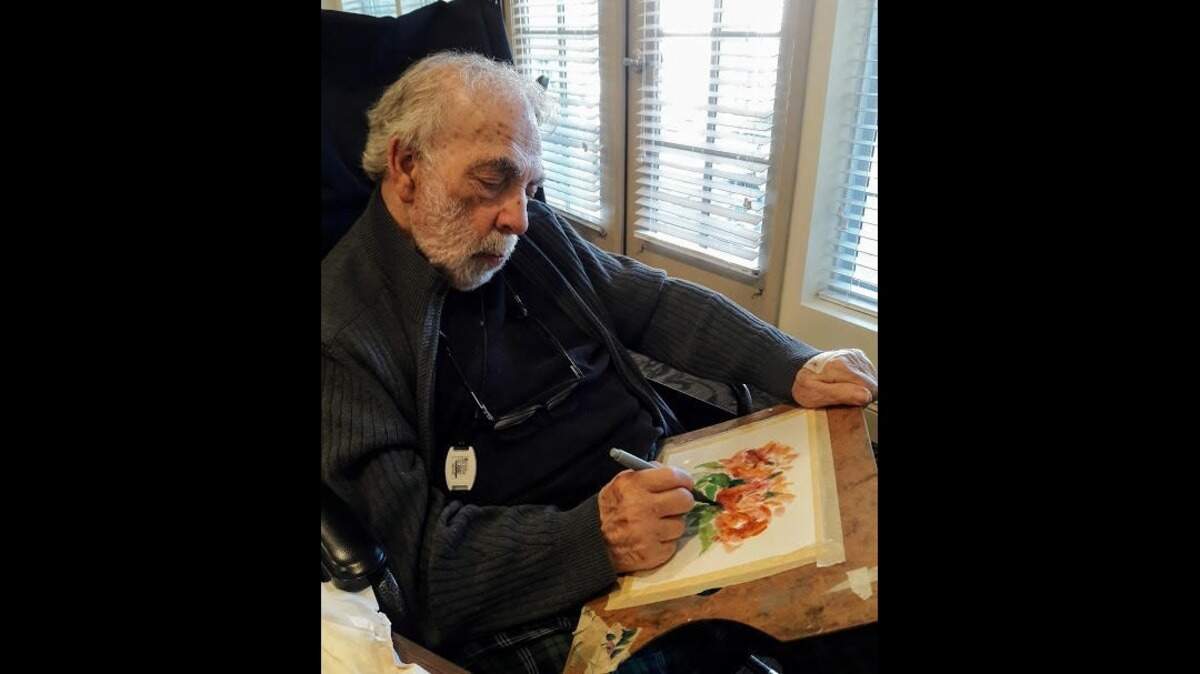
Tyler would usually visit her father, Frank Armato, four or five times a week at McCrite. Parkinson’s disease makes him a fall risk, and he recently came down with a bad cold.
She said she had read about another nursing home closing to visitors for just 30 days, but McCrite officials told her they would follow CDC guidelines, and Tyler isn’t sure how long visitors will be kept away.
On its Facebook page, McCrite asked that “outside visitors, guests and vendors visit only when absolutely necessary. According to CMS, families should only visit their loved ones if they are actively dying, in emotional distress, or are a caregiver for the resident.”
Ann Bickel’s 98-year-old mother, who has advanced Alzheimer’s disease, lives in a nursing home in Jefferson City. Bickel is the vice president of the advocacy group Missouri Coalition for Quality Care.
“They are on lockdown,” Bickel said of her mother’s facility.
She said the home had earlier banned visitors after one of the residents came down with influenza, then used the restrictions again when the threat of COVID-19 arrived.
From the beginning of the outbreak, health officials have warned that the oldest were most at risk. Most of the more than 40 people who have died from COVID-19 in the United States have been 60 or older.
in Washington state, the majority of COVID-19 deaths have been linked to a Life Care Center nursing home, drawing scrutiny of how that happened and raising alarm that it could happen in other nursing home settings.
Watching a national tragedy unfold, Bickel knew that nursing homes would have to close their doors to the outside.
“You could tell that this virus is kinda out of control,” said Bickel. “And the first thing they do is try to close off people of fragile health, and long-term care facilities are the first thing that you think about.”
‘The most lethal for the eldest’
The American Health Care Association, a trade group representing nursing homes and assisted living communities had been sounding a warning, recommending that people stay away from nursing facilities unless absolutely necessary. The group is led by Mark Parkinson, who served as Kansas governor from 2009 to 2011.
“It may be very hard for families and friends who cannot visit their loved ones at this time. But we know there is a risk that people who appear healthy will enter nursing homes and assisted living communities and still infect residents,” Parkinson, the health care association’s president and CEO, said in a statement on Friday.
Nursing homes can shut out visitors but still have to let in employees, hospice workers and the vendors who bring in food, medications and medical equipment, so facilities have started taking the temperature of anyone who walks into the building. A fever, cough and shortness of breath are symptoms of COVID-19.
Kansas officials referenced the more restrictive visitation rules at a press conference last week when they announced the death of the Wyandotte County nursing home resident, the first coronavirus death in Kansas.
The facility, Life Care Center of Kansas City, is owned by the same company that runs the one in Washington state linked to 22 COVID-19 deaths.
“This reminds us that COVID-19 is the most serious, and as we’ve seen in this circumstance, the most lethal for the eldest in our population and those with compromised immune systems,” said Laura Howard, secretary for the Kansas Department for Aging and Disability Services.
Nursing home populations “are at the highest risk of being affected by COVID-19,” given their close quarters and residents who are often older adults with underlying chronic medical conditions, the CDC says.
Kansas health officials said they didn’t know how the KCK man caught the virus. But when a reporter asked Lee Norman, Kansas Department of Health and Environment director, if the victim was infected by someone from the outside, Norman said: “It came in with a person.”
No volunteers, no barbers
Visitors and health care workers are the most likely ways the virus will get into senior facilities, the CDC says, which is why it revised its visitation recommendations.
“COVID-19 is being increasingly reported in communities across the United States” and is likely circulating in all communities even where cases have not yet been reported,” the CDC says.
“As such, nursing homes should assume it is now in their community and move to restrict all visitors and unnecessary health care professionals from the facility.”
It now recommends:
▪ Restricting all visitation except for end-of-life situations.
▪ Restricting all volunteers and non-essential healthcare personnel, including non-essential workers such as barbers.
▪ Canceling all group activities and communal dining.
▪ Actively screening residents and health care providers for fever and respiratory symptoms.
The new CMS guidelines also suggest limiting physical contact between family members and residents — as in no hugging.
“For example, a daughter who visits her mother every Monday would cease these visits, and limit her visits to only those situations when her mom has a significant issue,” the guidelines say
“Also, during the visit, the daughter would limit her contact with her mother and only meet with her in her room or a place the facility has specifically dedicated for visits.”
Skype and FaceTime
AdventHealth Care Center in Overland Park called families last Thursday, saying that because several cases of COVID-19 had been identified in Johnson County, visitations would be cut off beginning Friday, and continuing through April 15.
“On April 15 we will decide if we want to expand that time frame,” said a message left for one family member.
St. Luke’s Bishop Spencer Place retirement community in Kansas City mailed letters to residents’ families on Monday, giving contact information for the CEO and leading them to the community’s website for updates.
The new rules hew to the CDC’s advice: No visitors for residents in assisted living or skilled nursing unless it’s an end-of-life situation.
Visitors who are “essential to resident’s emotional well-being and care” must now enter through designated entrances, be screened, wear a mask and are restricted to the resident’s room.
Visitors of residents in independent living must also enter through designated entrances, be screened and wear a mask while they’re in the building..
Federal officials have told nursing homes to offer alternative ways for families to communicate, including by phone and video communication.
Meadowlark retirement community in Manhattan, Kansas, last week ordered more Chromebooks for patients to Skype with their families “because we figured that was going to increase,” said Sarah Duggan, community relations director.
Meadowlark, which has independent living, assisted living and a nursing home, began banning visitors for its 365 residents at 2 p.m. Friday.
“But the most important thing is to know that we believe this is the best thing to do based on CDC and CMS recommendations to protect the vulnerable population,” she said.
After Swope Ridge Geriatric Center in Kansas City shut its doors to visitors on Thursday until further notice, administrator and CEO Sidney Smith figured out a way for one resident to see his mother without her coming inside.
He took the man into the lobby where mother and son could see each other through the big glass windows.
“His mother was going out of town and wanted to see her son,” Smith said.
Smith said residents can also talk to their loves ones through the intercom at the front door. “We’ve had to be creative with how we communicate,” he said. “Families have been overwhelmingly supportive of us taking these measures to keep their loved ones safe.”
He’s been telling residents, families and his employees that the ban could go on for months as he awaits direction from the CDC and local health officials.
McFatrich with Kansas Advocates for Better Care said it’s hard for nursing homes to turn away visitors because residents “get lonely and they really benefit from the socialization. So it’s a balancing act.”
“We don’t want to deprive older folks of socialization with their family. But the other side of that is being judicious with not having too many visitors who could be infectious.”
This story was originally published March 16, 2020 at 5:00 AM.
.jpg)