
Kansas City is expanding streetcar route to the riverfront. How long will it take?
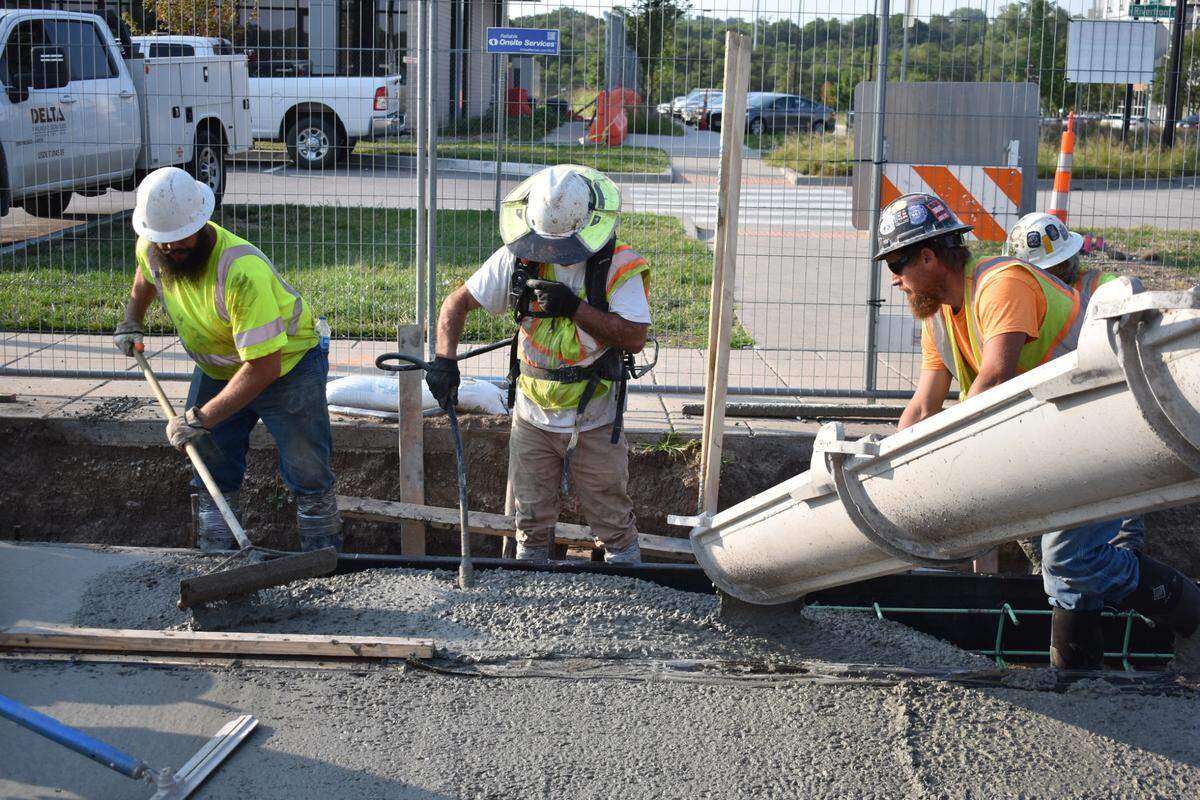
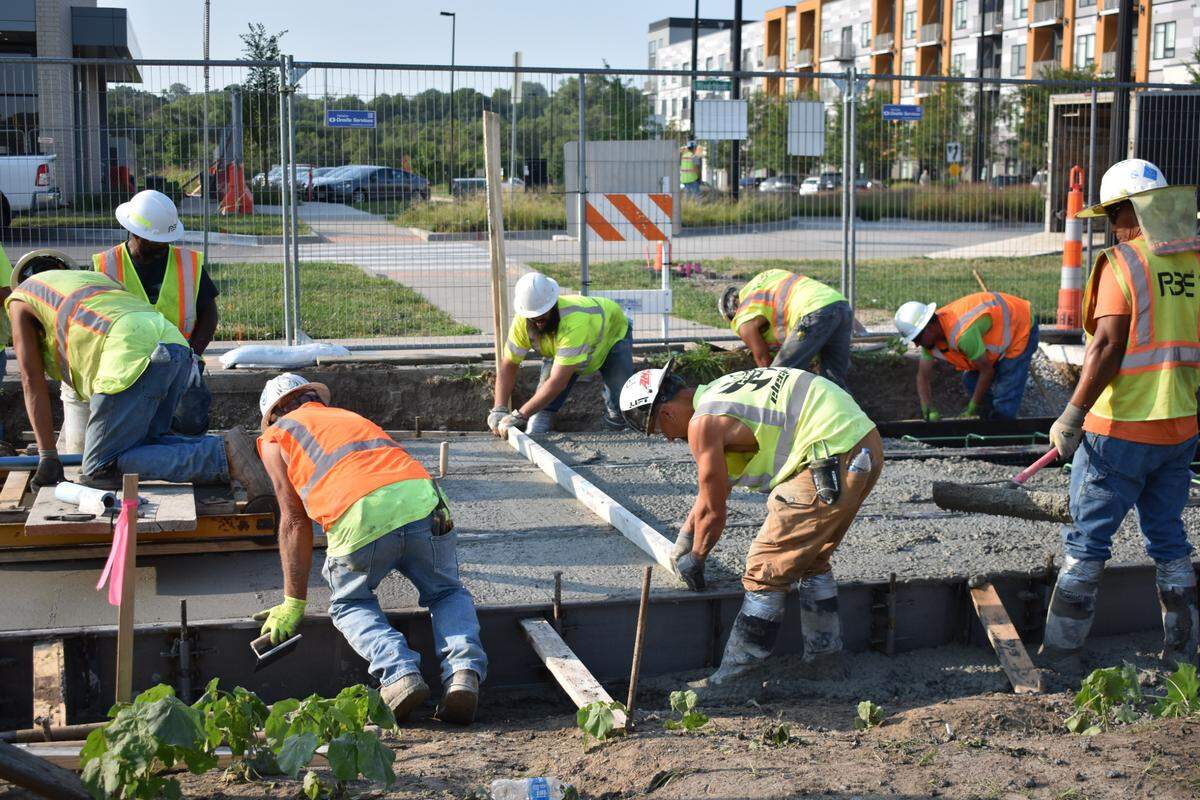
Construction crews from Radmacher Brothers Excavating poured cement this month for the first trackbed of the Kansas City Streetcar’s riverfront extension.
The 0.7-mile extension of the existing streetcar’s route will traverse the curving vehicle bridge where Grand Boulevard becomes Berkley Parkway, connecting the River Market to Berkley Riverfront Park.
“We’re hoping to open the extension in early 2026,” streetcar authority executive director Tom Gerend told The Star. “The plan is that we’re done with most of our construction by the end of 2025.”
A little over half of the funding for the $61 million project comes from federal infrastructure grants, while the rest is funded locally by groups like the city, the KC Streetcar Authority, the KCATA and Port KC.
Here’s what we know about the additional extension to the city’s streetcar line.
Where will the streetcar extension take passengers?
If you’ve been to a KC Current game at the new CPKC Stadium, you already know why the city needs streetcar service to the Berkley Riverfront.
Instead of loading onto school buses emblazoned with “KC, Baby!” decals, Current fans will be able to hop on the streetcar anywhere along its route and step off again in the center of Berkley Riverfront Park.
The extension won’t go all the way to the brand new CPKC Stadium’s front entrance — but Gerend says that’s by design.
“We want to have a buffer space for people to transition from a big venue when it gets let out. In our end-of-line facility, that allows for the crowd to disperse,” he said, adding that the streetcar strategically places its stops to move people through commercial areas near other large attractions like the T-Mobile Center.
The extension is meant to serve not only CPKC Stadium and the park, but also the apartment complexes and businesses that have been filling up the riverfront in a bid to develop what city leaders call a “forgotten area.”
Streetcar riders accustomed to looping around the River Market will have to adapt to a new system once the track extension opens. Gerend said the riverfront terminal will operate similarly to the current stop at Union Station: Northbound streetcars will stop and wait there before changing direction to head back to the Berkley Parkway bridge and into the River Market.
This will help regulate the spacing of the system’s streetcar fleet, which will grow to 14 vehicles when the Main Street extension opens next year. The entire extended streetcar line will run on one continuous route, from the riverfront to UMKC and back again.
What’s the timeline for the riverfront streetcar extension project? Will streets shut down?
Following Wednesday’s cement pouring, the first track slabs — wide cement strips with streetcar rails embedded in them — will begin taking shape.
While much of the initial track-laying work will take place along the riverfront, crews will eventually need to close down the curving Berkley Parkway bridge twice in order to install tracks and overhead catenary wires along it.
The first closure, which Gerend expects will last anywhere from 40 to 60 days, is scheduled to begin around September. During this time, no vehicles or pedestrians will be allowed on the road. The same will be true next spring, when the second closure will last about a month. In total, the two closures are set to take no more than 90 days combined.
During these planned shutdowns, cars will need to access the Berkley Riverfront from the nearby highway, while cyclists and pedestrians will be redirected to the Town of Kansas footbridge a few blocks away. They can then descend to the riverfront walkway by stairs or using an elevator.
By the end of 2025, the major construction on the streetcar extension should be complete, Gerend said. Cars will be allowed back on Berkley Parkway — and the city is working on an adjacent pedestrian bridge to funnel walkers and cyclists safely down to the riverfront as well.
Finally, around March 2026, the extension should open to streetcars as well. That could happen just in time for the KC Current’s season, which this year started March 16.
A lack of reliable access to the riverfront has been what Gerend calls “one of the limiting factors for growth and development over the last number of decades.”
“This is really an island,” he said of the burgeoning area. “Connecting it with high-capacity (transportation) alternatives that are easy and safe is a really important piece of the overall puzzle.”
Do you have more questions about transportation development in Kansas City? Ask the Service Journalism team at kcq@kcstar.com.
This story was originally published July 10, 2024 at 10:05 AM.
.jpg)