Days before state law tightens, Overland Park asks for $70M in incentives for arena
To help fund construction of a multi-sport complex in Overland Park, the city is requesting $71 million in state incentives — submitting the request days before changes to the STAR bonds program aimed at improving transparency go into effect.
The state awarded a previous version of the project $66 million in STAR bonds in the fall of 2019. But the project has yet to get off the ground. And developers have now amended their plan, so they are submitting a new request for the incentives.
City staff and the developer hope the project will be grandfathered in under the existing law before the new measures are required, said attorney Todd LaSala.
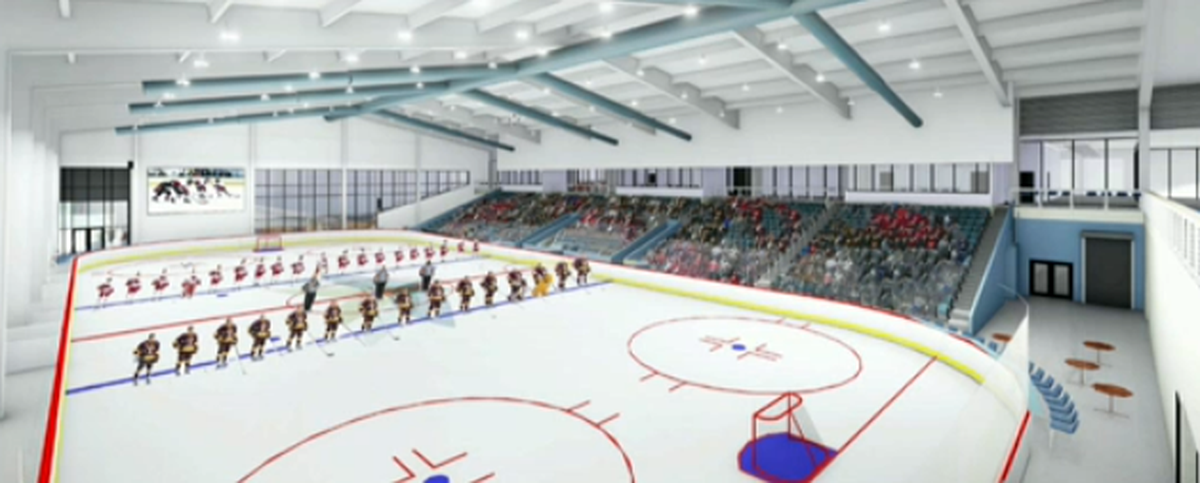
The City Council on Monday night voted to approve an amended development agreement for the Bluhawk site, southwest of U.S. Highway 69 and 159th Street. It will include retail, hotels and a more than 400,000-square-foot sports facility, with basketball courts, an indoor turf field, batting cages and two ice rinks, down from three in the original plan.
The sports center will now be built in two phases, rather than all at once. And the plan adds more retail and commercial space.
The developers, Price Brothers Management, hope to secure $70.7 million in Kansas sales tax revenue, or STAR bonds — a 20-year-old incentive program designed to draw tourists to Kansas.
The city sent in the request on Tuesday, said spokesman Sean Reilly. He said officials are asking the Kansas Department of Commerce to approve it before July 1, when changes to the program go into effect.
In April, Gov. Laura Kelly signed the bill that adds some guardrails to the program, such as requiring third-party feasibility studies, community engagement and other transparency measures. The bill also expands the program, allowing rural communities to more easily qualify.
The current program has faced bipartisan criticism, as it has warped beyond its original intent of subsidizing large, unique tourism destinations attracting visitors to Kansas. The program has been used to fund more mundane projects such as adding turf to soccer fields in Wichita. And one STAR bond-funded project in Overland Park, Prairiefire, has largely failed to meet expectations.
Councilman Scott Hamblin said he could not support approving the agreement the week before the new law takes effect.
“I don’t feel obligated to sit here and try and game the STAR bond system that the Legislature changed for a reason by voting tonight,” Hamblin said on Monday. “That’s the only reason we’re voting tonight.”
LaSala, who advises the city on economic development matters, said that “nobody’s afraid of the new law or being subject to the new law,” but the project could be stalled if it is submitted after the state begins implementing changes to the program.
“Everything will be a case of first impression under the new law, and it will necessarily cause delays to the project,” he said.
Bob North, the Commerce Department’s chief counsel, said that the department is reviewing the amended plan and will “act on it as soon as possible.”
The majority of council members supported the changes, highlighting that the developer now plans to invest more private dollars into the project. And the developer’s request for STAR bonds this time around is lower than the $77 million originally approved by the City Council in 2019.
“I think we’re doing our fiduciary responsibility by taking the opportunity to lower the amount of STAR bonds,” Councilman Tom Carignan said.
The new project
Plans for this part of the Bluhawk development have been in the works for years. The 277-acre site already features retail, restaurants and a hospital.
The northern 145 acres of the site have been considered eligible as a STAR bonds district since 2016, according to city documents. At one point, plans included a Cosmosphere Innovation science and space museum, but that idea was dropped a couple of years ago.
In 2019, the City Council approved a plan for the site, including a sports campus with two separate facilities, a multi-sport complex and an arena. The aim was to attract youth sports and tournaments, as well as entertainment and events. And the hockey arena was a major component.
It faced competition in Olathe, where a rival hockey arena was being planned at the former Great Mall site.
Overland Park requested $77 million in STAR bonds for the project. And that fall, the state awarded it $66 million. The Olathe project did not receive the state incentives.
Under the program, cities sell bonds to provide upfront capital that a developer can use for project costs. The bonds are paid back over 20 years with the sales tax generated by the development.
Other revenue sources for the project include a transportation development district, where 1% of sales tax will fund infrastructure improvements. There also is a community improvement district, levying an additional 0.5% sales tax, with revenue totaling up to $25.5 million.
The City Council also approved a 10-year property tax abatement. The developer will instead pay $700,000 annually for the first five years, and then $750,000 for the last five years of the abatement period.
Developers said they faced economic challenges due to the bond market and the COVID-19 pandemic in the past couple of years. But now they have secured a partnership with Sports Facility Management LLC, which has produced similar sports and recreation facilities throughout the country.
The company brought a new vision for the sports arena, which will now be built as one facility, rather than two. And the project will be built in phases, instead of all at once.
The first phase of the arena could be under construction as soon as this fall and completed by spring 2024. It would include an ice rink, some basketball courts, part of the indoor turf field and 4,000 seats on the courts, that can be moved depending on the event or tournament. Plans also include indoor golf simulators, batting cages, a dining area and more.
The next phase would include another sheet of ice, four additional hard surface courts, more of the indoor turf field and a fitness center.
Dev Pathik, founder of Sports Facility Management, expects the entire facility to be completed in 2028.
Under the new agreement, revenue collected through the transportation development district financing can total $35 million, down from the previous $40 million.
The entire project is expected to cost $434 million.
The City Council approved two items related to the new project plan. First, it voted 10-2 to approve the amended STAR bond plan, with Hamblin and Councilman Faris Farassati voting no.
Farassati argued that the sports arena will not be a national tourist attraction, saying that means it doesn’t fit the requirements for projects to qualify for STAR bonds. Pathik disagreed, saying that his facilities have exceeded expectations in all of their markets so far.
A second vote was required to pass a resolution approving the amended development agreement. Before the vote, Councilman Logan Heley asked that the developer be required to contribute an annual donation to the city to help fund housing affordability and environmental sustainability, as part of the agreement.
It is unclear how much that contribution might be. That resolution passed 9-3.
This story was originally published June 22, 2021 at 6:04 PM.