Developer who was a muscled model changes Kansas City’s West Side. Neighbors hate it
In the annals of Kansas City developers — those with big dreams to transform not only their lives, but also the skyline around them — none was ever, and none is ever likely to be like Paul Nagaoka.
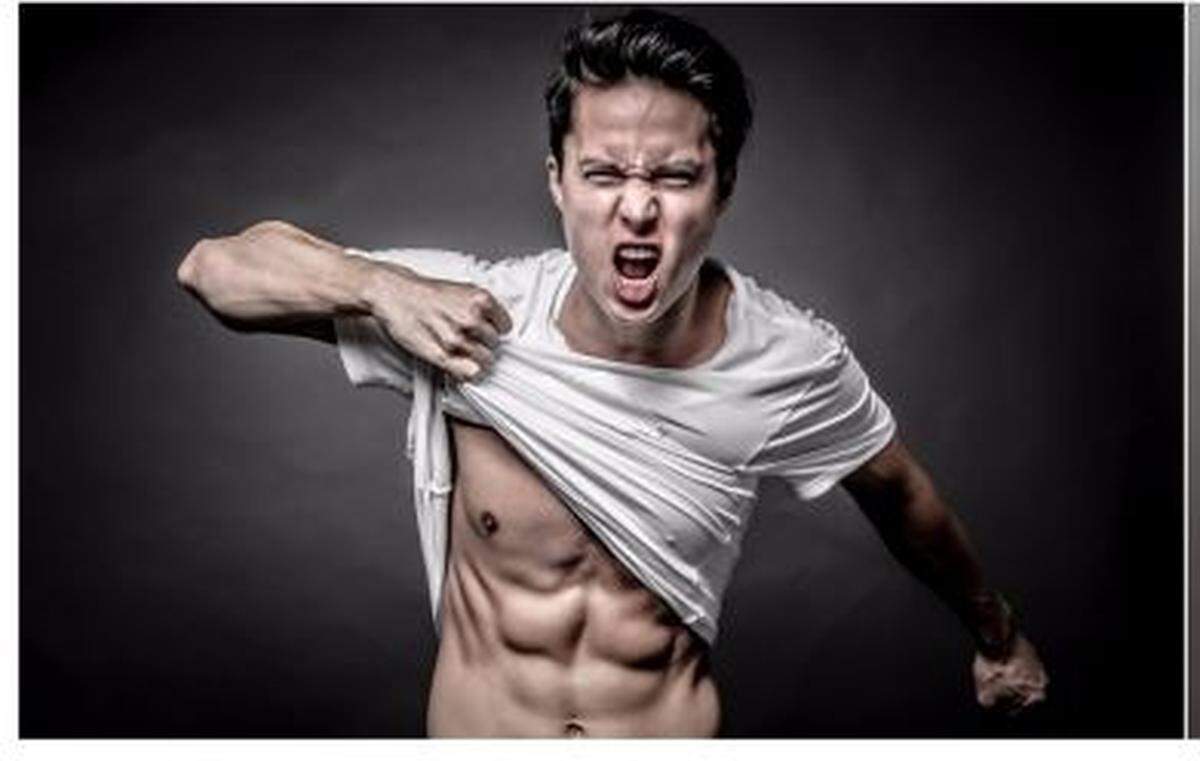
Age 36, lean, 6-foot-1, he is a free-diving, spear-fishing, rock-climbing, married father of two young sons, who, only a few years ago in Singapore, traveled Asia as a model and TV actor. Fashion shots show him baring his body like a thoroughbred: six-pack abs, oiled pecs. In one photo, he emerges from the sea like Aquaman. In another, he yanks up his white T-shirt, teeth exposed in defiance, not a hair out of place. One of his YouTube videos offers men tips from a model on looking better in photos.
“Have you seen those Dos Equis commercials?” Nagaoka (pronounced Nah-gah-oka) joked last week. “My goal is to be the most interesting man in the world by the time I’m that guy’s age.”
On a recent weekday — Nagaoka, who is the son of a Japanese Buddhist monk father and an American mother who, divorced, struggled to raise him alone in Portland, Oregon — stepped from his glimmering white Telsa at the crest of 31st Street and Southwest Trafficway.
“These are just stacked here right now,” he said. In front of him: 48 steel shipping containers all 40 feet long, 8 feet wide and more than 9 feet tall. For the last two weeks, they have drawn the attention of tens of thousands of drivers up and down Southwest Trafficway in the shadow of the former BMA Tower.
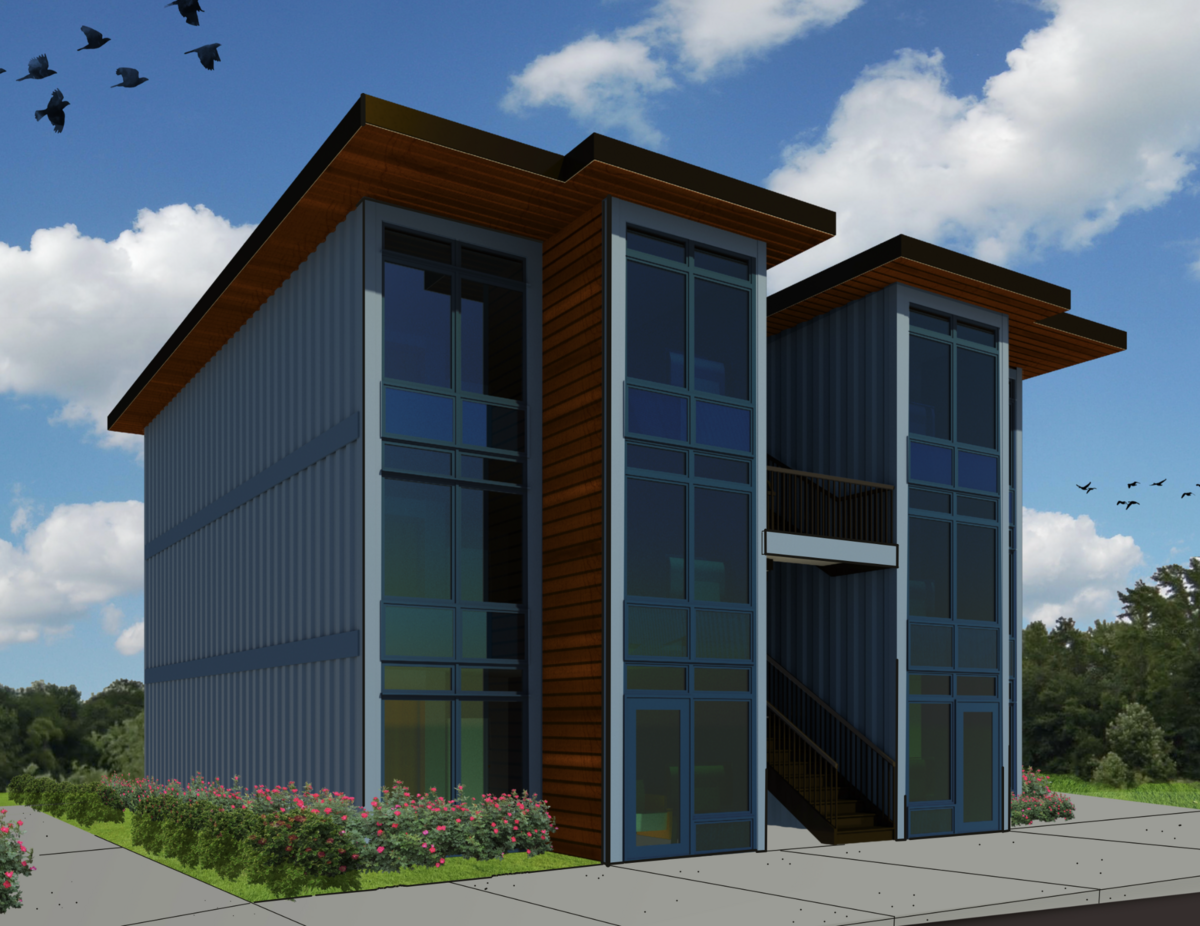
For Nagaoka and his company, Syndicate Real Estate Development LLC, they are the building blocks for what, by year’s end, will become 48, modern and, what he sees as affordable shipping container apartments — $675 to $775 per month for 320 square feet, with decks, quartz countertops, floor to ceiling windows, Murphy beds, solar-powered electricity — that will sit three stories tall atop the bluff and will transform the look of Signal Hill.
Toyota, Hilton … Nagaoka?
For neighbors, the prospect makes them livid.
“I don’t know anyone in the neighborhood who is for this. We all hate it,” said Alicia Meneses, who shares a home with her parents on nearby West 29th Street. They have lived on the West Side in the the predominantly Hispanic Sacred Heart Guadalupe parish for 67 years.
“It makes me want to cry,” said Lola Olmos, who lives in the Madison Avenue house her parents also bought 57 years ago. The apex of the apartment complex will loom 60 feet above her property at the bottom of the bluff. She has already watched the quick excavation of the bluff’s trees and boulders.
They view it as too many apartments, too many people, being squeezed into too small a footprint.
But Nagaoka said the complex is more than just a single development. If it turns out to be as successful as he envisions, the concept will be the first of many Nagaoka-branded shipping container apartment complexes throughout the United States — each fabricated in Kansas City, shipped by rail, then assembled on-site.
Ask the average person what their favorite brand of car, phone or hotel is, and, although answers may differ, Nagaoka said, people have answers: Toyota, Chevy, iPhone, Samsung, Toyota, Hyatt, Hilton.
“Now what’s your favorite apartment brand?” he asked rhetorically, knowing the answer doesn’t exist.
“Exactly,” said Nagaoka. His vision is to make Nagaoka shipping container studios, one-bedroom and two-bedroom apartment buildings that brand.
“Our goal,” he said, “is to be the Hilton of multi-family. … This is a proof of concept project to create an apartment complex brand that I want to bring across the nation.”
Two more Nagaoka complexes, with 108 one- or two-bedroom apartments each, are being planned for Kansas City’s Northland.
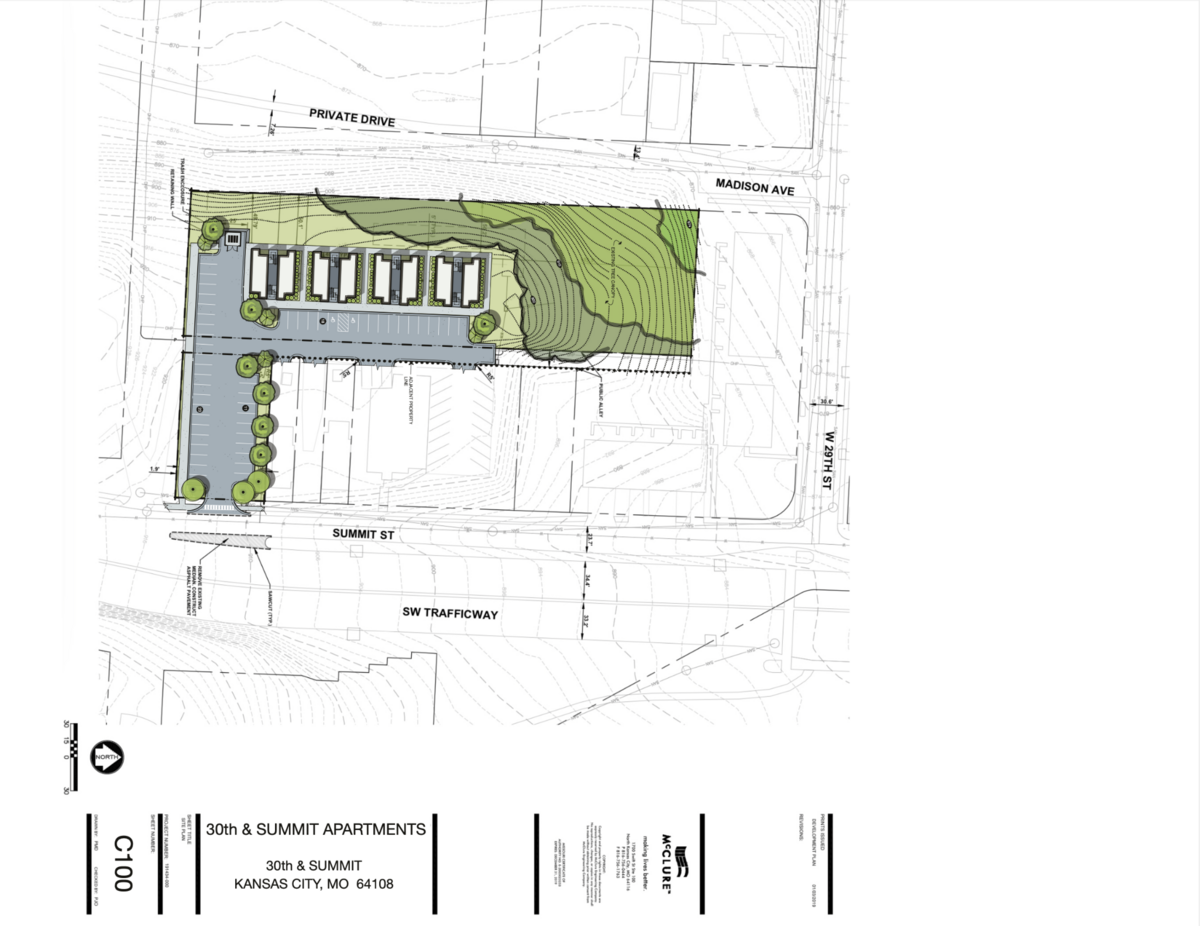
The developer, of course, insists the $4 million Signal Hill project will be beautiful. Renderings show four buildings that will stretch north to south along the back side of the bluff. Each building will contain 12 studio apartments that are 16 feet wide (the width of two containers) and 20 feet deep (the depth of half a container). He said the interiors have been designed to reflect much of the best of the “tiny home” movement.
“We are obsessed with maximizing every square inch of space,” Nagaoka said.
There will be parking east of the buildings. A dog park, with a broad view of downtown, is planned at the north end.
Twenty-four apartments will face east toward the sunrise. Twenty-four will face west to see it set.
“You will get all this natural light,” he said.
Not in my backyard
But for neighbors like 54-year-old Geri Lynn Forte, the project gives precise meaning to the acronym NIMBY, not in my backyard. The cargo containers, although stacked where they are temporarily, literally box in her bungalow at the crest of Summit Street on two sides.
It is the house where she was born and where she has lived her entire life.
Once the project is finished, she’ll be hemmed in by its parking lots. People staring out of those big windows and from those decks will be looking directly down into her backyard.
“We’re putting at least 50 people in this little itty-bitty space,” she said.
The Kansas City City Council approved the project on a 10 to 3 vote last July, despite intense opposition from neighbors, the Sacred Heart Homes Association and the Hispanic Economic Development Corp. The project received no city or state tax breaks, but will receive tax credits from the federal Opportunity Zone program.
Council members Kevin O’Neill, Melissa Robinson and the neighborhood’s own 4th District Councilman Eric Bunch voted against it. Mayor Quinton Lucas, who has said creating more affordable housing is a priority, voted for it.
In a committee meeting prior to the vote, Councilman Lee Barnes said that although he was sensitive to the neighborhood’s culture, the council needed to think of future housing needs.
“If we’re looking for ways to try and develop lower cost housing,” he said, “this may be a way we can do that.”
Nagaoka’s prices are certainly lower than many newer apartments opening up in Kansas City.
At Flash Cube Apartments downtown, studios are advertised with rents of $1,175 to $1,435 per month. In the Crossroads, studios go for $910 to $1,355 per month at City Club Apartments.
But the shipping container apartments are about half the size of the 591-square-foot studios that are standard at buildings like Two Light.
Bunch said last week that although he often supports multifamily developments that add more people to neighborhoods, he couldn’t get past the objections of those who would have to live near it.
“It was just something that that particular neighborhood did not want,” he said. “I generally see through when it is sort of that NIMBYism, not in my backyard. And this was above and beyond that. I think there were plenty of legitimate concerns.”
At the July City Council committee meeting, West Side resident Lauren Thompson said the tiny apartments should not be considered affordable just because they rent for less than $1,000 a month.
She likened the units to offering someone a hamburger for $20, who cuts the burger down the middle and sells each half for $15.
“That’s not cheaper,” she said. “And it’s not even a suitable meal.”
Forte sees consequences: disruption to the neighborhood, noise and congestion. The way to and from the complex is a single, narrow road. Residents living at the top of Summit Street will have to exit through the parking lot. If there was any development there, neighbors wanted single-family homes.
She can’t fathom who would want to live within the walls of 320 square feet — about the size of the average American hotel room.
“I’m trying to find out how and why anyone would want to live in a hotel room on a year’s lease for $800 a month,” she said recently. “It’s not a family-oriented project. If you have kids in a 320-square-foot room, something is wrong with you.”
Neighbor Albert Ruiz told the council, “We are 100% in opposition to this project. I think the whole project itself is bogus.
“Mr. Paul Nagaoka is nothing but a high-yield investor that is looking at this opportunity to not only line his pockets, but line the pockets of his investors.”
Christ, IHOP and ‘a circular ball of love’
Nagaoka insists that, yes, he certainly wants to do well.
“I don’t think there is anything wrong with making money. I love making money,” he said. “But as to my purpose, it is not the core.”
A a child in Portland, he remembers the hard times and especially how his mother, Clare Cleveland, a flight attendant who would fly routes from Oregon to Asia, struggled to make ends meet.
“I kind of grew up pretty poor,” he said. “So my mom always dreamed of having a better life for me.”
She tried to make that happen, he said, by latching onto to various side ventures, selling products to make money, but the ventures frequently went nowhere.
“She would go to these overpriced real estate seminars,” Nagaoka recalled. “She would come home with these cassette tapes.”
Nagaoka, at age 12, began listening to them himself, learning about leveraging assets and investments.
In grade school, he said, he bought cards in bulk for the game Magic: The Gathering, and sold them at a profit to classmates. What money he made, he began investing in mutual funds through a custodial account. In high school, he bought and flipped cars.
Instead of going to college, he went into business in a screen and digital printing company. Meantime, as a teen, he had already begun to model, getting booked for shoots across the Pacific in Hong Kong and other parts of Asia.
Then, at age 19, he said, he had an epiphany.
“I had a pretty radical encounter with Jesus that really changed the direction of my life,” Nagaoka said. “It’s the foundation of everything I do and what I’m all about.”
Like his mother, he said, he had long been “spiritually hungry,” but he had never thought much about Christianity, as many of the people he knew to be Christian often seemed to be leading hypocritical lives.
Then he met some who weren’t. They asked him to open up his heart and pray with them.
“And I’m like, ‘Sure, let’s try it,’” Nagaoka recalled. “And it was like crazy. In that moment something pulled me toward God.” For six months, he tried to sort out his feelings until a moment arrived when he decided, he said, to give his life over fully to Jesus Christ.
“I had this experience where it felt like this almost circular ball of love just went in the back of my mind,” Nagaoka said. “And I also felt this coursing electricity in my body. And I just felt like this hole that was in my heart — that had always been there — it felt for the first time that it was filled with like genuine, true love.”
Nagaoka attend a Bible college. A friend there introduced him to IHOP, the International House of Prayer community in Kansas City. Nagaoka was soon taking frequent trips to the city, the first in 2006.
He met his wife, Jennifer, at IHOP. They married. He was 23.
By 2008, Nagaoka was living in Kansas City permanently, selling single-family homes and purchasing rental properties. By the time he was 30 and he and Jennifer decided to move to Singapore to see the world, they had amassed about 300 units, most of which they cashed out at the time.
They had their sons, Kaemon (Japanese for “joyful”) who is now 6, and Raeden, now 2 1/2.
‘Turning beer into champagne’
Nagaoka, who owns multiple area properties — including a complex in Grandview, offices at 31st and Oak streets, as well as three apartment buildings on Broadway — believes that one of his strengths is “turning beer into champagne,” taking something others might overlook and making it better at an affordable price. Shipping container homes, he feels, are just that.
Certainly, the concept is accepted. North Kansas City’s Iron District, an outdoor food hall, is made up of the brightly colored containers. And developers like Cross Container Homes in Belton have built single family homes out of the shipping containers.
HGTV even has a “Container Homes” show, which has featured a Brookside home built in 2009 of cargo containers that drew the ire of neighbors.
Like other developers here, Nagaoka feels the market for high-rent luxury apartments is becoming saturated. And since the pandemic, the cost of building materials has only skyrocketed. Zillow reports the average rental in Kansas City goes for $1,184. But new, high-end apartments can fetch rents of $2,000 or $3,000 in desirable locations like downtown.
Nagaoka reasons, why not take ultra-strong shipping containers — designed to keep pests and water out — to give people more affordable places to live?
“These containers would be at the bottom of the ocean,” he said. He feels he is doing good.
Nagaoka understands the concerns of the neighborhood. In response, he likes to read from a letter he received from one West Side resident, Lisa, who supports the project, writing, “We need affordable housing for the next generation of Westsiders.
“I would love to see Westside residents have first chance at leasing the apartments. I have lived (in the area) for 15 years and am still a newcomer; the south side of the Westside has families who have been here for generations.
“We would like to keep that tradition.”
Supporting piers are already being driven into the hillside. The containers, Nagaoka said, will be hoisted into place in the coming weeks.
This story was originally published May 24, 2021 at 5:00 AM.