$52M luxury apartments in Kansas City Crossroads to get tax breaks developers wanted
Developers can move forward on a luxury apartment project aided by several forms of tax assistance near the renovated Union Station Freight House, an incentive-granting agency decided Thursday.
The “Tracks 215” developers plan to build 150 apartments on what is currently a surface lot just north of the train tracks there. It would include a 301-space garage to offset the loss of the lot and provide resident parking.
The $52 million project will receive up to $13.6 million through a variety of tax incentives. And members of the Planned Industrial Expansion Authority voted 8-2 on Thursday to award a 15-year partial property tax abatement despite a third-party analysis that deemed that incentive too large.
Vince Bryant, who has developed several Crossroads Arts District properties and is leading this project, pushed back on that analysis and said the project was a “win-win-win.”
“The project would bring jobs and investment into our community in the time where we need it most,” said Chris Sally, a consultant on the development team.
Tracks 215 would get incentives through several programs. Surplus funds generated by the TIF district that currently surrounds the Freight House would provide up to $4 million. The sales tax exemption on materials would save developers an estimated $1.2 million.
The bulk of the incentives came through the property tax abatement approved Thursday by the incentive agency board, which agreed to abate 75% of the property taxes on the project for the first 10 years after construction and 37.5% of the taxes for five years after that. Board staff noted that even with the abatement, there would be an immediate increase in the property taxes generated by the site, which help fund the city’s library system, mental health funds and Kansas City Public Schools.
That complies with an incentive cap introduced by now-Mayor Quinton Lucas in 2016 when he was a council member. But S.B. Friedman, which analyzes projects for board members, recommended only the 10-year, 75% abatement, which would reduce the incentive by $700,000.
“The project appears to require public financial assistance, primarily to address the high cost of parking,” the report says. “These costs are not fully supported by projected rents. However, the project does not appear to require the full requested assistance to be financially feasible.”
Shannon Jaax, director of planning and real estate services for KCPS, cited that report and urged the board to approve just a 10-year abatement.
“It’s always interesting to listen to folks for a really long time talk about the advantages to the taxing jurisdictions without the taxing jurisdictions being able to kind of weigh in a little bit,” Jaax said.
Jaax said she had not seen Economic Development Corp. staff recommend incentives more generous than third-party reports recommend.
“We as taxing jurisdictions have not supported projects asking for incentive above and beyond what the (analysis) supports,” Jaax said.

But Bryant said investors would already receive a relatively low return on the project. He said the $700,000 difference between what developers asked for and what S.B. Friedman recommended was a “deal-breaker.”
“We’re not trying to hide anything; we’re not trying to push anything,” Bryant said.
Some board members hesitated over the incentives, but said they believed they were approving lower and lower levels of incentives over the years.
Initially, the project was expected to include 250 apartments and 400 parking spaces, but developers scaled it back because of rising construction costs and the market’s lower rents, according to the S.B. Friedman report.
Since then, the team has also lost Greystar, a national apartment developer that was expected to partner with Bryant’s firm, 3D Development. Bryant said Greystar couldn’t secure financing for the project even with a higher level of incentives than the board discussed Thursday.
“We’re really going to have to work hard to find that next partner to fill in, and we’ve demonstrated, I think, already that these incentives are necessary.”
Under Kansas City policy, developers are required to set aside 10% of their units for affordable housing to get incentives. For nearly two years, the city has defined affordable as just over $1,000 a month — 30% of the area median income. Lucas introduced legislation in September 2018 to reduce what the city considers “affordable” and increase the number of affordable apartments developers would have to provide. But the City Council housing committee that he chairs hasn’t discussed the issue in six months.
Board member Andrea Flinders called the affordable housing provided in the project “kind of a joke.”
“We pretend that we have affordable housing, but $1,000 a month for a micro-unit is not something that a family of four can live in,” Flinders said. “That always concerns me, and in some ways, I’m like, why do we even bother with calling this affordable housing when it’s not?”
Flinders made an unsuccessful attempt to table the proposal, but the board voted to move forward.
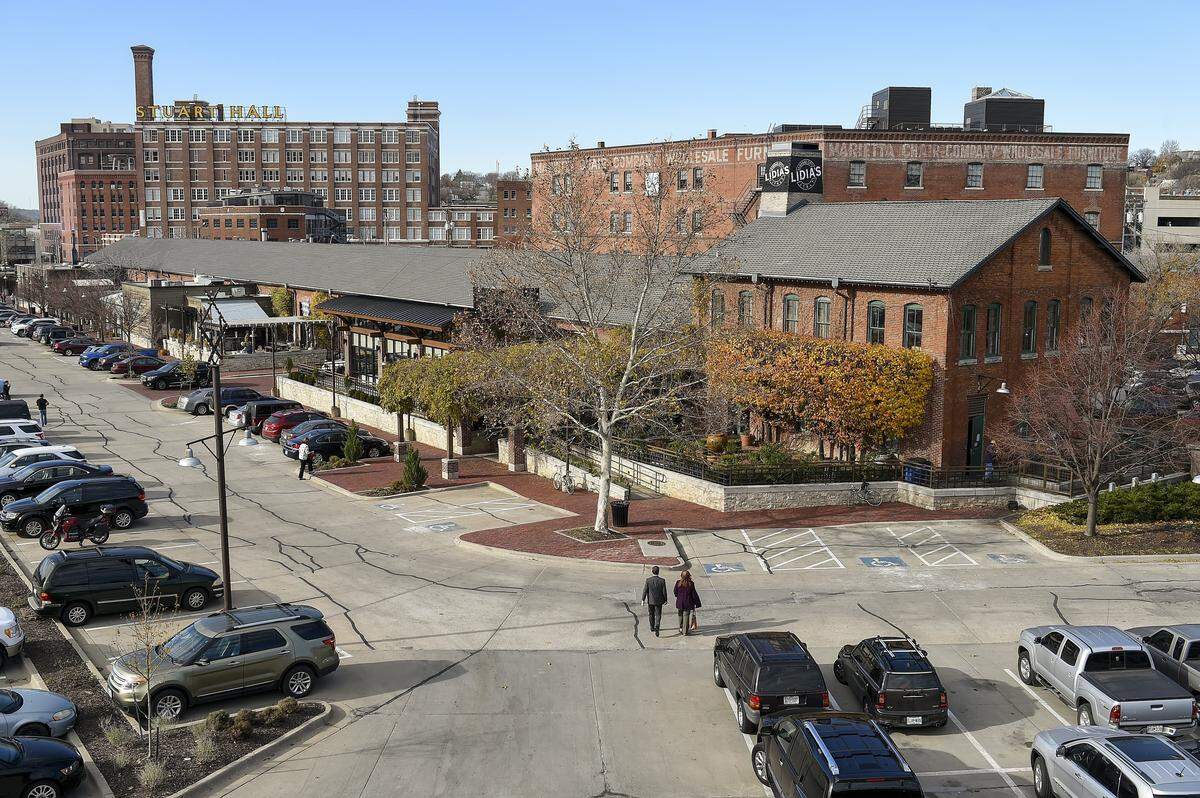
The apartments will stand at the Crossroads Arts District’s southern boundary, near the renovated Freight House building that houses Fiorella’s Jack Stack Barbecue, Grünauer and Lidia’s. Bryant’s projects nearby have included the former Kansas City Star building at 18th Street and Grand Bouldevard, which is expected to feature offices, a food hall and sports bar, and the Corrigan Building at 19th and Walnut streets.