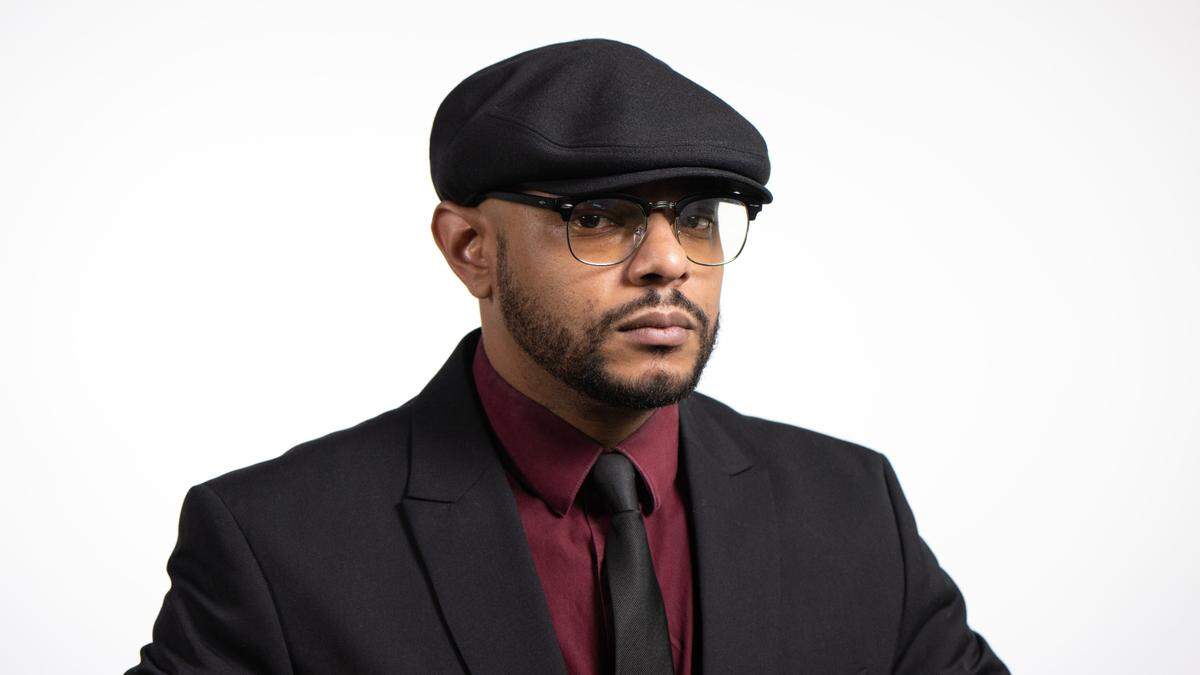
KC Defender starts Freedom School, training the next generation of Black activists
Since its inception in 2021, The Kansas City Defender has become a cornerstone of the Black community, providing cultural and community news that resonates with the city’s residents.
Founded by Ryan Sorrell, the online-only publication has distinguished itself not just as a news source, but as a platform for those who are passionate about social justice and civil resistance, particularly in the Black, brown, LGBTQ and low-income communities.
This pursuit continues with this weekend’s launch of The Defender’s Freedom School, an initiative inspired by the historical role of Freedom Schools — institutions designed, primarily during the 1960s Civil Rights Movement, to foster social change and challenge oppressive systems.
Gwendolyn Grant, president and CEO of the Urban League of Greater Kansas City, said, “At a time when Black history is being erased and our voices are being silenced,” (the Freedom School in Kansas City is) “exactly what this moment calls for. … A bold initiative that arms our community with the knowledge and tools to resist oppression and demand justice.”
Grant, no stranger to the struggle for Black liberation, has spent years working with numerous municipal boards and community organizations around Kansas City committed to sparking change. As an advocate for educational and economic empowerment in the Black community, Grant believes Freedom School courses could help mold new socially active leaders in Kansas City.
Grant said she sees, “Black Kansas Citians facing systemic disinvestment, gentrification, racial profiling, and economic exclusion resulting from the absence of strong leaders who are willing, capable and committed to doing whatever it takes to dismantle the systems and structures that have impeded Black liberation and economic mobility.”
She said she believes the Freedom School can “help equip residents with the knowledge, skills and courage to advocate for policies that empower our communities, challenge discriminatory policing, and fight back against policies that seek to keep us disenfranchised.”
Sorrell and his organization are reviving the Freedom Schools concept as a 14-week, three-hour course, exploring topics such as Black abolitionist movements, immigration, and community organizing.
Recently, Sorrell met with The Kansas City Star’s culture and identity reporter, J.M. Banks. They talked about Freedom Schools and the current political climate, which Sorrell said has sparked an urgency in educating Black residents in media literacy, campaign development and the history of Black activists and their movements resisting racial oppression.
Banks: Can you tell me about what the Freedom School course will entail?
Sorrell: We have three program elements or pillars of the program. The first one is writing and journalism training. That is a writing-intensive program.
It will teach the history of the radical Black press. It will teach critical media literacy, digital storytelling and narrative change strategies. All of that falls under that first element of writing, journalism training.
The second element is organizing, pretty much like community organizing. So that includes training on direct action, on mutual aid, campaign development, and for that we’ll have people from various different organizations across the city come in to lead these trainings.
The last element is Black studies, and so we’ll be doing deep engagement on Black radical thought, resistance histories and liberation movements of the past.
So I think those are really the hard skills, more or less, that our students will be learning. That is a part of the Black education tradition, that a lot of what is learned is not actually in the curriculum. It’s in the space, in the community itself.
How many students have signed up for your first cohort?
The first cohort is 30 students, and we also have four facilitators and three volunteers. So I would say it’s kind of more like a collective. We have a 14-week curriculum of courses that cover everything from abolition to fascism, to immigration and the history of Black liberation movements. Those are just a few of the topics that we discuss.
Our program is intergenerational. Our youngest student is 11 years old, our oldest student is 86 years old, and about 60% of the cohort is high school age, 20% is adult age, and 20% are elders. With the makeup of the class itself, there is going to be a lot of intergenerational knowledge sharing and learning and also just the creation of a community of people.
What inspired The Kansas City Defender to start this Freedom School?
This is something we have had our eye on for quite some time, but that was exacerbated by the vicious and rampant attacks on Black students and education by the presidential administration and by the ongoing and increasingly extremist, right-wing fascist movements that have largely been actively organizing in Missouri specifically.
That’s something that we outlined in the article that we published announcing the Freedom School. Whenever the Supreme Court repealed affirmative action, the very first university in the country to repeal their formative action practices was the University of Missouri, and so we view Missouri and Kansas as hotbeds of fascists and right-wing experimentation.
We view this political moment as a moment of crisis, particularly for Black, brown and poor students.
It became increasingly clear that we need to be building as much as possible. We need to be building institutions of knowledge production and sharing that enable our people to receive the education that we need, because we’re not going to get it from these institutions that are very rapidly destroying and erasing any semblance of Black history in public schools. The inability of students to get the education they need from the public schooling system and also a way for people to know how to organize in this political moment.
With this being Black History Month, are there any specific historical figures or movements, or events, that you can look back on as inspiration for this particular endeavor?
Definitely the original Freedom Schools from SNCC, the Student Nonviolent Coordinating Committee. They are a very big inspiration in terms of the name of the school and how those Freedom Schools were born during a time of heightened racial terrorism and white supremacist violence.
The location of our school is kept private for our own safety reasons and security reasons, but that’s one inspiration. Another one is Carter G. Woodson’s “The Mis-Education of the Negro,” as well as “Fugitive Pedagogy” (by Jarvis Givens), which is a more recent book.
What role do you see education playing in the larger struggle for liberation today, that you have described?
I think it is absolutely central. I think education has always been something that Carter G. Woodson (a Black historian and founder of African American studies) talked about.
It’s always political, and if we don’t have that education and we don’t know our history, if we allow the people who are harming us to tell us our own history, then I don’t think we can chart an effective path forward.
If we don’t study what our ancestors have already done, what our grandparents have done, we won’t know what has worked, what hasn’t worked. We won’t know what kind of lineage or what people we come from. We won’t even know what liberation looks like if we don’t study and make sure that we’re learning from the past.
How do you think Freedom Schools have historically challenged the traditional educational systems?
I think it depends, because I would say there are many types of Freedom Schools and one of the common denominators is that it takes place outside of the state and thus the curriculums are not state sanctioned.
We get to curate a curriculum that is directly relevant to the lives and experiences of Black people and especially of Black youth. For ours, the difference also is the fact that it’s intergenerational, which of course no public school is organized that way.
We really just cover a lot of the topics that you don’t learn about. You don’t learn about the Student Nonviolent Coordinating Committee in public school. You don’t learn about people (like) Medgar Evers. You learn very little about Assata Shakur, about Ida B. Wells and Claudia Jones. So much history we never learn in public schools.
Me, personally, I only had one Black teacher ever throughout my entire time in public school, and I know that’s a very similar experience for a lot of people. So I think being in a loving creative space that tells Black people you belong here creates an entirely different educational environment then would exist in much of the normal school system.
How would you describe your core curriculum to someone unfamiliar with the historical significance of Freedom Schools?
If I was explaining it to someone, I would say they (students) learn how to organize in their own community and build power with Black people across their community and across the city. They would get to learn vital history of resistance movements and successful revolts, because we often learn about the brutal and horrifying things that happen to Black people but very rarely do we learn about Black people who fought back and how they did that successfully. We get to learn about that, and then they get to be creative and get to be in this space of total creative and intellectual freedom.
How long did it take The Defender to put together the curriculum that will be taught?
In terms of the curriculum we actually worked with the W.E.B. Du Bois (Movement School for Abolition & Reconstruction) in Philadelphia. They actually sent us their curriculum and so that was like the very base, and we customized that. We made a lot of customizations to it, because their program is multiracial, whereas ours is exclusively Black.
But we made alterations to it by using exclusively Black scholars and authors in our curriculum. As far as how long it took, I would say it took around six months to put it together. We’ve also consulted quite a few organizations and educators from across the country.
How did you ensure that you were integrating cultural, historical and revolutionary aspects within the learning process?
I think a lot of that just comes from what and who we are studying. One of the lessons is on intersectionality and Black queer feminism. And sharing that we study from a wide range of scholars and thinkers and organizers, not just Black men for instance, is one way of doing that.
Have there been any challenges your organization has faced launching this initiative?
Not really. I think everything so far has been going very smooth and people are very excited about it. We had a huge amount of people who applied. Unfortunately, we weren’t able to let everybody in the first cohort. We had a lot of people who applied to volunteer as well. I would say really, if anything, it has been determining what to include in the curriculum itself. Especially with how quickly things are changing in our country right now. It can be tempting to become reactionary. So determining what do we feel are the most critical topics and discussions that we can be having in this political moment?
What was the criteria for the spots you wanted to fill?
On the application we asked the question: Why did you want to be a part of the program? And did they have any experience? I think largely we wanted a widely diverse group of people, so we wanted someone who had a lot of experience in organizing and Black studies.
We wanted some people who had absolutely zero and this would be their first time ever being in a space like that. We wanted people who were much, much older, and wanted people who were in middle school.
I would say the biggest criteria was the essay question that we included on the application around why people wanted to be in the program and why now.
How do you see the Freedom School growing in years to come?
So we’ll definitely have our second cohort either late summer or fall. We want to just continue having cohorts. We want to increase the size of cohorts. We want to expand the resources, because we really built this from the ground up with pretty much no funding.
I would also say the people who might be guest speakers, I think, will be a big piece. I’m hoping to get some Black authors who, at least virtually, would be able to join.
What is the legacy you hope this Freedom School leaves?
I’ll probably say the legacy, first and foremost, will be in the people who go through the program. What they do in their lives and the community. The impact that the students that go through our program are able to have on the community and the world.
For more stories about culture and identity sign up for our free On The Vine newsletter at http://KansasCity.com/newsletters.