
String of fires at black churches ignites fears of hate crimes
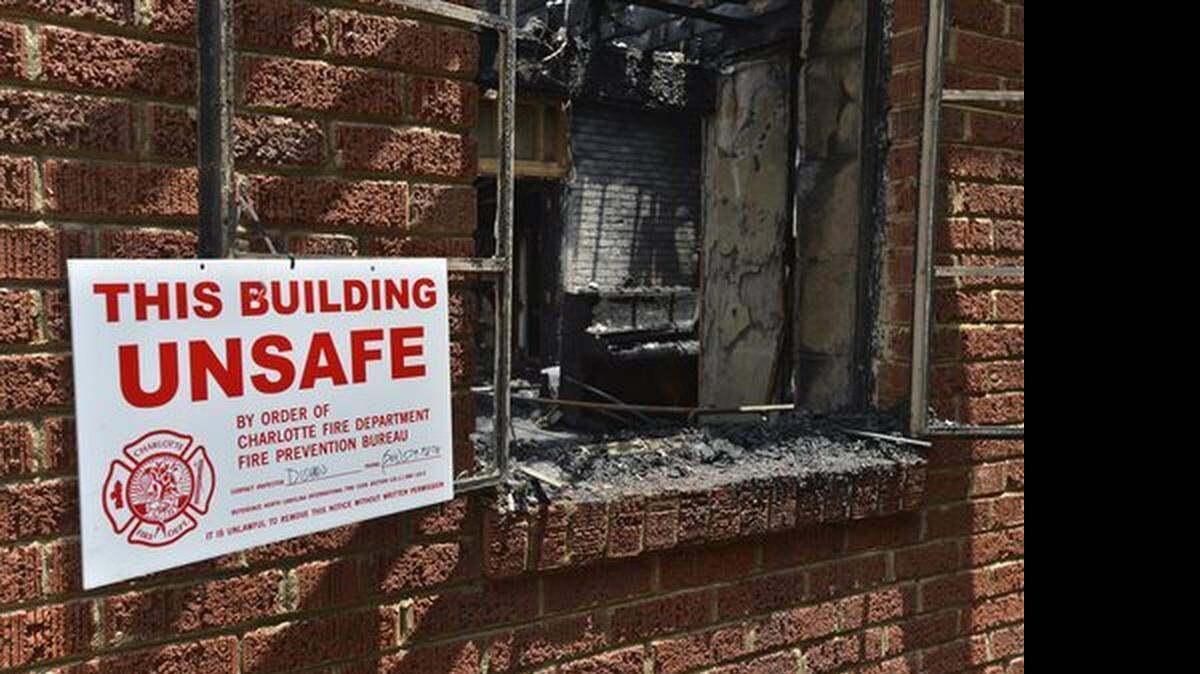
A string of fires last week at predominantly black churches in the South has attracted authorities’ attention and is raising concerns over whether racially motivated violence targeting religious property is ramping up.
From Sunday through Friday, fires destroyed or caused extensive damage to churches in Tennessee, Georgia, North and South Carolina and Florida. Three have been determined to be arson, and the others remain under investigation.
“It’s something that needs to come to public light,” said Shawn Alexander, associate professor of African and African-American studies at the University of Kansas. “We should be concerned. It’s activity that is on the rise.
“These may not be isolated incidents. But even if they’re not connected, there’s a sentiment out there that we need to understand.”
African-American churches are pillars of the community, education centers and places of solace, he said.
“That’s why they’ve been targeted.”
The recent fires, all occurring at night or before dawn, came just days after a gunman opened fire June 17 on a Bible study group at Emanuel African Methodist Episcopal Church in Charleston, S.C., killing nine. The suspect charged in the shootings, 21-year-old Dylann Roof, appears to have white supremacist leanings and had posed in recent photographs with a Confederate battle flag.
The massacre prompted calls for the state of South Carolina to remove the Confederate flag from the capitol grounds in Columbia. Last week, South Carolina Gov. Nikki Haley urged lawmakers to pass legislation to do just that.
Four days after the shootings, someone set hay bales ablaze outside College Hill Seventh-Day Adventist, a predominantly black church in Knoxville, Tenn. A fire official said bags of dirt and hay bales were left burning outside the church door. The blaze also seriously damaged a church van. Police said the fire appeared to be an act of vandalism. It remains under investigation.
Two days later, on June 23, an early morning fire damaged God’s Power Church of Christ in Macon, Ga. Fire investigators said they believed the fire was intentionally set about 4 a.m. It destroyed much of the building.
On June 24, last Wednesday, a fire severely damaged the Briar Creek Road Baptist Church in Charlotte, N.C. Authorities said the fire was deliberately set, and they are attempting to determine whether it was a hate crime. More than 75 firefighters responded to the blaze, which was reported shortly before 1 a.m. and caused more than a quarter million dollars of damage. Two firefighters were treated for heat-related injuries.
On Friday, a fire broke out at Glover Grove Baptist Church in Warrenville, S.C. Fire crews responded about 3:30 a.m., but couldn’t save the building. The cause remains under investigation.
Two other fires last week are not believed to be arson, although it hasn’t been ruled out.
Authorities said a June 23 fire that destroyed Fruitland Presbyterian in Fruitland, Tenn., was likely caused by a lightning strike. And an early morning fire Friday that destroyed the Greater Miracle Temple Apostolic Holiness Church in Tallahassee, Fla. may have started when a tree limb fell on an electrical line.
Other arsons have been committed at black churches in recent months, including in November, when someone set fire to the children’s area of The Flood Christian Church in Ferguson, Mo. The church, which was regularly attended by Michael Brown Sr. — the father of the unarmed black teen shot to death last year by Officer Darren Wilson — was a total loss. The fire occurred during the violence that erupted when residents learned that Wilson would be not charged by a state grand jury.
A series of stories earlier this year included church fires as a form of domestic terrorism.
In 2008, hours after Barack Obama was elected president, three white men torched the newly constructed Macedonia Church of God in Christ in Springfield, Mass., in protest, burning it to the ground. According to the Justice Department, the men had agreed “to retaliate against the election by burning the new church because the church members, congregation and Bishop were African-American.”
And in December 2010, a white man torched the Faith in Christ Church in Crane, Texas, in what prosecutors said was an attempt to gain credibility with the Aryan Brotherhood, a white supremacist prison gang. The man admitted that he was hoping to kill a disabled black man he thought lived at a shelter in the church.
Attacks on black churches were common during the civil rights movement in the 1960s. The most widely known was the 1963 Sunday morning bombing at the 16th Street Baptist Church in Birmingham, Ala., that killed four girls. The activity picked up again in the South in the early 1990s, prompting President Bill Clinton to form the National Church Arson Task Force in 1996 to investigate church arsons and ease the burden of local law enforcement.
That same year, Congress passed the Church Arson Prevention Act, making it easier to prosecute those who commit racially motivated arsons at churches.
U.S. Rep. Emanuel Cleaver, a United Methodist pastor, told The Star on Monday that while the recent church fires are a cause for concern, “this is nothing new for the black church community.”
“Attacking our churches has been a means of retaliation for progress almost since the beginning of the black church,” said Cleaver, a Kansas City Democrat. “In many ways this is just a continuation after a recess by the racists.”
He said the fires are likely a backlash over the push to remove the Confederate flag from various public places.
“They have to come up with something, and the church is a good way of getting back at the world,” he said.
Cleaver said many black churches, particularly the larger ones, today have armed guards.
“We have off-duty police officers in their police uniforms,” he said of St. James United Methodist Church in Kansas City, where he has served as pastor.
“You’ll find that in many cities in the country. It’s unfortunate, but it’s a problem that isn’t going away.”
Figures on arsons at African-American churches are difficult to come by. Federal agencies compile data on arsons against all religious institutions, but don’t break the churches down by race.
The Bureau of Alcohol, Tobacco, Firearms and Explosives referred The Star to the FBI’s annual hate crime statistics, which include data on hate crimes against religious institutions. Its 2013 report says religious institutions were the targets of nine arsons that were deemed hate crimes that year.
Tracking church arsons isn’t as easy as it used to be, said Marty Ahrens, who analyzes data for the National Fire Protection Association, a nonprofit trade organization.
A system implemented in 1999 changed the rules and coding procedures, making it more difficult to compare the old and new data, she said. And you can’t simply conduct a search for arsons at black churches.
“Sometimes you get the info on whether it’s racially motivated; sometimes you don’t,” she said.
This story was originally published June 29, 2015 at 9:14 AM.