Food Matters For Mental Health: New Research Reveals a 25% to 35% Lower Depression Risk With Colorful Diets
Think about the last meal that actually felt good. Chances are it wasn’t just about the food. The light was warm, the plate looked inviting, someone was sitting across from you.
The food-mood connection has been a loose idea for a long time, but researchers studying it in 2025 and 2026 are pinning down exactly which variables move the needle, and a few of the answers are surprisingly small.
What the Food-Mood Connection Actually Means
The food-mood connection isn’t one thing. It’s the overlap between what you eat, how it’s presented, where you’re sitting and who’s with you. Researchers have started separating these threads and measuring them independently, and what they’re finding is that the environment around a meal shapes how it feels as much as the meal itself does.
That’s not folk wisdom anymore. It’s showing up in controlled experiments using eye tracking, EEG and Gallup data from 142 countries.
How Food Presentation Shifts the Way You Feel
A January 2025 study by Salazar Cobo and colleagues, published in Food Quality and Preference via Wageningen University, found that food served on a large plate with high-stacked plating triggered more positive emotions than identical food presented differently. Same ingredients, different emotional outcome.
Plate color adds to the effect. A 2025 study by Kuo and Huang in the Journal of Sensory Studies found white plates enhanced perceived taste compared to black ones. And lighting (the detail most home kitchens don’t think about) turns out to matter.
An October 2025 study via the National Library of Medicine found warm white light at 2700K produced the highest levels of positive emotion and appetite in participants. Blue light did the opposite.
None of this requires a kitchen renovation. A different bulb, a white plate, a little height on the food are the kinds of shifts the research is actually pointing to.
Why Shared Meals Show Up in Happiness Data
The social piece of the food-mood connection is where the numbers get hardest to ignore. A 2026 study in Scientific Reports by De Neve and colleagues, drawing on Gallup data from 142 countries, found that how often you eat with others predicts wellbeing about as well as income does. Not diet quality. Not exercise, but who’s at the table.
The World Happiness Report 2025 from Oxford’s Wellbeing Research Centre found that solo dining in the US has climbed 53% over the past two decades.
For younger adults the shift is even sharper. Americans aged 18 to 24 are 90% more likely to eat every meal alone than they were in 2003 — a trend researchers are tracking alongside declining mental health outcomes in the same age group.
Where Color and Mindfulness Fit In
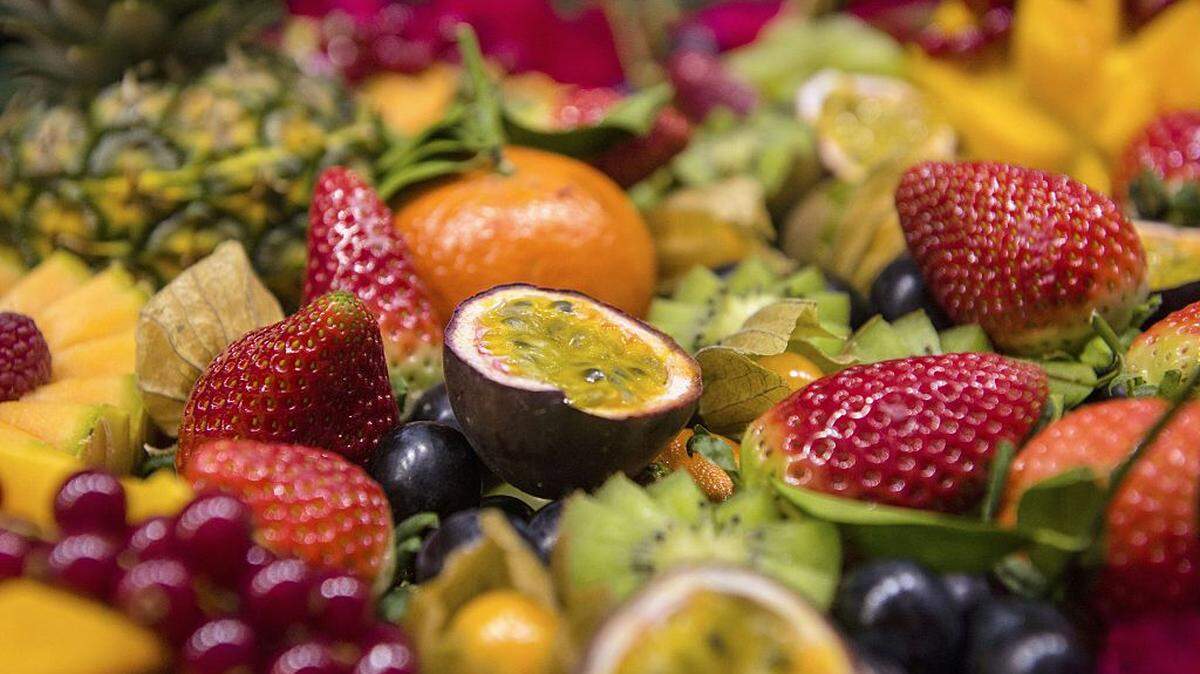
What’s actually on the plate still matters. Harvard Health’s nutritional psychiatry research finds depression risk is 25% to 35% lower in people eating traditional, colorful, whole-food diets compared to typical Western diets. A 2025 study in Frontiers in Nutrition linked mindful eating and nutrient-dense foods directly to positive mood outcomes.
The 6-to-1 grocery method — six vegetables, five fruits, four proteins, three starches, two sauces, one fun item — has caught on as a low-effort way to nudge the cart toward what the research keeps recommending. It’s not a clinical protocol, just a structure that makes colorful, whole-food shopping easier to default to.
The food-mood connection is a layered thing. It starts in the grocery aisle, runs through the kitchen and lands at the table. Research keeps pointing back to the same simple idea: small choices you make every day add up to real, measurable results that are increasingly worth understanding.
This article was created by content specialists using various tools, including AI.
This story was originally published May 20, 2026 at 3:09 PM with the headline "Food Matters For Mental Health: New Research Reveals a 25% to 35% Lower Depression Risk With Colorful Diets."